Homemade Fruit Leather
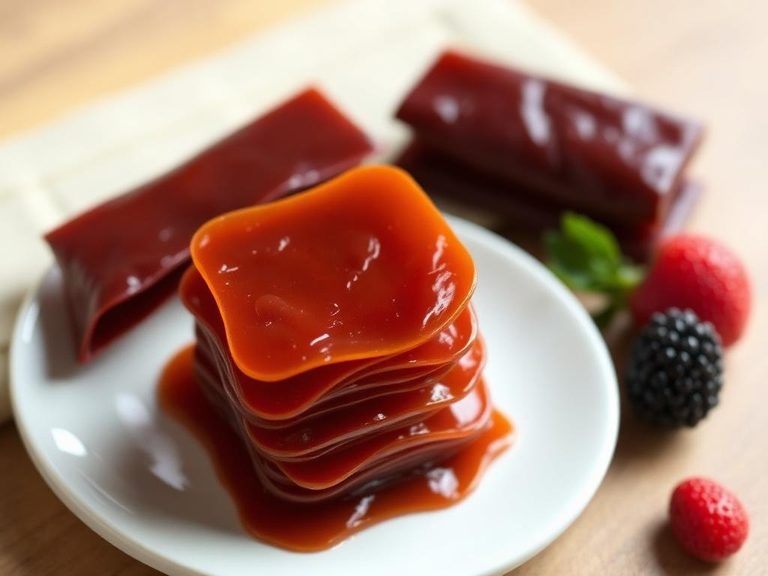
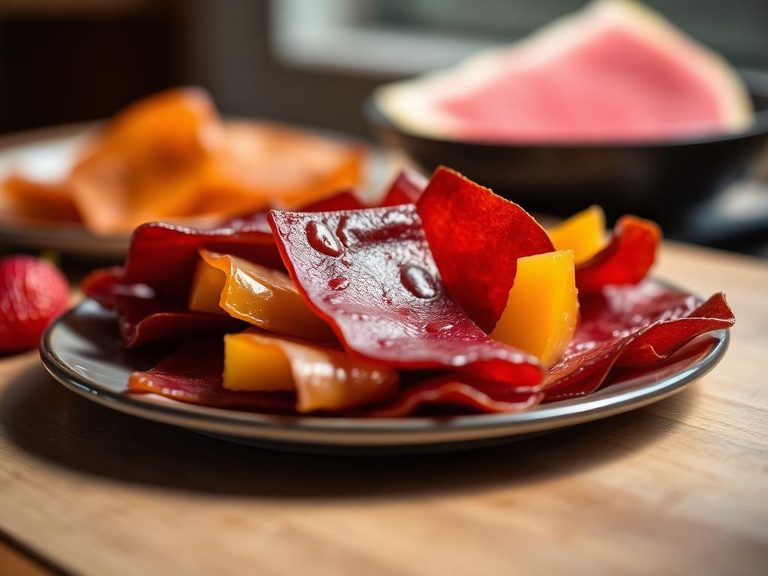
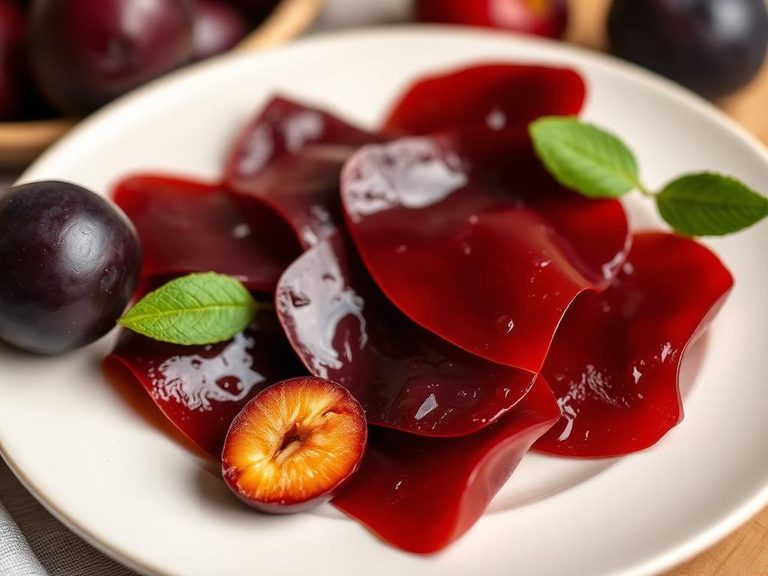
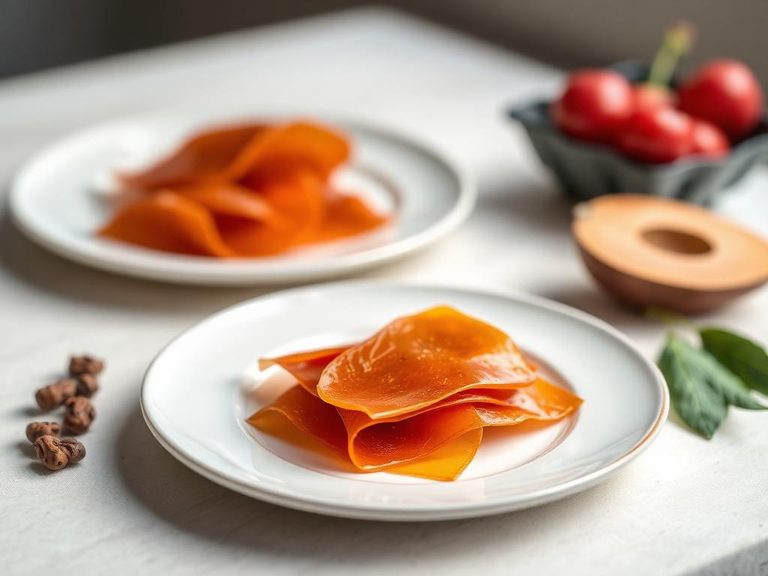
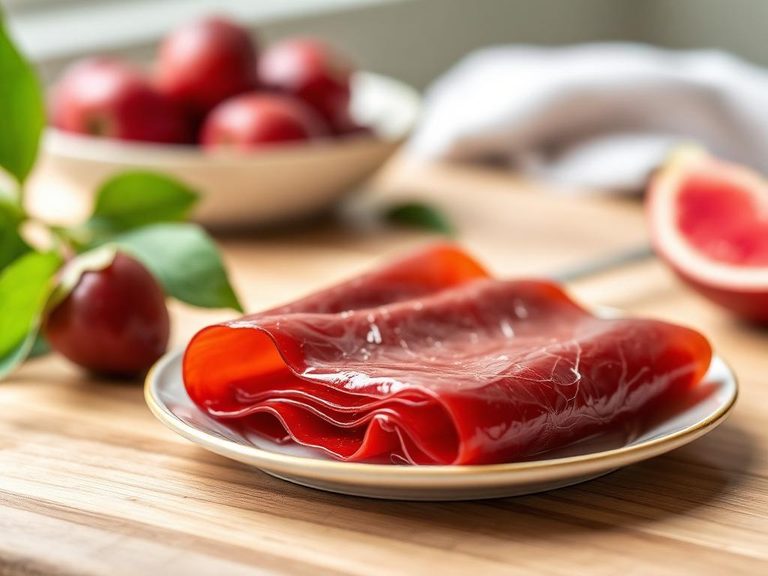
Homemade fruit leather is a chewy, naturally sweet snack made by pureeing fresh or dried fruits, spreading the mixture thin, and dehydrating it until pliable. It typically features fruits like apples, strawberries, mangoes, or berries, often with a touch of lemon juice or honey, and has roots in various cultures as a simple, preserved treat.
🍽️ Nutrition at a glance
This snack is primarily high in carbohydrates from natural fruit sugars and fiber, with minimal fat or protein. A standard serving provides vitamins like vitamin C and antioxidants, and roughly 80-120 calories per ounce, depending on the fruit used.
Nutrition breakdown
| Calories | 150 kcal |
| Protein | 0.5 g |
| Carbs | 36 g |
| Fat | 0.2 g |
| Fiber | 2.5 g |
| Sugar | 30 g |
| Sodium | 5 mg |
| Vitamin C | 15 mg |
| Vitamin A | 80 mcg |
| Potassium | 250 mg |
| Iron | 0.5 mg |
| Magnesium | 15 mg |
| Manganese | 0.2 mg |
| Vitamin B6 | 0.1 mg |
| Folate | 10 mcg |
Per 1 sheet (approx. 50 g) · estimated, varies by recipe
💡 What's interesting
Fruit leather is a fascinating example of ancient food preservation techniques, similar to Middle Eastern 'lavashak' or Asian 'fruit rolls,' that modernizes into a popular, healthy alternative to candy. Nutritionally, it concentrates fruit's nutrients without added preservatives, making it a portable way to enjoy whole-food benefits.