

Breadsticks, hard, reduced sodium
Common food

Photo: Wikipedia
Hard, reduced-sodium breadsticks are a crunchy, dry biscuit-like snack, typically pale golden with a firm, snappy texture. They offer a substantial calorie density of 434 kcal per 100g, primarily from carbohydrates, with a modest protein content and a notable reduction in sodium compared to standard versions.
Calorie split: 11% protein · 66% carbs · 22% fat
↓ Full nutrition💚 Why it's loved
People love them for their satisfying, audible crunch and neutral, toasty flavor that pairs well with both sweet and savory dips. Their dry, sturdy nature makes them a classic, no-mess accompaniment to soups, salads, and cheese boards.
⚠️ Watch-outs & how to enjoy it better
The high carbohydrate load and low fiber can lead to rapid blood sugar spikes if eaten alone. They are also a common wheat-based allergen. To counteract this, pair them with a protein or healthy fat like hummus, cheese, or a dip with olive oil to slow digestion, and practice portion control by limiting your serving to a small handful.
Key benefits
- Provides a quick, energy-dense carbohydrate source
- Offers a crunchy texture without added fats from frying
- Reduced sodium content supports heart-healthy dietary choices
- Contains a small amount of dietary fiber
- Low in sugar, making it a less sweet snack option
🍽️ Popular dishes
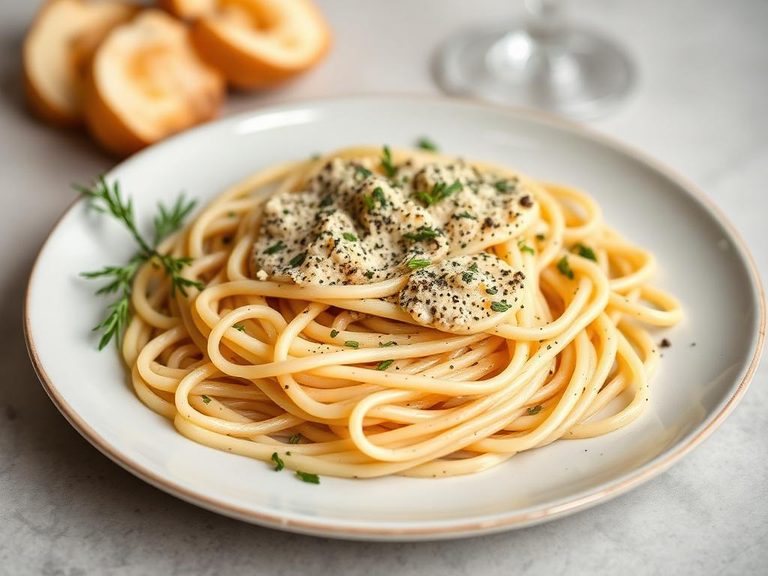
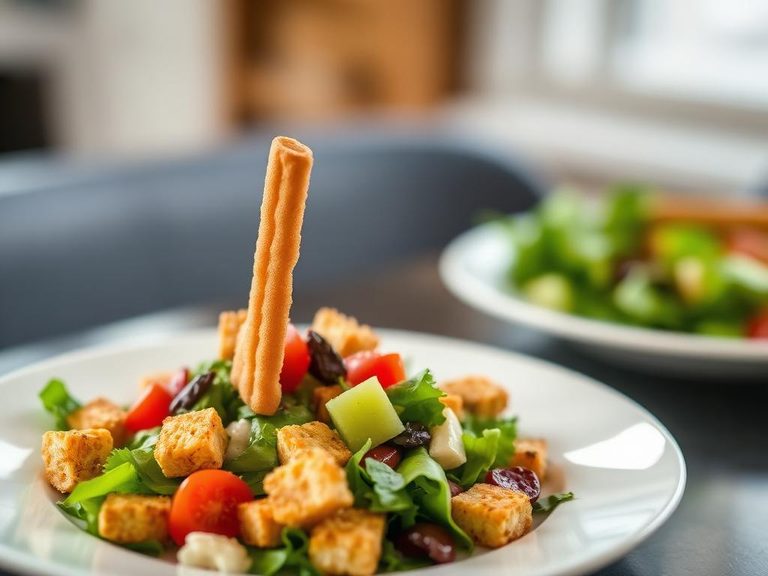



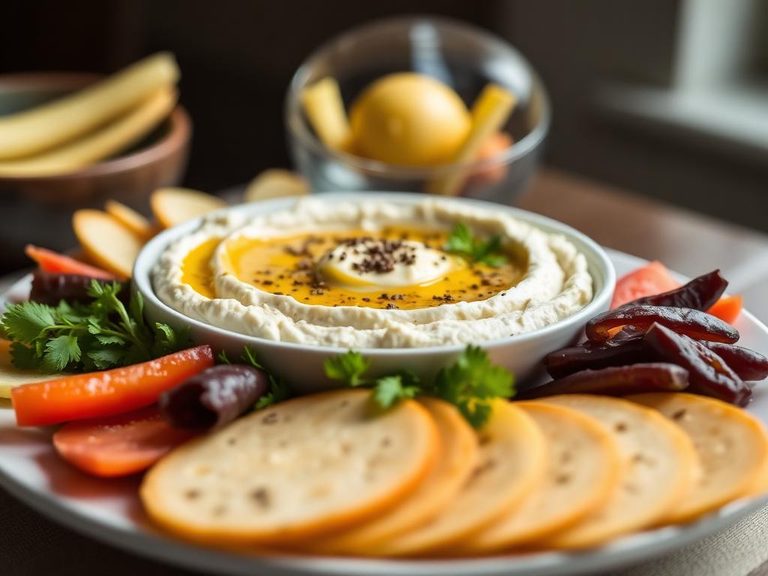
🌍 Where it's eaten
💡 Did you know?
The classic Italian 'grissino' was reportedly invented in Turin in the 17th century and was once believed to have medicinal properties for aiding digestion.
Full nutrition (USDA data · scales with serving)
| Water | 4.4 g |
| Energy | 434 kcal |
| Protein | 12.0 g |
| Total lipid (fat) | 10.9 g |
| Carbohydrate, by difference | 72.2 g |
| Fiber, total dietary | 2.5 g |
| Total Sugars | 1.3 g |
| Calcium, Ca | 18.0 mg |
| Iron, Fe | 5.3 mg |
| Magnesium, Mg | 30.0 mg |
| Phosphorus, P | 113 mg |
| Potassium, K | 131 mg |
| Sodium, Na | 4.0 mg |
| Zinc, Zn | 0.95 mg |
| Copper, Cu | 0.17 mg |
| Selenium, Se | 23.3 ug |
| Vitamin C, total ascorbic acid | 0.00 mg |
| Thiamin | 0.74 mg |
| Riboflavin | 0.39 mg |
| Niacin | 5.8 mg |
| Vitamin B-6 | 0.07 mg |
| Folate, total | 109 ug |
| Folic acid | 82.0 ug |
| Folate, food | 27.0 ug |
| Folate, DFE | 167 ug |
| Choline, total | 9.7 mg |
| Vitamin B-12 | 0.00 ug |
| Vitamin B-12, added | 0.00 ug |
| Vitamin A, RAE | 0.00 ug |
| Retinol | 0.00 ug |
| Carotene, beta | 0.00 ug |
| Carotene, alpha | 0.00 ug |
| Cryptoxanthin, beta | 0.00 ug |
| Lycopene | 0.00 ug |
| Lutein + zeaxanthin | 41.0 ug |
| Vitamin E (alpha-tocopherol) | 2.0 mg |
| Vitamin E, added | 0.00 mg |
| Vitamin D (D2 + D3) | 0.00 ug |
| Vitamin K (phylloquinone) | 9.7 ug |
| Alcohol, ethyl | 0.00 g |
| Caffeine | 0.00 mg |
| Theobromine | 0.00 mg |
Fat & fatty acid profile (per 100g)
| Fatty acids, total saturated | 1.4 g |
| SFA 4:0 | 0.00 g |
| SFA 6:0 | 0.00 g |
| SFA 8:0 | 0.00 g |
| SFA 10:0 | 0.00 g |
| SFA 12:0 | 0.00 g |
| SFA 14:0 | 0.01 g |
| SFA 16:0 | 1.1 g |
| SFA 18:0 | 0.28 g |
| Fatty acids, total monounsaturated | 4.1 g |
| MUFA 16:1 | 0.04 g |
| MUFA 18:1 | 4.0 g |
| MUFA 20:1 | 0.06 g |
| MUFA 22:1 | 0.00 g |
| Fatty acids, total polyunsaturated | 4.1 g |
| PUFA 18:2 | 3.7 g |
| PUFA 18:3 | 0.44 g |
| PUFA 18:4 | 0.00 g |
| PUFA 20:4 | 0.00 g |
| PUFA 20:5 n-3 (EPA) | 0.00 g |
| PUFA 22:5 n-3 (DPA) | 0.00 g |
| PUFA 22:6 n-3 (DHA) | 0.00 g |
| Cholesterol | 0.00 mg |
FAQ
How do hard breadsticks differ from soft breadsticks?
Hard breadsticks are baked longer to remove most moisture, resulting in a dry, crunchy, biscuit-like texture ideal for dipping. Soft breadsticks are baked to retain moisture, yielding a tender, pillowy bread often brushed with butter or oil.
What does 'reduced sodium' mean for this product?
It means the manufacturer has decreased the salt content by at least 25% compared to the standard version, making it a better choice for those monitoring sodium intake for heart health.
Can I use these as a substitute for croutons?
Yes, they make an excellent crouton substitute. Simply slice or crush them and toast lightly in a pan with a little olive oil and herbs for a quick, crunchy salad topper.
Nutrient density (calculated · NRF9.3)
Nutrient Rich Foods index: beneficial nutrients (protein, fiber, vitamins, minerals) minus saturated fat, added sugar & sodium, per 100 kcal.
NRF9.3 index — Fulgoni, Keast & Drewnowski, 2009. Computed from USDA nutrients.
Weight-loss friendliness (composite index)
Energy density 4.34 kcal/g · 11% calories from protein · 2.5 g fiber · 1.3 g sugar per 100 g.
Composite of energy density (Rolls et al., 1999), protein & fiber satiety, minus sugar. A calculated heuristic — ranks satiety-per-calorie, not a clinical measure.
Dietary load (calculated from USDA values)
Potential renal acid load. Positive = acid-forming, negative = alkaline-forming.
Sodium-to-potassium ratio: 0.03 (lower is better — aim for ≤ 1)
Sodium:potassium per WHO potassium guidance. Computed from USDA nutrients.