

Breadsticks, hard, gluten free
Common food

Photo: Wikipedia
A crisp, dry, and sturdy gluten-free breadstick, often made from rice flour or cornstarch, offering a satisfying snap and a mild, savory flavor. Nutritionally, it's a calorie-dense energy source with a notable fiber content for a refined product, making it a surprisingly filling snack. Its low sugar content is a highlight for those monitoring sweet intake.
Calorie split: 10% protein · 59% carbs · 31% fat
↓ Full nutrition💚 Why it's loved
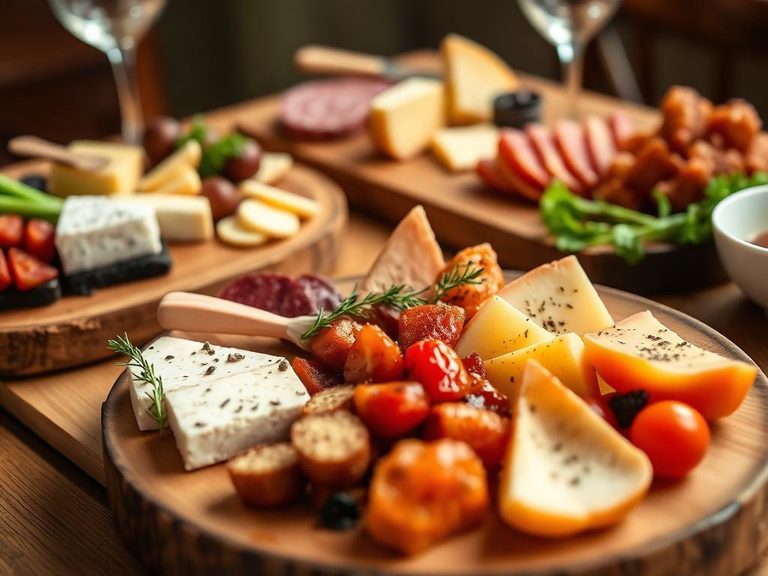
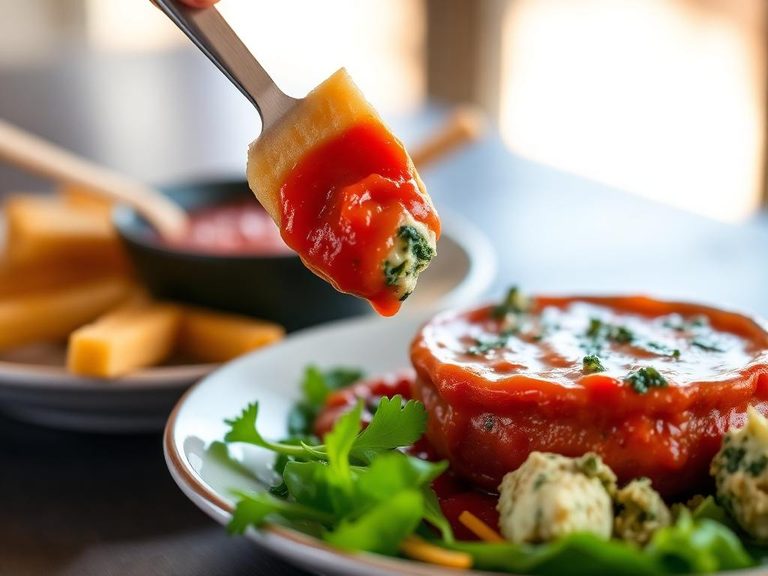
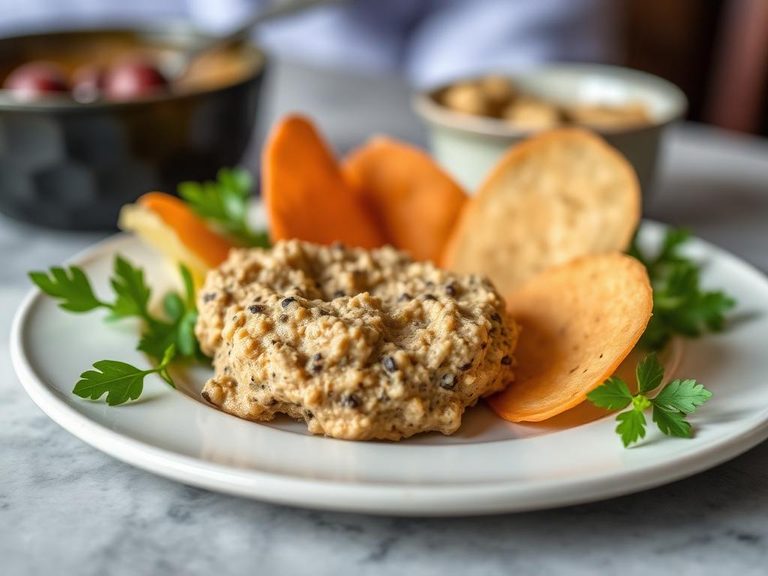
People love it for its pure, satisfying crunch and neutral flavor that pairs perfectly with dips, soups, and cheeses. It's a reliable, shelf-stable snack that brings a comforting, simple pleasure to casual eating.
⚠️ Watch-outs & how to enjoy it better
Its high carbohydrate and calorie density can contribute to blood-sugar spikes if eaten in large amounts without other foods. To counteract this, pair it with a protein or fat source like hummus, cheese, or a dip to slow digestion. Also, check labels for sodium, as some brands can be high in salt.
Key benefits
- Provides a quick, gluten-free source of energy
- Contains a notable amount of dietary fiber (10.2g per 100g)
- Low in sugar, with less than 1g per 100g
- Offers a crunchy, satisfying texture for snacking
- Naturally free from common gluten allergens
🍽️ Popular dishes
🌍 Where it's eaten
💡 Did you know?
The hard, dry texture of these breadsticks is achieved through a double-baking process, similar to how traditional Italian grissini are made, which removes moisture and creates their signature long-lasting crunch.
Full nutrition (USDA data · scales with serving)
| Water | 3.6 g |
| Energy | 453 kcal |
| Protein | 11.3 g |
| Total lipid (fat) | 15.8 g |
| Carbohydrate, by difference | 66.3 g |
| Fiber, total dietary | 10.2 g |
| Total Sugars | 0.86 g |
| Calcium, Ca | 238 mg |
| Iron, Fe | 2.8 mg |
| Magnesium, Mg | 164 mg |
| Phosphorus, P | 374 mg |
| Potassium, K | 381 mg |
| Sodium, Na | 438 mg |
| Zinc, Zn | 2.6 mg |
| Copper, Cu | 0.55 mg |
| Selenium, Se | 17.4 ug |
| Vitamin C, total ascorbic acid | 0.00 mg |
| Thiamin | 0.21 mg |
| Riboflavin | 0.17 mg |
| Niacin | 4.8 mg |
| Vitamin B-6 | 0.37 mg |
| Folate, total | 35.0 ug |
| Folic acid | 0.00 ug |
| Folate, food | 35.0 ug |
| Folate, DFE | 35.0 ug |
| Choline, total | 27.1 mg |
| Vitamin B-12 | 0.00 ug |
| Vitamin B-12, added | 0.00 ug |
| Vitamin A, RAE | 0.00 ug |
| Retinol | 0.00 ug |
| Carotene, beta | 4.0 ug |
| Carotene, alpha | 0.00 ug |
| Cryptoxanthin, beta | 0.00 ug |
| Lycopene | 0.00 ug |
| Lutein + zeaxanthin | 174 ug |
| Vitamin E (alpha-tocopherol) | 1.5 mg |
| Vitamin E, added | 0.00 mg |
| Vitamin D (D2 + D3) | 0.00 ug |
| Vitamin K (phylloquinone) | 13.7 ug |
| Alcohol, ethyl | 0.00 g |
| Caffeine | 0.00 mg |
| Theobromine | 0.00 mg |
Fat & fatty acid profile (per 100g)
| Fatty acids, total saturated | 2.1 g |
| SFA 4:0 | 0.00 g |
| SFA 6:0 | 0.00 g |
| SFA 8:0 | 0.00 g |
| SFA 10:0 | 0.00 g |
| SFA 12:0 | 0.00 g |
| SFA 14:0 | 0.01 g |
| SFA 16:0 | 1.3 g |
| SFA 18:0 | 0.67 g |
| Fatty acids, total monounsaturated | 7.0 g |
| MUFA 16:1 | 0.02 g |
| MUFA 18:1 | 6.9 g |
| MUFA 20:1 | 0.04 g |
| MUFA 22:1 | 0.01 g |
| Fatty acids, total polyunsaturated | 6.0 g |
| PUFA 18:2 | 5.0 g |
| PUFA 18:3 | 0.93 g |
| PUFA 18:4 | 0.00 g |
| PUFA 20:4 | 0.00 g |
| PUFA 20:5 n-3 (EPA) | 0.01 g |
| PUFA 22:5 n-3 (DPA) | 0.00 g |
| PUFA 22:6 n-3 (DHA) | 0.00 g |
| Cholesterol | 0.00 mg |
FAQ
What are gluten-free breadsticks typically made from?
They are commonly made from a blend of gluten-free flours and starches, such as rice flour, tapioca starch, potato starch, and sometimes cornstarch, along with binders like xanthan gum.
Are they a healthy snack option?
They can be part of a balanced diet. While they are low in sugar and contain fiber, they are energy-dense. Enjoying them with protein or fat and mindful portioning makes them a more nutritious choice.
How do I keep them from going stale?
Store them in a completely airtight container or resealable bag at room temperature. Their low moisture content makes them susceptible to absorbing humidity, which can make them lose their crunch.
Nutrient density (calculated · NRF9.3)
Nutrient Rich Foods index: beneficial nutrients (protein, fiber, vitamins, minerals) minus saturated fat, added sugar & sodium, per 100 kcal.
NRF9.3 index — Fulgoni, Keast & Drewnowski, 2009. Computed from USDA nutrients.
Weight-loss friendliness (composite index)
Energy density 4.53 kcal/g · 10% calories from protein · 10.2 g fiber · 0.9 g sugar per 100 g.
Composite of energy density (Rolls et al., 1999), protein & fiber satiety, minus sugar. A calculated heuristic — ranks satiety-per-calorie, not a clinical measure.
Dietary load (calculated from USDA values)
Potential renal acid load. Positive = acid-forming, negative = alkaline-forming.
Sodium-to-potassium ratio: 1.15 (lower is better — aim for ≤ 1)
Sodium:potassium per WHO potassium guidance. Computed from USDA nutrients.