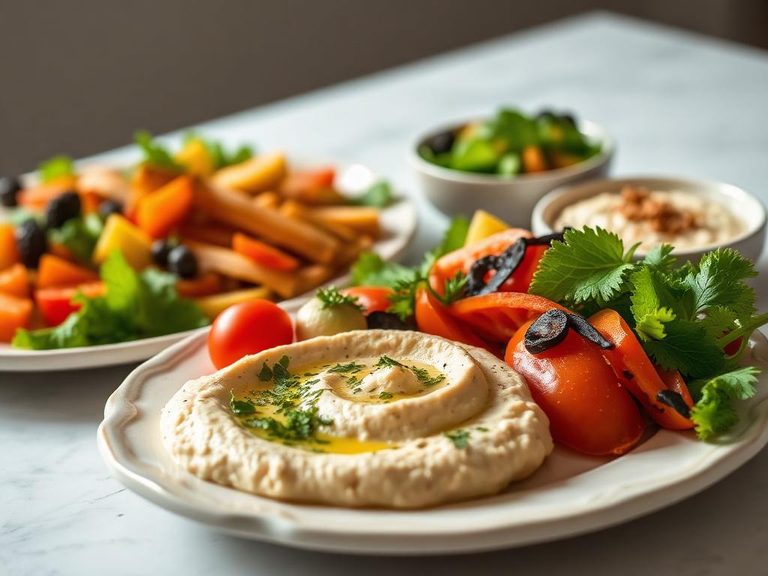
Hummus Platter Accompaniment
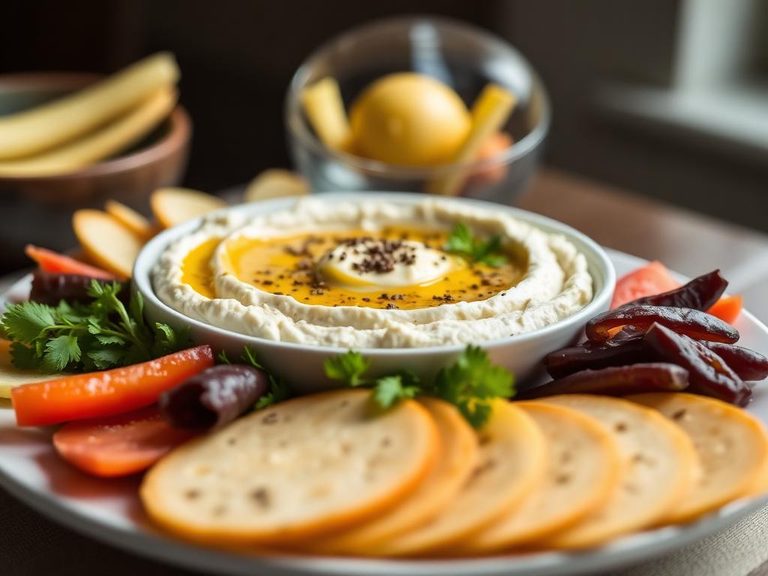
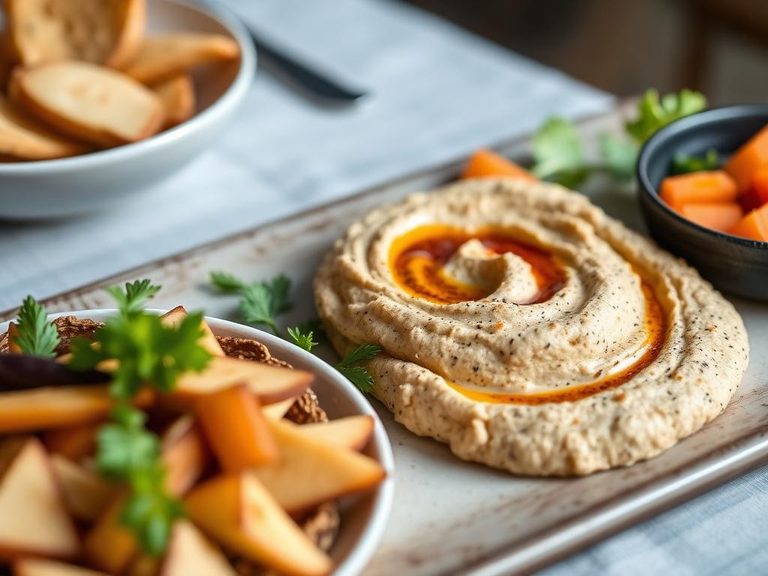
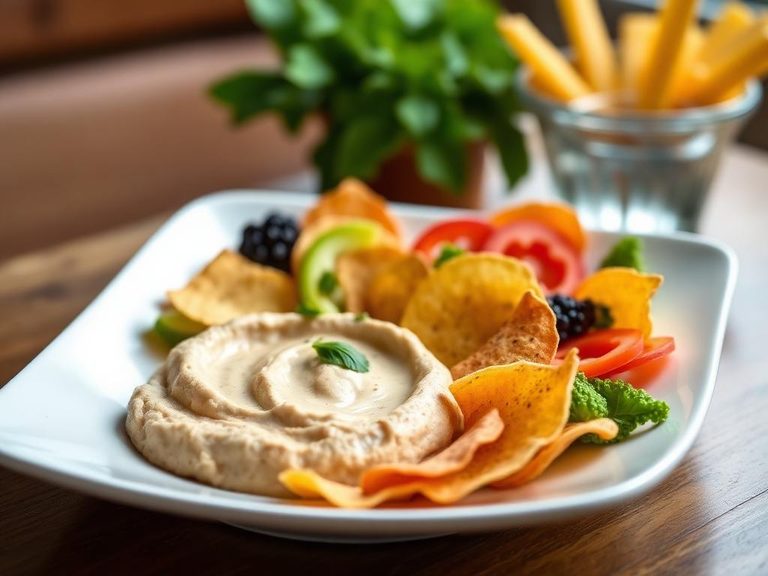
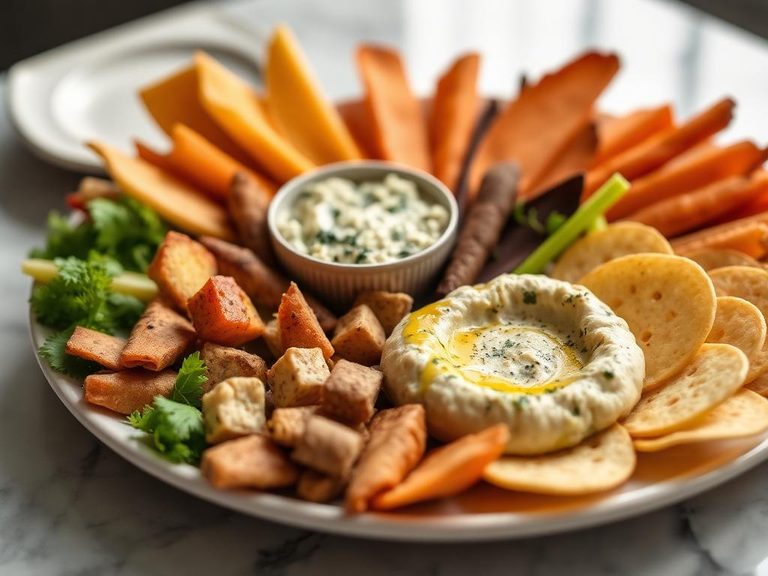
Hummus Platter Accompaniment refers to the fresh vegetables, pita bread, and other items typically served alongside hummus for dipping. Common accompaniments include sliced cucumbers, tomatoes, carrots, bell peppers, radishes, olives, and warm pita bread or crackers. This style of serving is a staple in Middle Eastern and Mediterranean cuisine, often presented as a shared appetizer or part of a mezze spread.
🍽️ Nutrition at a glance
The accompaniments themselves are generally low in calories and fat, with the pita bread providing the main source of carbohydrates. They offer a good mix of dietary fiber, vitamins (like vitamin C and A from the vegetables), and minerals, making the overall platter a balanced and nutritious option.
Nutrition breakdown
| Calories | 130 kcal |
| Protein | 4 g |
| Carbs | 25 g |
| Fat | 1.5 g |
| Fiber | 5 g |
| Sugar | 4 g |
| Sodium | 200 mg |
| Vitamin C | 45 mg |
| Vitamin A | 300 µg |
| Potassium | 350 mg |
| Folate | 60 µg |
| Vitamin K | 30 µg |
| Manganese | 0.5 mg |
| Iron | 1.5 mg |
| Magnesium | 25 mg |
Per 1 cup mixed vegetables (approx. 150 g) and 1 small pita bread (approx. 60 g) · estimated, varies by recipe
💡 What's interesting
Serving hummus with a colorful array of fresh vegetables is a classic example of the Mediterranean diet's emphasis on plant-based foods and communal eating. Nutritionally, the fiber and water content of the vegetables can help with satiety and digestion, complementing the protein and healthy fats in the hummus.