Hummus and vegetable platters
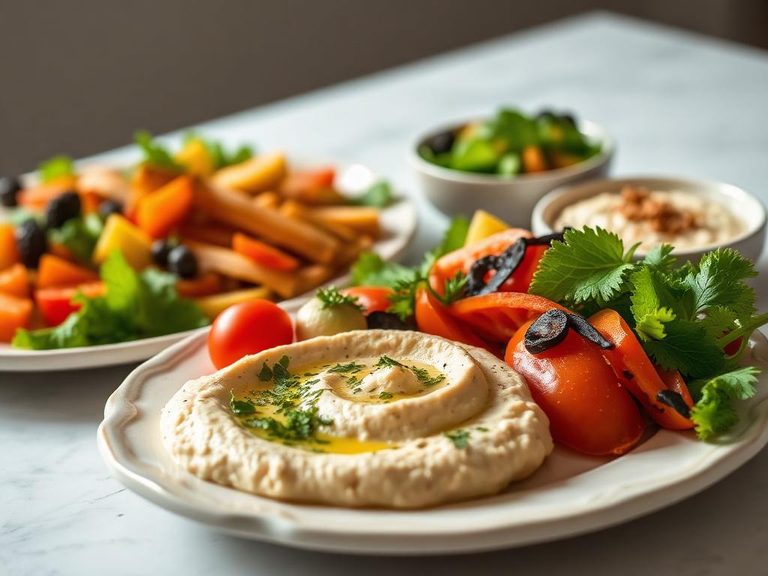
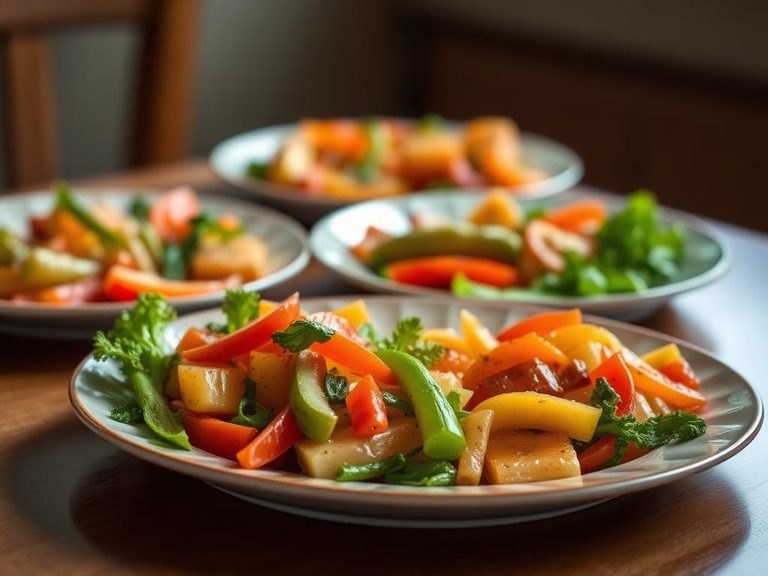
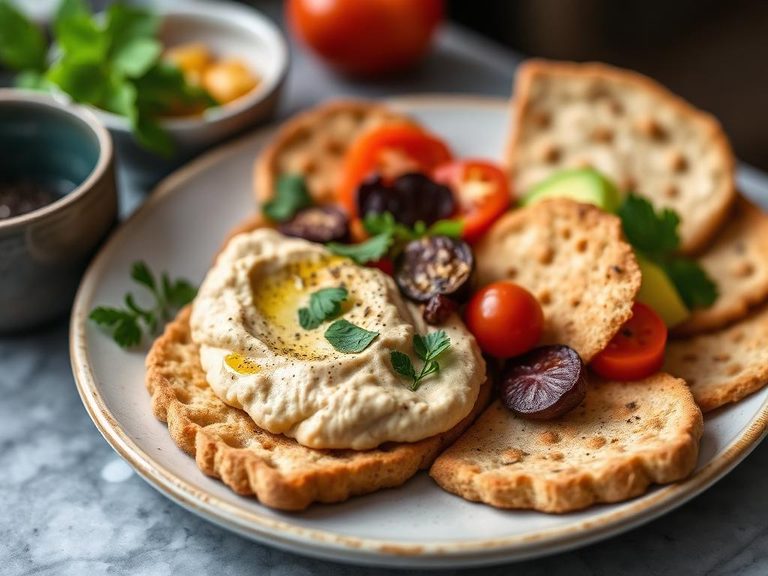
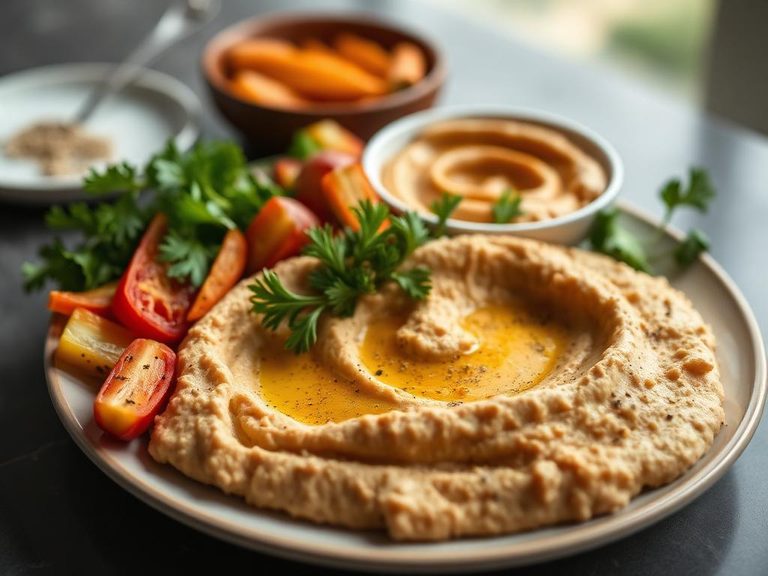
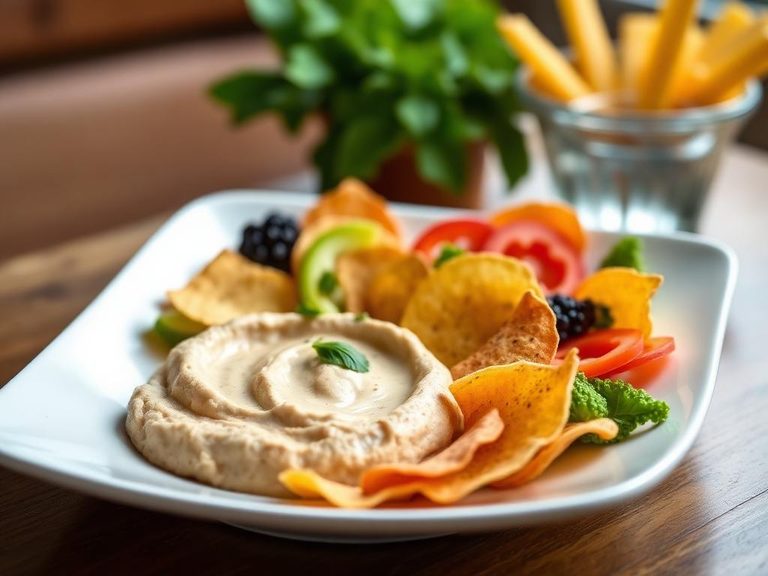
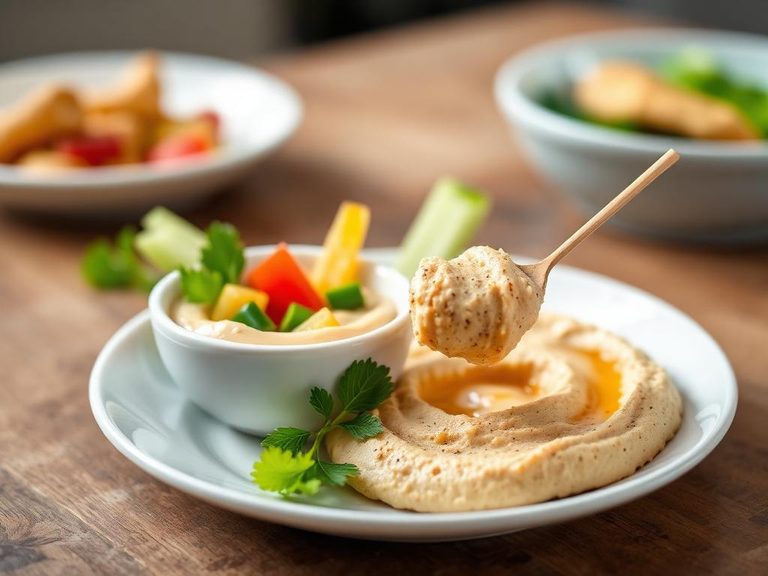
Hummus and vegetable platters feature creamy hummus, a dip made from mashed chickpeas, tahini, lemon juice, and garlic, served alongside a colorful assortment of fresh, raw vegetables. This dish is a staple in Middle Eastern and Mediterranean cuisines, often enjoyed as a healthy appetizer, snack, or light meal.
🍽️ Nutrition at a glance
This dish is well-balanced, offering a good mix of plant-based protein and healthy fats from the hummus, with plenty of fiber and complex carbs from the vegetables. A typical serving provides around 250-350 calories, along with essential nutrients like iron, folate, and vitamin C.
Nutrition breakdown
| Calories | 320 kcal |
| Protein | 12 g |
| Carbs | 38 g |
| Fat | 14 g |
| Fiber | 12 g |
| Sugar | 8 g |
| Sodium | 480 mg |
| Iron | 4.2 mg |
| Folate | 180 mcg |
| Vitamin C | 45 mg |
| Vitamin A | 450 mcg RAE |
| Potassium | 650 mg |
| Magnesium | 70 mg |
| Phosphorus | 180 mg |
| Vitamin K | 25 mcg |
Per 1 cup hummus (240 g) with 2 cups mixed raw vegetables (e.g., carrots, cucumbers, bell peppers, ~300 g) · estimated, varies by recipe
💡 What's interesting
Culturally, hummus has ancient roots in the Levant region and is a symbol of communal eating and hospitality. Nutritionally, the pairing is unique because the vitamin C in the vegetables helps enhance the absorption of iron from the chickpeas in the hummus.