Blueberries, raw
Common food
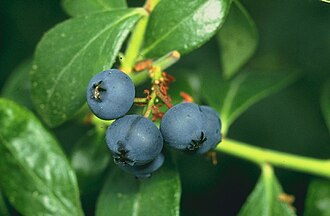
Photo: Wikipedia
These tiny, deep-blue berries are nature's burst of sweet-tart flavor, with a satisfying pop from their thin skin and juicy, seed-flecked interior. Packed with anthocyanin antioxidants, they are a low-calorie powerhouse, offering more fiber than sugar per 100 grams.
💚 Why it's loved
People adore blueberries for their perfect balance of sweetness and tang, and their incredible versatility—equally at home in a morning smoothie, a warm pie, or sprinkled over yogurt. They are a beloved symbol of summer harvests in North America.
⚠️ Watch-outs & how to enjoy it better
Their natural sugar content can cause blood-sugar spikes if eaten in large quantities alone, especially for those with insulin sensitivity. To counteract this, pair them with a protein or fat source like nuts, cheese, or Greek yogurt to slow sugar absorption. Also, their high oxalate content may be a concern for individuals prone to certain kidney stones.
Key benefits
- Rich in anthocyanin antioxidants linked to brain health.
- Good source of dietary fiber for digestive regularity.
- Low in calories and naturally fat-free.
- Contains vitamin C and vitamin K for immune and bone support.
- May support heart health by helping manage blood pressure.
🍽️ Popular dishes
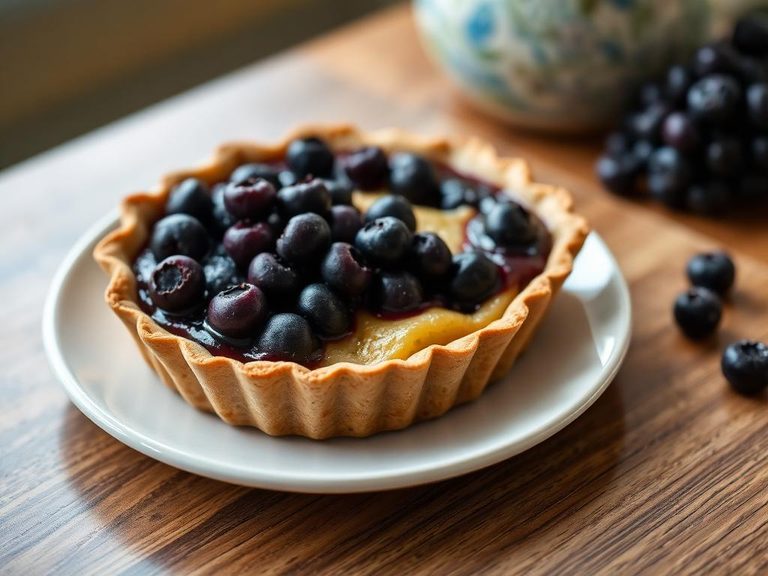
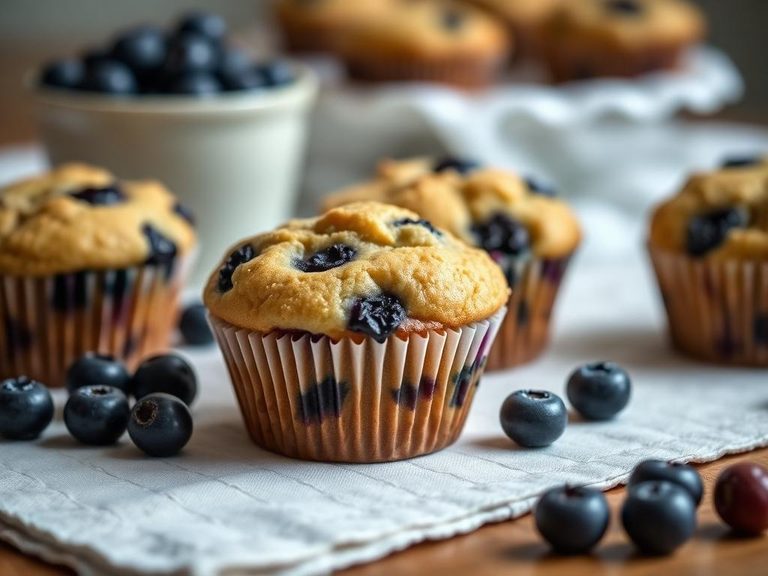
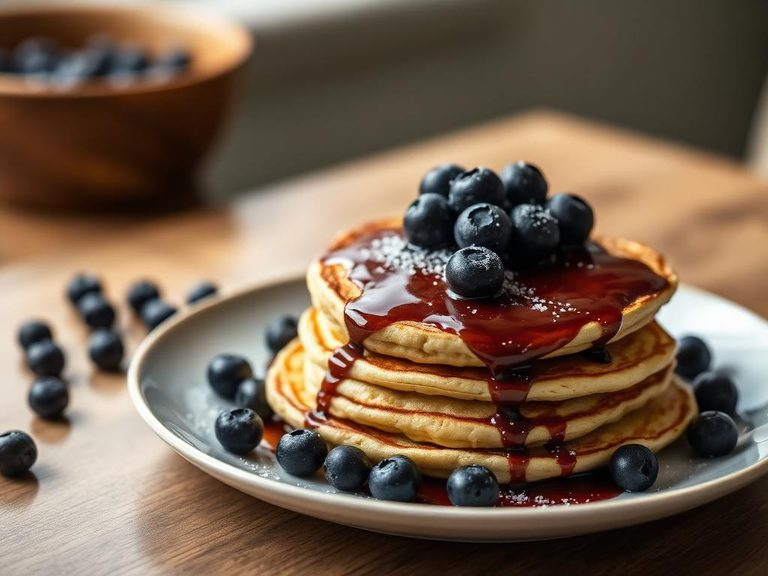
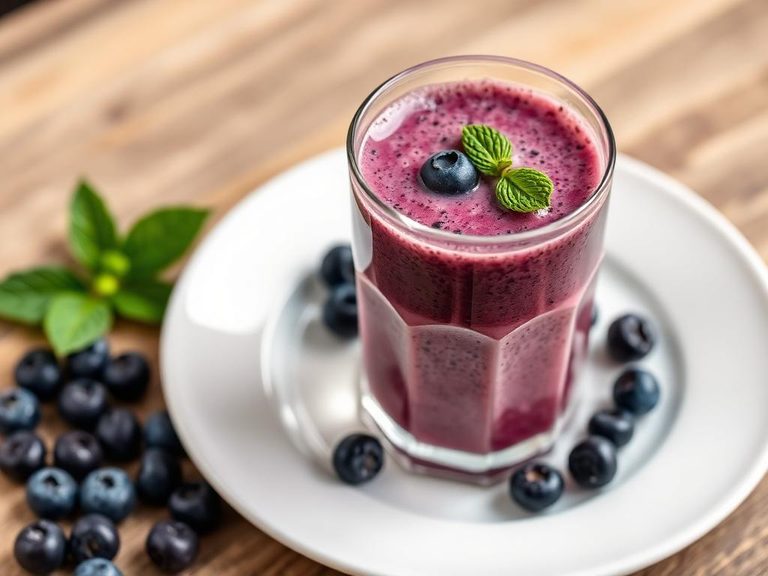
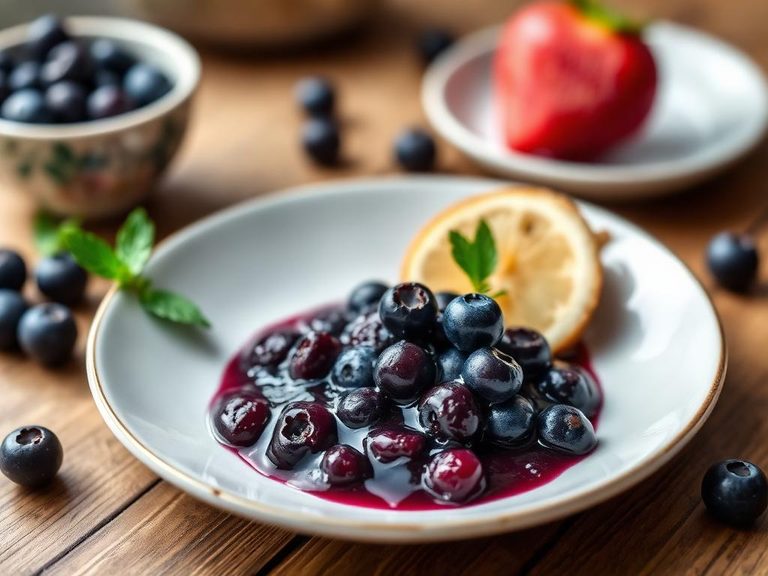
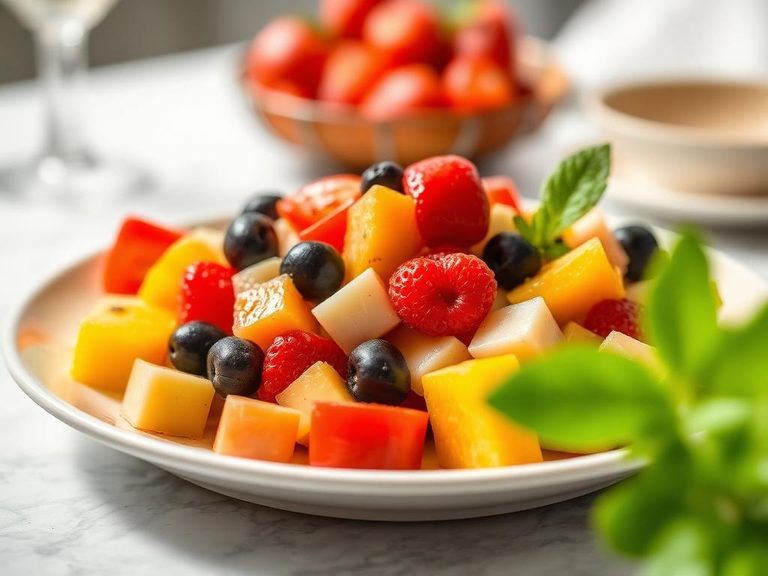
🌍 Where it's eaten
💡 Did you know?
The 'bloom'—a natural, dusty-white wax coating on the berry's skin—is a protective barrier that signals freshness and helps prevent moisture loss.
Full nutrition (scales with serving)
| Water | 84.2 g |
| Energy | 64.0 kcal |
| Protein | 0.70 g |
| Total lipid (fat) | 0.31 g |
| Carbohydrate, by difference | 14.6 g |
| Fiber, total dietary | 2.4 g |
| Total Sugars | 9.4 g |
| Calcium, Ca | 12.0 mg |
| Iron, Fe | 0.34 mg |
| Magnesium, Mg | 6.0 mg |
| Phosphorus, P | 13.0 mg |
| Potassium, K | 86.0 mg |
| Sodium, Na | 0.00 mg |
| Zinc, Zn | 0.09 mg |
| Copper, Cu | 0.05 mg |
| Selenium, Se | 0.10 ug |
| Vitamin C, total ascorbic acid | 8.1 mg |
| Thiamin | 0.04 mg |
| Riboflavin | 0.04 mg |
| Niacin | 0.42 mg |
| Vitamin B-6 | 0.05 mg |
| Folate, total | 6.0 ug |
| Folic acid | 0.00 ug |
| Folate, food | 6.0 ug |
| Folate, DFE | 6.0 ug |
| Choline, total | 6.0 mg |
| Vitamin B-12 | 0.00 ug |
| Vitamin B-12, added | 0.00 ug |
| Vitamin A, RAE | 3.0 ug |
| Retinol | 0.00 ug |
| Carotene, beta | 32.0 ug |
| Carotene, alpha | 0.00 ug |
| Cryptoxanthin, beta | 0.00 ug |
| Lycopene | 0.00 ug |
| Lutein + zeaxanthin | 80.0 ug |
| Vitamin E (alpha-tocopherol) | 0.57 mg |
| Vitamin E, added | 0.00 mg |
| Vitamin D (D2 + D3) | 0.00 ug |
| Vitamin K (phylloquinone) | 19.3 ug |
| Fatty acids, total saturated | 0.03 g |
| SFA 4:0 | 0.00 g |
| SFA 6:0 | 0.00 g |
| SFA 8:0 | 0.00 g |
| SFA 10:0 | 0.00 g |
| SFA 12:0 | 0.00 g |
| SFA 14:0 | 0.00 g |
| SFA 16:0 | 0.02 g |
| SFA 18:0 | 0.01 g |
| Fatty acids, total monounsaturated | 0.05 g |
| MUFA 16:1 | 0.00 g |
| MUFA 18:1 | 0.05 g |
| MUFA 20:1 | 0.00 g |
| MUFA 22:1 | 0.00 g |
| Fatty acids, total polyunsaturated | 0.15 g |
| PUFA 18:2 | 0.09 g |
| PUFA 18:3 | 0.06 g |
| PUFA 18:4 | 0.00 g |
| PUFA 20:4 | 0.00 g |
| PUFA 20:5 n-3 (EPA) | 0.00 g |
| PUFA 22:5 n-3 (DPA) | 0.00 g |
| PUFA 22:6 n-3 (DHA) | 0.00 g |
| Cholesterol | 0.00 mg |
| Alcohol, ethyl | 0.00 g |
| Caffeine | 0.00 mg |
| Theobromine | 0.00 mg |
FAQ
Are frozen blueberries as nutritious as fresh?
Yes, often more so. They are typically flash-frozen at peak ripeness, which locks in nutrients like antioxidants and vitamins that can degrade in fresh berries over time.
Why are some blueberries larger than others?
Size depends on the variety (e.g., highbush vs. wild lowbush) and growing conditions like water and sunlight. Larger berries aren't necessarily sweeter or more nutritious.
Can I eat the skin and seeds?
Absolutely. The skin is where most of the antioxidants are, and the tiny seeds are edible and contribute to the berry's fiber content.