

Beef with spaetzle or rice, vegetable, frozen meal
Common food

Photo: Wikipedia
This is a convenient frozen meal featuring tender strips of beef paired with either soft, egg-rich spaetzle noodles or fluffy rice, accompanied by a medley of vegetables. The taste is savory and comforting, with the beef providing a satisfying chew against the starchy backdrop. Nutritionally, it's a light option at 118 kcal per 100g, offering a balanced mix of protein and carbohydrates for a quick meal.
Calorie split: 24% protein · 42% carbs · 34% fat
↓ Full nutrition💚 Why it's loved
People love it for its comforting, familiar flavors and the convenience of having a hot, savory meal ready in minutes. The combination of tender beef and starchy noodles or rice is a classic, satisfying pairing found in many cuisines.
⚠️ Watch-outs & how to enjoy it better
As a processed frozen meal, it can be high in sodium for flavor preservation, which may concern those monitoring salt intake. To counteract this, you could pair it with a fresh, unsalted side salad or rinse the components lightly if possible. The refined carbs (spaetzle/rice) may cause a quicker blood sugar rise; adding extra vegetables or a side of fiber-rich food can help moderate this.
Key benefits
- Provides a complete protein source from beef.
- Offers a quick and convenient meal solution.
- Contains a balanced ratio of protein, carbs, and fats.
- Vegetable inclusion adds some micronutrients and texture.
- Low in sugar, making it suitable for stable energy.
🍽️ Popular dishes
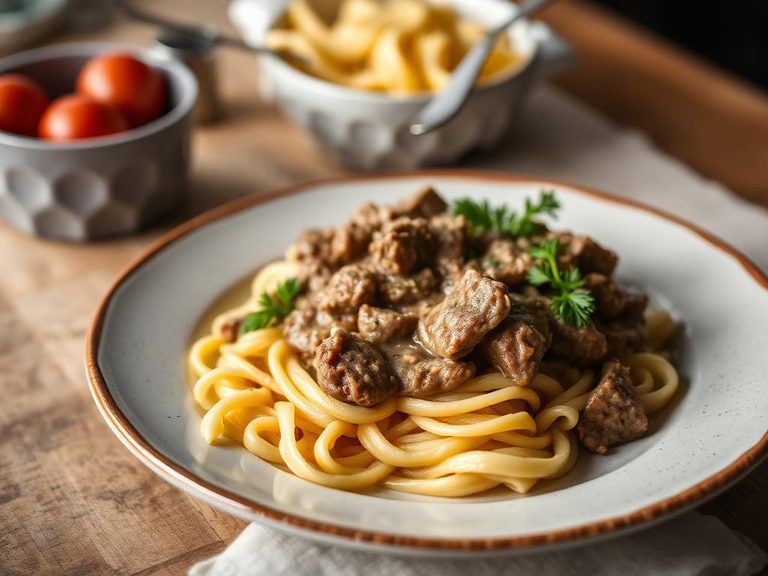
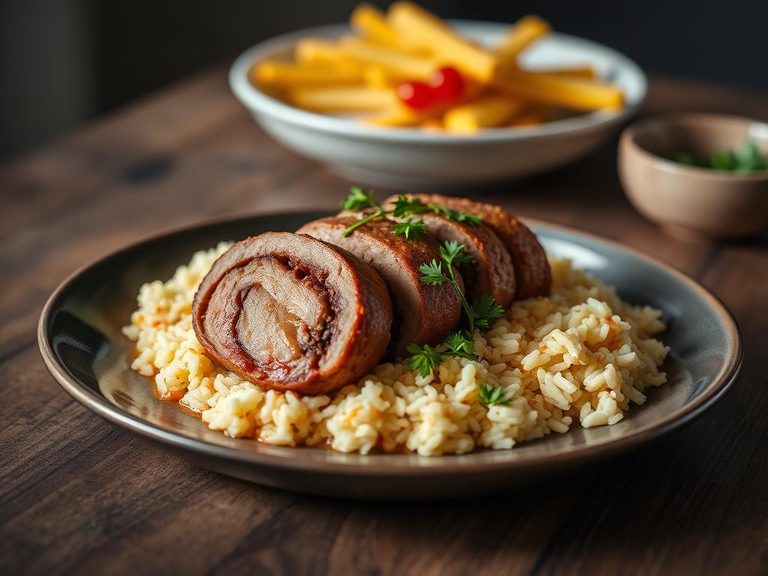
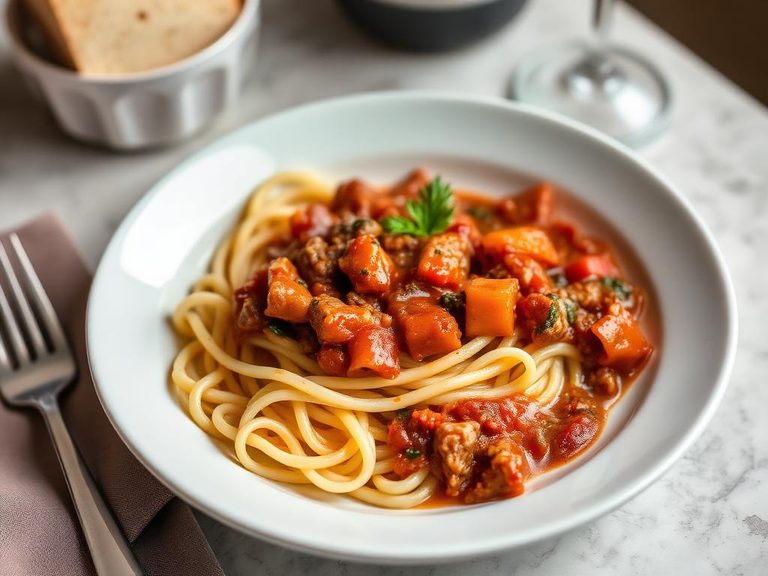
🌍 Where it's eaten
💡 Did you know?
Spaetzle, the soft egg noodle often paired with this dish, gets its name from the Swabian German word for 'little sparrow,' referring to the small, irregular shape of the dough when it's pressed or scraped into boiling water.
Full nutrition (USDA data · scales with serving)
| Water | 75.0 g |
| Energy | 118 kcal |
| Protein | 6.9 g |
| Total lipid (fat) | 4.4 g |
| Carbohydrate, by difference | 12.2 g |
| Fiber, total dietary | 0.60 g |
| Total Sugars | 1.2 g |
| Calcium, Ca | 8.0 mg |
| Iron, Fe | 1.1 mg |
| Magnesium, Mg | 13.0 mg |
| Phosphorus, P | 71.0 mg |
| Potassium, K | 149 mg |
| Sodium, Na | 278 mg |
| Zinc, Zn | 1.1 mg |
| Copper, Cu | 0.06 mg |
| Selenium, Se | 8.2 ug |
| Vitamin C, total ascorbic acid | 17.4 mg |
| Thiamin | 0.08 mg |
| Riboflavin | 0.06 mg |
| Niacin | 1.6 mg |
| Vitamin B-6 | 0.17 mg |
| Folate, total | 25.0 ug |
| Folic acid | 18.0 ug |
| Folate, food | 7.0 ug |
| Folate, DFE | 38.0 ug |
| Choline, total | 24.4 mg |
| Vitamin B-12 | 0.62 ug |
| Vitamin B-12, added | 0.00 ug |
| Vitamin A, RAE | 7.0 ug |
| Retinol | 0.00 ug |
| Carotene, beta | 80.0 ug |
| Carotene, alpha | 9.0 ug |
| Cryptoxanthin, beta | 10.0 ug |
| Lycopene | 117 ug |
| Lutein + zeaxanthin | 121 ug |
| Vitamin E (alpha-tocopherol) | 0.73 mg |
| Vitamin E, added | 0.00 mg |
| Vitamin D (D2 + D3) | 0.00 ug |
| Vitamin K (phylloquinone) | 4.6 ug |
| Alcohol, ethyl | 0.00 g |
| Caffeine | 0.00 mg |
| Theobromine | 0.00 mg |
Fat & fatty acid profile (per 100g)
| Fatty acids, total saturated | 1.2 g |
| SFA 4:0 | 0.00 g |
| SFA 6:0 | 0.00 g |
| SFA 8:0 | 0.00 g |
| SFA 10:0 | 0.01 g |
| SFA 12:0 | 0.00 g |
| SFA 14:0 | 0.08 g |
| SFA 16:0 | 0.79 g |
| SFA 18:0 | 0.33 g |
| Fatty acids, total monounsaturated | 1.9 g |
| MUFA 16:1 | 0.12 g |
| MUFA 18:1 | 1.8 g |
| MUFA 20:1 | 0.02 g |
| MUFA 22:1 | 0.00 g |
| Fatty acids, total polyunsaturated | 0.71 g |
| PUFA 18:2 | 0.59 g |
| PUFA 18:3 | 0.11 g |
| PUFA 18:4 | 0.00 g |
| PUFA 20:4 | 0.01 g |
| PUFA 20:5 n-3 (EPA) | 0.00 g |
| PUFA 22:5 n-3 (DPA) | 0.00 g |
| PUFA 22:6 n-3 (DHA) | 0.00 g |
| Cholesterol | 16.0 mg |
FAQ
Is this meal suitable for a low-carb diet?
Not typically. The spaetzle or rice provides a significant carbohydrate portion. For a lower-carb option, you might look for versions with more vegetables and less starch, or consider it as part of a balanced day.
How does the protein content compare to a homemade version?
At 6.92g protein per 100g, this frozen meal offers a moderate amount. A homemade version could easily have a higher protein-to-carb ratio by increasing the beef portion and reducing the starch.
Can I improve the nutritional profile when reheating?
Absolutely. Consider adding a handful of fresh spinach or other greens during reheating to boost fiber and micronutrients. Serving it with a side of plain yogurt or a drizzle of tahini can add healthy fats and protein.
Nutrient density (calculated · NRF9.3)
Nutrient Rich Foods index: beneficial nutrients (protein, fiber, vitamins, minerals) minus saturated fat, added sugar & sodium, per 100 kcal.
NRF9.3 index — Fulgoni, Keast & Drewnowski, 2009. Computed from USDA nutrients.
Weight-loss friendliness (composite index)
Energy density 1.18 kcal/g · 23% calories from protein · 0.6 g fiber · 1.2 g sugar per 100 g.
Composite of energy density (Rolls et al., 1999), protein & fiber satiety, minus sugar. A calculated heuristic — ranks satiety-per-calorie, not a clinical measure.
Dietary load (calculated from USDA values)
Potential renal acid load. Positive = acid-forming, negative = alkaline-forming.
Sodium-to-potassium ratio: 1.87 (lower is better — aim for ≤ 1)
Sodium:potassium per WHO potassium guidance. Computed from USDA nutrients.