

Beef shish kabob with vegetables, excluding potatoes
Common food

Photo: Wikipedia
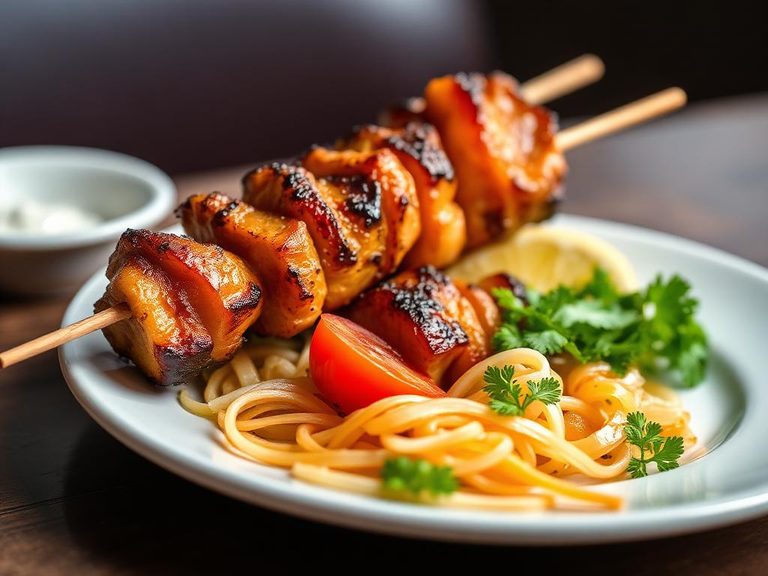
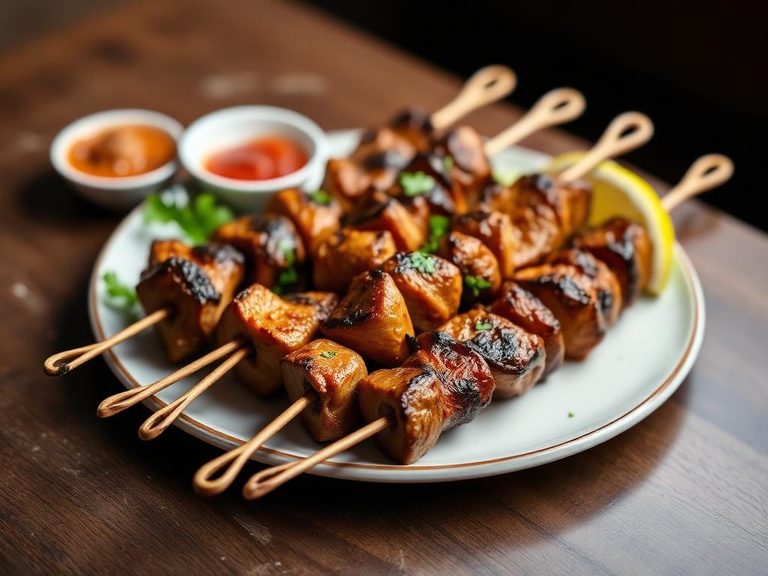
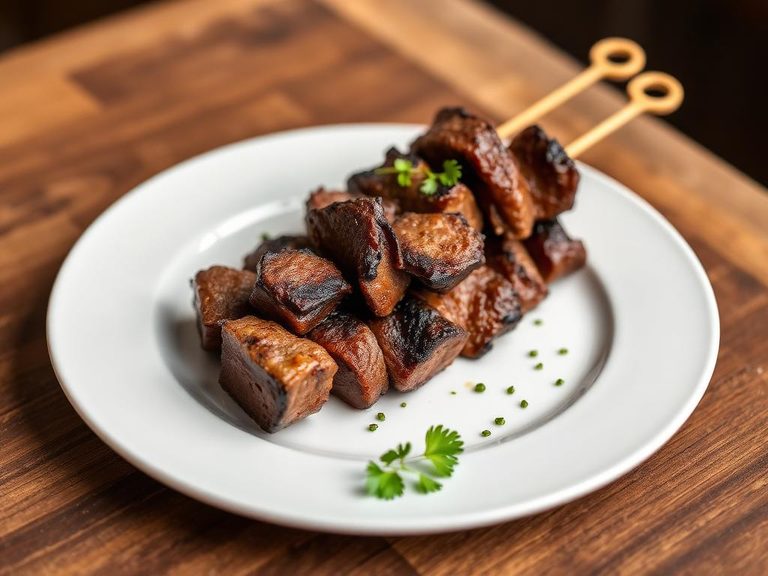
Beef shish kabob with vegetables (excluding potatoes) features tender, marinated beef cubes grilled alongside colorful bell peppers, onions, and zucchini, creating a smoky, charred flavor with a juicy, satisfying texture. This protein-rich dish delivers a substantial 14.8g of protein per 100g with a moderate 122 kcal, making it a lean yet flavorful option for a balanced meal. The absence of starchy potatoes keeps the carbohydrate content low at 5.06g, while the vegetables add a crisp, fresh contrast to the savory beef.
Calorie split: 48% protein · 16% carbs · 36% fat
↓ Full nutrition💚 Why it's loved
People love beef shish kabob for its perfect balance of smoky, charred meat and sweet, crisp vegetables, offering a complete flavor experience in every bite. Its versatility makes it a staple for backyard grilling, festive gatherings, and diverse cuisines from Mediterranean to Middle Eastern tables.
⚠️ Watch-outs & how to enjoy it better
The main caution is for individuals monitoring sodium intake, as marinades can be high in salt, and those with red meat sensitivities or specific dietary restrictions. To counteract, opt for low-sodium marinades using herbs, citrus, and garlic, and balance the meal with a large side salad or steamed greens to increase fiber and nutrient density without added sodium.
Key benefits
- High-quality protein source for muscle maintenance and satiety
- Low carbohydrate content suitable for low-carb dietary patterns
- Rich in iron and zinc from beef, essential for energy and immunity
- Vegetables provide vitamins A and C, plus dietary fiber
- Grilling method allows excess fat to drip away, reducing overall fat content
🍽️ Popular dishes
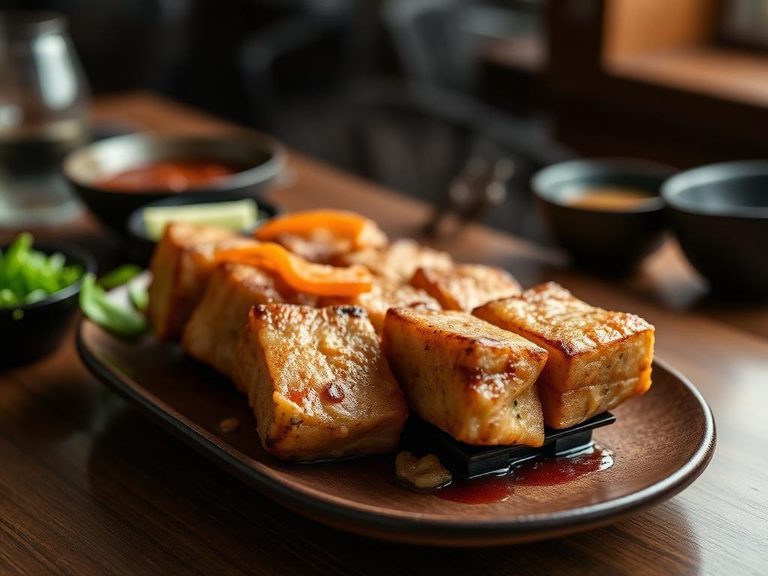
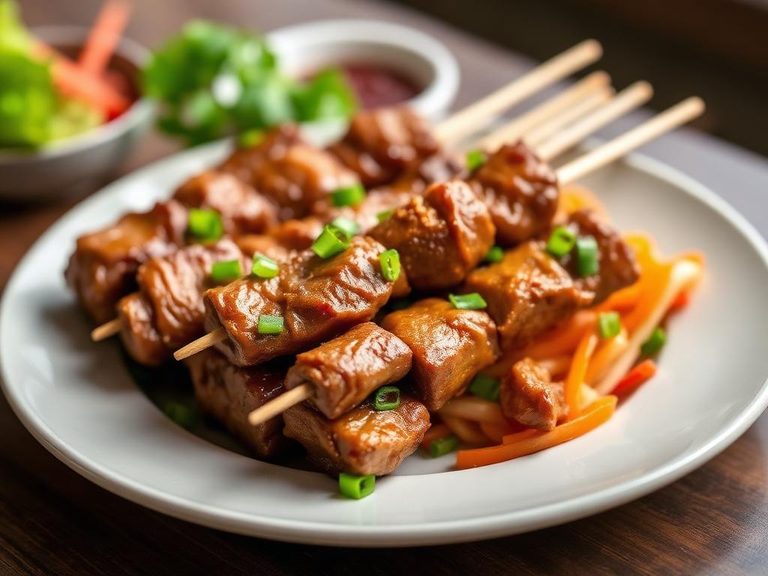
🌍 Where it's eaten
💡 Did you know?
The word 'kebab' likely derived from the Aramaic word 'kabbābā', meaning 'to char' or 'to burn', directly referencing the grilling technique that gives the dish its signature smoky flavor.
Full nutrition (USDA data · scales with serving)
| Water | 74.2 g |
| Energy | 122 kcal |
| Protein | 14.8 g |
| Total lipid (fat) | 4.9 g |
| Carbohydrate, by difference | 5.1 g |
| Fiber, total dietary | 0.80 g |
| Total Sugars | 2.4 g |
| Calcium, Ca | 14.0 mg |
| Iron, Fe | 1.3 mg |
| Magnesium, Mg | 16.0 mg |
| Phosphorus, P | 113 mg |
| Potassium, K | 238 mg |
| Sodium, Na | 208 mg |
| Zinc, Zn | 2.5 mg |
| Copper, Cu | 0.10 mg |
| Selenium, Se | 16.3 ug |
| Vitamin C, total ascorbic acid | 15.0 mg |
| Thiamin | 0.06 mg |
| Riboflavin | 0.14 mg |
| Niacin | 2.9 mg |
| Vitamin B-6 | 0.27 mg |
| Folate, total | 17.0 ug |
| Folic acid | 0.00 ug |
| Folate, food | 17.0 ug |
| Folate, DFE | 17.0 ug |
| Choline, total | 57.7 mg |
| Vitamin B-12 | 0.78 ug |
| Vitamin B-12, added | 0.00 ug |
| Vitamin A, RAE | 10.0 ug |
| Retinol | 0.00 ug |
| Carotene, beta | 110 ug |
| Carotene, alpha | 2.0 ug |
| Cryptoxanthin, beta | 27.0 ug |
| Lycopene | 0.00 ug |
| Lutein + zeaxanthin | 33.0 ug |
| Vitamin E (alpha-tocopherol) | 0.46 mg |
| Vitamin E, added | 0.00 mg |
| Vitamin D (D2 + D3) | 0.00 ug |
| Vitamin K (phylloquinone) | 5.5 ug |
| Alcohol, ethyl | 0.00 g |
| Caffeine | 0.00 mg |
| Theobromine | 0.00 mg |
Fat & fatty acid profile (per 100g)
| Fatty acids, total saturated | 1.7 g |
| SFA 4:0 | 0.00 g |
| SFA 6:0 | 0.00 g |
| SFA 8:0 | 0.00 g |
| SFA 10:0 | 0.01 g |
| SFA 12:0 | 0.01 g |
| SFA 14:0 | 0.12 g |
| SFA 16:0 | 1.0 g |
| SFA 18:0 | 0.47 g |
| Fatty acids, total monounsaturated | 2.0 g |
| MUFA 16:1 | 0.17 g |
| MUFA 18:1 | 1.9 g |
| MUFA 20:1 | 0.01 g |
| MUFA 22:1 | 0.00 g |
| Fatty acids, total polyunsaturated | 0.49 g |
| PUFA 18:2 | 0.40 g |
| PUFA 18:3 | 0.07 g |
| PUFA 18:4 | 0.00 g |
| PUFA 20:4 | 0.01 g |
| PUFA 20:5 n-3 (EPA) | 0.00 g |
| PUFA 22:5 n-3 (DPA) | 0.01 g |
| PUFA 22:6 n-3 (DHA) | 0.00 g |
| Cholesterol | 41.0 mg |
FAQ
How does the nutrition change if I include potatoes on the skewer?
Adding potatoes significantly increases the carbohydrate and calorie content. A 100g serving with potatoes might rise to around 150-170 kcal and 15-20g of carbs, altering the low-carb profile of the dish.
What's the best way to keep the beef tender for shish kabobs?
Use a marinade containing an acidic component (like yogurt, lemon juice, or vinegar) and oil for at least 30 minutes. Choose tender cuts like sirloin or ribeye, and avoid overcooking by grilling over high heat quickly.
Are there common allergens in beef shish kabobs?
While beef itself is not a top allergen, common allergens can appear in marinades or seasonings, such as soy sauce (soy, wheat), yogurt (dairy), or sesame oil. Always check ingredients if allergies are a concern.
Nutrient density (calculated · NRF9.3)
Nutrient Rich Foods index: beneficial nutrients (protein, fiber, vitamins, minerals) minus saturated fat, added sugar & sodium, per 100 kcal.
NRF9.3 index — Fulgoni, Keast & Drewnowski, 2009. Computed from USDA nutrients.
Weight-loss friendliness (composite index)
Energy density 1.22 kcal/g · 49% calories from protein · 0.8 g fiber · 2.4 g sugar per 100 g.
Composite of energy density (Rolls et al., 1999), protein & fiber satiety, minus sugar. A calculated heuristic — ranks satiety-per-calorie, not a clinical measure.
Dietary load (calculated from USDA values)
Potential renal acid load. Positive = acid-forming, negative = alkaline-forming.
Sodium-to-potassium ratio: 0.87 (lower is better — aim for ≤ 1)
Sodium:potassium per WHO potassium guidance. Computed from USDA nutrients.