

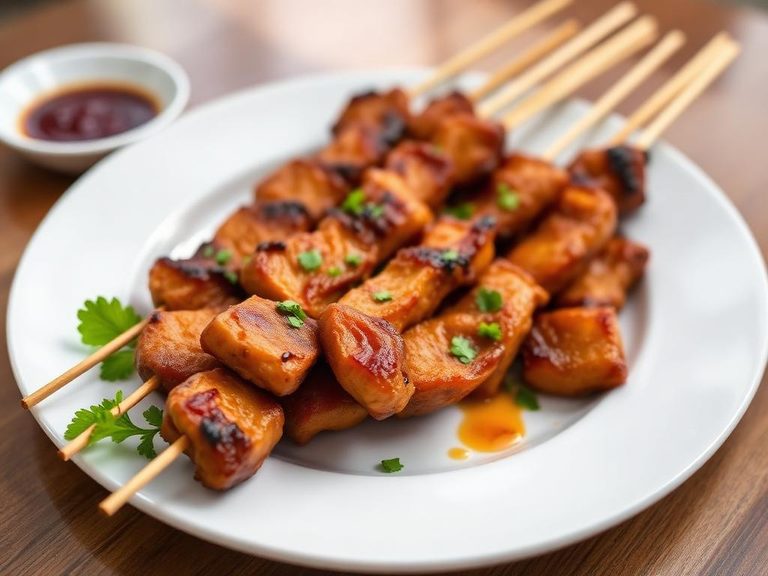
Pork shish kabob with vegetables, excluding potatoes
Common food

Photo: Wikipedia
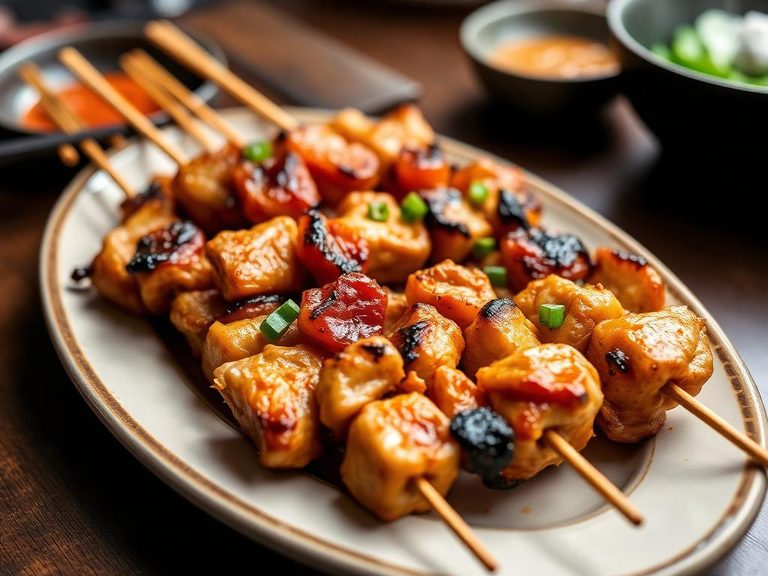
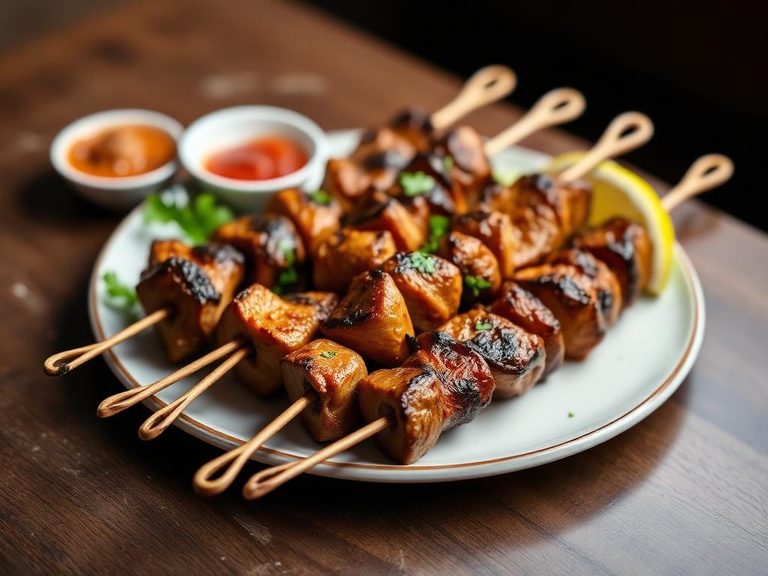
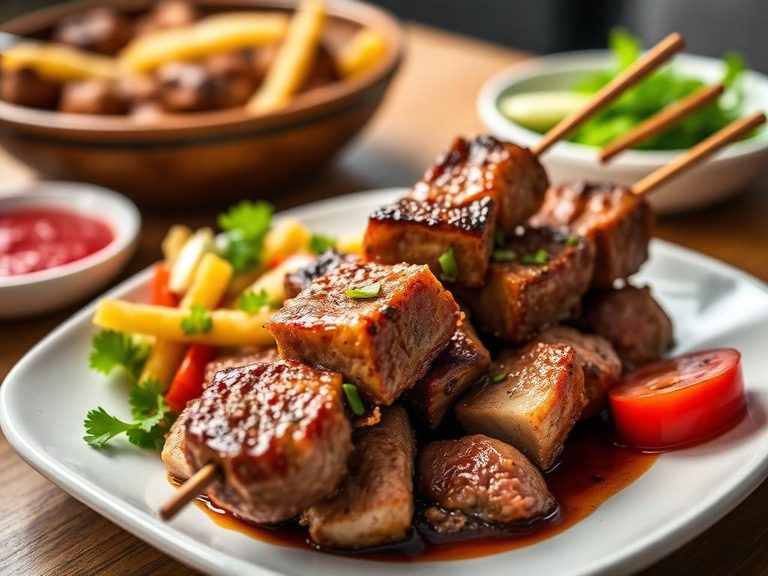
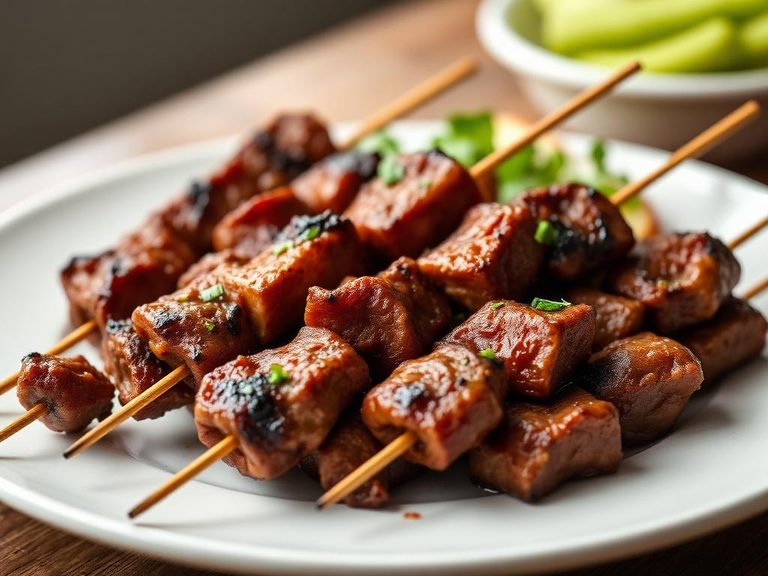
This dish features tender chunks of marinated pork threaded onto skewers with colorful vegetables like bell peppers, onions, and zucchini, then grilled or broiled to a smoky, caramelized finish. The lean pork provides a satisfying, savory bite with a juicy texture, while the vegetables add a crisp-tender contrast and natural sweetness. With a high protein-to-calorie ratio, it's a nutrient-dense, low-carb option that supports muscle maintenance without excessive energy density.
Calorie split: 45% protein · 17% carbs · 38% fat
↓ Full nutrition💚 Why it's loved
People love it for the irresistible combination of smoky, charred flavors from grilling and the harmonious blend of savory meat with sweet, caramelized vegetables. It's a versatile, hands-on meal that's perfect for social gatherings, allowing for endless customization of marinades and vegetable choices.
⚠️ Watch-outs & how to enjoy it better
The primary concern is the potential for charring or burning during high-heat cooking, which can produce heterocyclic amines (HCAs) and polycyclic aromatic hydrocarbons (PAHs), compounds formed when meat is cooked at very high temperatures. To mitigate this, marinate the pork beforehand (acidic components like yogurt or citrus can help), avoid direct flame contact, and trim any excessive fat to reduce flare-ups. Individuals monitoring sodium intake should be cautious with pre-made marinades, opting for homemade versions with herbs and spices instead.
Key benefits
- Excellent source of high-quality, complete protein for muscle repair and satiety.
- Low in carbohydrates, making it suitable for low-carb and ketogenic dietary patterns.
- Rich in B vitamins (especially B1, B6, and B12) from pork, essential for energy metabolism.
- Provides minerals like selenium and zinc from pork, which support immune function.
- Vegetable components contribute fiber, vitamin C, and antioxidants.
🍽️ Popular dishes
🌍 Where it's eaten
💡 Did you know?
The term 'kabob' is believed to derive from the Arabic word 'kabāb,' which may have originally meant 'to char' or 'to burn,' referencing the cooking method over an open flame.
Full nutrition (USDA data · scales with serving)
| Water | 74.8 g |
| Energy | 124 kcal |
| Protein | 13.9 g |
| Total lipid (fat) | 5.2 g |
| Carbohydrate, by difference | 5.1 g |
| Fiber, total dietary | 0.80 g |
| Total Sugars | 2.4 g |
| Calcium, Ca | 19.0 mg |
| Iron, Fe | 0.66 mg |
| Magnesium, Mg | 20.0 mg |
| Phosphorus, P | 138 mg |
| Potassium, K | 316 mg |
| Sodium, Na | 216 mg |
| Zinc, Zn | 1.3 mg |
| Copper, Cu | 0.09 mg |
| Selenium, Se | 17.8 ug |
| Vitamin C, total ascorbic acid | 15.3 mg |
| Thiamin | 0.48 mg |
| Riboflavin | 0.21 mg |
| Niacin | 3.2 mg |
| Vitamin B-6 | 0.34 mg |
| Folate, total | 13.0 ug |
| Folic acid | 0.00 ug |
| Folate, food | 13.0 ug |
| Folate, DFE | 13.0 ug |
| Choline, total | 49.4 mg |
| Vitamin B-12 | 0.33 ug |
| Vitamin B-12, added | 0.00 ug |
| Vitamin A, RAE | 11.0 ug |
| Retinol | 1.0 ug |
| Carotene, beta | 110 ug |
| Carotene, alpha | 2.0 ug |
| Cryptoxanthin, beta | 27.0 ug |
| Lycopene | 0.00 ug |
| Lutein + zeaxanthin | 33.0 ug |
| Vitamin E (alpha-tocopherol) | 0.35 mg |
| Vitamin E, added | 0.00 mg |
| Vitamin D (D2 + D3) | 0.30 ug |
| Vitamin K (phylloquinone) | 4.8 ug |
| Alcohol, ethyl | 0.00 g |
| Caffeine | 0.00 mg |
| Theobromine | 0.00 mg |
Fat & fatty acid profile (per 100g)
| Fatty acids, total saturated | 1.7 g |
| SFA 4:0 | 0.00 g |
| SFA 6:0 | 0.00 g |
| SFA 8:0 | 0.00 g |
| SFA 10:0 | 0.01 g |
| SFA 12:0 | 0.01 g |
| SFA 14:0 | 0.06 g |
| SFA 16:0 | 1.1 g |
| SFA 18:0 | 0.53 g |
| Fatty acids, total monounsaturated | 2.3 g |
| MUFA 16:1 | 0.14 g |
| MUFA 18:1 | 2.1 g |
| MUFA 20:1 | 0.04 g |
| MUFA 22:1 | 0.00 g |
| Fatty acids, total polyunsaturated | 0.67 g |
| PUFA 18:2 | 0.59 g |
| PUFA 18:3 | 0.04 g |
| PUFA 18:4 | 0.00 g |
| PUFA 20:4 | 0.02 g |
| PUFA 20:5 n-3 (EPA) | 0.00 g |
| PUFA 22:5 n-3 (DPA) | 0.00 g |
| PUFA 22:6 n-3 (DHA) | 0.00 g |
| Cholesterol | 37.0 mg |
FAQ
Is pork shish kabob a good option for weight loss?
Yes, it can be. At 124 kcal per 100g with a high protein content (13.87g), it is very satiating and nutrient-dense, which can help control overall calorie intake. The key is to watch the marinade and any added sauces, which can add calories and sodium.
How do I prevent the pork from drying out on the skewer?
Choose cuts with some marbling like pork shoulder or loin, cut into uniform 1-inch cubes. Marinate for at least 30 minutes (yogurt or oil-based marinades help retain moisture). Grill over medium-high heat, turning frequently, and avoid overcooking—pork is safe and juicy at an internal temperature of 145°F (63°C).
Can I make this ahead of time for meal prep?
Yes. You can marinate the pork and chop the vegetables up to 24 hours in advance, storing them separately in the refrigerator. Assemble the skewers just before cooking for the best texture. Cooked kabobs will keep in an airtight container in the fridge for 3-4 days.
Nutrient density (calculated · NRF9.3)
Nutrient Rich Foods index: beneficial nutrients (protein, fiber, vitamins, minerals) minus saturated fat, added sugar & sodium, per 100 kcal.
NRF9.3 index — Fulgoni, Keast & Drewnowski, 2009. Computed from USDA nutrients.
Weight-loss friendliness (composite index)
Energy density 1.24 kcal/g · 45% calories from protein · 0.8 g fiber · 2.4 g sugar per 100 g.
Composite of energy density (Rolls et al., 1999), protein & fiber satiety, minus sugar. A calculated heuristic — ranks satiety-per-calorie, not a clinical measure.
Dietary load (calculated from USDA values)
Potential renal acid load. Positive = acid-forming, negative = alkaline-forming.
Sodium-to-potassium ratio: 0.68 (lower is better — aim for ≤ 1)
Sodium:potassium per WHO potassium guidance. Computed from USDA nutrients.