

Banana nectar
Common food

Photo: Wikipedia
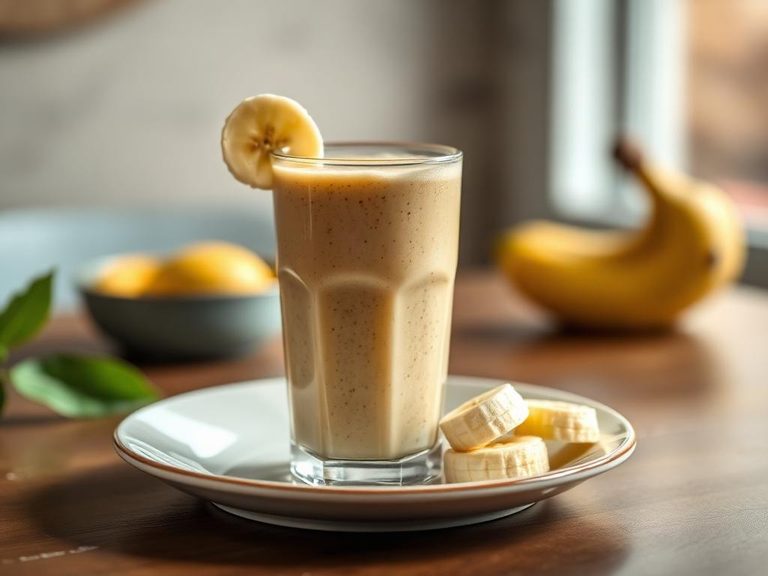
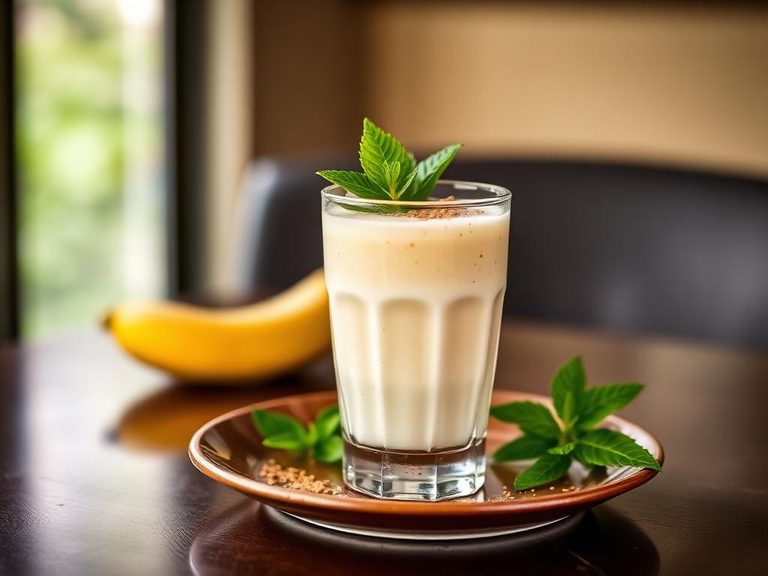
Banana nectar is a smooth, sweet, and pourable beverage made from banana puree, often diluted with water and sweetened. It offers a rich, creamy banana flavor without the fibrous texture of the whole fruit, delivering a quick source of energy primarily from its natural and added sugars.
Calorie split: 1% protein · 97% carbs · 2% fat
↓ Full nutrition💚 Why it's loved
People love banana nectar for its intensely sweet, nostalgic banana flavor and velvety-smooth texture that feels like a treat. It's a beloved, comforting drink in many cultures, often enjoyed chilled as a refreshing pick-me-up or used as a quick breakfast component.
⚠️ Watch-outs & how to enjoy it better
Due to its high sugar content (over 15g per 100g), it can cause rapid blood-sugar spikes, making it a less ideal choice for those managing diabetes or watching their glycemic load. To counteract this, pair it with a source of protein or healthy fat (like a handful of nuts or a spoonful of yogurt) to slow sugar absorption, and practice strict portion control.
Key benefits
- Quick source of natural energy from carbohydrates
- Provides small amounts of potassium and vitamin B6
- Easier to digest than whole fruit for some individuals
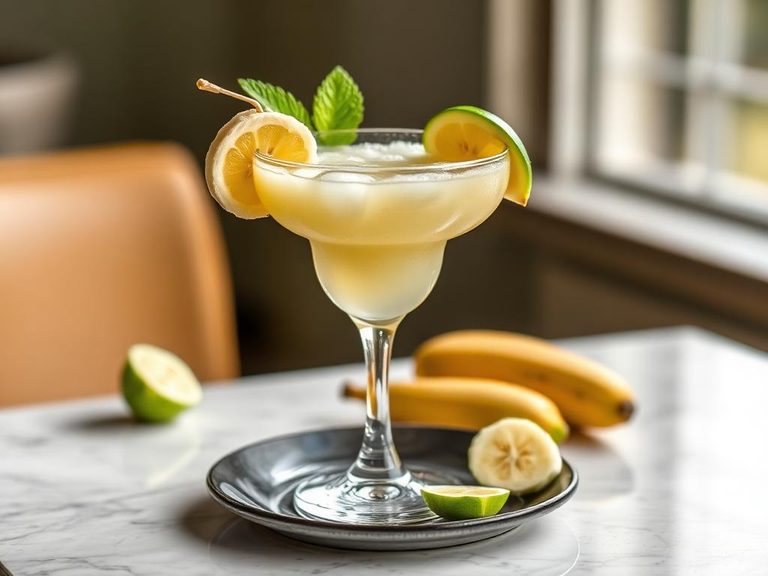
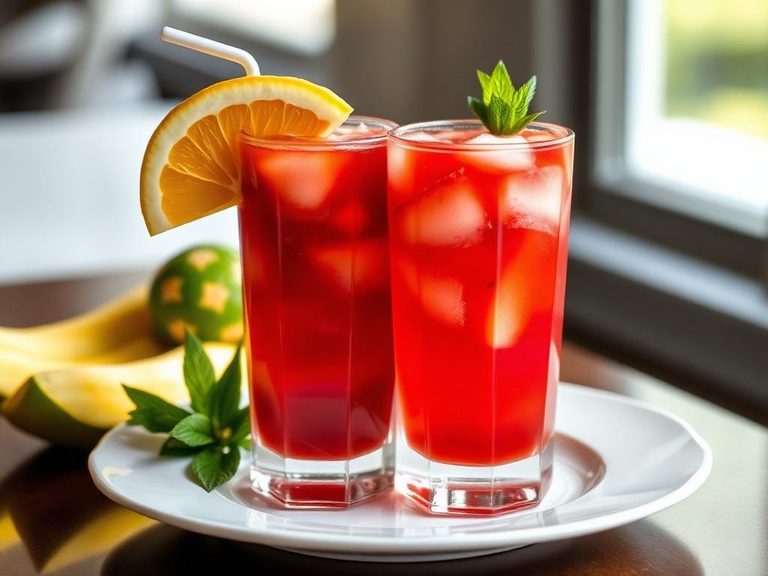
- A versatile base for smoothies and cocktails
- Shelf-stable and convenient for on-the-go consumption
🍽️ Popular dishes
🌍 Where it's eaten
💡 Did you know?
Commercial banana nectar is often made from the 'Cavendish' banana, but its flavor is frequently enhanced with artificial banana esters (like isoamyl acetate) derived from the now-rare 'Gros Michel' banana, which was the dominant export variety before the 1950s.
Full nutrition (USDA data · scales with serving)
| Water | 81.3 g |
| Energy | 74.0 kcal |
| Protein | 0.26 g |
| Total lipid (fat) | 0.13 g |
| Carbohydrate, by difference | 18.0 g |
| Fiber, total dietary | 0.60 g |
| Total Sugars | 15.5 g |
| Calcium, Ca | 4.0 mg |
| Iron, Fe | 0.00 mg |
| Magnesium, Mg | 10.0 mg |
| Phosphorus, P | 8.0 mg |
| Potassium, K | 115 mg |
| Sodium, Na | 2.0 mg |
| Zinc, Zn | 0.06 mg |
| Copper, Cu | 0.04 mg |
| Selenium, Se | 0.10 ug |
| Vitamin C, total ascorbic acid | 4.3 mg |
| Thiamin | 0.02 mg |
| Riboflavin | 0.00 mg |
| Niacin | 0.23 mg |
| Vitamin B-6 | 0.07 mg |
| Folate, total | 5.0 ug |
| Folic acid | 0.00 ug |
| Folate, food | 5.0 ug |
| Folate, DFE | 5.0 ug |
| Choline, total | 3.4 mg |
| Vitamin B-12 | 0.00 ug |
| Vitamin B-12, added | 0.00 ug |
| Vitamin A, RAE | 0.00 ug |
| Retinol | 0.00 ug |
| Carotene, beta | 3.0 ug |
| Carotene, alpha | 2.0 ug |
| Cryptoxanthin, beta | 0.00 ug |
| Lycopene | 0.00 ug |
| Lutein + zeaxanthin | 8.0 ug |
| Vitamin E (alpha-tocopherol) | 0.04 mg |
| Vitamin E, added | 0.00 mg |
| Vitamin D (D2 + D3) | 0.00 ug |
| Vitamin K (phylloquinone) | 0.00 ug |
| Alcohol, ethyl | 0.00 g |
| Caffeine | 0.00 mg |
| Theobromine | 0.00 mg |
Fat & fatty acid profile (per 100g)
| Fatty acids, total saturated | 0.04 g |
| SFA 4:0 | 0.00 g |
| SFA 6:0 | 0.00 g |
| SFA 8:0 | 0.00 g |
| SFA 10:0 | 0.00 g |
| SFA 12:0 | 0.00 g |
| SFA 14:0 | 0.00 g |
| SFA 16:0 | 0.04 g |
| SFA 18:0 | 0.00 g |
| Fatty acids, total monounsaturated | 0.01 g |
| MUFA 16:1 | 0.00 g |
| MUFA 18:1 | 0.01 g |
| MUFA 20:1 | 0.00 g |
| MUFA 22:1 | 0.00 g |
| Fatty acids, total polyunsaturated | 0.03 g |
| PUFA 18:2 | 0.02 g |
| PUFA 18:3 | 0.01 g |
| PUFA 18:4 | 0.00 g |
| PUFA 20:4 | 0.00 g |
| PUFA 20:5 n-3 (EPA) | 0.00 g |
| PUFA 22:5 n-3 (DPA) | 0.00 g |
| PUFA 22:6 n-3 (DHA) | 0.00 g |
| Cholesterol | 0.00 mg |
FAQ
Is banana nectar the same as banana juice?
Not exactly. Pure banana juice is difficult to extract due to the fruit's low water content. Banana nectar is a processed beverage made from banana puree that is diluted with water and often sweetened, giving it a pourable, juice-like consistency.
Does banana nectar contain added sugar?
Most commercial brands do contain added sugars (like cane sugar or high-fructose corn syrup) in addition to the natural sugars from the bananas. Always check the nutrition label to see the total sugar content and ingredient list.
Can I use banana nectar in baking?
Yes, it can be used to add moisture and a concentrated banana flavor to cakes, muffins, and pancakes. However, remember it adds significant liquid and sugar, so you may need to adjust other ingredients in the recipe accordingly.
Nutrient density (calculated · NRF9.3)
Nutrient Rich Foods index: beneficial nutrients (protein, fiber, vitamins, minerals) minus saturated fat, added sugar & sodium, per 100 kcal.
NRF9.3 index — Fulgoni, Keast & Drewnowski, 2009. Computed from USDA nutrients.
Weight-loss friendliness (composite index)
Energy density 0.74 kcal/g · 1% calories from protein · 0.6 g fiber · 15.5 g sugar per 100 g.
Composite of energy density (Rolls et al., 1999), protein & fiber satiety, minus sugar. A calculated heuristic — ranks satiety-per-calorie, not a clinical measure.
Dietary load (calculated from USDA values)
Potential renal acid load. Positive = acid-forming, negative = alkaline-forming.
Sodium-to-potassium ratio: 0.02 (lower is better — aim for ≤ 1)
Sodium:potassium per WHO potassium guidance. Computed from USDA nutrients.