

Apple juice, 100%, with calcium added
Common food

Photo: Wikipedia
A clear, golden-hued beverage made by pressing apples and fortifying the juice with calcium, offering a sweet, crisp, and slightly tart flavor profile. Its texture is smooth and thin, with a clean finish that makes it a refreshing, easy-to-drink option. Nutritionally, it provides a quick source of carbohydrates and a modest boost of calcium, though it lacks the fiber and protein found in whole apples.
Calorie split: 1% protein · 96% carbs · 3% fat
↓ Full nutrition💚 Why it's loved
People love it for its sweet, familiar apple flavor and refreshing, thirst-quenching quality, making it a staple in lunchboxes and breakfast tables. Its versatility shines in both chilled sipping and as a base for cocktails, smoothies, or marinades.
⚠️ Watch-outs & how to enjoy it better
The high sugar content (nearly 9.5g per 100g) can cause blood-sugar spikes, especially for those with diabetes or insulin resistance. To counteract this, pair it with a source of protein or healthy fat (like nuts or yogurt) and practice portion control by limiting servings to 120-150ml.
Key benefits
- Provides a quick source of natural sugars for energy.
- Fortified with calcium to support bone health.
- Contains small amounts of vitamin C from apple concentrate.
- Hydrating and easy to consume for all ages.
- Offers a convenient way to increase daily fruit intake.
🍽️ Popular dishes

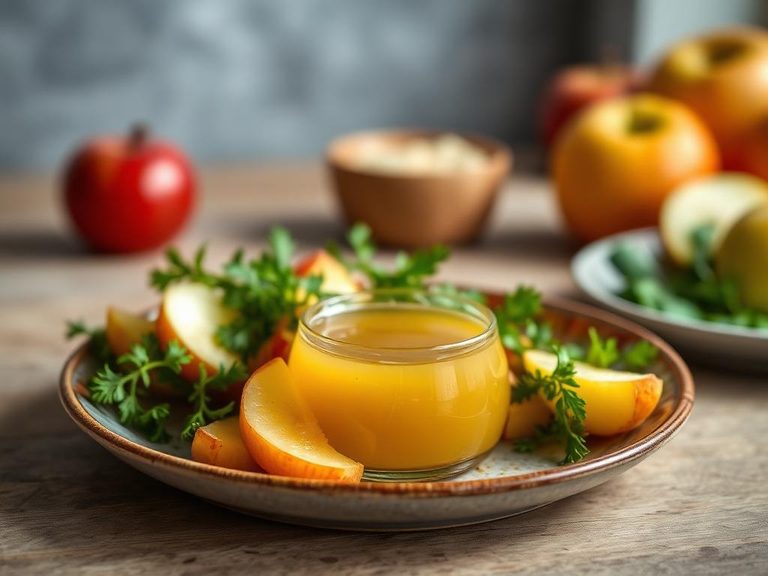

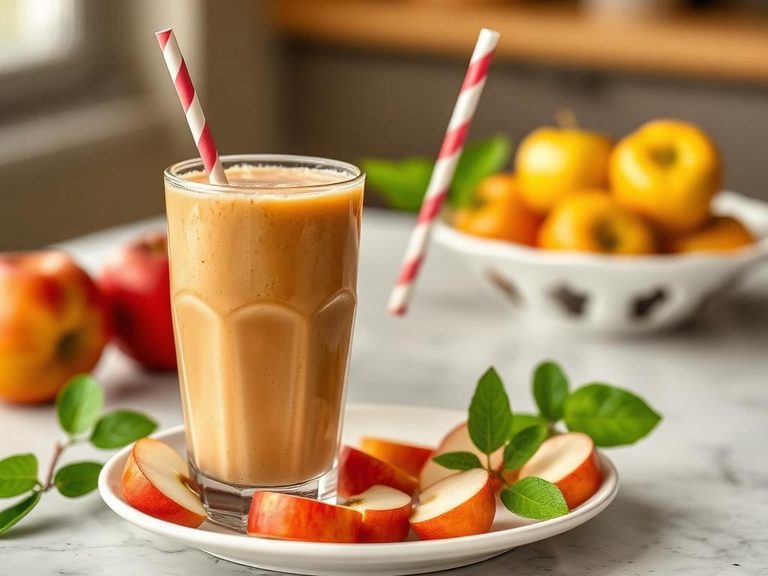
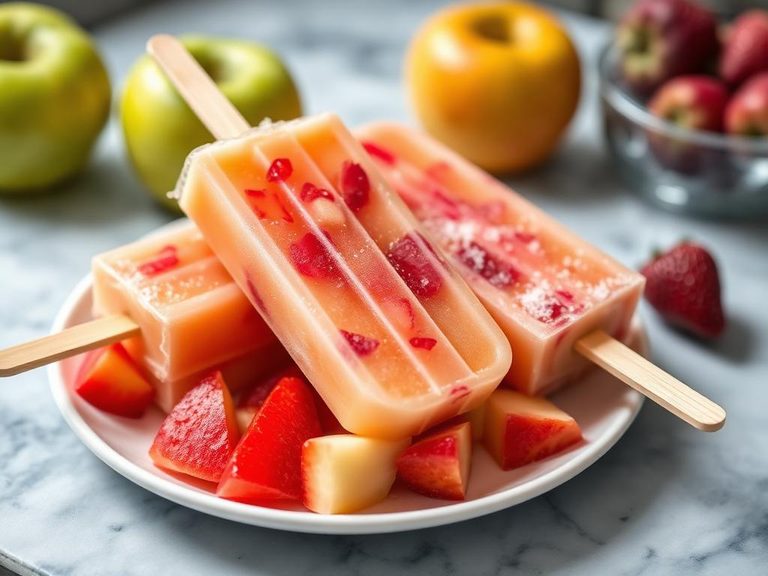
🌍 Where it's eaten
💡 Did you know?
In the 18th century, apple juice was often fermented into hard cider because water was unsafe to drink, making it a common beverage for all ages in colonial America.
Full nutrition (USDA data · scales with serving)
| Water | 87.9 g |
| Energy | 48.0 kcal |
| Protein | 0.12 g |
| Total lipid (fat) | 0.17 g |
| Carbohydrate, by difference | 11.5 g |
| Fiber, total dietary | 0.30 g |
| Total Sugars | 9.5 g |
| Calcium, Ca | 70.0 mg |
| Iron, Fe | 0.13 mg |
| Magnesium, Mg | 5.0 mg |
| Phosphorus, P | 9.0 mg |
| Potassium, K | 184 mg |
| Sodium, Na | 5.0 mg |
| Zinc, Zn | 0.04 mg |
| Copper, Cu | 0.01 mg |
| Selenium, Se | 0.10 ug |
| Vitamin C, total ascorbic acid | 30.3 mg |
| Thiamin | 0.00 mg |
| Riboflavin | 0.01 mg |
| Niacin | 0.07 mg |
| Vitamin B-6 | 0.02 mg |
| Folate, total | 0.00 ug |
| Folic acid | 0.00 ug |
| Folate, food | 0.00 ug |
| Folate, DFE | 0.00 ug |
| Choline, total | 1.8 mg |
| Vitamin B-12 | 0.00 ug |
| Vitamin B-12, added | 0.00 ug |
| Vitamin A, RAE | 0.00 ug |
| Retinol | 0.00 ug |
| Carotene, beta | 0.00 ug |
| Carotene, alpha | 0.00 ug |
| Cryptoxanthin, beta | 0.00 ug |
| Lycopene | 0.00 ug |
| Lutein + zeaxanthin | 16.0 ug |
| Vitamin E (alpha-tocopherol) | 0.01 mg |
| Vitamin E, added | 0.00 mg |
| Vitamin D (D2 + D3) | 0.00 ug |
| Vitamin K (phylloquinone) | 0.00 ug |
| Alcohol, ethyl | 0.00 g |
| Caffeine | 0.00 mg |
| Theobromine | 0.00 mg |
Fat & fatty acid profile (per 100g)
| Fatty acids, total saturated | 0.03 g |
| SFA 4:0 | 0.00 g |
| SFA 6:0 | 0.00 g |
| SFA 8:0 | 0.00 g |
| SFA 10:0 | 0.00 g |
| SFA 12:0 | 0.00 g |
| SFA 14:0 | 0.00 g |
| SFA 16:0 | 0.02 g |
| SFA 18:0 | 0.00 g |
| Fatty acids, total monounsaturated | 0.01 g |
| MUFA 16:1 | 0.00 g |
| MUFA 18:1 | 0.01 g |
| MUFA 20:1 | 0.00 g |
| MUFA 22:1 | 0.00 g |
| Fatty acids, total polyunsaturated | 0.05 g |
| PUFA 18:2 | 0.04 g |
| PUFA 18:3 | 0.01 g |
| PUFA 18:4 | 0.00 g |
| PUFA 20:4 | 0.00 g |
| PUFA 20:5 n-3 (EPA) | 0.00 g |
| PUFA 22:5 n-3 (DPA) | 0.00 g |
| PUFA 22:6 n-3 (DHA) | 0.00 g |
| Cholesterol | 0.00 mg |
FAQ
Is apple juice with added calcium as good as milk for bone health?
No, while it provides some calcium, it lacks the protein, vitamin D, and other nutrients in milk. It can be a supplementary source, but not a replacement for dairy or fortified plant milks.
Can I drink apple juice on a low-sugar diet?
It's best to limit intake due to its high natural sugar content. Opt for small portions (e.g., 100ml) and pair it with fiber or protein to slow sugar absorption.
Does the calcium in apple juice get absorbed well?
Yes, the added calcium (often as calcium citrate or carbonate) is generally well-absorbed, especially when consumed with vitamin C from the juice itself.
Is apple juice with calcium suitable for children?
Yes, in moderation, it can be a good way to add calcium to a child's diet. However, it should not replace milk or water, and portion control is key to avoid excessive sugar intake.
Nutrient density (calculated · NRF9.3)
Nutrient Rich Foods index: beneficial nutrients (protein, fiber, vitamins, minerals) minus saturated fat, added sugar & sodium, per 100 kcal.
NRF9.3 index — Fulgoni, Keast & Drewnowski, 2009. Computed from USDA nutrients.
Weight-loss friendliness (composite index)
Energy density 0.48 kcal/g · 1% calories from protein · 0.3 g fiber · 9.5 g sugar per 100 g.
Composite of energy density (Rolls et al., 1999), protein & fiber satiety, minus sugar. A calculated heuristic — ranks satiety-per-calorie, not a clinical measure.
Dietary load (calculated from USDA values)
Potential renal acid load. Positive = acid-forming, negative = alkaline-forming.
Sodium-to-potassium ratio: 0.03 (lower is better — aim for ≤ 1)
Sodium:potassium per WHO potassium guidance. Computed from USDA nutrients.