

Alcoholic malt beverage
Common food
An alcoholic malt beverage is a fermented drink, often light and slightly sweet, with a distinct grainy aroma and a refreshing, bubbly texture. Its nutritional profile is surprisingly lean, offering a modest 58 calories per 100g with minimal protein and virtually no fat or sugar. This makes it a relatively low-calorie option among alcoholic drinks, though its alcohol content remains a key consideration.
Calorie split: 77% protein · 23% carbs · 0% fat
↓ Full nutrition💚 Why it's loved
People love it for its crisp, slightly sweet taste and light body, making it easy to drink in social settings. Its versatility allows it to be enjoyed chilled on its own or used as a base in cocktails and mixed drinks.
⚠️ Watch-outs & how to enjoy it better
It contains alcohol, which can impair judgment and should be consumed in moderation, especially by those with liver conditions or who are pregnant. To counteract potential dehydration or hangovers, pair it with water and food, and practice portion control by sticking to one or two servings.
Key benefits
- Low in calories compared to many other alcoholic beverages
- Contains small amounts of B vitamins from malted grains
- Often gluten-free if made from sorghum or other grains
- Provides a light, refreshing alternative to heavier beers or spirits
- Can be a social drink with moderate calorie intake per serving
🍽️ Popular dishes
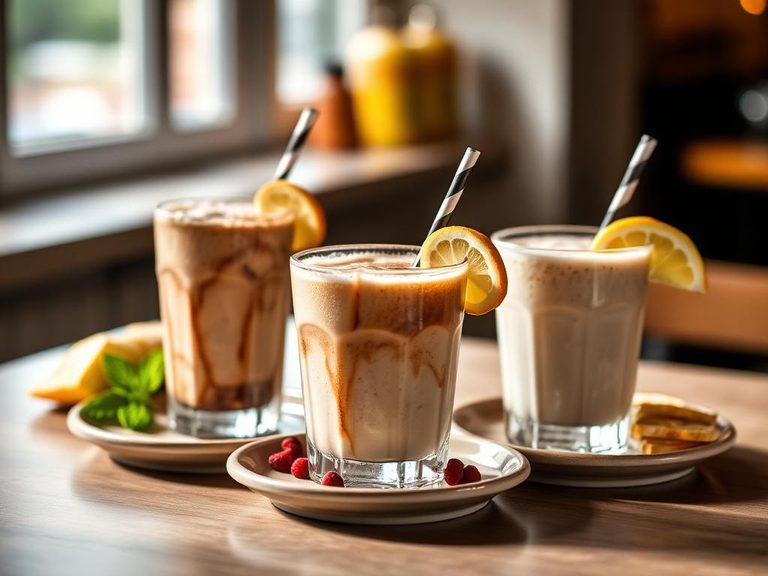

🌍 Where it's eaten
💡 Did you know?
Malt beverages have been brewed for centuries, with some of the earliest recorded recipes dating back to ancient Egypt, where they were considered a staple food and drink.
Full nutrition (USDA data · scales with serving)
| Water | 91.0 g |
| Energy | 58.0 kcal |
| Protein | 0.90 g |
| Total lipid (fat) | 0.00 g |
| Carbohydrate, by difference | 0.27 g |
| Fiber, total dietary | 0.00 g |
| Total Sugars | 0.00 g |
| Calcium, Ca | 8.0 mg |
| Iron, Fe | 0.03 mg |
| Magnesium, Mg | 12.0 mg |
| Phosphorus, P | 32.0 mg |
| Potassium, K | 62.0 mg |
| Sodium, Na | 4.0 mg |
| Zinc, Zn | 0.01 mg |
| Copper, Cu | 0.01 mg |
| Selenium, Se | 0.60 ug |
| Vitamin C, total ascorbic acid | 0.00 mg |
| Thiamin | 0.03 mg |
| Riboflavin | 0.09 mg |
| Niacin | 1.1 mg |
| Vitamin B-6 | 0.09 mg |
| Folate, total | 18.0 ug |
| Folic acid | 0.00 ug |
| Folate, food | 18.0 ug |
| Folate, DFE | 18.0 ug |
| Choline, total | 10.1 mg |
| Vitamin B-12 | 0.02 ug |
| Vitamin B-12, added | 0.00 ug |
| Vitamin A, RAE | 0.00 ug |
| Retinol | 0.00 ug |
| Carotene, beta | 0.00 ug |
| Carotene, alpha | 0.00 ug |
| Cryptoxanthin, beta | 0.00 ug |
| Lycopene | 0.00 ug |
| Lutein + zeaxanthin | 0.00 ug |
| Vitamin E (alpha-tocopherol) | 0.00 mg |
| Vitamin E, added | 0.00 mg |
| Vitamin D (D2 + D3) | 0.00 ug |
| Vitamin K (phylloquinone) | 0.00 ug |
| Alcohol, ethyl | 7.7 g |
| Caffeine | 0.00 mg |
| Theobromine | 0.00 mg |
Fat & fatty acid profile (per 100g)
| Fatty acids, total saturated | 0.00 g |
| SFA 4:0 | 0.00 g |
| SFA 6:0 | 0.00 g |
| SFA 8:0 | 0.00 g |
| SFA 10:0 | 0.00 g |
| SFA 12:0 | 0.00 g |
| SFA 14:0 | 0.00 g |
| SFA 16:0 | 0.00 g |
| SFA 18:0 | 0.00 g |
| Fatty acids, total monounsaturated | 0.00 g |
| MUFA 16:1 | 0.00 g |
| MUFA 18:1 | 0.00 g |
| MUFA 20:1 | 0.00 g |
| MUFA 22:1 | 0.00 g |
| Fatty acids, total polyunsaturated | 0.00 g |
| PUFA 18:2 | 0.00 g |
| PUFA 18:3 | 0.00 g |
| PUFA 18:4 | 0.00 g |
| PUFA 20:4 | 0.00 g |
| PUFA 20:5 n-3 (EPA) | 0.00 g |
| PUFA 22:5 n-3 (DPA) | 0.00 g |
| PUFA 22:6 n-3 (DHA) | 0.00 g |
| Cholesterol | 0.00 mg |
FAQ
What is an alcoholic malt beverage?
It is a fermented drink made from malted grains, often with added sugars and flavors, and typically contains alcohol.
How does it differ from beer?
Malt beverages are often sweeter and lighter than traditional beers, with a lower alcohol content and sometimes added flavors or sugars.
Is it gluten-free?
It depends on the grains used; some malt beverages are made from sorghum or other gluten-free grains, but many contain barley or wheat.
Nutrient density (calculated · NRF9.3)
Nutrient Rich Foods index: beneficial nutrients (protein, fiber, vitamins, minerals) minus saturated fat, added sugar & sodium, per 100 kcal.
NRF9.3 index — Fulgoni, Keast & Drewnowski, 2009. Computed from USDA nutrients.
Weight-loss friendliness (composite index)
Energy density 0.58 kcal/g · 6% calories from protein · 0.0 g fiber · 0.0 g sugar per 100 g.
Composite of energy density (Rolls et al., 1999), protein & fiber satiety, minus sugar. A calculated heuristic — ranks satiety-per-calorie, not a clinical measure.
Dietary load (calculated from USDA values)
Potential renal acid load. Positive = acid-forming, negative = alkaline-forming.
Sodium-to-potassium ratio: 0.06 (lower is better — aim for ≤ 1)
Sodium:potassium per WHO potassium guidance. Computed from USDA nutrients.