

Wine, dessert, sweet
Common food

Photo: Wikipedia
This is a rich, syrupy dessert wine, often served chilled in small glasses to accompany or replace sweet courses. It boasts a luscious, viscous texture and a flavor profile bursting with concentrated notes of honey, apricot, fig, or caramel, depending on the grape and winemaking method. Nutritionally, it is essentially pure liquid energy, with its 13.69g of carbohydrates per 100g coming almost entirely from natural and residual sugars.
Calorie split: 1% protein · 99% carbs · 0% fat
↓ Full nutrition💚 Why it's loved
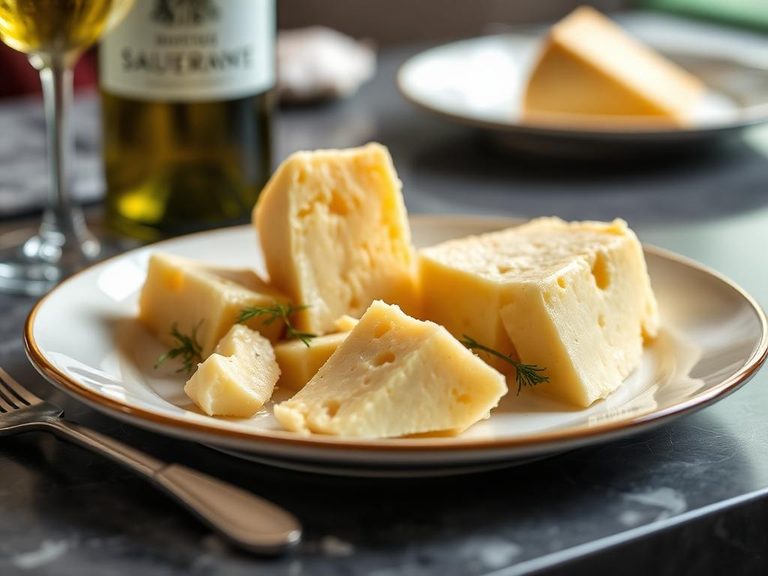
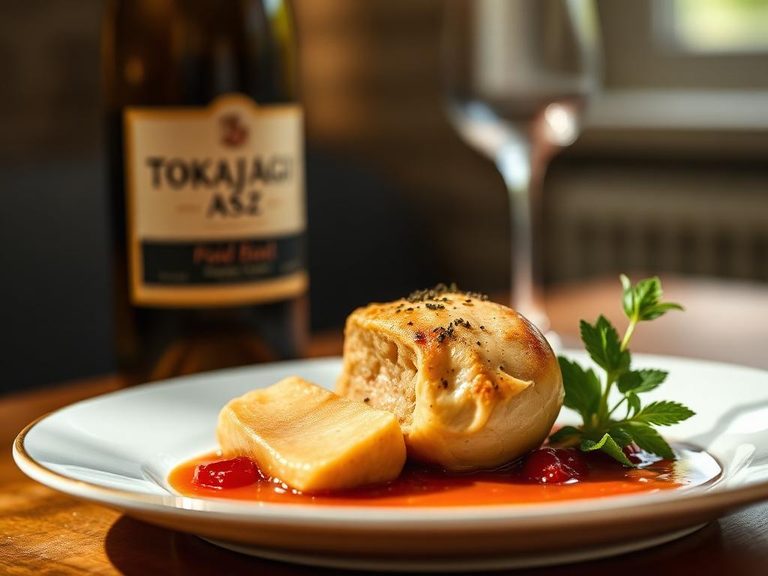
People love dessert wine for its intense, complex sweetness and luxurious mouthfeel, which can feel like a special indulgence. Its versatility shines in pairings—from blue cheese to fruit tarts—and it carries deep cultural significance in regions like Bordeaux, Tokaji, and the Rhine Valley.
⚠️ Watch-outs & how to enjoy it better
The high sugar content can cause rapid blood-sugar spikes, making it less suitable for those managing diabetes or watching caloric intake. To mitigate this, practice strict portion control (a standard 3-4 oz pour) and pair it with a source of protein or fat, like a handful of nuts or a piece of aged cheese, to slow sugar absorption. Those with alcohol sensitivities should also exercise caution.
Key benefits
- Provides quick energy from simple carbohydrates
- Contains antioxidants like resveratrol from grape skins
- Often enjoyed in moderation as part of a social or celebratory ritual
- Can be paired with fruit or cheese for a balanced dessert course
🍽️ Popular dishes

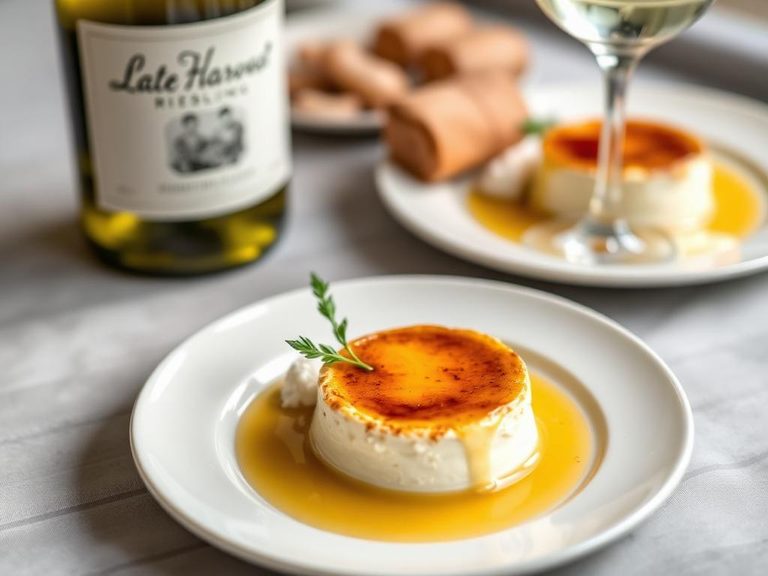
🌍 Where it's eaten
💡 Did you know?
The world's most expensive bottle of dessert wine is a 200-year-old Tokaji Aszó, which was reportedly served to Louis XIV and is valued at over $40,000.
Full nutrition (USDA data · scales with serving)
| Water | 70.5 g |
| Energy | 160 kcal |
| Protein | 0.20 g |
| Total lipid (fat) | 0.00 g |
| Carbohydrate, by difference | 13.7 g |
| Fiber, total dietary | 0.00 g |
| Total Sugars | 7.8 g |
| Calcium, Ca | 8.0 mg |
| Iron, Fe | 0.24 mg |
| Magnesium, Mg | 9.0 mg |
| Phosphorus, P | 9.0 mg |
| Potassium, K | 92.0 mg |
| Sodium, Na | 9.0 mg |
| Zinc, Zn | 0.07 mg |
| Copper, Cu | 0.04 mg |
| Selenium, Se | 0.50 ug |
| Vitamin C, total ascorbic acid | 0.00 mg |
| Thiamin | 0.02 mg |
| Riboflavin | 0.02 mg |
| Niacin | 0.21 mg |
| Vitamin B-6 | 0.00 mg |
| Folate, total | 0.00 ug |
| Folic acid | 0.00 ug |
| Folate, food | 0.00 ug |
| Folate, DFE | 0.00 ug |
| Choline, total | 5.0 mg |
| Vitamin B-12 | 0.00 ug |
| Vitamin B-12, added | 0.00 ug |
| Vitamin A, RAE | 0.00 ug |
| Retinol | 0.00 ug |
| Carotene, beta | 0.00 ug |
| Carotene, alpha | 0.00 ug |
| Cryptoxanthin, beta | 0.00 ug |
| Lycopene | 0.00 ug |
| Lutein + zeaxanthin | 0.00 ug |
| Vitamin E (alpha-tocopherol) | 0.00 mg |
| Vitamin E, added | 0.00 mg |
| Vitamin D (D2 + D3) | 0.00 ug |
| Vitamin K (phylloquinone) | 0.00 ug |
| Alcohol, ethyl | 15.3 g |
| Caffeine | 0.00 mg |
| Theobromine | 0.00 mg |
Fat & fatty acid profile (per 100g)
| Fatty acids, total saturated | 0.00 g |
| SFA 4:0 | 0.00 g |
| SFA 6:0 | 0.00 g |
| SFA 8:0 | 0.00 g |
| SFA 10:0 | 0.00 g |
| SFA 12:0 | 0.00 g |
| SFA 14:0 | 0.00 g |
| SFA 16:0 | 0.00 g |
| SFA 18:0 | 0.00 g |
| Fatty acids, total monounsaturated | 0.00 g |
| MUFA 16:1 | 0.00 g |
| MUFA 18:1 | 0.00 g |
| MUFA 20:1 | 0.00 g |
| MUFA 22:1 | 0.00 g |
| Fatty acids, total polyunsaturated | 0.00 g |
| PUFA 18:2 | 0.00 g |
| PUFA 18:3 | 0.00 g |
| PUFA 18:4 | 0.00 g |
| PUFA 20:4 | 0.00 g |
| PUFA 20:5 n-3 (EPA) | 0.00 g |
| PUFA 22:5 n-3 (DPA) | 0.00 g |
| PUFA 22:6 n-3 (DHA) | 0.00 g |
| Cholesterol | 0.00 mg |
FAQ
What's the difference between dessert wine and regular wine?
Dessert wine is made from grapes with higher sugar content, or the fermentation is stopped early to preserve residual sugar, resulting in a sweeter, often lower-alcohol beverage meant for sipping with or after sweets.
How should dessert wine be served?
It should be served chilled (around 45-55°F or 7-13°C) in small, narrow glasses to concentrate its aromas and control portion size.
Can dessert wine be used in cooking?
Absolutely. It's excellent for deglazing pans to create rich sauces for meats like duck or pork, or for poaching fruits like pears and peaches.
Nutrient density (calculated · NRF9.3)
Nutrient Rich Foods index: beneficial nutrients (protein, fiber, vitamins, minerals) minus saturated fat, added sugar & sodium, per 100 kcal.
NRF9.3 index — Fulgoni, Keast & Drewnowski, 2009. Computed from USDA nutrients.
Weight-loss friendliness (composite index)
Energy density 1.60 kcal/g · 1% calories from protein · 0.0 g fiber · 7.8 g sugar per 100 g.
Composite of energy density (Rolls et al., 1999), protein & fiber satiety, minus sugar. A calculated heuristic — ranks satiety-per-calorie, not a clinical measure.
Dietary load (calculated from USDA values)
Potential renal acid load. Positive = acid-forming, negative = alkaline-forming.
Sodium-to-potassium ratio: 0.10 (lower is better — aim for ≤ 1)
Sodium:potassium per WHO potassium guidance. Computed from USDA nutrients.