White sauce or gravy
Common food
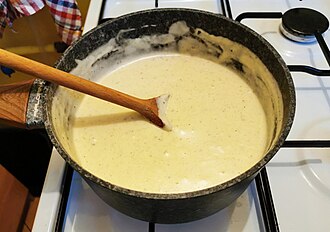
Photo: Wikipedia
White sauce, or béchamel, is a foundational French sauce made from a roux of butter and flour cooked with milk, resulting in a velvety, creamy texture and a mild, savory flavor. It serves as a blank canvas, readily absorbing seasonings like nutmeg, garlic, or herbs. Nutritionally, it is a dense source of energy and fat, providing a significant calorie boost to any dish it enriches.
💚 Why it's loved
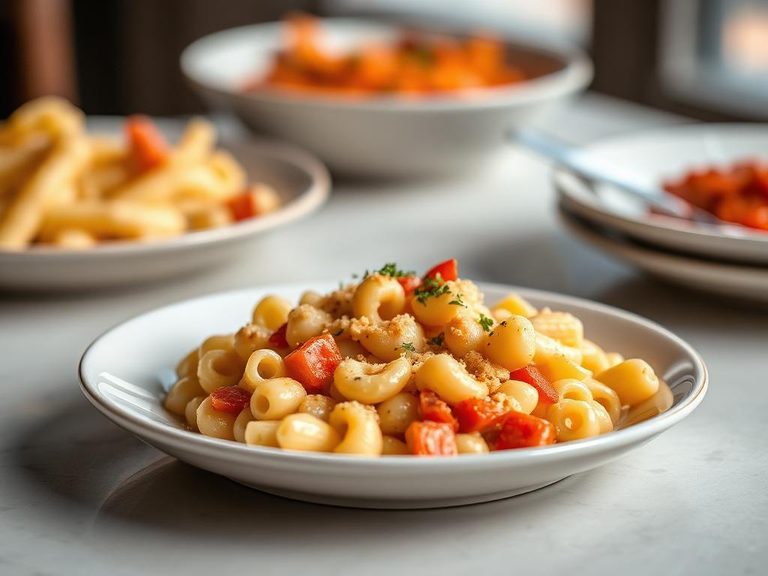
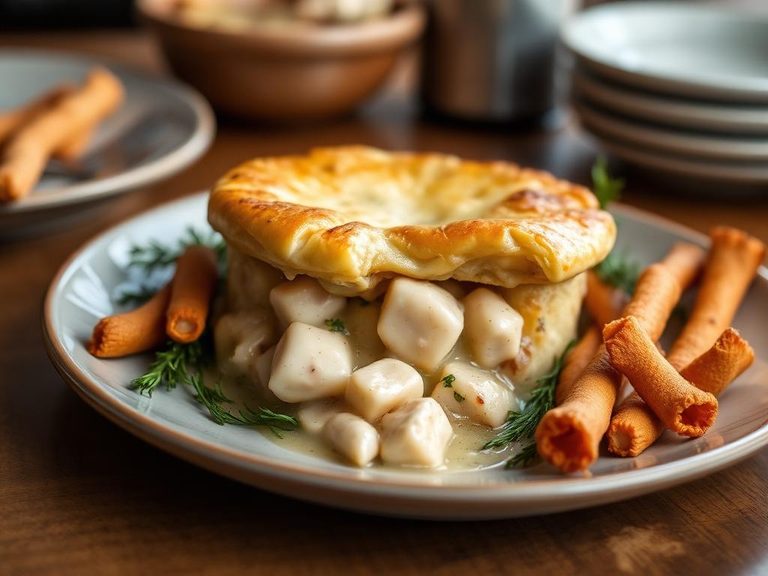
People love it for its luxurious, comforting mouthfeel and its incredible versatility as a flavor carrier. It is the creamy soul of classic comfort foods, from macaroni and cheese to chicken pot pie, evoking a sense of warmth and home cooking.
⚠️ Watch-outs & how to enjoy it better
Its high fat and calorie density can be a concern for those managing weight or cardiovascular health. The refined flour and milk can cause blood sugar spikes or digestive issues for some. To counteract, use it as a flavor accent rather than the main event, pair it with high-fiber vegetables or lean protein, and consider using low-fat milk or a small amount of strong cheese to reduce the portion needed.
Key benefits
- Provides a quick source of energy from fats and carbohydrates
- Acts as a creamy binder and thickener in countless recipes
- Enhances the palatability of vegetables and lean proteins
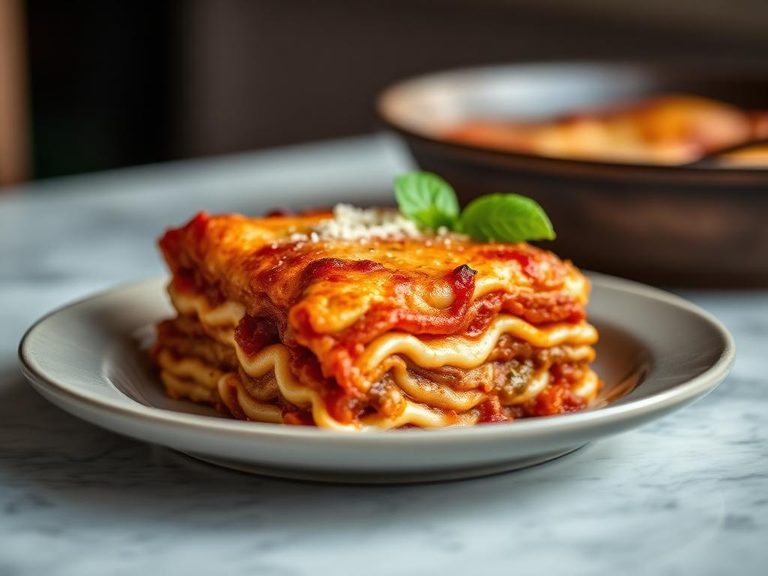
- A base for nutrient-dense dishes like lasagna or gratins
- Contains calcium from its primary ingredient, milk
🍽️ Popular dishes
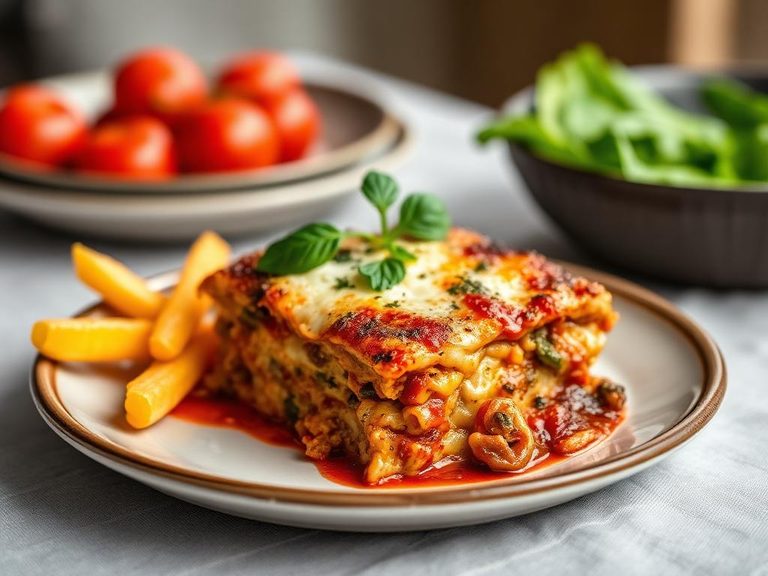
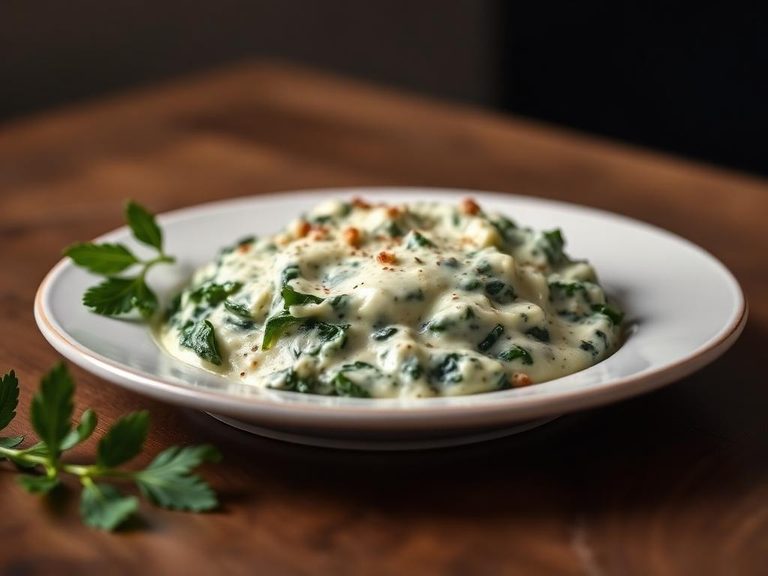
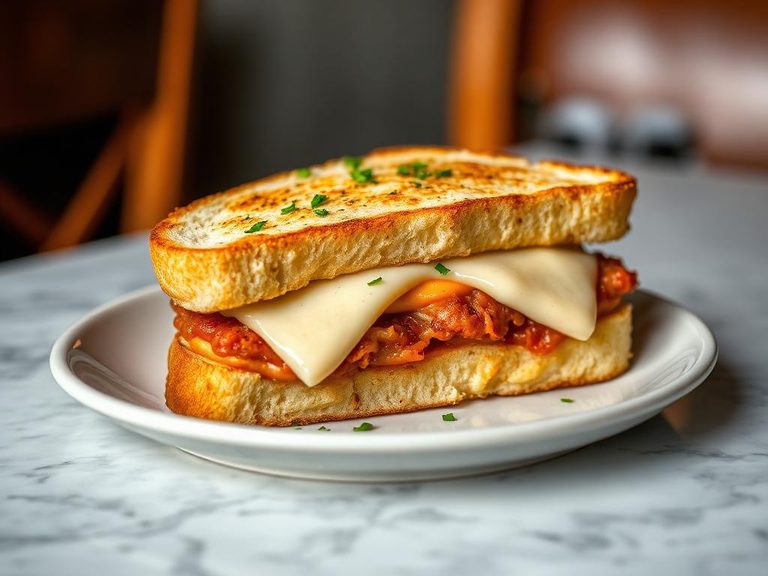
🌍 Where it's eaten
💡 Did you know?
The classic French 'mother sauce' béchamel is named after Louis de Béchameil, a 17th-century French courtier and financier, though its invention is more likely credited to his personal chef.
Full nutrition (scales with serving)
| Water | 75.3 g |
| Energy | 144 kcal |
| Protein | 3.8 g |
| Total lipid (fat) | 10.2 g |
| Carbohydrate, by difference | 9.2 g |
| Fiber, total dietary | 0.20 g |
| Total Sugars | 4.6 g |
| Calcium, Ca | 121 mg |
| Iron, Fe | 0.34 mg |
| Magnesium, Mg | 13.0 mg |
| Phosphorus, P | 105 mg |
| Potassium, K | 157 mg |
| Sodium, Na | 323 mg |
| Zinc, Zn | 0.45 mg |
| Copper, Cu | 0.01 mg |
| Selenium, Se | 2.7 ug |
| Vitamin C, total ascorbic acid | 0.10 mg |
| Thiamin | 0.09 mg |
| Riboflavin | 0.15 mg |
| Niacin | 0.47 mg |
| Vitamin B-6 | 0.18 mg |
| Folate, total | 8.0 ug |
| Folic acid | 6.0 ug |
| Folate, food | 2.0 ug |
| Folate, DFE | 12.0 ug |
| Choline, total | 17.4 mg |
| Vitamin B-12 | 0.42 ug |
| Vitamin B-12, added | 0.00 ug |
| Vitamin A, RAE | 138 ug |
| Retinol | 135 ug |
| Carotene, beta | 41.0 ug |
| Carotene, alpha | 0.00 ug |
| Cryptoxanthin, beta | 1.0 ug |
| Lycopene | 0.00 ug |
| Lutein + zeaxanthin | 1.0 ug |
| Vitamin E (alpha-tocopherol) | 0.81 mg |
| Vitamin E, added | 0.00 mg |
| Vitamin D (D2 + D3) | 1.2 ug |
| Vitamin K (phylloquinone) | 4.9 ug |
| Fatty acids, total saturated | 4.7 g |
| SFA 4:0 | 0.17 g |
| SFA 6:0 | 0.13 g |
| SFA 8:0 | 0.08 g |
| SFA 10:0 | 0.18 g |
| SFA 12:0 | 0.21 g |
| SFA 14:0 | 0.66 g |
| SFA 16:0 | 2.2 g |
| SFA 18:0 | 0.89 g |
| Fatty acids, total monounsaturated | 2.6 g |
| MUFA 16:1 | 0.10 g |
| MUFA 18:1 | 2.4 g |
| MUFA 20:1 | 0.02 g |
| MUFA 22:1 | 0.00 g |
| Fatty acids, total polyunsaturated | 1.4 g |
| PUFA 18:2 | 1.2 g |
| PUFA 18:3 | 0.14 g |
| PUFA 18:4 | 0.00 g |
| PUFA 20:4 | 0.01 g |
| PUFA 20:5 n-3 (EPA) | 0.00 g |
| PUFA 22:5 n-3 (DPA) | 0.00 g |
| PUFA 22:6 n-3 (DHA) | 0.00 g |
| Cholesterol | 23.0 mg |
| Alcohol, ethyl | 0.00 g |
| Caffeine | 0.00 mg |
| Theobromine | 0.00 mg |
FAQ
What is the difference between white sauce and gravy?
White sauce (béchamel) is a milk-based sauce thickened with a butter-flour roux. Gravy is typically made from meat drippings thickened with a roux or cornstarch, giving it a savory, meaty flavor profile distinct from the milder white sauce.
Can I make a lighter version?
Yes. You can substitute some or all of the butter with olive oil, use low-fat or plant-based milk, and thicken with pureed cauliflower or white beans for a lower-fat, higher-fiber alternative.
Why did my white sauce turn out lumpy?
Lumps form when the flour isn't fully incorporated into the fat before adding the liquid. To prevent this, cook the roux for a minute, then add the warm milk gradually while whisking constantly.