

Vegetable tempura
Common food

Photo: Wikipedia
Vegetable tempura is a classic Japanese dish where light, crispy batter-coated vegetables are deep-fried to golden perfection. The batter creates a delicate, shattering crunch that gives way to tender, sweet vegetables inside. Despite its indulgent texture, a 100g serving contains 239 calories and 15.81g of fat, making it a flavorful but calorie-dense treat.
Calorie split: 6% protein · 34% carbs · 59% fat
↓ Full nutrition💚 Why it's loved
People love vegetable tempura for its irresistible contrast of a light, crispy batter and tender vegetables, offering a satisfying crunch with every bite. It's a beloved staple in Japanese cuisine that pairs beautifully with dipping sauces, making it a versatile and comforting food enjoyed across cultures.
⚠️ Watch-outs & how to enjoy it better
The deep-frying process adds significant fat and calories, which can be a concern for those watching their intake or managing blood sugar levels. To counteract this, pair tempura with protein-rich foods like grilled fish or tofu, use portion control, and consider air-frying or baking as healthier alternatives.
Key benefits
- Provides quick energy from 20.45g of carbohydrates per 100g
- Contains 3.81g of plant-based protein per 100g serving
- Offers 1.6g of dietary fiber to support digestion
- Delivers a satisfying crunch and texture contrast
- Versatile side dish or appetizer for various meals
🍽️ Popular dishes

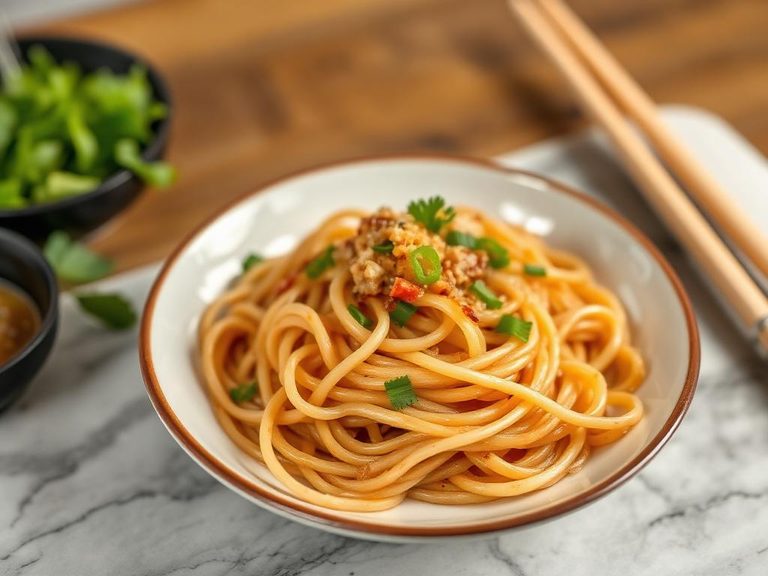
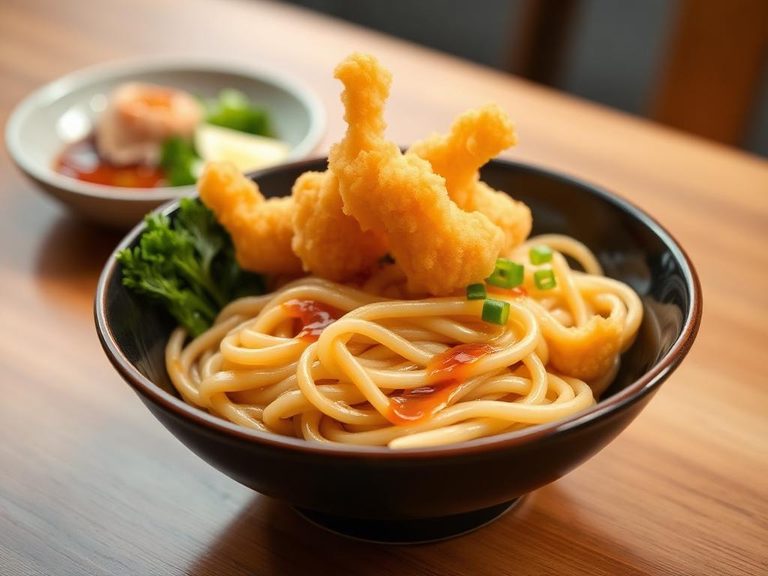

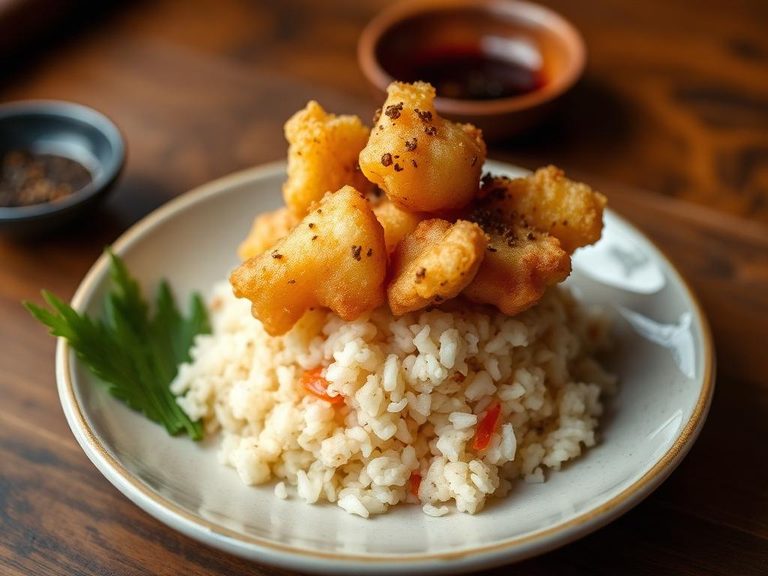
🌍 Where it's eaten
💡 Did you know?
Tempura was introduced to Japan by Portuguese missionaries in the 16th century, and the name likely derives from the Latin 'tempora,' referring to the Ember Days when Catholics ate fish and vegetables instead of meat.
Full nutrition (USDA data · scales with serving)
| Water | 59.4 g |
| Energy | 239 kcal |
| Protein | 3.8 g |
| Total lipid (fat) | 15.8 g |
| Carbohydrate, by difference | 20.4 g |
| Fiber, total dietary | 1.6 g |
| Total Sugars | 1.5 g |
| Calcium, Ca | 22.0 mg |
| Iron, Fe | 1.5 mg |
| Magnesium, Mg | 15.0 mg |
| Phosphorus, P | 62.0 mg |
| Potassium, K | 179 mg |
| Sodium, Na | 12.0 mg |
| Zinc, Zn | 0.40 mg |
| Copper, Cu | 0.10 mg |
| Selenium, Se | 6.8 ug |
| Vitamin C, total ascorbic acid | 16.0 mg |
| Thiamin | 0.19 mg |
| Riboflavin | 0.16 mg |
| Niacin | 1.7 mg |
| Vitamin B-6 | 0.10 mg |
| Folate, total | 40.0 ug |
| Folic acid | 20.0 ug |
| Folate, food | 20.0 ug |
| Folate, DFE | 54.0 ug |
| Choline, total | 34.2 mg |
| Vitamin B-12 | 0.06 ug |
| Vitamin B-12, added | 0.00 ug |
| Vitamin A, RAE | 60.0 ug |
| Retinol | 13.0 ug |
| Carotene, beta | 564 ug |
| Carotene, alpha | 7.0 ug |
| Cryptoxanthin, beta | 2.0 ug |
| Lycopene | 0.00 ug |
| Lutein + zeaxanthin | 262 ug |
| Vitamin E (alpha-tocopherol) | 3.0 mg |
| Vitamin E, added | 0.00 mg |
| Vitamin D (D2 + D3) | 0.20 ug |
| Vitamin K (phylloquinone) | 26.3 ug |
| Alcohol, ethyl | 0.00 g |
| Caffeine | 0.00 mg |
| Theobromine | 0.00 mg |
Fat & fatty acid profile (per 100g)
| Fatty acids, total saturated | 2.3 g |
| SFA 4:0 | 0.00 g |
| SFA 6:0 | 0.00 g |
| SFA 8:0 | 0.00 g |
| SFA 10:0 | 0.00 g |
| SFA 12:0 | 0.00 g |
| SFA 14:0 | 0.01 g |
| SFA 16:0 | 1.7 g |
| SFA 18:0 | 0.50 g |
| Fatty acids, total monounsaturated | 6.5 g |
| MUFA 16:1 | 0.08 g |
| MUFA 18:1 | 6.3 g |
| MUFA 20:1 | 0.10 g |
| MUFA 22:1 | 0.00 g |
| Fatty acids, total polyunsaturated | 5.8 g |
| PUFA 18:2 | 5.1 g |
| PUFA 18:3 | 0.65 g |
| PUFA 18:4 | 0.00 g |
| PUFA 20:4 | 0.02 g |
| PUFA 20:5 n-3 (EPA) | 0.00 g |
| PUFA 22:5 n-3 (DPA) | 0.00 g |
| PUFA 22:6 n-3 (DHA) | 0.00 g |
| Cholesterol | 38.0 mg |
FAQ
Is vegetable tempura healthy?
While it contains vegetables, the deep-frying adds significant fat and calories. It's best enjoyed in moderation and paired with protein-rich foods to balance the meal.
What vegetables are commonly used in tempura?
Common vegetables include sweet potato, eggplant, bell peppers, zucchini, mushrooms, and green beans, though many others can be used.
How can I make tempura healthier?
You can use an air fryer or bake the tempura to reduce oil, use whole-grain flour in the batter, and serve with a light dipping sauce to cut down on calories.
Nutrient density (calculated · NRF9.3)
Nutrient Rich Foods index: beneficial nutrients (protein, fiber, vitamins, minerals) minus saturated fat, added sugar & sodium, per 100 kcal.
NRF9.3 index — Fulgoni, Keast & Drewnowski, 2009. Computed from USDA nutrients.
Weight-loss friendliness (composite index)
Energy density 2.39 kcal/g · 6% calories from protein · 1.6 g fiber · 1.5 g sugar per 100 g.
Composite of energy density (Rolls et al., 1999), protein & fiber satiety, minus sugar. A calculated heuristic — ranks satiety-per-calorie, not a clinical measure.
Dietary load (calculated from USDA values)
Potential renal acid load. Positive = acid-forming, negative = alkaline-forming.
Sodium-to-potassium ratio: 0.07 (lower is better — aim for ≤ 1)
Sodium:potassium per WHO potassium guidance. Computed from USDA nutrients.