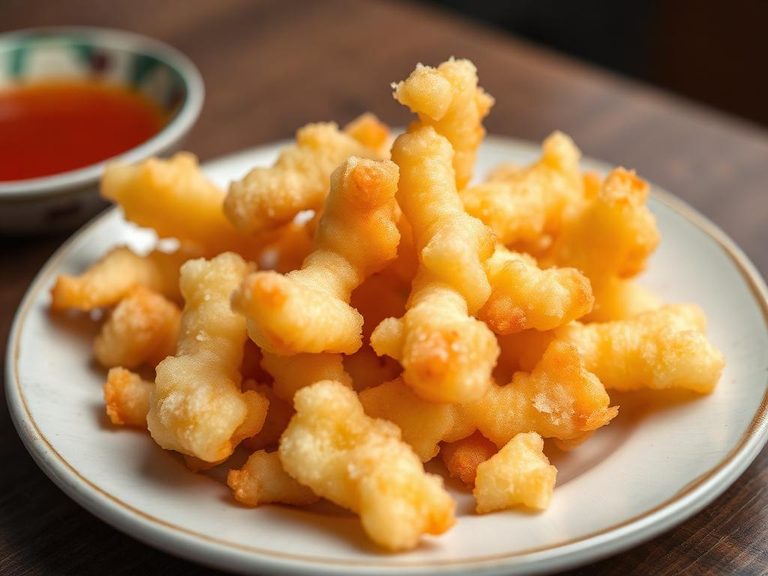
Yasai tempura

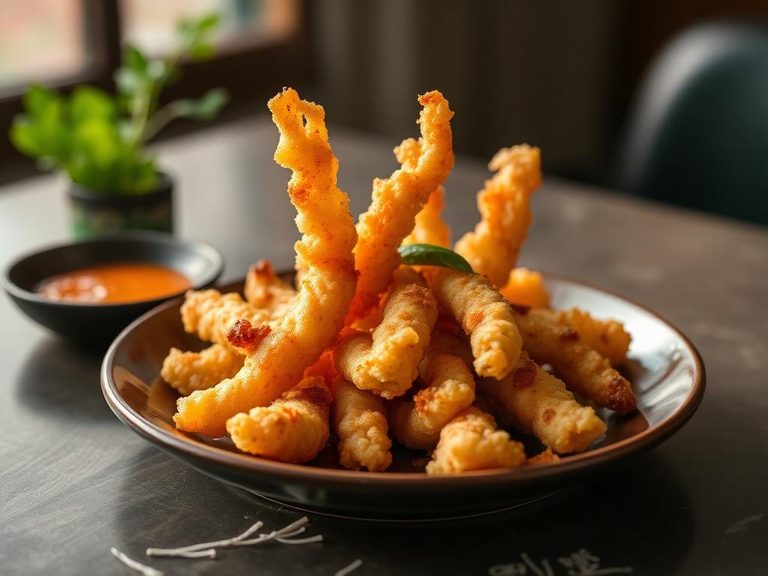
Yasai tempura is a classic Japanese dish featuring a variety of vegetables like sweet potato, shiso leaf, eggplant, and lotus root, each delicately coated in a light, crispy batter and deep-fried. It originated in Japan, where it's a popular side dish, appetizer, or part of a larger meal like tendon (tempura rice bowl).
🍽️ Nutrition at a glance
This dish is high in fat and carbohydrates due to the deep-frying process and the starchy vegetables, while protein content is generally low. A typical serving can range from 300 to 500 calories, providing some dietary fiber and vitamins from the vegetables, but the primary nutritional note is the calorie density from the oil.
Nutrition breakdown
| Calories | 280 kcal |
| Protein | 4 g |
| Carbs | 25 g |
| Fat | 18 g |
| Fiber | 3 g |
| Sugar | 2 g |
| Sodium | 450 mg |
| Potassium | 320 mg |
| Vitamin A | 120 µg |
| Vitamin C | 15 mg |
| Calcium | 45 mg |
| Iron | 1.2 mg |
| Magnesium | 25 mg |
| Phosphorus | 60 mg |
| Zinc | 0.8 mg |
Per 1 cup (150 g) · estimated, varies by recipe
💡 What's interesting
Culturally, tempura was introduced to Japan by Portuguese missionaries in the 16th century, but the Japanese refined the technique to create an exceptionally light, non-greasy batter. Nutritionally, while it's a fried food, using a variety of colorful vegetables ensures a mix of antioxidants and nutrients, making it a more balanced indulgence compared to other fried snacks.