

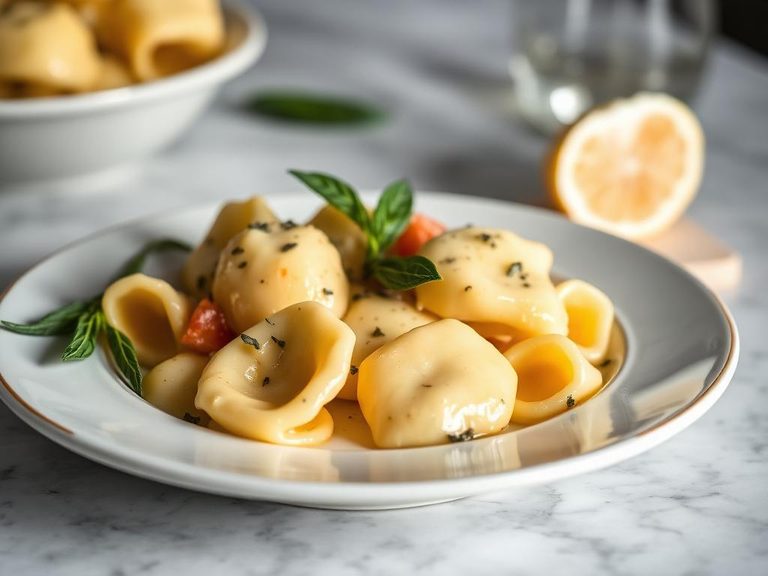
Tortellini, meat-filled, no sauce
Common food

Photo: Wikipedia
Tortellini are small, ring-shaped pasta parcels traditionally stuffed with a savory blend of cured meats like prosciutto and pork, encased in a thin, delicate egg pasta dough. Their texture is uniquely satisfying, offering a tender, slightly chewy bite that gives way to a rich, umami-packed filling. Nutritionally, they are a concentrated source of protein and energy, making them a hearty component of a meal.
Calorie split: 26% protein · 38% carbs · 36% fat
↓ Full nutrition💚 Why it's loved
People love tortellini for their perfect, bite-sized format and the burst of savory, meaty flavor in each piece. Their deep roots in Italian culinary tradition, especially in Emilia-Romagna, make them a beloved symbol of homemade, celebratory food.
⚠️ Watch-outs & how to enjoy it better
As a refined pasta, it can cause blood-sugar spikes if eaten alone, and traditional versions are often high in sodium. They are also a common allergen (gluten, eggs, dairy). To counteract this, pair them with fiber-rich vegetables (like spinach or zucchini) and a source of healthy fat (like olive oil or Parmesan) to slow digestion, and choose low-sodium broths or sauces.
Key benefits
- High in protein for muscle maintenance and satiety
- Provides a quick source of energy from carbohydrates
- Convenient and fast-cooking meal base
- Versatile for soups, broths, or simple butter sauces
- A classic source of culinary comfort and tradition
🍽️ Popular dishes
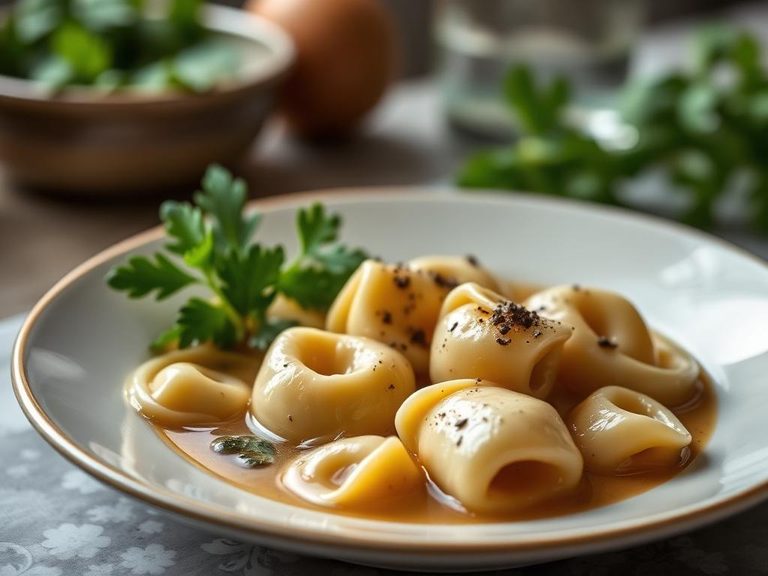
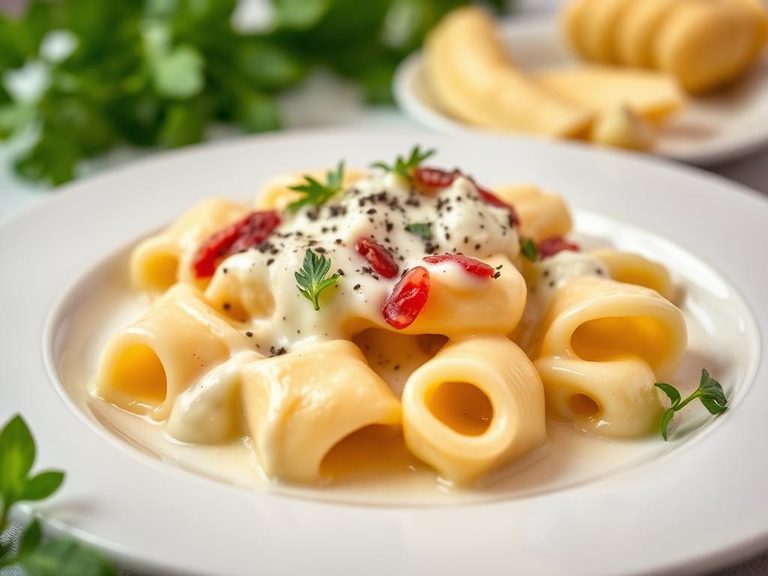
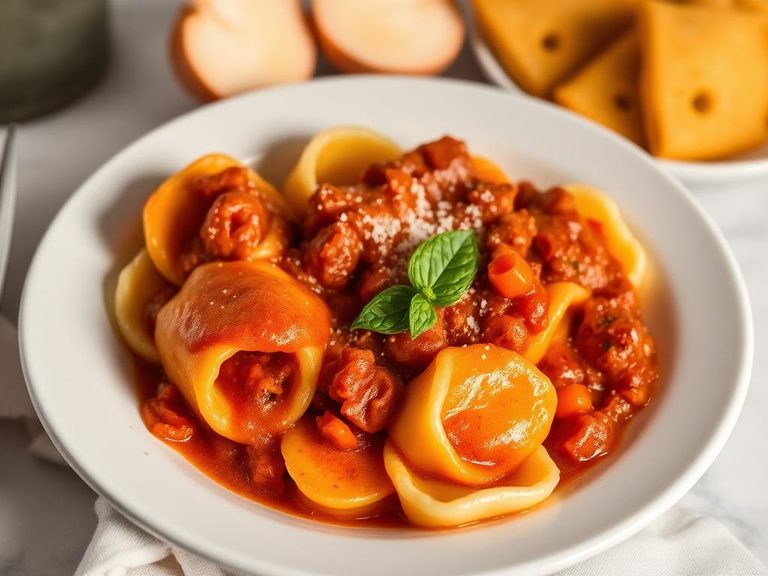
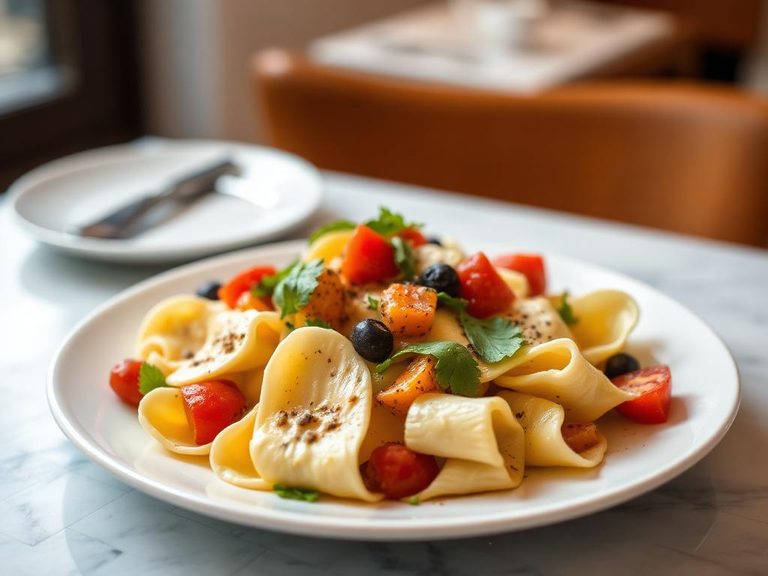
🌍 Where it's eaten
💡 Did you know?
Legend says tortellini were inspired by the navel of Venus, the goddess of love, after a innkeeper glimpsed her while she was bathing.
Full nutrition (USDA data · scales with serving)
| Water | 60.6 g |
| Energy | 190 kcal |
| Protein | 12.3 g |
| Total lipid (fat) | 7.5 g |
| Carbohydrate, by difference | 18.0 g |
| Fiber, total dietary | 0.60 g |
| Total Sugars | 0.18 g |
| Calcium, Ca | 67.0 mg |
| Iron, Fe | 1.8 mg |
| Magnesium, Mg | 15.0 mg |
| Phosphorus, P | 145 mg |
| Potassium, K | 131 mg |
| Sodium, Na | 434 mg |
| Zinc, Zn | 1.1 mg |
| Copper, Cu | 0.05 mg |
| Selenium, Se | 19.3 ug |
| Vitamin C, total ascorbic acid | 0.00 mg |
| Thiamin | 0.26 mg |
| Riboflavin | 0.27 mg |
| Niacin | 2.6 mg |
| Vitamin B-6 | 0.13 mg |
| Folate, total | 39.0 ug |
| Folic acid | 21.0 ug |
| Folate, food | 17.0 ug |
| Folate, DFE | 53.0 ug |
| Choline, total | 88.9 mg |
| Vitamin B-12 | 0.52 ug |
| Vitamin B-12, added | 0.00 ug |
| Vitamin A, RAE | 70.0 ug |
| Retinol | 69.0 ug |
| Carotene, beta | 12.0 ug |
| Carotene, alpha | 0.00 ug |
| Cryptoxanthin, beta | 3.0 ug |
| Lycopene | 0.00 ug |
| Lutein + zeaxanthin | 118 ug |
| Vitamin E (alpha-tocopherol) | 0.51 mg |
| Vitamin E, added | 0.00 mg |
| Vitamin D (D2 + D3) | 0.80 ug |
| Vitamin K (phylloquinone) | 2.0 ug |
| Alcohol, ethyl | 0.00 g |
| Caffeine | 0.00 mg |
| Theobromine | 0.00 mg |
Fat & fatty acid profile (per 100g)
| Fatty acids, total saturated | 2.5 g |
| SFA 4:0 | 0.03 g |
| SFA 6:0 | 0.02 g |
| SFA 8:0 | 0.01 g |
| SFA 10:0 | 0.04 g |
| SFA 12:0 | 0.04 g |
| SFA 14:0 | 0.16 g |
| SFA 16:0 | 1.5 g |
| SFA 18:0 | 0.64 g |
| Fatty acids, total monounsaturated | 2.7 g |
| MUFA 16:1 | 0.15 g |
| MUFA 18:1 | 2.6 g |
| MUFA 20:1 | 0.01 g |
| MUFA 22:1 | 0.00 g |
| Fatty acids, total polyunsaturated | 1.2 g |
| PUFA 18:2 | 1.1 g |
| PUFA 18:3 | 0.06 g |
| PUFA 18:4 | 0.00 g |
| PUFA 20:4 | 0.02 g |
| PUFA 20:5 n-3 (EPA) | 0.00 g |
| PUFA 22:5 n-3 (DPA) | 0.00 g |
| PUFA 22:6 n-3 (DHA) | 0.00 g |
| Cholesterol | 120 mg |
FAQ
What is the traditional filling for tortellini?
The classic filling, known as 'cappello del prete' (priest's hat), is a mixture of prosciutto, mortadella, pork loin, Parmigiano-Reggiano cheese, egg, and nutmeg.
What is the difference between tortellini and tortelloni?
Tortellini are small, bite-sized rings, while tortelloni are significantly larger, roughly the size of a walnut.
What is the most authentic way to serve tortellini?
In the Emilia-Romagna region, the most traditional and revered preparation is 'Tortellini in Brodo,' served simply in a clear, hot capon or beef broth.
Nutrient density (calculated · NRF9.3)
Nutrient Rich Foods index: beneficial nutrients (protein, fiber, vitamins, minerals) minus saturated fat, added sugar & sodium, per 100 kcal.
NRF9.3 index — Fulgoni, Keast & Drewnowski, 2009. Computed from USDA nutrients.
Weight-loss friendliness (composite index)
Energy density 1.90 kcal/g · 26% calories from protein · 0.6 g fiber · 0.2 g sugar per 100 g.
Composite of energy density (Rolls et al., 1999), protein & fiber satiety, minus sugar. A calculated heuristic — ranks satiety-per-calorie, not a clinical measure.
Dietary load (calculated from USDA values)
Potential renal acid load. Positive = acid-forming, negative = alkaline-forming.
Sodium-to-potassium ratio: 3.31 (lower is better — aim for ≤ 1)
Sodium:potassium per WHO potassium guidance. Computed from USDA nutrients.