

Tortellini, cheese-filled, no sauce
Common food

Photo: Wikipedia
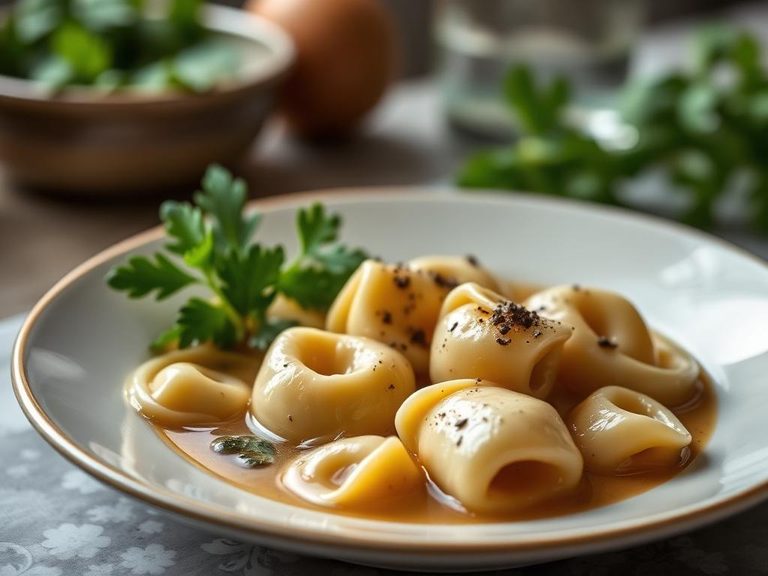
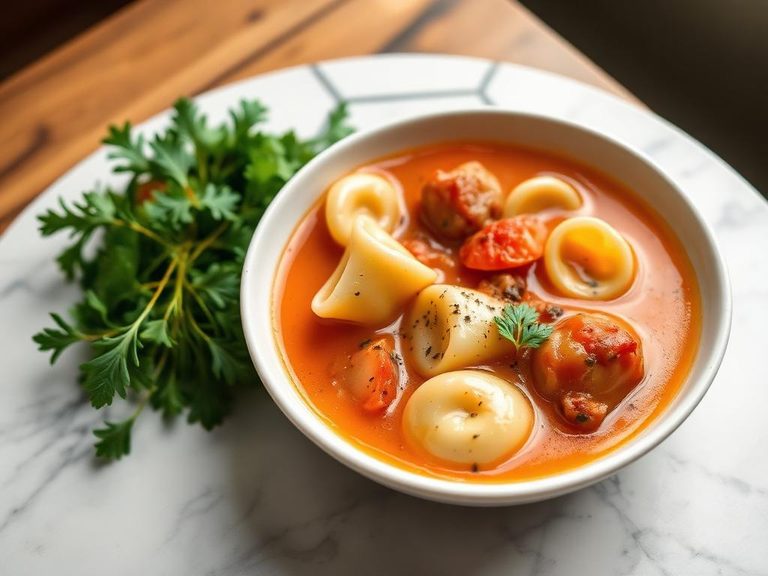
Tortellini are small, ring-shaped pasta parcels traditionally stuffed with a mixture of cheese, often including Parmigiano-Reggiano and ricotta, encased in a delicate egg pasta dough. When served plain without sauce, they offer a subtle, savory flavor with a tender, slightly chewy texture and a rich, creamy filling. Nutritionally, they are a moderate source of protein and carbohydrates, providing a balanced base for a meal.
Calorie split: 18% protein · 61% carbs · 21% fat
↓ Full nutrition💚 Why it's loved
People love cheese tortellini for their comforting, savory flavor and satisfying texture, which makes them a beloved staple in Italian cuisine. Their small, portable shape and rich filling make them versatile for soups, salads, or simple butter tosses.
⚠️ Watch-outs & how to enjoy it better
Without sauce, they can be dry and less flavorful, and the refined pasta dough may cause blood-sugar spikes in sensitive individuals. To counteract this, pair them with a fiber-rich vegetable side or a protein source like grilled chicken, and consider a small portion size to manage carbohydrate intake.
Key benefits
- Good source of protein for muscle maintenance
- Provides energy from complex carbohydrates
- Contains calcium from cheese filling
- Convenient and quick to prepare
- Versatile base for various sauces and additions
🍽️ Popular dishes
🌍 Where it's eaten
💡 Did you know?
Legend says tortellini were inspired by the navel of Venus, the Roman goddess of love, after a innkeeper peeked through a keyhole at her.
Full nutrition (USDA data · scales with serving)
| Water | 46.5 g |
| Energy | 236 kcal |
| Protein | 10.4 g |
| Total lipid (fat) | 5.6 g |
| Carbohydrate, by difference | 36.1 g |
| Fiber, total dietary | 1.5 g |
| Total Sugars | 0.73 g |
| Calcium, Ca | 111 mg |
| Iron, Fe | 0.86 mg |
| Magnesium, Mg | 14.0 mg |
| Phosphorus, P | 139 mg |
| Potassium, K | 21.0 mg |
| Sodium, Na | 156 mg |
| Zinc, Zn | 0.78 mg |
| Copper, Cu | 0.06 mg |
| Selenium, Se | 18.4 ug |
| Vitamin C, total ascorbic acid | 0.00 mg |
| Thiamin | 0.16 mg |
| Riboflavin | 0.18 mg |
| Niacin | 1.3 mg |
| Vitamin B-6 | 0.03 mg |
| Folate, total | 40.0 ug |
| Folic acid | 33.0 ug |
| Folate, food | 6.0 ug |
| Folate, DFE | 63.0 ug |
| Choline, total | 3.9 mg |
| Vitamin B-12 | 0.12 ug |
| Vitamin B-12, added | 0.00 ug |
| Vitamin A, RAE | 28.0 ug |
| Retinol | 27.0 ug |
| Carotene, beta | 8.0 ug |
| Carotene, alpha | 0.00 ug |
| Cryptoxanthin, beta | 1.0 ug |
| Lycopene | 0.00 ug |
| Lutein + zeaxanthin | 23.0 ug |
| Vitamin E (alpha-tocopherol) | 0.12 mg |
| Vitamin E, added | 0.00 mg |
| Vitamin D (D2 + D3) | 0.00 ug |
| Vitamin K (phylloquinone) | 1.0 ug |
| Alcohol, ethyl | 0.00 g |
| Caffeine | 0.00 mg |
| Theobromine | 0.00 mg |
Fat & fatty acid profile (per 100g)
| Fatty acids, total saturated | 2.8 g |
| SFA 4:0 | 0.20 g |
| SFA 6:0 | 0.07 g |
| SFA 8:0 | 0.04 g |
| SFA 10:0 | 0.10 g |
| SFA 12:0 | 0.12 g |
| SFA 14:0 | 0.46 g |
| SFA 16:0 | 1.3 g |
| SFA 18:0 | 0.41 g |
| Fatty acids, total monounsaturated | 1.6 g |
| MUFA 16:1 | 0.10 g |
| MUFA 18:1 | 1.4 g |
| MUFA 20:1 | 0.00 g |
| MUFA 22:1 | 0.00 g |
| Fatty acids, total polyunsaturated | 0.35 g |
| PUFA 18:2 | 0.29 g |
| PUFA 18:3 | 0.07 g |
| PUFA 18:4 | 0.00 g |
| PUFA 20:4 | 0.00 g |
| PUFA 20:5 n-3 (EPA) | 0.00 g |
| PUFA 22:5 n-3 (DPA) | 0.00 g |
| PUFA 22:6 n-3 (DHA) | 0.00 g |
| Cholesterol | 32.0 mg |
FAQ
What is the traditional filling for cheese tortellini?
The classic filling is a blend of cheeses, often including Parmigiano-Reggiano, ricotta, and sometimes mortadella or prosciutto, seasoned with nutmeg.
How should I cook plain cheese tortellini?
Boil in salted water for 3-5 minutes until they float to the surface, then drain. They can be served with a simple butter toss or a light sauce.
Are cheese tortellini gluten-free?
Traditional tortellini are made with wheat flour and egg pasta, so they are not gluten-free. Gluten-free versions are available using alternative flours.
Nutrient density (calculated · NRF9.3)
Nutrient Rich Foods index: beneficial nutrients (protein, fiber, vitamins, minerals) minus saturated fat, added sugar & sodium, per 100 kcal.
NRF9.3 index — Fulgoni, Keast & Drewnowski, 2009. Computed from USDA nutrients.
Weight-loss friendliness (composite index)
Energy density 2.36 kcal/g · 18% calories from protein · 1.5 g fiber · 0.7 g sugar per 100 g.
Composite of energy density (Rolls et al., 1999), protein & fiber satiety, minus sugar. A calculated heuristic — ranks satiety-per-calorie, not a clinical measure.
Dietary load (calculated from USDA values)
Potential renal acid load. Positive = acid-forming, negative = alkaline-forming.
Sodium-to-potassium ratio: 7.43 (lower is better — aim for ≤ 1)
Sodium:potassium per WHO potassium guidance. Computed from USDA nutrients.