

Toddler meal, meat and vegetables
Common food

Photo: Wikipedia
A finely textured, savory blend of minced meat and soft-cooked vegetables, typically pureed or chopped for young palates. It offers a balanced, mild flavor profile with a soft, easy-to-swallow consistency. Nutritionally, it provides a solid protein foundation with moderate carbohydrates and healthy fats for toddler growth.
Calorie split: 18% protein · 43% carbs · 39% fat
↓ Full nutrition💚 Why it's loved
Parents love it for its convenience and balanced nutrition in a single, palatable package. Toddlers often enjoy the familiar, mild flavors and soft texture that make mealtime less stressful.
⚠️ Watch-outs & how to enjoy it better
The bland, uniform texture can be unappealing to some toddlers, and it may lack the sensory variety of whole foods. To counteract this, mix in small, soft pieces of the same vegetables or a sprinkle of mild herbs to add texture and flavor without overwhelming the palate.
Key benefits
- Supports muscle and tissue growth with balanced protein.
- Provides essential vitamins and minerals from mixed vegetables.
- Offers a convenient, all-in-one meal for busy parents.
- The soft texture is ideal for developing chewing skills.
- Low in added sugars, supporting healthy eating habits.
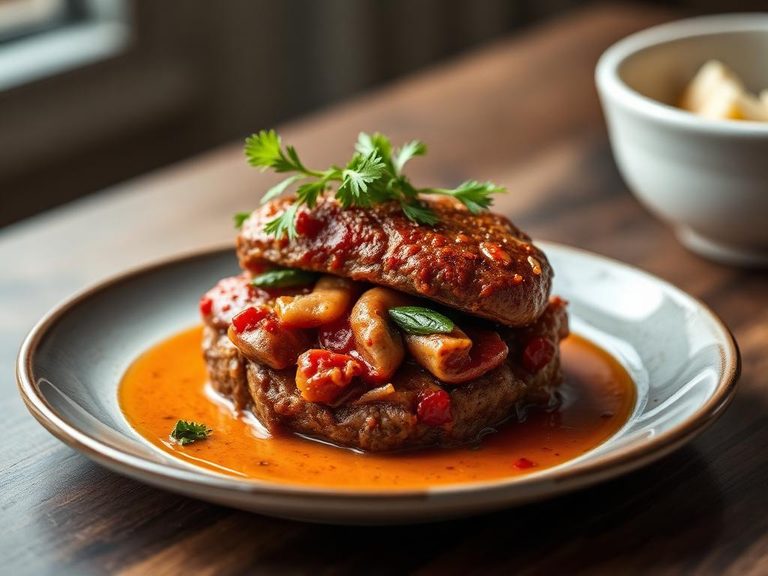
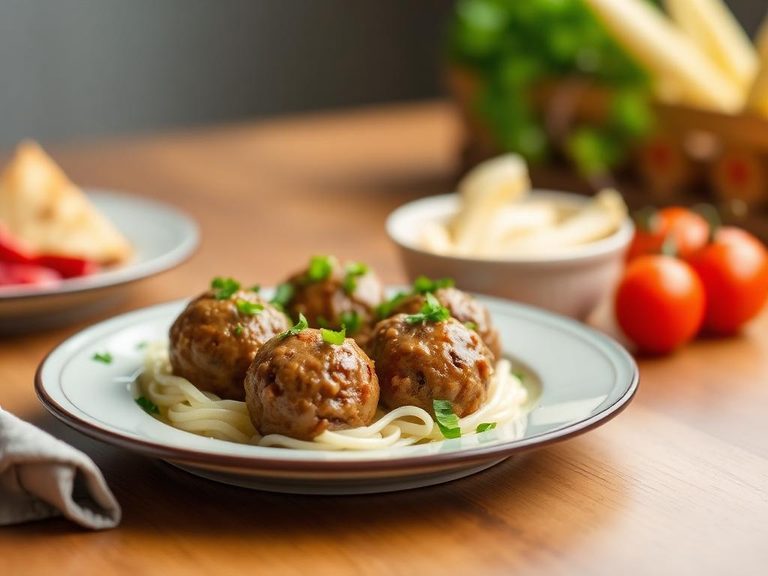
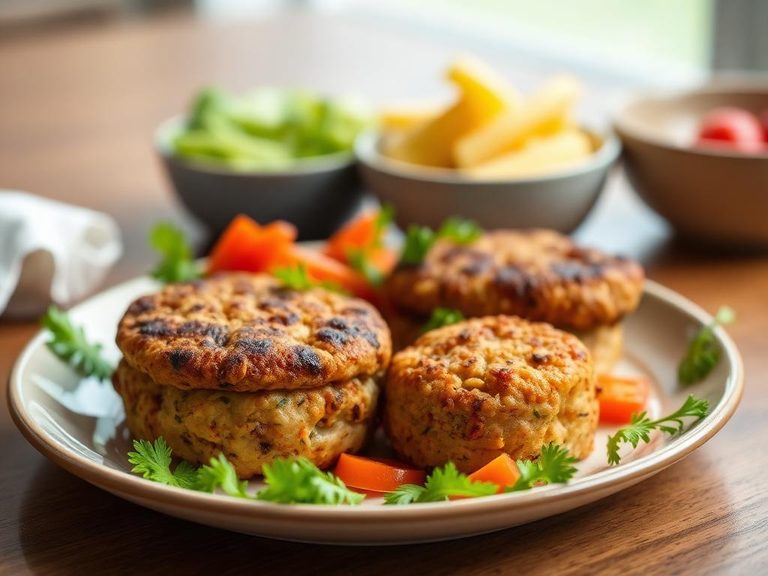
🍽️ Popular dishes
🌍 Where it's eaten
💡 Did you know?
The concept of 'hidden vegetable' purees in meat dishes gained significant popularity in the 2010s, driven by parenting blogs and social media sharing of recipes to help picky eaters.
Full nutrition (USDA data · scales with serving)
| Water | 84.0 g |
| Energy | 77.0 kcal |
| Protein | 3.5 g |
| Total lipid (fat) | 3.3 g |
| Carbohydrate, by difference | 8.3 g |
| Fiber, total dietary | 1.0 g |
| Total Sugars | 1.7 g |
| Calcium, Ca | 21.0 mg |
| Iron, Fe | 0.51 mg |
| Magnesium, Mg | 14.0 mg |
| Phosphorus, P | 41.0 mg |
| Potassium, K | 151 mg |
| Sodium, Na | 157 mg |
| Zinc, Zn | 0.49 mg |
| Copper, Cu | 0.07 mg |
| Selenium, Se | 2.5 ug |
| Vitamin C, total ascorbic acid | 6.3 mg |
| Thiamin | 0.03 mg |
| Riboflavin | 0.06 mg |
| Niacin | 0.93 mg |
| Vitamin B-6 | 0.08 mg |
| Folate, total | 11.0 ug |
| Folic acid | 0.00 ug |
| Folate, food | 11.0 ug |
| Folate, DFE | 11.0 ug |
| Choline, total | 19.1 mg |
| Vitamin B-12 | 0.15 ug |
| Vitamin B-12, added | 0.00 ug |
| Vitamin A, RAE | 113 ug |
| Retinol | 1.0 ug |
| Carotene, beta | 1207 ug |
| Carotene, alpha | 262 ug |
| Cryptoxanthin, beta | 1.0 ug |
| Lycopene | 0.00 ug |
| Lutein + zeaxanthin | 411 ug |
| Vitamin E (alpha-tocopherol) | 0.58 mg |
| Vitamin E, added | 0.00 mg |
| Vitamin D (D2 + D3) | 0.10 ug |
| Vitamin K (phylloquinone) | 9.5 ug |
| Alcohol, ethyl | 0.00 g |
| Caffeine | 0.00 mg |
| Theobromine | 0.00 mg |
Fat & fatty acid profile (per 100g)
| Fatty acids, total saturated | 0.51 g |
| SFA 4:0 | 0.00 g |
| SFA 6:0 | 0.00 g |
| SFA 8:0 | 0.00 g |
| SFA 10:0 | 0.00 g |
| SFA 12:0 | 0.00 g |
| SFA 14:0 | 0.01 g |
| SFA 16:0 | 0.31 g |
| SFA 18:0 | 0.12 g |
| Fatty acids, total monounsaturated | 1.8 g |
| MUFA 16:1 | 0.04 g |
| MUFA 18:1 | 1.7 g |
| MUFA 20:1 | 0.04 g |
| MUFA 22:1 | 0.00 g |
| Fatty acids, total polyunsaturated | 0.83 g |
| PUFA 18:2 | 0.63 g |
| PUFA 18:3 | 0.17 g |
| PUFA 18:4 | 0.00 g |
| PUFA 20:4 | 0.01 g |
| PUFA 20:5 n-3 (EPA) | 0.00 g |
| PUFA 22:5 n-3 (DPA) | 0.00 g |
| PUFA 22:6 n-3 (DHA) | 0.00 g |
| Cholesterol | 11.0 mg |
FAQ
Is this suitable for a 1-year-old?
Yes, it is generally suitable for toddlers over 12 months, provided the meat is finely minced or pureed and vegetables are soft-cooked to prevent choking. Always consult with a pediatrician for specific dietary advice.
Can I make this at home?
Absolutely. Use lean ground meat (like turkey or chicken) and finely chopped or pureed vegetables (like carrots, peas, or sweet potato). Cook thoroughly and blend or mash to the desired consistency.
How can I increase the calorie content?
To boost calories, add a small amount of healthy fat like olive oil or avocado, or mix in a spoonful of full-fat yogurt or cheese. You can also use a slightly fattier cut of meat, but ensure it's cooked thoroughly.
Nutrient density (calculated · NRF9.3)
Nutrient Rich Foods index: beneficial nutrients (protein, fiber, vitamins, minerals) minus saturated fat, added sugar & sodium, per 100 kcal.
NRF9.3 index — Fulgoni, Keast & Drewnowski, 2009. Computed from USDA nutrients.
Weight-loss friendliness (composite index)
Energy density 0.77 kcal/g · 18% calories from protein · 1.0 g fiber · 1.7 g sugar per 100 g.
Composite of energy density (Rolls et al., 1999), protein & fiber satiety, minus sugar. A calculated heuristic — ranks satiety-per-calorie, not a clinical measure.
Dietary load (calculated from USDA values)
Potential renal acid load. Positive = acid-forming, negative = alkaline-forming.
Sodium-to-potassium ratio: 1.04 (lower is better — aim for ≤ 1)
Sodium:potassium per WHO potassium guidance. Computed from USDA nutrients.