

Tiramisu
Common food

Photo: Wikipedia
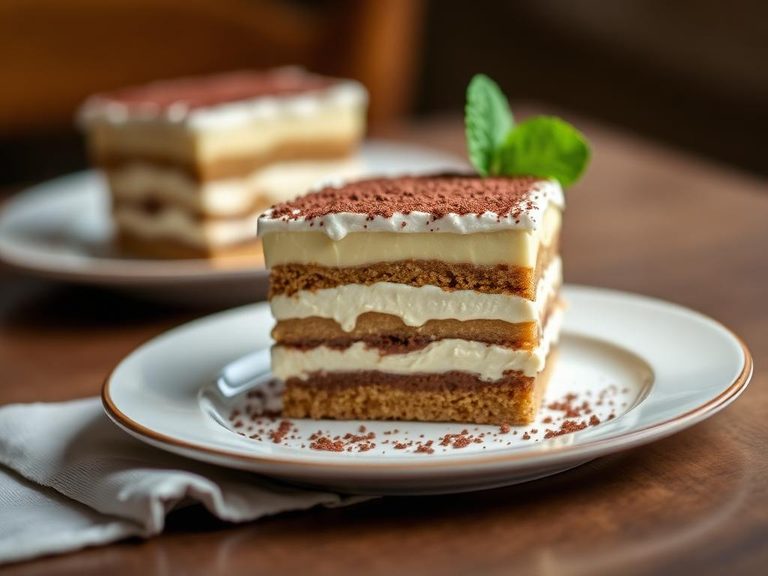
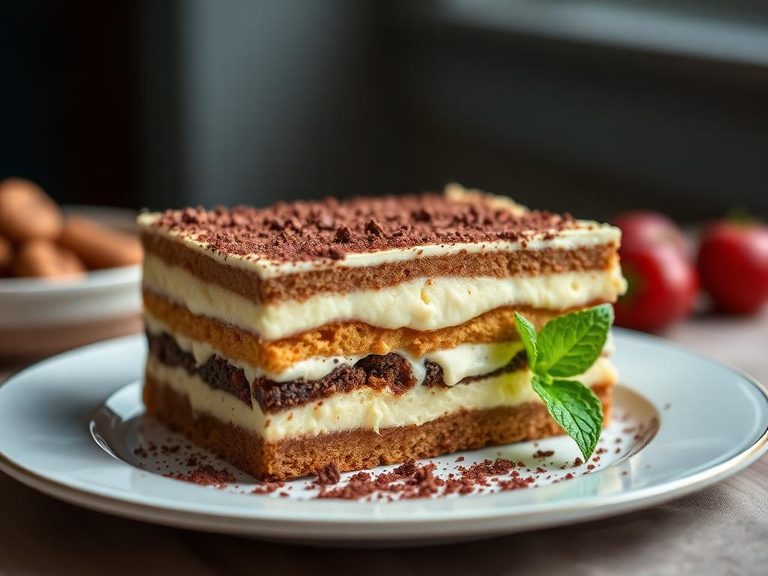
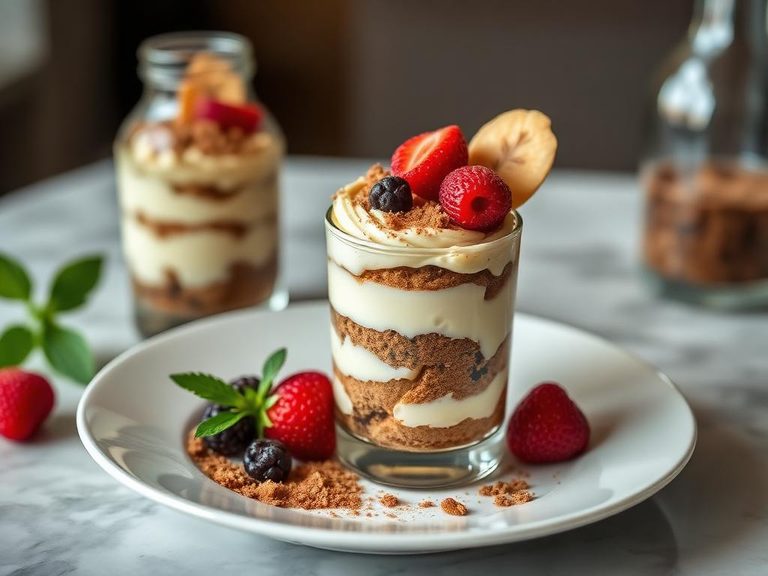
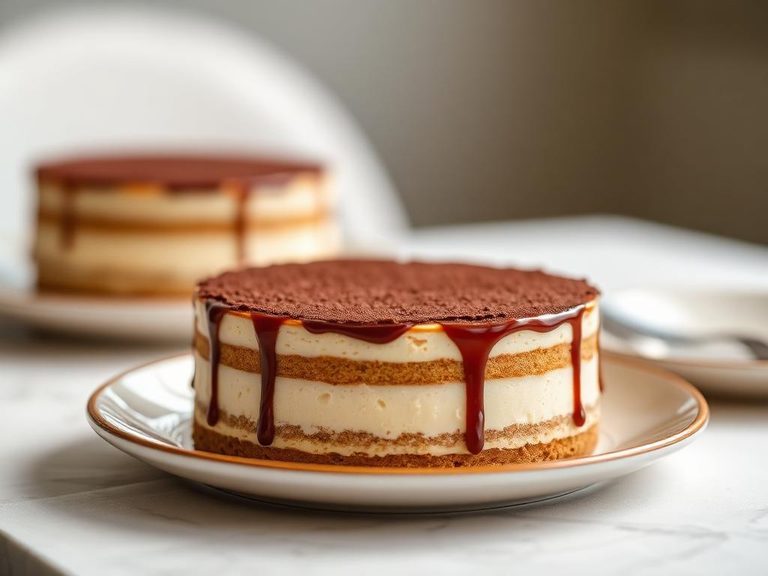
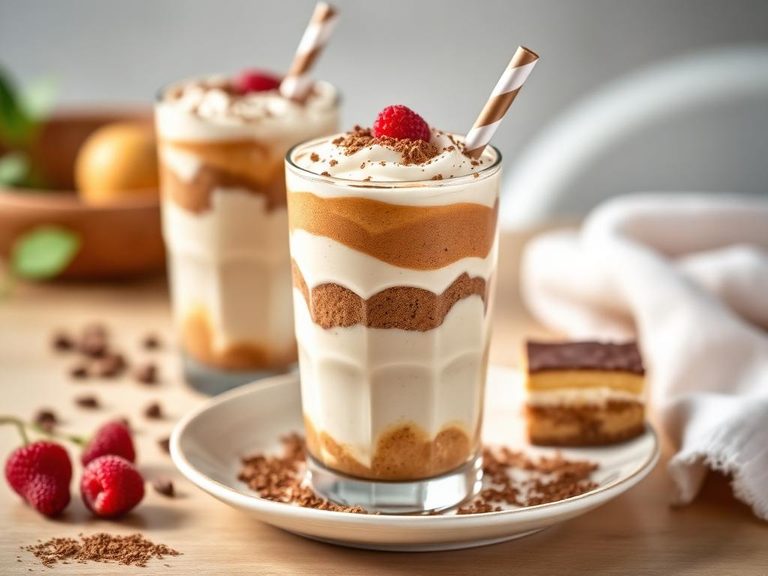
Tiramisu is a no-bake Italian dessert of coffee-soaked ladyfingers layered with a rich, creamy mascarpone and egg-yolk custard, finished with a dusting of bitter cocoa powder. Its texture is a sublime contrast: the soft, coffee-infused sponge yielding to the dense, velvety cream. Nutritionally, it's a decadent treat, delivering a significant calorie and fat load primarily from its mascarpone and egg yolks.
Calorie split: 6% protein · 33% carbs · 60% fat
↓ Full nutrition💚 Why it's loved
People adore tiramisu for its perfect harmony of flavors: the deep bitterness of espresso and cocoa cutting through the sweet, rich cream. It's a beloved symbol of Italian dolce vita, often associated with celebration and indulgence.
⚠️ Watch-outs & how to enjoy it better
Its high sugar and saturated fat content can cause a rapid blood-sugar spike and is calorie-dense. Those with lactose intolerance, egg allergies, or gluten sensitivity (from ladyfingers) should be cautious. To enjoy it mindfully, practice strict portion control, pair a small serving with a source of protein (like a handful of nuts) to slow sugar absorption, and consider a homemade version with reduced sugar and gluten-free ladyfingers.
Key benefits
- Provides a quick energy boost from its carbohydrate content.
- Contains calcium from the mascarpone cheese.
- Offers a small amount of protein from eggs and dairy.
- The caffeine from espresso can provide a mild stimulant effect.
🍽️ Popular dishes
🌍 Where it's eaten
💡 Did you know?
The name 'tiramisu' translates to 'pick me up' or 'lift me up' in Italian, a reference to the energizing effects of the caffeine and sugar.
Full nutrition (USDA data · scales with serving)
| Water | 40.0 g |
| Energy | 353 kcal |
| Protein | 5.7 g |
| Total lipid (fat) | 23.9 g |
| Carbohydrate, by difference | 29.4 g |
| Fiber, total dietary | 0.60 g |
| Total Sugars | 18.7 g |
| Calcium, Ca | 65.0 mg |
| Iron, Fe | 1.1 mg |
| Magnesium, Mg | 16.0 mg |
| Phosphorus, P | 109 mg |
| Potassium, K | 150 mg |
| Sodium, Na | 173 mg |
| Zinc, Zn | 0.64 mg |
| Copper, Cu | 0.07 mg |
| Selenium, Se | 9.6 ug |
| Vitamin C, total ascorbic acid | 1.1 mg |
| Thiamin | 0.10 mg |
| Riboflavin | 0.25 mg |
| Niacin | 0.90 mg |
| Vitamin B-6 | 0.06 mg |
| Folate, total | 20.0 ug |
| Folic acid | 6.0 ug |
| Folate, food | 14.0 ug |
| Folate, DFE | 24.0 ug |
| Choline, total | 39.0 mg |
| Vitamin B-12 | 0.20 ug |
| Vitamin B-12, added | 0.00 ug |
| Vitamin A, RAE | 185 ug |
| Retinol | 184 ug |
| Carotene, beta | 6.0 ug |
| Carotene, alpha | 2.0 ug |
| Cryptoxanthin, beta | 2.0 ug |
| Lycopene | 0.00 ug |
| Lutein + zeaxanthin | 72.0 ug |
| Vitamin E (alpha-tocopherol) | 0.71 mg |
| Vitamin E, added | 0.00 mg |
| Vitamin D (D2 + D3) | 0.60 ug |
| Vitamin K (phylloquinone) | 1.7 ug |
| Alcohol, ethyl | 0.00 g |
| Caffeine | 34.0 mg |
| Theobromine | 21.0 mg |
Fat & fatty acid profile (per 100g)
| Fatty acids, total saturated | 13.3 g |
| SFA 4:0 | 0.45 g |
| SFA 6:0 | 0.37 g |
| SFA 8:0 | 0.23 g |
| SFA 10:0 | 0.55 g |
| SFA 12:0 | 0.65 g |
| SFA 14:0 | 2.1 g |
| SFA 16:0 | 6.4 g |
| SFA 18:0 | 2.2 g |
| Fatty acids, total monounsaturated | 5.4 g |
| MUFA 16:1 | 0.48 g |
| MUFA 18:1 | 5.8 g |
| MUFA 20:1 | 0.05 g |
| MUFA 22:1 | 0.00 g |
| Fatty acids, total polyunsaturated | 1.3 g |
| PUFA 18:2 | 0.77 g |
| PUFA 18:3 | 0.09 g |
| PUFA 18:4 | 0.00 g |
| PUFA 20:4 | 0.07 g |
| PUFA 20:5 n-3 (EPA) | 0.01 g |
| PUFA 22:5 n-3 (DPA) | 0.01 g |
| PUFA 22:6 n-3 (DHA) | 0.01 g |
| Cholesterol | 121 mg |
FAQ
Is tiramisu safe to eat if it contains raw eggs?
Traditional recipes use raw egg yolks in the mascarpone cream. The risk is minimal when using very fresh, pasteurized eggs, but commercial versions or recipes for vulnerable groups often use a cooked zabaglione base or egg-free alternatives for safety.
Why is my tiramisu soggy or falling apart?
This is usually from over-soaking the ladyfingers in the coffee mixture. Dip them quickly—just a second or two per side—so they absorb flavor but retain structure. Also, allow it to set in the fridge for at least 6 hours, preferably overnight, before serving.
Can I make tiramisu without alcohol?
Absolutely. The alcohol (like Marsala wine or rum) is optional. You can simply use a stronger brewed espresso or coffee, or add a splash of vanilla extract or coffee syrup to the soaking liquid for depth of flavor.
Nutrient density (calculated · NRF9.3)
Nutrient Rich Foods index: beneficial nutrients (protein, fiber, vitamins, minerals) minus saturated fat, added sugar & sodium, per 100 kcal.
NRF9.3 index — Fulgoni, Keast & Drewnowski, 2009. Computed from USDA nutrients.
Weight-loss friendliness (composite index)
Energy density 3.53 kcal/g · 6% calories from protein · 0.6 g fiber · 18.7 g sugar per 100 g.
Composite of energy density (Rolls et al., 1999), protein & fiber satiety, minus sugar. A calculated heuristic — ranks satiety-per-calorie, not a clinical measure.
Dietary load (calculated from USDA values)
Potential renal acid load. Positive = acid-forming, negative = alkaline-forming.
Sodium-to-potassium ratio: 1.15 (lower is better — aim for ≤ 1)
Sodium:potassium per WHO potassium guidance. Computed from USDA nutrients.