

Teriyaki sauce
Common food
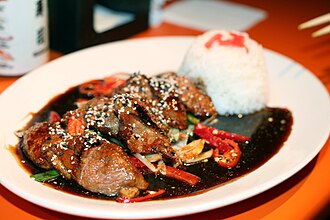
Photo: Wikipedia
Teriyaki sauce is a glossy, savory-sweet glaze that transforms simple ingredients into caramelized, umami-rich dishes. Its signature sheen comes from a balance of soy sauce, mirin, and sugar, creating a sticky texture that clings beautifully to proteins and vegetables. Nutritionally, it's a high-sugar, low-fat condiment, contributing quick energy primarily from carbohydrates.
Calorie split: 28% protein · 72% carbs · 0% fat
↓ Full nutrition💚 Why it's loved
People love it for its perfect harmony of salty, sweet, and savory notes that make almost any ingredient more appealing. Its versatility allows it to be used as a marinade, glaze, or dipping sauce, deeply rooted in Japanese culinary tradition.
⚠️ Watch-outs & how to enjoy it better
Its high sugar content (over 14g per 100g) can cause rapid blood-sugar spikes, and commercial versions are often very high in sodium. To counteract this, use it sparingly as a finishing glaze rather than a cooking sauce, pair it with plenty of fiber-rich vegetables and lean protein, and consider diluting it with a splash of water or citrus juice.
Key benefits
- Adds intense umami and sweet-savory flavor with minimal fat
- Provides a quick source of energy from its carbohydrate content
- Enhances the palatability of lean proteins and vegetables
- A small amount can significantly elevate a dish's overall flavor profile
🍽️ Popular dishes
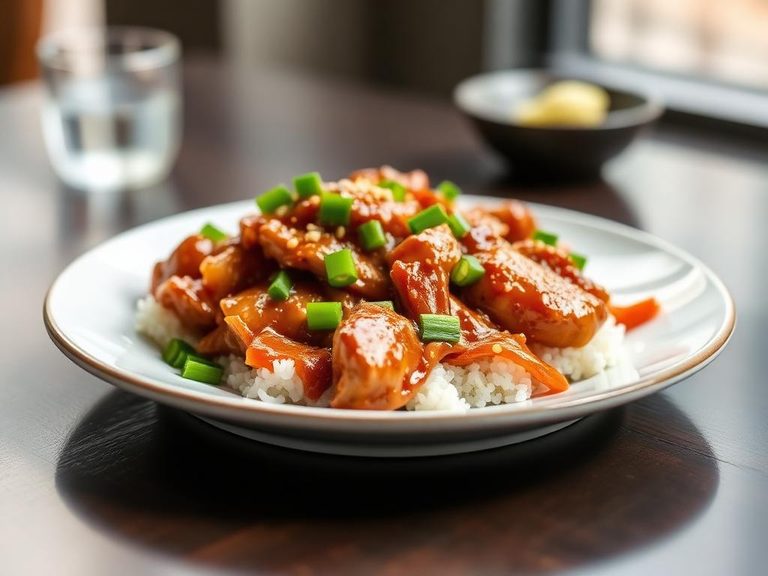
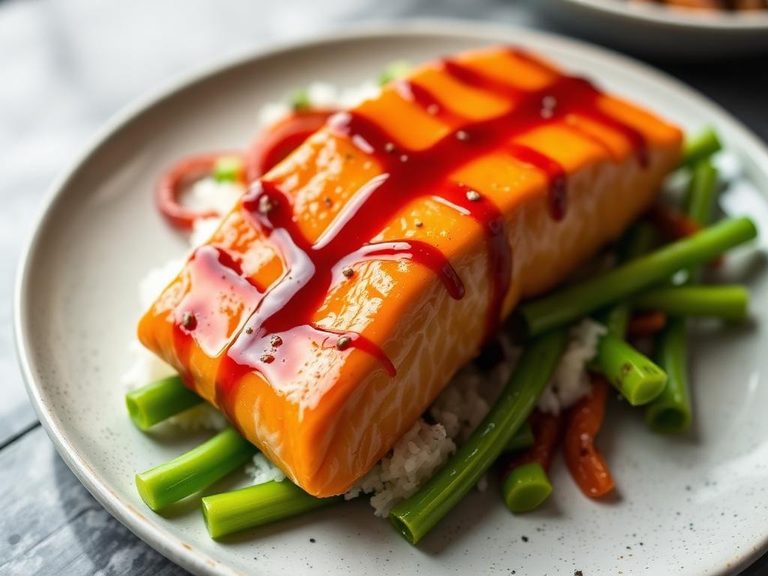
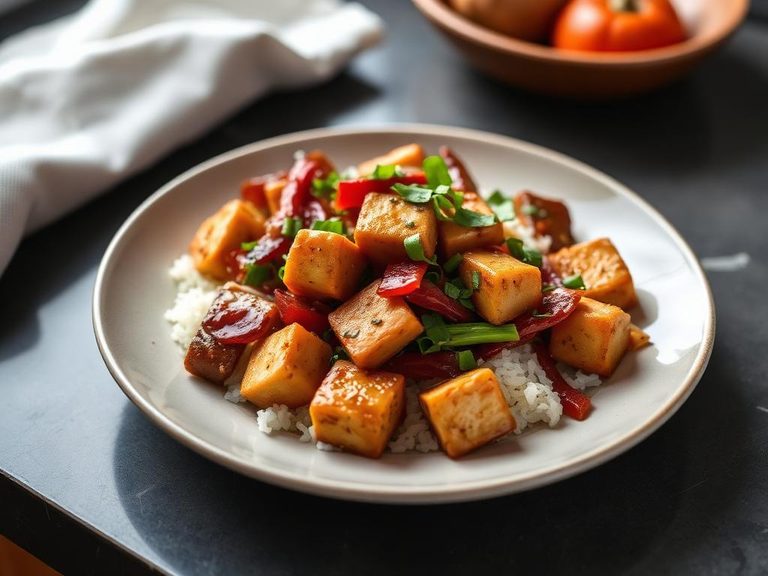
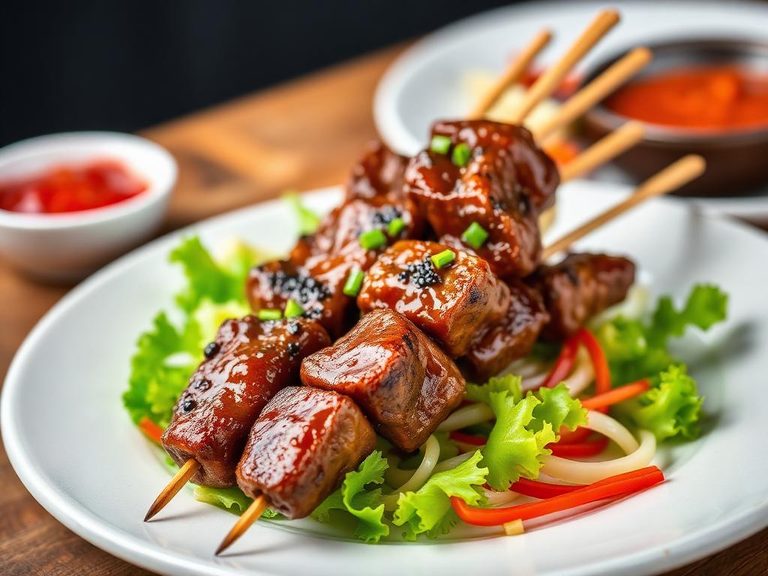
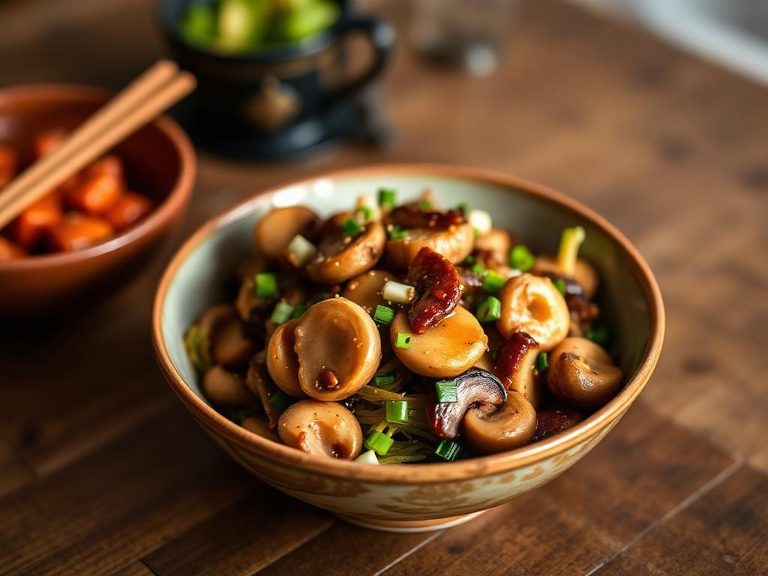
🌍 Where it's eaten
💡 Did you know?
Authentic Japanese teriyaki (照り焼き) is a cooking technique meaning 'glossy grilling,' where the sauce is applied only in the final moments of cooking to create a lacquer, unlike many Western versions where food is simmered in the sauce.
Full nutrition (USDA data · scales with serving)
| Water | 67.7 g |
| Energy | 89.0 kcal |
| Protein | 5.9 g |
| Total lipid (fat) | 0.02 g |
| Carbohydrate, by difference | 15.6 g |
| Fiber, total dietary | 0.10 g |
| Total Sugars | 14.1 g |
| Calcium, Ca | 25.0 mg |
| Iron, Fe | 1.7 mg |
| Magnesium, Mg | 61.0 mg |
| Phosphorus, P | 154 mg |
| Potassium, K | 225 mg |
| Sodium, Na | 3833 mg |
| Zinc, Zn | 0.10 mg |
| Copper, Cu | 0.10 mg |
| Selenium, Se | 1.1 ug |
| Vitamin C, total ascorbic acid | 0.00 mg |
| Thiamin | 0.03 mg |
| Riboflavin | 0.07 mg |
| Niacin | 1.3 mg |
| Vitamin B-6 | 0.10 mg |
| Folate, total | 8.0 ug |
| Folic acid | 0.00 ug |
| Folate, food | 8.0 ug |
| Folate, DFE | 8.0 ug |
| Choline, total | 19.5 mg |
| Vitamin B-12 | 0.00 ug |
| Vitamin B-12, added | 0.00 ug |
| Vitamin A, RAE | 0.00 ug |
| Retinol | 0.00 ug |
| Carotene, beta | 0.00 ug |
| Carotene, alpha | 0.00 ug |
| Cryptoxanthin, beta | 0.00 ug |
| Lycopene | 0.00 ug |
| Lutein + zeaxanthin | 0.00 ug |
| Vitamin E (alpha-tocopherol) | 0.00 mg |
| Vitamin E, added | 0.00 mg |
| Vitamin D (D2 + D3) | 0.00 ug |
| Vitamin K (phylloquinone) | 0.00 ug |
| Alcohol, ethyl | 0.00 g |
| Caffeine | 0.00 mg |
| Theobromine | 0.00 mg |
Fat & fatty acid profile (per 100g)
| Fatty acids, total saturated | 0.00 g |
| SFA 4:0 | 0.00 g |
| SFA 6:0 | 0.00 g |
| SFA 8:0 | 0.00 g |
| SFA 10:0 | 0.00 g |
| SFA 12:0 | 0.00 g |
| SFA 14:0 | 0.00 g |
| SFA 16:0 | 0.00 g |
| SFA 18:0 | 0.00 g |
| Fatty acids, total monounsaturated | 0.00 g |
| MUFA 16:1 | 0.00 g |
| MUFA 18:1 | 0.00 g |
| MUFA 20:1 | 0.00 g |
| MUFA 22:1 | 0.00 g |
| Fatty acids, total polyunsaturated | 0.00 g |
| PUFA 18:2 | 0.00 g |
| PUFA 18:3 | 0.00 g |
| PUFA 18:4 | 0.00 g |
| PUFA 20:4 | 0.00 g |
| PUFA 20:5 n-3 (EPA) | 0.00 g |
| PUFA 22:5 n-3 (DPA) | 0.00 g |
| PUFA 22:6 n-3 (DHA) | 0.00 g |
| Cholesterol | 0.00 mg |
FAQ
Is teriyaki sauce gluten-free?
Most traditional and commercial teriyaki sauces contain soy sauce, which is brewed with wheat. For a gluten-free version, look for tamari-based teriyaki sauces or make your own using gluten-free soy sauce or coconut aminos.
Can I use teriyaki sauce as a marinade?
Yes, but with caution. Its high sugar content can cause the surface of meat to burn quickly if grilled or broiled. It's best used as a marinade for a short time (30 minutes) or as a glaze applied during the last few minutes of cooking.
How does homemade teriyaki differ from bottled?
Homemade versions typically have a brighter, less cloying sweetness and allow you to control the sodium and sugar levels. Bottled sauces often contain added thickeners, preservatives, and a higher concentration of sugar for shelf stability.
Nutrient density (calculated · NRF9.3)
Nutrient Rich Foods index: beneficial nutrients (protein, fiber, vitamins, minerals) minus saturated fat, added sugar & sodium, per 100 kcal.
NRF9.3 index — Fulgoni, Keast & Drewnowski, 2009. Computed from USDA nutrients.
Weight-loss friendliness (composite index)
Energy density 0.89 kcal/g · 27% calories from protein · 0.1 g fiber · 14.1 g sugar per 100 g.
Composite of energy density (Rolls et al., 1999), protein & fiber satiety, minus sugar. A calculated heuristic — ranks satiety-per-calorie, not a clinical measure.
Dietary load (calculated from USDA values)
Potential renal acid load. Positive = acid-forming, negative = alkaline-forming.
Sodium-to-potassium ratio: 17.04 (lower is better — aim for ≤ 1)
Sodium:potassium per WHO potassium guidance. Computed from USDA nutrients.