

Taco or tostada salad with meat and sour cream
Common food

Photo: Wikipedia
A vibrant, layered salad served in a crispy corn tortilla bowl or on a flat tostada shell, piled with seasoned ground beef, fresh lettuce, diced tomatoes, shredded cheese, and a generous dollop of cool sour cream. Each bite offers a satisfying crunch from the shell, a savory depth from the meat, and a creamy, tangy finish that ties the textures together. With 181 kcal per 100g and a balanced 6.91g protein, it's a more substantial, meal-sized salad option.
Calorie split: 15% protein · 33% carbs · 52% fat
↓ Full nutrition💚 Why it's loved
People love it for the perfect contrast of warm, savory meat against cool, crisp vegetables and creamy sour cream, all held in an edible, crunchy vessel. It's a customizable, hearty meal that feels indulgent yet incorporates salad elements, making it a popular choice for both casual dinners and festive occasions.
⚠️ Watch-outs & how to enjoy it better
The fried tortilla shell and full-fat dairy can make it high in calories and saturated fat, while the seasoned meat and cheese often contribute significant sodium. Those watching blood sugar should be mindful of the refined carbs in the shell and any added sugar in the dressing. To counteract, opt for a baked or soft corn tortilla, use lean ground meat, load up on extra lettuce and tomatoes, and choose a light sour cream or Greek yogurt.
Key benefits
- Good source of protein from ground meat and dairy
- Provides dietary fiber from lettuce and beans (if included)
- Contains calcium from cheese and sour cream
- Offers a mix of textures that can increase meal satisfaction
- Can be a vehicle for vegetables like lettuce, tomatoes, and onions
🍽️ Popular dishes
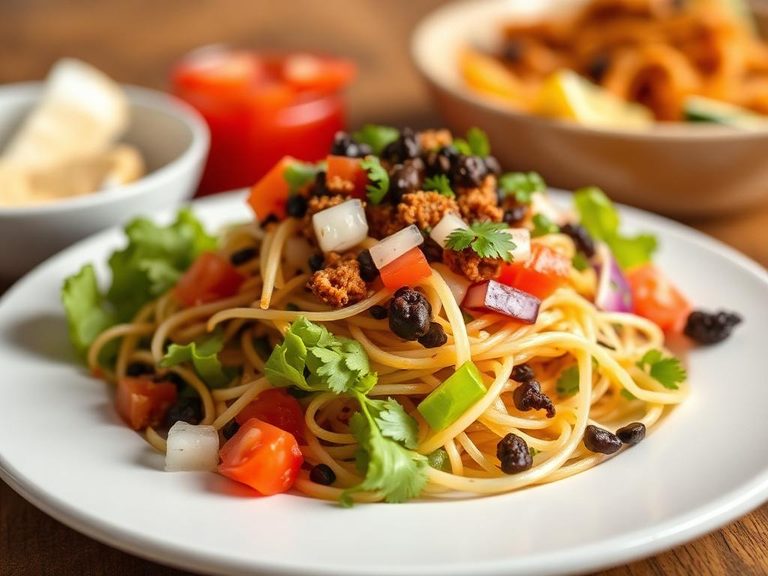
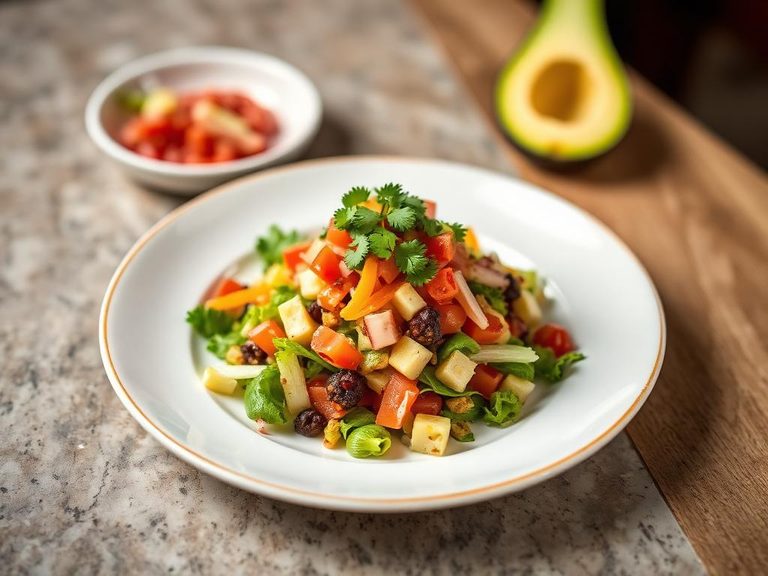
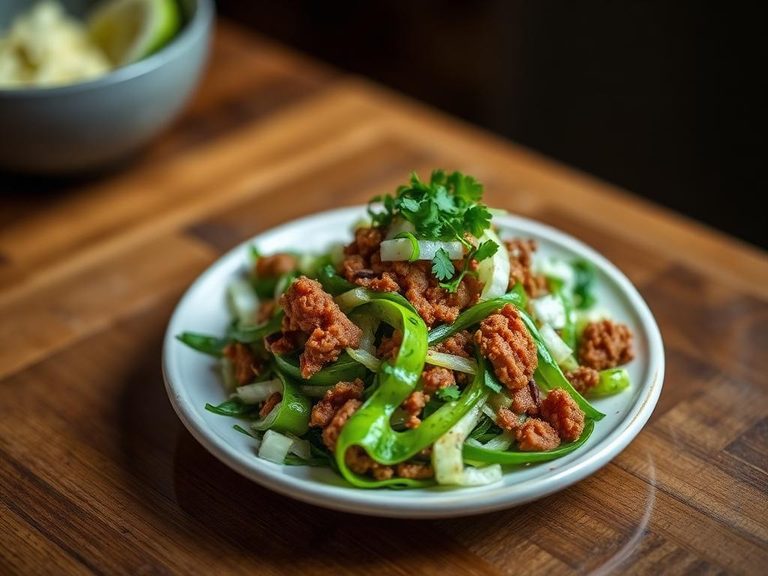
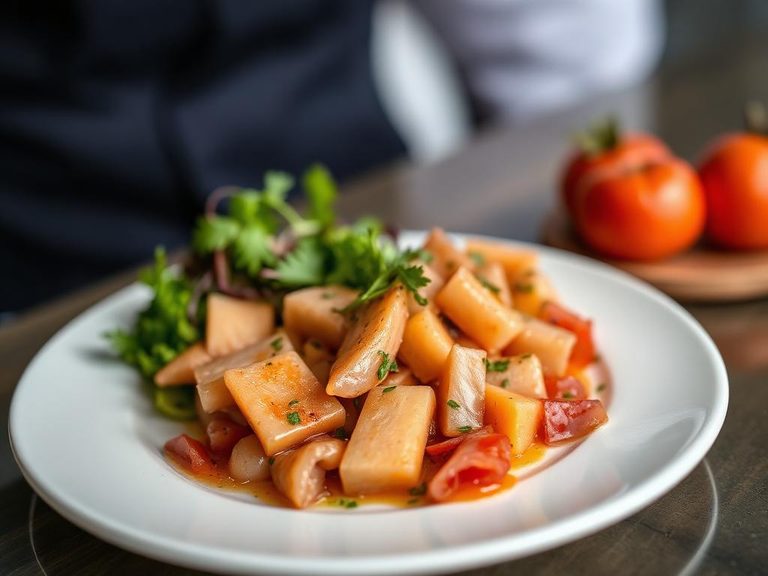
🌍 Where it's eaten
💡 Did you know?
The iconic edible salad bowl is often made from a single large corn tortilla that is deep-fried in a special mold to hold its shape, a technique popularized in Tex-Mex restaurants in the 1960s.
Full nutrition (USDA data · scales with serving)
| Water | 66.1 g |
| Energy | 181 kcal |
| Protein | 6.9 g |
| Total lipid (fat) | 10.4 g |
| Carbohydrate, by difference | 15.1 g |
| Fiber, total dietary | 2.5 g |
| Total Sugars | 2.0 g |
| Calcium, Ca | 87.0 mg |
| Iron, Fe | 1.6 mg |
| Magnesium, Mg | 19.0 mg |
| Phosphorus, P | 118 mg |
| Potassium, K | 214 mg |
| Sodium, Na | 286 mg |
| Zinc, Zn | 1.1 mg |
| Copper, Cu | 0.09 mg |
| Selenium, Se | 8.5 ug |
| Vitamin C, total ascorbic acid | 2.9 mg |
| Thiamin | 0.13 mg |
| Riboflavin | 0.13 mg |
| Niacin | 1.6 mg |
| Vitamin B-6 | 0.11 mg |
| Folate, total | 36.0 ug |
| Folic acid | 10.0 ug |
| Folate, food | 26.0 ug |
| Folate, DFE | 43.0 ug |
| Choline, total | 19.9 mg |
| Vitamin B-12 | 0.34 ug |
| Vitamin B-12, added | 0.00 ug |
| Vitamin A, RAE | 46.0 ug |
| Retinol | 32.0 ug |
| Carotene, beta | 151 ug |
| Carotene, alpha | 17.0 ug |
| Cryptoxanthin, beta | 12.0 ug |
| Lycopene | 241 ug |
| Lutein + zeaxanthin | 103 ug |
| Vitamin E (alpha-tocopherol) | 0.94 mg |
| Vitamin E, added | 0.00 mg |
| Vitamin D (D2 + D3) | 0.00 ug |
| Vitamin K (phylloquinone) | 10.6 ug |
| Alcohol, ethyl | 0.00 g |
| Caffeine | 0.00 mg |
| Theobromine | 0.00 mg |
Fat & fatty acid profile (per 100g)
| Fatty acids, total saturated | 3.9 g |
| SFA 4:0 | 0.03 g |
| SFA 6:0 | 0.05 g |
| SFA 8:0 | 0.03 g |
| SFA 10:0 | 0.08 g |
| SFA 12:0 | 0.11 g |
| SFA 14:0 | 0.40 g |
| SFA 16:0 | 2.1 g |
| SFA 18:0 | 0.85 g |
| Fatty acids, total monounsaturated | 3.7 g |
| MUFA 16:1 | 0.18 g |
| MUFA 18:1 | 3.5 g |
| MUFA 20:1 | 0.03 g |
| MUFA 22:1 | 0.00 g |
| Fatty acids, total polyunsaturated | 1.6 g |
| PUFA 18:2 | 1.4 g |
| PUFA 18:3 | 0.18 g |
| PUFA 18:4 | 0.00 g |
| PUFA 20:4 | 0.01 g |
| PUFA 20:5 n-3 (EPA) | 0.00 g |
| PUFA 22:5 n-3 (DPA) | 0.00 g |
| PUFA 22:6 n-3 (DHA) | 0.00 g |
| Cholesterol | 20.0 mg |
FAQ
Is a taco salad healthier than a regular taco?
It can be, as it typically includes a larger volume of lettuce and vegetables, increasing fiber and nutrient content. However, the fried shell and generous cheese and sour cream can make it higher in calories and fat than a simple soft taco.
How can I make a lighter version at home?
Use lean ground turkey or chicken, bake the tortilla bowl or use a soft corn tortilla, load up on extra lettuce, tomatoes, and onions, and substitute full-fat sour cream with plain Greek yogurt or a light version.
What's the difference between a taco salad and a tostada salad?
A taco salad is typically served in a deep, fried tortilla bowl, while a tostada salad is served on a flat, crispy tostada shell. The ingredients are often similar, but the vessel and presentation differ.
Nutrient density (calculated · NRF9.3)
Nutrient Rich Foods index: beneficial nutrients (protein, fiber, vitamins, minerals) minus saturated fat, added sugar & sodium, per 100 kcal.
NRF9.3 index — Fulgoni, Keast & Drewnowski, 2009. Computed from USDA nutrients.
Weight-loss friendliness (composite index)
Energy density 1.81 kcal/g · 15% calories from protein · 2.5 g fiber · 2.0 g sugar per 100 g.
Composite of energy density (Rolls et al., 1999), protein & fiber satiety, minus sugar. A calculated heuristic — ranks satiety-per-calorie, not a clinical measure.
Dietary load (calculated from USDA values)
Potential renal acid load. Positive = acid-forming, negative = alkaline-forming.
Sodium-to-potassium ratio: 1.34 (lower is better — aim for ≤ 1)
Sodium:potassium per WHO potassium guidance. Computed from USDA nutrients.