

Taco or tostada salad, meatless with sour cream
Common food
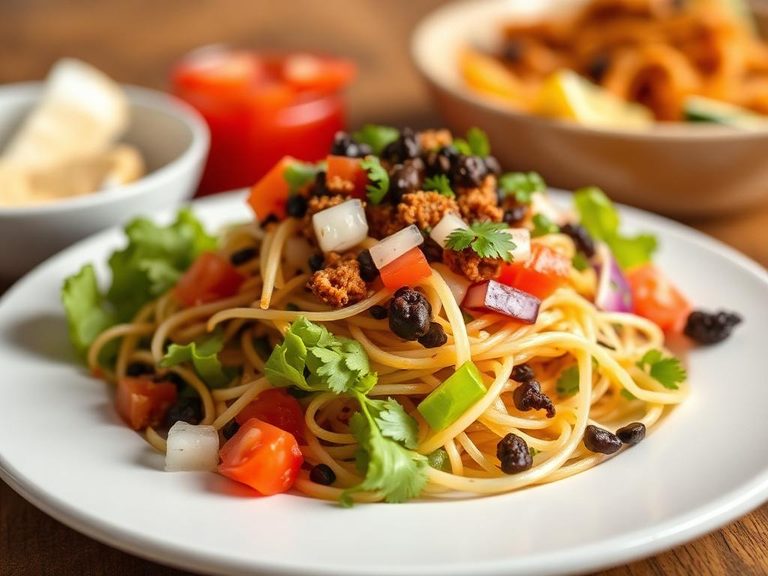
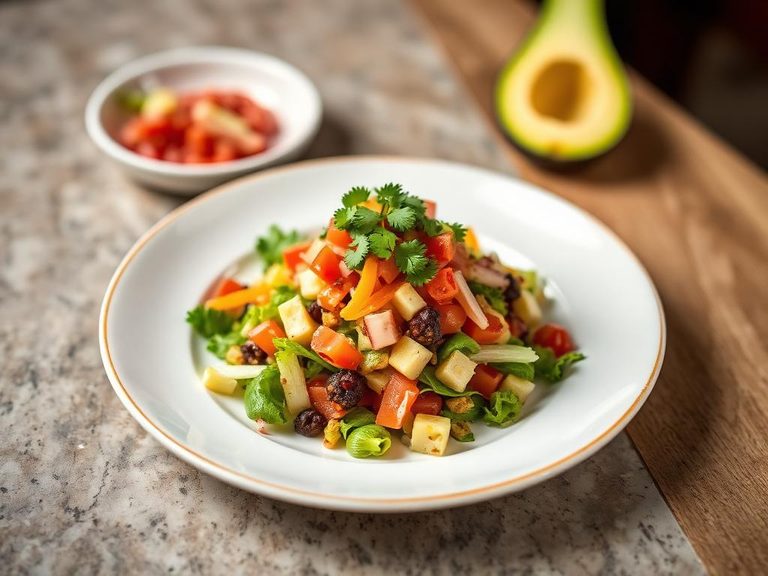
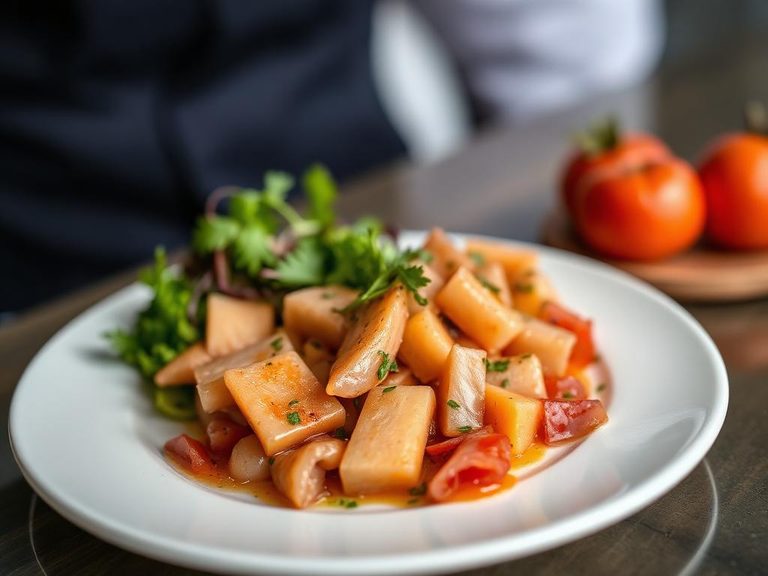
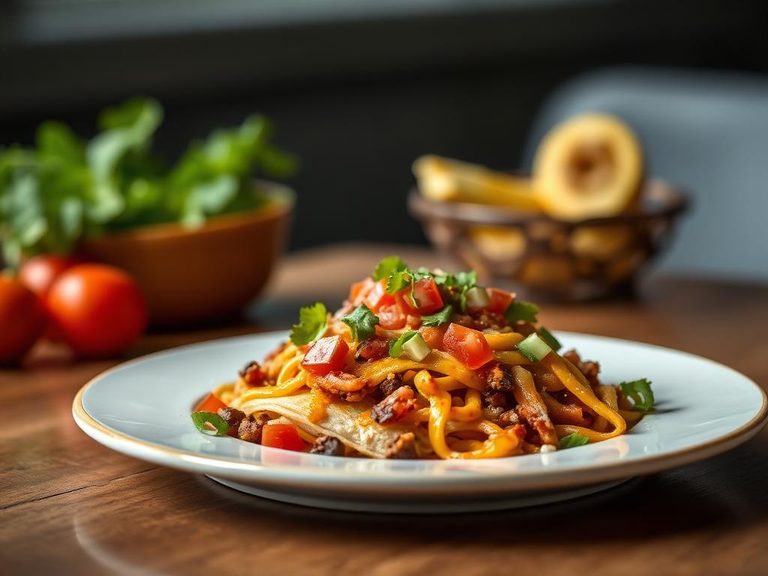
This is a vibrant, texturally dynamic dish where a crisp corn tortilla base or a fresh lettuce bed supports a medley of beans, corn, and vegetables, all cooled by a dollop of tangy sour cream. It delivers a satisfying crunch and a creamy finish, offering a lighter, plant-forward take on the classic taco experience. Nutritionally, it's a moderate-calorie option that provides a good balance of fiber and healthy fats from the sour cream.
Calorie split: 12% protein · 42% carbs · 46% fat
↓ Full nutrition💚 Why it's loved
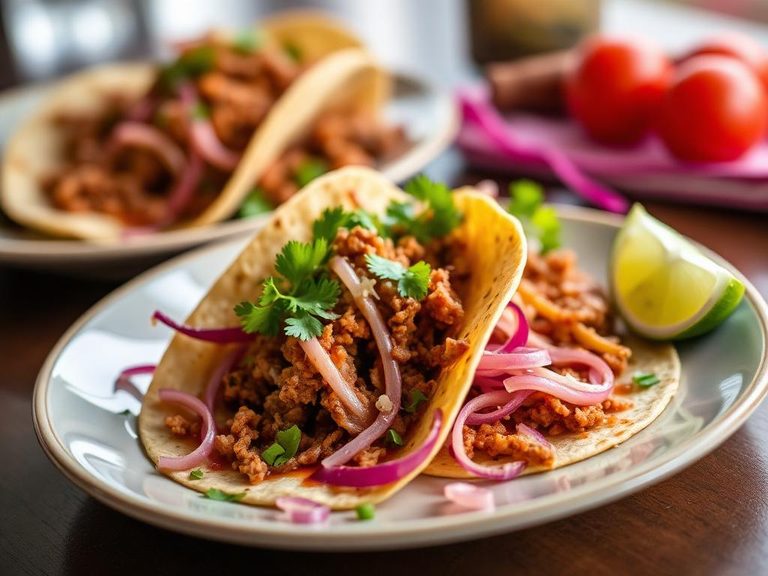
People adore this dish for its customizable nature and the satisfying contrast between the crunchy base and the cool, creamy sour cream. It's a beloved staple in Mexican and Tex-Mex cuisine, offering a flavorful and versatile meal that can be tailored to individual tastes.
⚠️ Watch-outs & how to enjoy it better
The sour cream adds saturated fat and calories, which may be a concern for those monitoring their intake. To counteract this, consider using a low-fat or Greek yogurt alternative, and be mindful of portion sizes to keep the dish balanced.
Key benefits
- Provides plant-based protein from beans and corn
- Good source of dietary fiber for digestive health
- Offers a balanced mix of carbohydrates and fats
- Low in saturated fat compared to meat-based versions
- Can be a lighter, refreshing meal option
🍽️ Popular dishes
🌍 Where it's eaten
💡 Did you know?
The word 'tostada' comes from the Spanish word for 'toasted,' referring to the flat, fried or baked corn tortilla that serves as the crunchy foundation for this salad.
Full nutrition (USDA data · scales with serving)
| Water | 67.3 g |
| Energy | 167 kcal |
| Protein | 5.0 g |
| Total lipid (fat) | 8.7 g |
| Carbohydrate, by difference | 17.6 g |
| Fiber, total dietary | 3.3 g |
| Total Sugars | 2.0 g |
| Calcium, Ca | 90.0 mg |
| Iron, Fe | 1.6 mg |
| Magnesium, Mg | 21.0 mg |
| Phosphorus, P | 113 mg |
| Potassium, K | 221 mg |
| Sodium, Na | 241 mg |
| Zinc, Zn | 0.56 mg |
| Copper, Cu | 0.11 mg |
| Selenium, Se | 6.4 ug |
| Vitamin C, total ascorbic acid | 2.9 mg |
| Thiamin | 0.15 mg |
| Riboflavin | 0.12 mg |
| Niacin | 1.1 mg |
| Vitamin B-6 | 0.07 mg |
| Folate, total | 44.0 ug |
| Folic acid | 10.0 ug |
| Folate, food | 34.0 ug |
| Folate, DFE | 51.0 ug |
| Choline, total | 14.5 mg |
| Vitamin B-12 | 0.05 ug |
| Vitamin B-12, added | 0.00 ug |
| Vitamin A, RAE | 41.0 ug |
| Retinol | 32.0 ug |
| Carotene, beta | 110 ug |
| Carotene, alpha | 12.0 ug |
| Cryptoxanthin, beta | 2.0 ug |
| Lycopene | 244 ug |
| Lutein + zeaxanthin | 101 ug |
| Vitamin E (alpha-tocopherol) | 0.92 mg |
| Vitamin E, added | 0.00 mg |
| Vitamin D (D2 + D3) | 0.00 ug |
| Vitamin K (phylloquinone) | 10.6 ug |
| Alcohol, ethyl | 0.00 g |
| Caffeine | 0.00 mg |
| Theobromine | 0.00 mg |
Fat & fatty acid profile (per 100g)
| Fatty acids, total saturated | 3.2 g |
| SFA 4:0 | 0.03 g |
| SFA 6:0 | 0.05 g |
| SFA 8:0 | 0.03 g |
| SFA 10:0 | 0.08 g |
| SFA 12:0 | 0.11 g |
| SFA 14:0 | 0.35 g |
| SFA 16:0 | 1.7 g |
| SFA 18:0 | 0.64 g |
| Fatty acids, total monounsaturated | 2.9 g |
| MUFA 16:1 | 0.12 g |
| MUFA 18:1 | 2.9 g |
| MUFA 20:1 | 0.03 g |
| MUFA 22:1 | 0.00 g |
| Fatty acids, total polyunsaturated | 1.6 g |
| PUFA 18:2 | 1.4 g |
| PUFA 18:3 | 0.18 g |
| PUFA 18:4 | 0.00 g |
| PUFA 20:4 | 0.01 g |
| PUFA 20:5 n-3 (EPA) | 0.00 g |
| PUFA 22:5 n-3 (DPA) | 0.00 g |
| PUFA 22:6 n-3 (DHA) | 0.00 g |
| Cholesterol | 11.0 mg |
FAQ
Is a meatless taco or tostada salad a good source of protein?
While it provides some plant-based protein from beans and corn, it's not a high-protein dish. For a more substantial protein boost, consider adding tofu, tempeh, or extra beans.
Can I make this dish gluten-free?
Yes, if you use corn tortillas or corn-based tostada shells, which are naturally gluten-free. Always check labels for any added ingredients that might contain gluten.
How can I reduce the fat content from the sour cream?
You can use low-fat or non-fat sour cream, or substitute it with plain Greek yogurt for a similar tangy flavor with less fat and more protein.
What are the best vegetables to include in a meatless taco salad?
Common choices include lettuce, tomatoes, onions, bell peppers, corn, black beans, and avocado. You can also add jalapeños for a spicy kick or cilantro for freshness.
Nutrient density (calculated · NRF9.3)
Nutrient Rich Foods index: beneficial nutrients (protein, fiber, vitamins, minerals) minus saturated fat, added sugar & sodium, per 100 kcal.
NRF9.3 index — Fulgoni, Keast & Drewnowski, 2009. Computed from USDA nutrients.
Weight-loss friendliness (composite index)
Energy density 1.67 kcal/g · 12% calories from protein · 3.3 g fiber · 2.0 g sugar per 100 g.
Composite of energy density (Rolls et al., 1999), protein & fiber satiety, minus sugar. A calculated heuristic — ranks satiety-per-calorie, not a clinical measure.
Dietary load (calculated from USDA values)
Potential renal acid load. Positive = acid-forming, negative = alkaline-forming.
Sodium-to-potassium ratio: 1.09 (lower is better — aim for ≤ 1)
Sodium:potassium per WHO potassium guidance. Computed from USDA nutrients.