

Szechuan beef
Common food
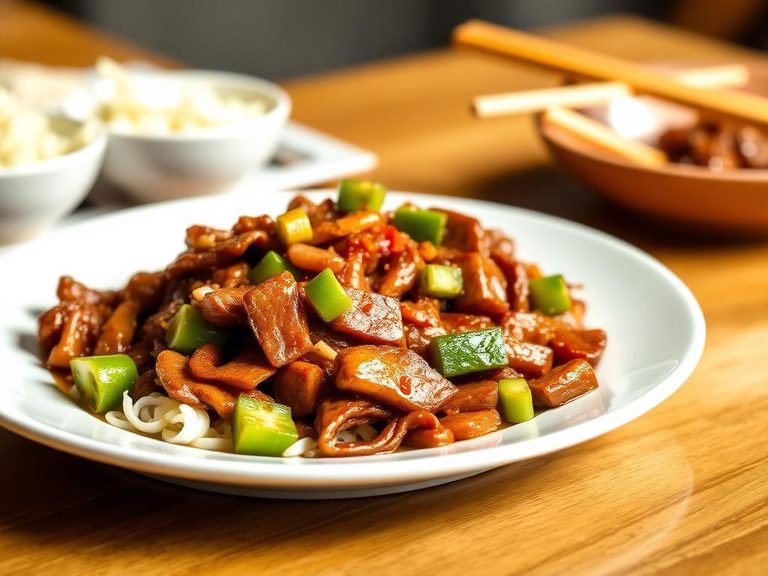
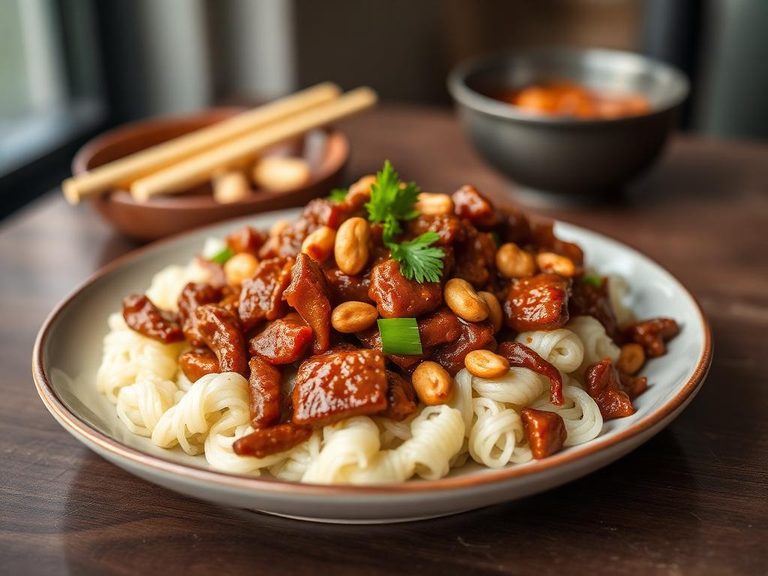
Szechuan beef is a classic Chinese-American stir-fry featuring tender slices of beef wok-seared with a fiery, aromatic sauce. The texture is typically tender-crisp, with the beef coated in a glossy, complex sauce that balances spicy, savory, and slightly sweet notes. Nutritionally, it's a relatively lean protein source with a moderate calorie count per 100g.
Calorie split: 27% protein · 28% carbs · 45% fat
↓ Full nutrition💚 Why it's loved
People adore it for the bold, layered heat from Szechuan peppercorns and dried chilies, which create a unique tingling, numbing sensation (málà). It's a versatile dish that can be tailored with various vegetables and is a staple in celebratory meals and casual dining alike.
⚠️ Watch-outs & how to enjoy it better
The primary concern is often high sodium content from soy sauce, oyster sauce, and added salt, which can be problematic for those monitoring blood pressure. To counteract this, request sauce on the side, use low-sodium soy sauce in homemade versions, or pair it with unsalted steamed rice and extra vegetables to dilute the sodium per bite.
Key benefits
- Good source of high-quality protein for muscle maintenance.
- Contains iron and zinc from the beef.
- Capsaicin from chili peppers may boost metabolism.
- Quick to cook, preserving some vegetable nutrients if included.
🍽️ Popular dishes
🌍 Where it's eaten
💡 Did you know?
The signature 'numbing' sensation in Szechuan beef comes from the Szechuan peppercorn, which isn't a true pepper but the husk of a berry that creates a unique tingling effect by interacting with nerve receptors.
Full nutrition (USDA data · scales with serving)
| Water | 78.8 g |
| Energy | 105 kcal |
| Protein | 7.1 g |
| Total lipid (fat) | 5.3 g |
| Carbohydrate, by difference | 7.3 g |
| Fiber, total dietary | 1.5 g |
| Total Sugars | 2.4 g |
| Calcium, Ca | 22.0 mg |
| Iron, Fe | 1.1 mg |
| Magnesium, Mg | 15.0 mg |
| Phosphorus, P | 76.0 mg |
| Potassium, K | 204 mg |
| Sodium, Na | 409 mg |
| Zinc, Zn | 1.5 mg |
| Copper, Cu | 0.05 mg |
| Selenium, Se | 6.7 ug |
| Vitamin C, total ascorbic acid | 11.6 mg |
| Thiamin | 0.03 mg |
| Riboflavin | 0.06 mg |
| Niacin | 1.3 mg |
| Vitamin B-6 | 0.16 mg |
| Folate, total | 45.0 ug |
| Folic acid | 0.00 ug |
| Folate, food | 45.0 ug |
| Folate, DFE | 45.0 ug |
| Choline, total | 34.5 mg |
| Vitamin B-12 | 0.48 ug |
| Vitamin B-12, added | 0.00 ug |
| Vitamin A, RAE | 63.0 ug |
| Retinol | 0.00 ug |
| Carotene, beta | 595 ug |
| Carotene, alpha | 323 ug |
| Cryptoxanthin, beta | 1.0 ug |
| Lycopene | 4.0 ug |
| Lutein + zeaxanthin | 268 ug |
| Vitamin E (alpha-tocopherol) | 0.82 mg |
| Vitamin E, added | 0.00 mg |
| Vitamin D (D2 + D3) | 0.10 ug |
| Vitamin K (phylloquinone) | 51.3 ug |
| Alcohol, ethyl | 0.00 g |
| Caffeine | 0.00 mg |
| Theobromine | 0.00 mg |
Fat & fatty acid profile (per 100g)
| Fatty acids, total saturated | 0.98 g |
| SFA 4:0 | 0.00 g |
| SFA 6:0 | 0.01 g |
| SFA 8:0 | 0.00 g |
| SFA 10:0 | 0.00 g |
| SFA 12:0 | 0.00 g |
| SFA 14:0 | 0.03 g |
| SFA 16:0 | 0.63 g |
| SFA 18:0 | 0.25 g |
| Fatty acids, total monounsaturated | 1.2 g |
| MUFA 16:1 | 0.05 g |
| MUFA 18:1 | 1.1 g |
| MUFA 20:1 | 0.02 g |
| MUFA 22:1 | 0.00 g |
| Fatty acids, total polyunsaturated | 2.1 g |
| PUFA 18:2 | 1.8 g |
| PUFA 18:3 | 0.26 g |
| PUFA 18:4 | 0.00 g |
| PUFA 20:4 | 0.01 g |
| PUFA 20:5 n-3 (EPA) | 0.00 g |
| PUFA 22:5 n-3 (DPA) | 0.01 g |
| PUFA 22:6 n-3 (DHA) | 0.00 g |
| Cholesterol | 14.0 mg |
FAQ
Is Szechuan beef very spicy?
Authentic versions are quite spicy and numbing (málà) due to dried chilies and Szechuan peppercorns. American-Chinese versions are often milder, with heat levels that can be adjusted when ordering.
What cut of beef is typically used?
Flank steak, sirloin, or beef tenderloin are common, as they are tender and cook quickly in a hot wok. The beef is often sliced against the grain for maximum tenderness.
Can I make a healthier version at home?
Yes. Use lean beef like sirloin, reduce sodium by using low-sodium soy sauce and broth, load up on vegetables like bell peppers and broccoli, and control the oil by using a non-stick pan.
Nutrient density (calculated · NRF9.3)
Nutrient Rich Foods index: beneficial nutrients (protein, fiber, vitamins, minerals) minus saturated fat, added sugar & sodium, per 100 kcal.
NRF9.3 index — Fulgoni, Keast & Drewnowski, 2009. Computed from USDA nutrients.
Weight-loss friendliness (composite index)
Energy density 1.05 kcal/g · 27% calories from protein · 1.5 g fiber · 2.4 g sugar per 100 g.
Composite of energy density (Rolls et al., 1999), protein & fiber satiety, minus sugar. A calculated heuristic — ranks satiety-per-calorie, not a clinical measure.
Dietary load (calculated from USDA values)
Potential renal acid load. Positive = acid-forming, negative = alkaline-forming.
Sodium-to-potassium ratio: 2.00 (lower is better — aim for ≤ 1)
Sodium:potassium per WHO potassium guidance. Computed from USDA nutrients.