

Spanakopita
Common food

Photo: Wikipedia
Spanakopita is a savory Greek pastry, where flaky, buttery phyllo dough encases a rich filling of spinach, tangy feta cheese, and aromatic herbs like dill and scallion. The texture is a delightful contrast: a shattering, crisp exterior giving way to a soft, creamy, and savory interior. Nutritionally, it's a source of protein and fat from the cheese and dough, but is calorie-dense due to its generous use of butter or oil.
Calorie split: 16% protein · 20% carbs · 65% fat
↓ Full nutrition💚 Why it's loved
People adore spanakopita for its perfect harmony of textures—the crispy, shattering phyllo against the warm, creamy spinach-feta filling—and its deeply savory, herbaceous flavor. It's a beloved staple at Greek gatherings, holidays, and as a versatile snack that can be served hot or at room temperature.
⚠️ Watch-outs & how to enjoy it better
The high fat content from butter and phyllo, along with sodium from feta, can be a concern for those monitoring heart health or blood pressure. To counteract this, enjoy a moderate portion (like a small triangle) alongside a fresh, acidic salad to cut the richness, and ensure the rest of your meal is lower in sodium and fat.
Key benefits
- Provides protein from feta cheese and eggs
- Contains iron and vitamins from spinach
- Offers quick energy from carbohydrates
- Can be a source of calcium from dairy
- Often includes beneficial herbs like dill
🍽️ Popular dishes
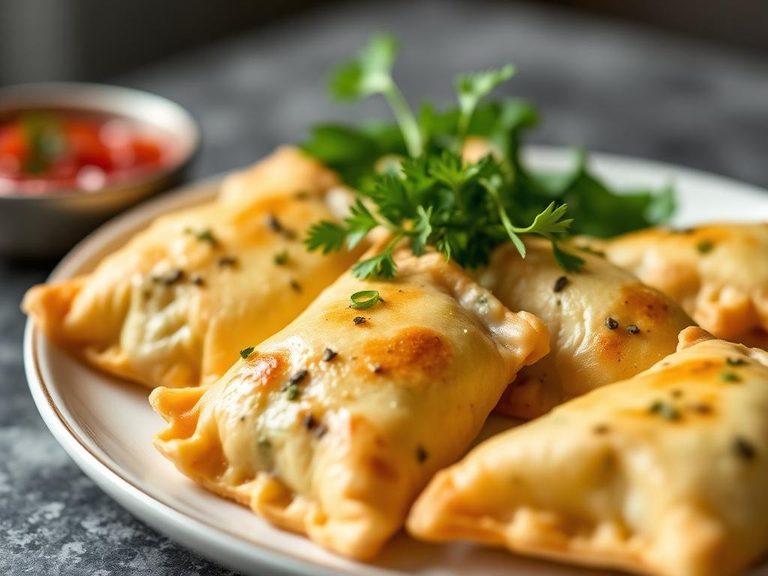
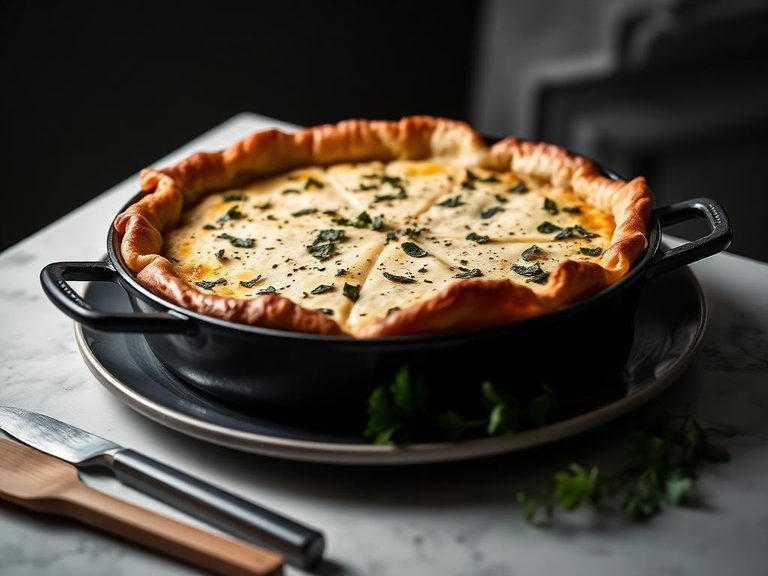

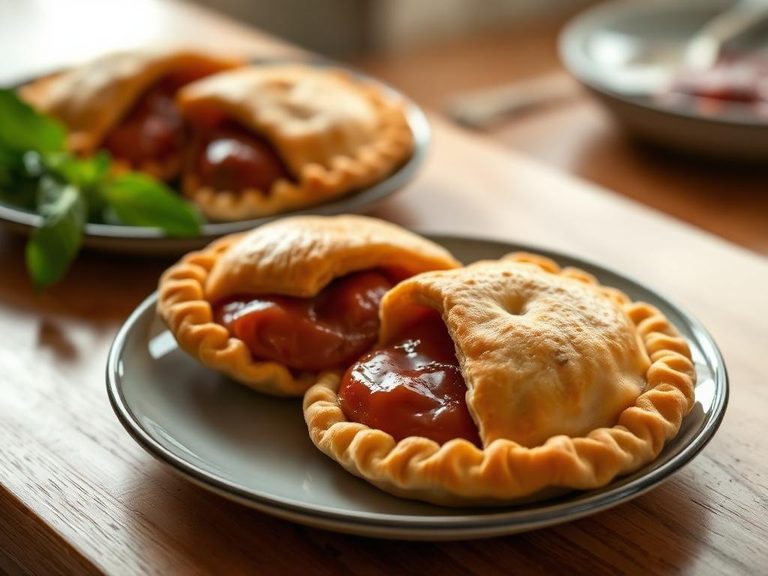
🌍 Where it's eaten
💡 Did you know?
The word 'spanakopita' literally translates from Greek as 'spinach pie' (spanáki = spinach, píta = pie), and its origins are often traced back to the Ottoman Empire's influence on the region's cuisine.
Full nutrition (USDA data · scales with serving)
| Water | 64.3 g |
| Energy | 212 kcal |
| Protein | 8.3 g |
| Total lipid (fat) | 15.2 g |
| Carbohydrate, by difference | 10.3 g |
| Fiber, total dietary | 1.0 g |
| Total Sugars | 0.64 g |
| Calcium, Ca | 132 mg |
| Iron, Fe | 1.3 mg |
| Magnesium, Mg | 48.0 mg |
| Phosphorus, P | 126 mg |
| Potassium, K | 264 mg |
| Sodium, Na | 392 mg |
| Zinc, Zn | 0.94 mg |
| Copper, Cu | 0.06 mg |
| Selenium, Se | 11.6 ug |
| Vitamin C, total ascorbic acid | 9.4 mg |
| Thiamin | 0.11 mg |
| Riboflavin | 0.26 mg |
| Niacin | 0.78 mg |
| Vitamin B-6 | 0.10 mg |
| Folate, total | 58.0 ug |
| Folic acid | 7.0 ug |
| Folate, food | 51.0 ug |
| Folate, DFE | 63.0 ug |
| Choline, total | 46.6 mg |
| Vitamin B-12 | 0.25 ug |
| Vitamin B-12, added | 0.00 ug |
| Vitamin A, RAE | 233 ug |
| Retinol | 109 ug |
| Carotene, beta | 1485 ug |
| Carotene, alpha | 0.00 ug |
| Cryptoxanthin, beta | 6.0 ug |
| Lycopene | 0.00 ug |
| Lutein + zeaxanthin | 3230 ug |
| Vitamin E (alpha-tocopherol) | 1.8 mg |
| Vitamin E, added | 0.00 mg |
| Vitamin D (D2 + D3) | 0.30 ug |
| Vitamin K (phylloquinone) | 211 ug |
| Alcohol, ethyl | 0.00 g |
| Caffeine | 0.00 mg |
| Theobromine | 0.00 mg |
Fat & fatty acid profile (per 100g)
| Fatty acids, total saturated | 6.5 g |
| SFA 4:0 | 0.23 g |
| SFA 6:0 | 0.15 g |
| SFA 8:0 | 0.14 g |
| SFA 10:0 | 0.22 g |
| SFA 12:0 | 0.24 g |
| SFA 14:0 | 0.87 g |
| SFA 16:0 | 3.4 g |
| SFA 18:0 | 1.2 g |
| Fatty acids, total monounsaturated | 5.3 g |
| MUFA 16:1 | 0.22 g |
| MUFA 18:1 | 5.0 g |
| MUFA 20:1 | 0.02 g |
| MUFA 22:1 | 0.00 g |
| Fatty acids, total polyunsaturated | 1.0 g |
| PUFA 18:2 | 0.85 g |
| PUFA 18:3 | 0.16 g |
| PUFA 18:4 | 0.00 g |
| PUFA 20:4 | 0.01 g |
| PUFA 20:5 n-3 (EPA) | 0.00 g |
| PUFA 22:5 n-3 (DPA) | 0.00 g |
| PUFA 22:6 n-3 (DHA) | 0.00 g |
| Cholesterol | 79.0 mg |
FAQ
Is spanakopita healthy?
It's a mixed bag. The spinach and feta provide nutrients like iron, protein, and calcium, but the buttery phyllo makes it high in fat and calories. It's best enjoyed as an occasional treat or in controlled portions.
What does spanakopita taste like?
It tastes savory, salty, and herbaceous, with a dominant flavor of spinach and tangy feta cheese, complemented by dill and onion. The texture is key: crispy, flaky pastry outside and a soft, creamy filling inside.
Can I make it ahead of time?
Yes. You can assemble the unbaked pastries, freeze them on a tray, and then transfer to a bag. Bake directly from frozen, adding a few extra minutes to the cooking time for a fresh, hot result.
Nutrient density (calculated · NRF9.3)
Nutrient Rich Foods index: beneficial nutrients (protein, fiber, vitamins, minerals) minus saturated fat, added sugar & sodium, per 100 kcal.
NRF9.3 index — Fulgoni, Keast & Drewnowski, 2009. Computed from USDA nutrients.
Weight-loss friendliness (composite index)
Energy density 2.12 kcal/g · 16% calories from protein · 1.0 g fiber · 0.6 g sugar per 100 g.
Composite of energy density (Rolls et al., 1999), protein & fiber satiety, minus sugar. A calculated heuristic — ranks satiety-per-calorie, not a clinical measure.
Dietary load (calculated from USDA values)
Potential renal acid load. Positive = acid-forming, negative = alkaline-forming.
Sodium-to-potassium ratio: 1.48 (lower is better — aim for ≤ 1)
Sodium:potassium per WHO potassium guidance. Computed from USDA nutrients.