

Soup, turkey, chunky, canned, ready-to-serve
Whole food · Soups, Sauces, and Gravies
A hearty, ready-to-eat canned soup featuring chunks of turkey meat in a savory broth. Its texture is distinctly chunky, offering a satisfying, protein-rich meal with a mild, comforting flavor. Nutritionally, it's a low-calorie option (57 kcal per 100g) that provides a good source of protein (4.33g) with moderate carbs (5.96g) and low fat (1.87g).
Calorie split: 30% protein · 41% carbs · 29% fat
↓ Full nutrition💚 Why it's loved
People love it for its comforting, savory flavor and the satisfying texture of real turkey chunks, making it a quick, hearty meal. Its versatility allows it to be enjoyed on its own or enhanced with crackers, bread, or vegetables, fitting into busy lifestyles.
⚠️ Watch-outs & how to enjoy it better
Canned soups can be high in sodium, which may concern those monitoring blood pressure or fluid retention. To counteract this, pair it with a potassium-rich side like a banana or spinach, and choose low-sodium varieties if available. Additionally, the processed nature may not appeal to those preferring fresh, whole foods.
Key benefits
- Low calorie density (57 kcal/100g) for weight management.
- Good source of protein (4.33g/100g) for muscle maintenance.
- Convenient, ready-to-serve meal requiring no preparation.
- Moderate carbohydrate content (5.96g/100g) for energy.
- Low fat content (1.87g/100g) suitable for low-fat diets.
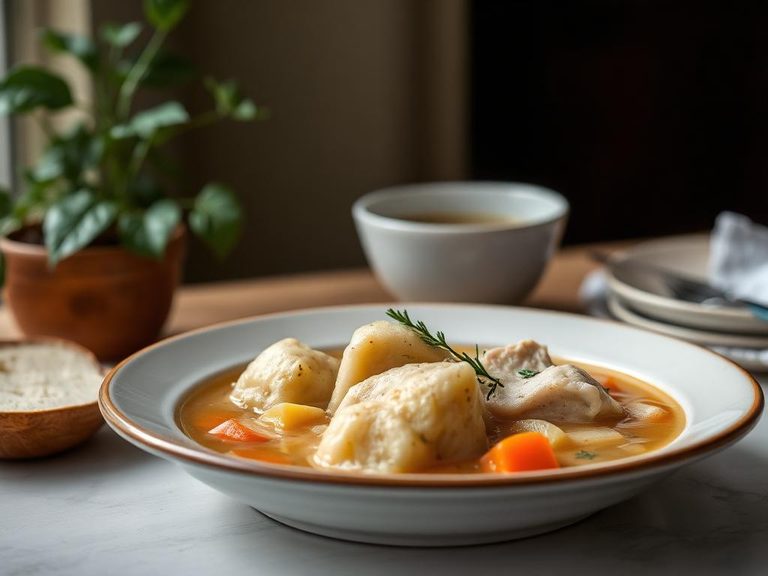
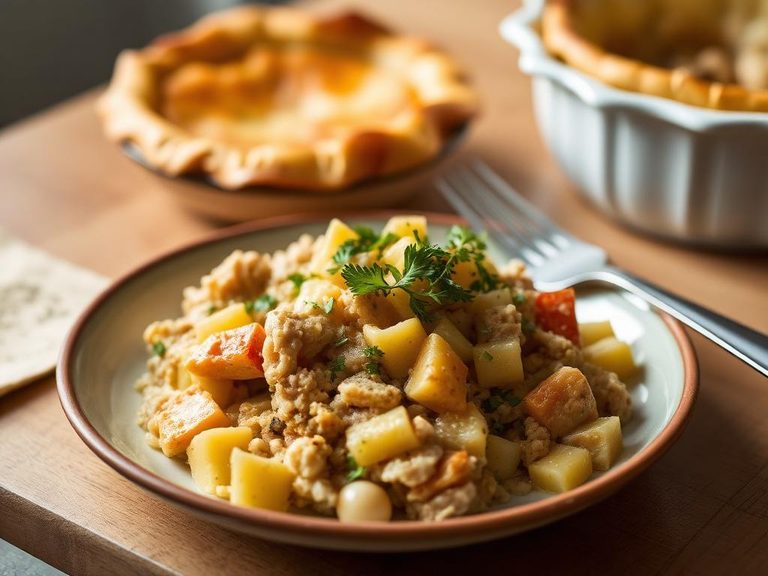
🍽️ Popular dishes
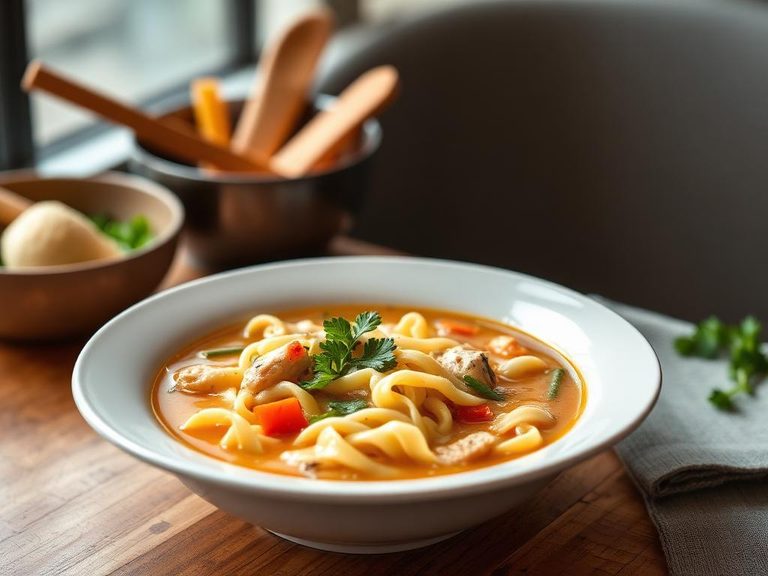
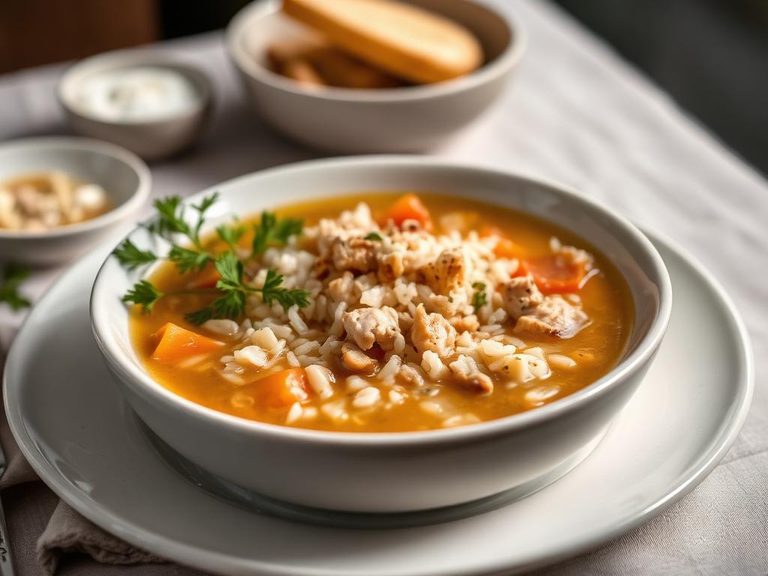
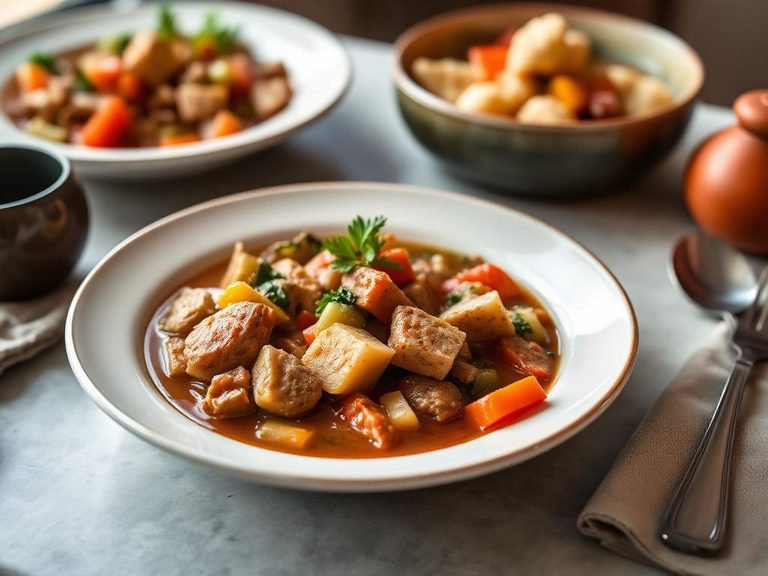
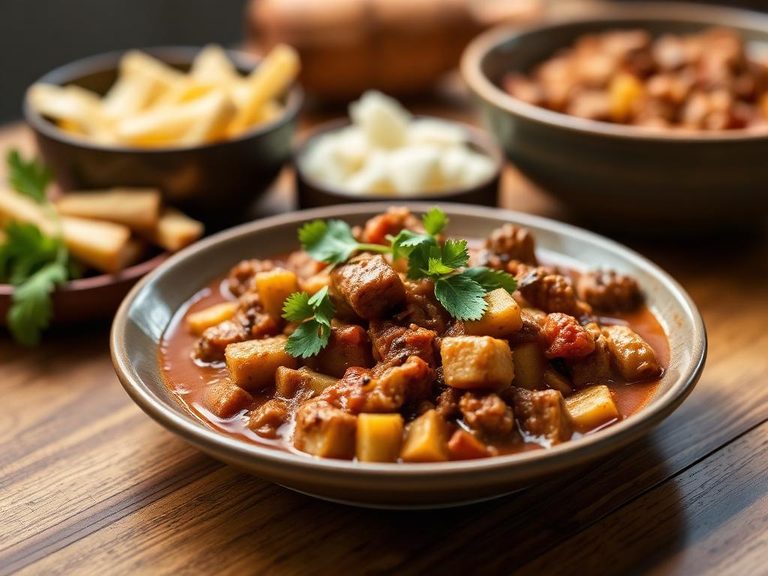
🌍 Where it's eaten
💡 Did you know?
The chunky style of canned soup was popularized in the 1960s as a response to consumer demand for more substantial, meal-like canned products, moving away from the traditional thin broths.
Full nutrition (USDA data · scales with serving)
| Water | 86.4 g |
| Energy | 57.0 kcal |
| Energy | 238 kj |
| Protein | 4.3 g |
| Total lipid (fat) | 1.9 g |
| Ash | 1.5 g |
| Carbohydrate, by difference | 6.0 g |
| Calcium, Ca | 21.0 mg |
| Iron, Fe | 0.81 mg |
| Magnesium, Mg | 10.0 mg |
| Phosphorus, P | 44.0 mg |
| Potassium, K | 153 mg |
| Sodium, Na | 391 mg |
| Zinc, Zn | 0.90 mg |
| Copper, Cu | 0.10 mg |
| Manganese, Mn | 0.10 mg |
| Vitamin C, total ascorbic acid | 2.7 mg |
| Thiamin | 0.01 mg |
| Riboflavin | 0.04 mg |
| Niacin | 1.5 mg |
| Pantothenic acid | 0.39 mg |
| Vitamin B-6 | 0.13 mg |
| Folate, total | 5.0 ug |
| Folic acid | 0.00 ug |
| Folate, food | 5.0 ug |
| Folate, DFE | 5.0 ug |
| Vitamin B-12 | 0.90 ug |
| Vitamin A, RAE | 152 ug |
| Retinol | 0.00 ug |
| Vitamin A, IU | 3032 iu |
Fat & fatty acid profile (per 100g)
| Fatty acids, total saturated | 0.52 g |
| SFA 14:0 | 0.02 g |
| SFA 16:0 | 0.39 g |
| SFA 18:0 | 0.09 g |
| Fatty acids, total monounsaturated | 0.75 g |
| MUFA 16:1 | 0.11 g |
| MUFA 18:1 | 0.65 g |
| Fatty acids, total polyunsaturated | 0.46 g |
| PUFA 18:2 | 0.44 g |
| PUFA 18:3 | 0.02 g |
| Cholesterol | 4.0 mg |
Amino acid profile (per 100g)
| Tryptophan | 0.04 g |
| Threonine | 0.17 g |
| Isoleucine | 0.22 g |
| Leucine | 0.33 g |
| Lysine | 0.34 g |
| Methionine | 0.09 g |
| Cystine | 0.04 g |
| Phenylalanine | 0.18 g |
| Tyrosine | 0.13 g |
| Valine | 0.23 g |
| Arginine | 0.23 g |
| Histidine | 0.10 g |
| Alanine | 0.27 g |
| Aspartic acid | 0.42 g |
| Glutamic acid | 0.78 g |
| Glycine | 0.25 g |
| Proline | 0.20 g |
| Serine | 0.15 g |
FAQ
Is canned turkey soup a good source of protein?
Yes, with 4.33g of protein per 100g, it provides a moderate protein boost, making it a suitable option for a light meal or snack to support muscle health.
How does the sodium content in canned turkey soup compare to fresh soup?
Canned soups often contain higher sodium levels than homemade versions due to preservatives and flavoring. To reduce sodium intake, look for low-sodium labels or rinse the soup lightly before serving.
Can canned turkey soup be part of a balanced diet?
Absolutely, when consumed in moderation and paired with fiber-rich vegetables or whole grains, it can contribute to a balanced meal, especially due to its low calorie and fat content.
Nutrient density (calculated · NRF9.3)
Nutrient Rich Foods index: beneficial nutrients (protein, fiber, vitamins, minerals) minus saturated fat, added sugar & sodium, per 100 kcal.
NRF9.3 index — Fulgoni, Keast & Drewnowski, 2009. Computed from USDA nutrients.
Weight-loss friendliness (composite index)
Energy density 0.57 kcal/g · 30% calories from protein · 0.0 g fiber · 0.0 g sugar per 100 g.
Composite of energy density (Rolls et al., 1999), protein & fiber satiety, minus sugar. A calculated heuristic — ranks satiety-per-calorie, not a clinical measure.
Dietary load (calculated from USDA values)
Potential renal acid load. Positive = acid-forming, negative = alkaline-forming.
Sodium-to-potassium ratio: 2.56 (lower is better — aim for ≤ 1)
Sodium:potassium per WHO potassium guidance. Computed from USDA nutrients.