

Scotch
Common food

Photo: Wikipedia
Scotch is a distilled alcoholic beverage made primarily from malted barley, water, and yeast, aged in oak casks for a minimum of three years. Its flavor profile ranges from smoky and peaty to sweet and fruity, with a smooth, warming texture. Nutritionally, it provides 231 kcal per 100ml but contains no protein, carbs, fat, fiber, or sugar, as its calories come almost entirely from alcohol.
💚 Why it's loved
People love Scotch for its complex, layered flavors—from the smoky peat of Islay to the honeyed sweetness of Speyside—and its deep cultural heritage, often enjoyed neat or as a centerpiece of social rituals.
⚠️ Watch-outs & how to enjoy it better
Excessive consumption can lead to liver damage, addiction, and impaired judgment. It contains congeners that may worsen hangovers, and its high calorie density (231 kcal/100ml) can contribute to weight gain. To mitigate, practice strict portion control (e.g., 25-50ml servings), alternate with water, and avoid drinking on an empty stomach.
Key benefits
- Contains antioxidants like ellagic acid from oak aging
- May support heart health in moderate consumption
- Gluten-free after distillation (for most single malts)
- Used in traditional remedies for digestion
- Cultural and social bonding drink
🍽️ Popular dishes
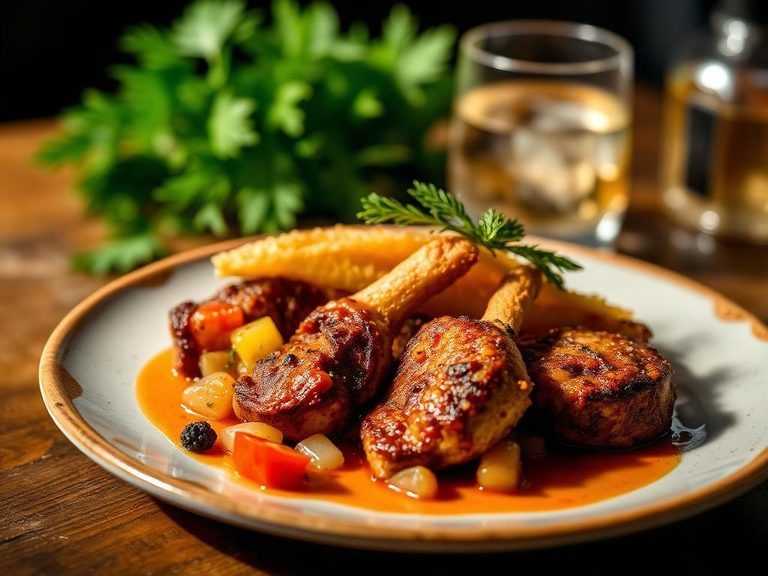
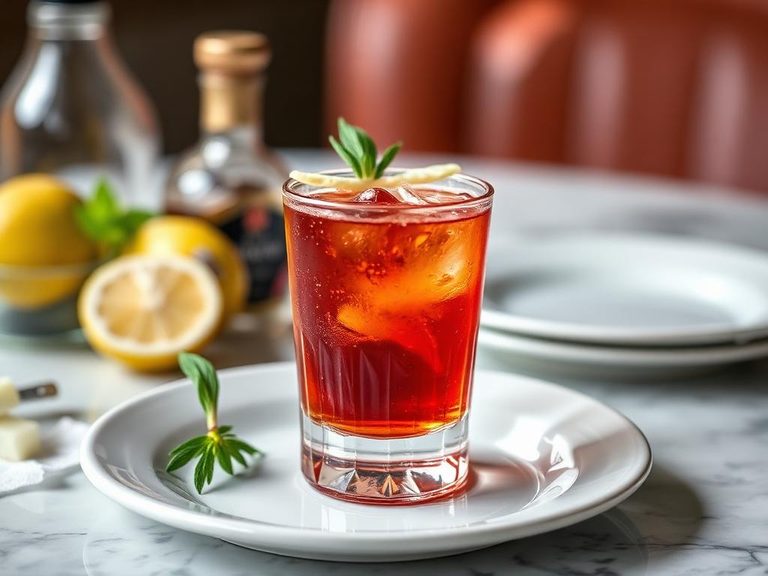
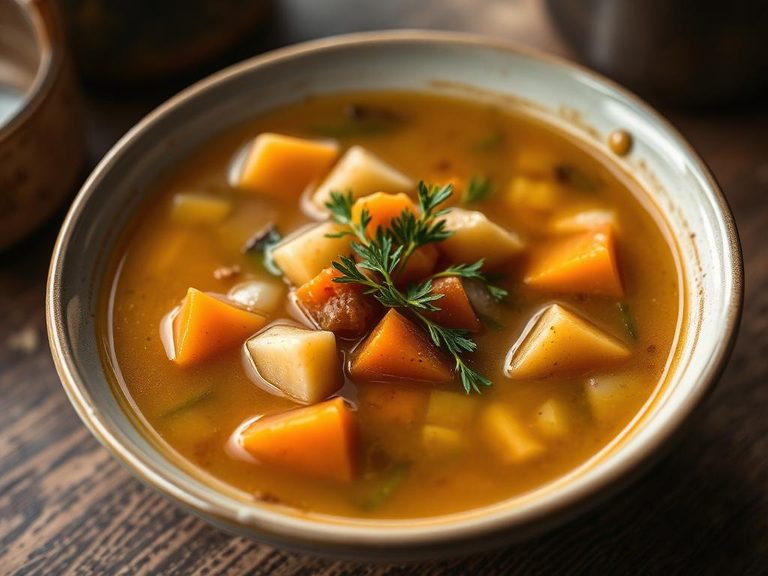
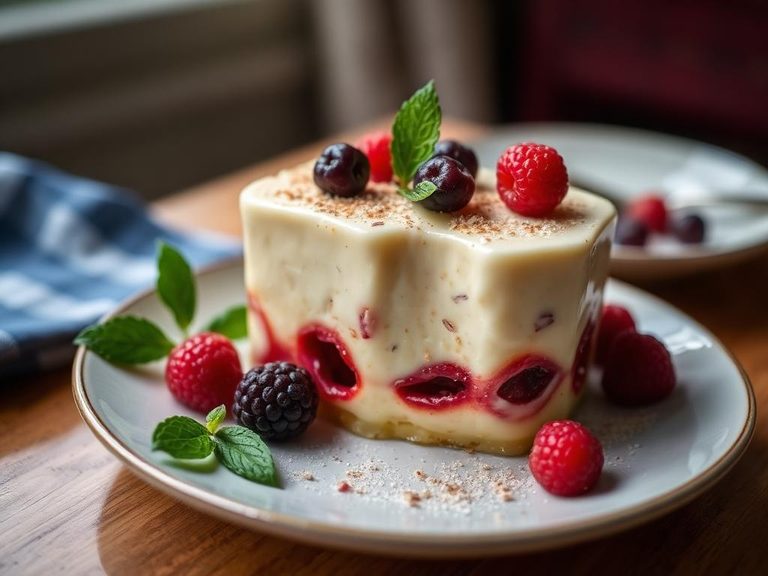

🌍 Where it's eaten
💡 Did you know?
The 'Angel's Share' refers to about 2% of Scotch whisky that evaporates from the cask each year during aging—meaning a 10-year-old cask has lost about 20% of its volume to the angels.
Full nutrition (USDA data · scales with serving)
| Water | 66.6 g |
| Energy | 231 kcal |
| Protein | 0.00 g |
| Total lipid (fat) | 0.00 g |
| Carbohydrate, by difference | 0.00 g |
| Fiber, total dietary | 0.00 g |
| Total Sugars | 0.00 g |
| Calcium, Ca | 0.00 mg |
| Iron, Fe | 0.04 mg |
| Magnesium, Mg | 0.00 mg |
| Phosphorus, P | 4.0 mg |
| Potassium, K | 2.0 mg |
| Sodium, Na | 1.0 mg |
| Zinc, Zn | 0.04 mg |
| Copper, Cu | 0.02 mg |
| Selenium, Se | 0.00 ug |
| Vitamin C, total ascorbic acid | 0.00 mg |
| Thiamin | 0.01 mg |
| Riboflavin | 0.00 mg |
| Niacin | 0.01 mg |
| Vitamin B-6 | 0.00 mg |
| Folate, total | 0.00 ug |
| Folic acid | 0.00 ug |
| Folate, food | 0.00 ug |
| Folate, DFE | 0.00 ug |
| Choline, total | 0.00 mg |
| Vitamin B-12 | 0.00 ug |
| Vitamin B-12, added | 0.00 ug |
| Vitamin A, RAE | 0.00 ug |
| Retinol | 0.00 ug |
| Carotene, beta | 0.00 ug |
| Carotene, alpha | 0.00 ug |
| Cryptoxanthin, beta | 0.00 ug |
| Lycopene | 0.00 ug |
| Lutein + zeaxanthin | 0.00 ug |
| Vitamin E (alpha-tocopherol) | 0.00 mg |
| Vitamin E, added | 0.00 mg |
| Vitamin D (D2 + D3) | 0.00 ug |
| Vitamin K (phylloquinone) | 0.00 ug |
| Alcohol, ethyl | 33.4 g |
| Caffeine | 0.00 mg |
| Theobromine | 0.00 mg |
Fat & fatty acid profile (per 100g)
| Fatty acids, total saturated | 0.00 g |
| SFA 4:0 | 0.00 g |
| SFA 6:0 | 0.00 g |
| SFA 8:0 | 0.00 g |
| SFA 10:0 | 0.00 g |
| SFA 12:0 | 0.00 g |
| SFA 14:0 | 0.00 g |
| SFA 16:0 | 0.00 g |
| SFA 18:0 | 0.00 g |
| Fatty acids, total monounsaturated | 0.00 g |
| MUFA 16:1 | 0.00 g |
| MUFA 18:1 | 0.00 g |
| MUFA 20:1 | 0.00 g |
| MUFA 22:1 | 0.00 g |
| Fatty acids, total polyunsaturated | 0.00 g |
| PUFA 18:2 | 0.00 g |
| PUFA 18:3 | 0.00 g |
| PUFA 18:4 | 0.00 g |
| PUFA 20:4 | 0.00 g |
| PUFA 20:5 n-3 (EPA) | 0.00 g |
| PUFA 22:5 n-3 (DPA) | 0.00 g |
| PUFA 22:6 n-3 (DHA) | 0.00 g |
| Cholesterol | 0.00 mg |
FAQ
What's the difference between Scotch and whiskey?
Scotch is a specific type of whisky that must be made in Scotland, aged at least 3 years in oak casks, and follow strict production rules. Whiskey is a broader term for similar spirits made worldwide.
Is Scotch gluten-free?
Most single malt Scotch is considered gluten-free after distillation, as the gluten proteins are removed. However, some blended Scotches may contain added grain spirits, so those with severe celiac disease should check labels or opt for certified gluten-free brands.
How should I drink Scotch as a beginner?
Start with a Speyside or Highland single malt, which are often smoother and fruitier. Try it neat first, then add a few drops of water to open up the flavors. Avoid ice initially, as it can numb the taste.
Nutrient density (calculated · NRF9.3)
Nutrient Rich Foods index: beneficial nutrients (protein, fiber, vitamins, minerals) minus saturated fat, added sugar & sodium, per 100 kcal.
NRF9.3 index — Fulgoni, Keast & Drewnowski, 2009. Computed from USDA nutrients.
Weight-loss friendliness (composite index)
Energy density 2.31 kcal/g · 0% calories from protein · 0.0 g fiber · 0.0 g sugar per 100 g.
Composite of energy density (Rolls et al., 1999), protein & fiber satiety, minus sugar. A calculated heuristic — ranks satiety-per-calorie, not a clinical measure.
Dietary load (calculated from USDA values)
Potential renal acid load. Positive = acid-forming, negative = alkaline-forming.
Sodium-to-potassium ratio: 0.50 (lower is better — aim for ≤ 1)
Sodium:potassium per WHO potassium guidance. Computed from USDA nutrients.