

Sauce as ingredient in hamburgers
Common food
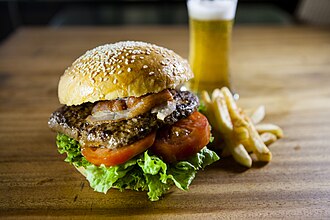
Photo: Wikipedia
This is the rich, tangy, and often creamy condiment that transforms a simple hamburger patty into a flavorful experience. Its smooth, viscous texture clings to the meat and bun, delivering a burst of savory, sweet, and umami notes. Nutritionally, it's a calorie-dense addition, primarily from fats and sugars, contributing significantly to a burger's total energy content.
Calorie split: 2% protein · 25% carbs · 74% fat
↓ Full nutrition💚 Why it's loved
People love it for its transformative power, turning a basic sandwich into a craveable, juicy meal with a perfect balance of sweet, tangy, and savory notes. Its versatility allows for endless customization, from classic ketchup-mustard blends to gourmet aiolis and spicy sriracha mixes.
⚠️ Watch-outs & how to enjoy it better
The high sugar and fat content can contribute to blood sugar spikes and excess calorie intake, especially with generous portions. To counteract this, use it sparingly as a flavor accent rather than a drenching, and pair your burger with a fiber-rich side salad or grilled vegetables to slow sugar absorption.
Key benefits
- Enhances palatability and moisture of lean patties
- Provides quick energy from carbohydrates
- Adds complex flavor depth with minimal preparation
- Acts as a binding agent for toppings on the bun
🍽️ Popular dishes
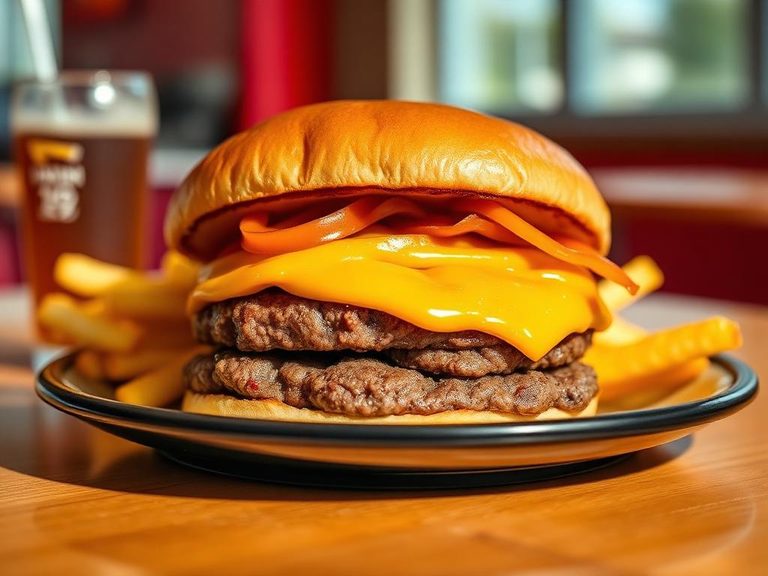
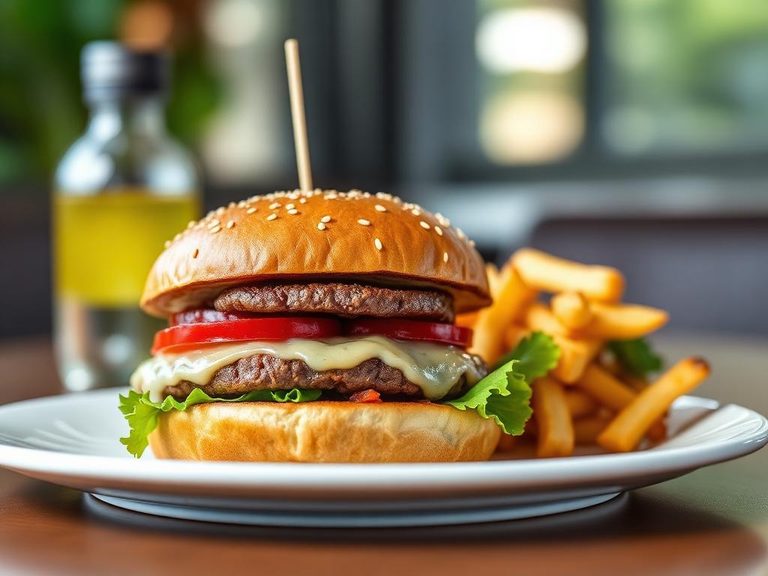
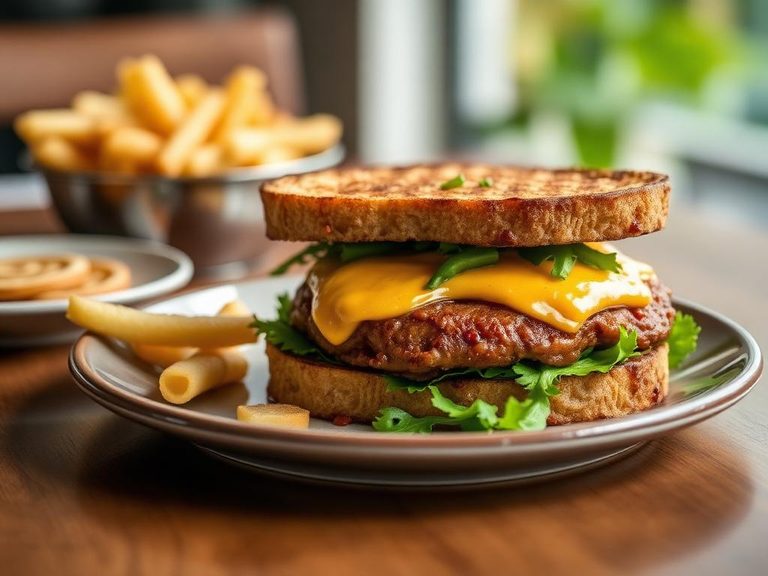
🌍 Where it's eaten
💡 Did you know?
The iconic 'special sauce' of the Big Mac was originally a variant of Thousand Island dressing, and its exact recipe was a closely guarded trade secret for decades.
Full nutrition (USDA data · scales with serving)
| Water | 56.0 g |
| Energy | 272 kcal |
| Protein | 1.3 g |
| Total lipid (fat) | 22.9 g |
| Carbohydrate, by difference | 17.1 g |
| Fiber, total dietary | 0.60 g |
| Total Sugars | 13.1 g |
| Calcium, Ca | 18.0 mg |
| Iron, Fe | 0.43 mg |
| Magnesium, Mg | 13.0 mg |
| Phosphorus, P | 33.0 mg |
| Potassium, K | 190 mg |
| Sodium, Na | 845 mg |
| Zinc, Zn | 0.21 mg |
| Copper, Cu | 0.06 mg |
| Selenium, Se | 4.5 ug |
| Vitamin C, total ascorbic acid | 2.5 mg |
| Thiamin | 0.03 mg |
| Riboflavin | 0.11 mg |
| Niacin | 0.92 mg |
| Vitamin B-6 | 0.10 mg |
| Folate, total | 8.0 ug |
| Folic acid | 0.00 ug |
| Folate, food | 8.0 ug |
| Folate, DFE | 8.0 ug |
| Choline, total | 20.0 mg |
| Vitamin B-12 | 0.04 ug |
| Vitamin B-12, added | 0.00 ug |
| Vitamin A, RAE | 21.0 ug |
| Retinol | 4.0 ug |
| Carotene, beta | 194 ug |
| Carotene, alpha | 0.00 ug |
| Cryptoxanthin, beta | 4.0 ug |
| Lycopene | 7237 ug |
| Lutein + zeaxanthin | 112 ug |
| Vitamin E (alpha-tocopherol) | 1.9 mg |
| Vitamin E, added | 0.00 mg |
| Vitamin D (D2 + D3) | 0.10 ug |
| Vitamin K (phylloquinone) | 50.8 ug |
| Alcohol, ethyl | 0.00 g |
| Caffeine | 0.00 mg |
| Theobromine | 0.00 mg |
Fat & fatty acid profile (per 100g)
| Fatty acids, total saturated | 3.5 g |
| SFA 4:0 | 0.00 g |
| SFA 6:0 | 0.00 g |
| SFA 8:0 | 0.00 g |
| SFA 10:0 | 0.00 g |
| SFA 12:0 | 0.00 g |
| SFA 14:0 | 0.02 g |
| SFA 16:0 | 2.4 g |
| SFA 18:0 | 0.94 g |
| Fatty acids, total monounsaturated | 5.3 g |
| MUFA 16:1 | 0.03 g |
| MUFA 18:1 | 5.0 g |
| MUFA 20:1 | 0.11 g |
| MUFA 22:1 | 0.13 g |
| Fatty acids, total polyunsaturated | 13.5 g |
| PUFA 18:2 | 11.8 g |
| PUFA 18:3 | 1.7 g |
| PUFA 18:4 | 0.00 g |
| PUFA 20:4 | 0.01 g |
| PUFA 20:5 n-3 (EPA) | 0.00 g |
| PUFA 22:5 n-3 (DPA) | 0.00 g |
| PUFA 22:6 n-3 (DHA) | 0.00 g |
| Cholesterol | 13.0 mg |
FAQ
How does sauce affect a burger's nutritional profile?
A typical 2-tablespoon (30g) serving can add 50-80 calories, mostly from fat and sugar, significantly increasing the total energy density of the meal without adding substantial protein or fiber.
Can burger sauce be made healthier?
Yes, you can create lighter versions using Greek yogurt or avocado as a base, reducing added sugars, and incorporating herbs and spices for flavor instead of relying on salt and sugar.
What's the best way to apply sauce to a burger?
Spread it on both the top and bottom buns to create a moisture barrier that prevents sogginess, and apply it just before serving to maintain the bun's texture.
Nutrient density (calculated · NRF9.3)
Nutrient Rich Foods index: beneficial nutrients (protein, fiber, vitamins, minerals) minus saturated fat, added sugar & sodium, per 100 kcal.
NRF9.3 index — Fulgoni, Keast & Drewnowski, 2009. Computed from USDA nutrients.
Weight-loss friendliness (composite index)
Energy density 2.72 kcal/g · 2% calories from protein · 0.6 g fiber · 13.1 g sugar per 100 g.
Composite of energy density (Rolls et al., 1999), protein & fiber satiety, minus sugar. A calculated heuristic — ranks satiety-per-calorie, not a clinical measure.
Dietary load (calculated from USDA values)
Potential renal acid load. Positive = acid-forming, negative = alkaline-forming.
Sodium-to-potassium ratio: 4.45 (lower is better — aim for ≤ 1)
Sodium:potassium per WHO potassium guidance. Computed from USDA nutrients.