

Sambar, vegetable stew
Common food
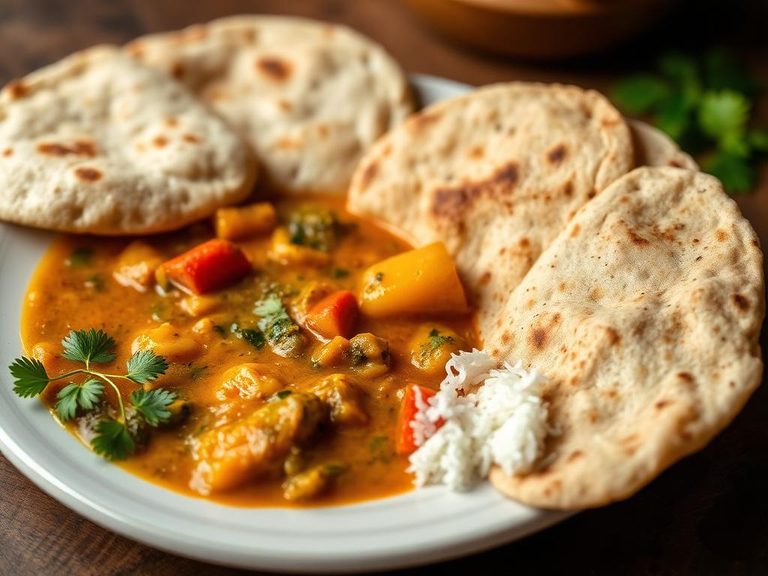
Sambar is a tangy, savory lentil and vegetable stew from South India, simmered with a unique blend of roasted spices and tamarind. Its texture is a comforting, slightly thick broth filled with soft, cooked vegetables and lentils, offering a complex flavor profile that is simultaneously sour, spicy, and earthy. Nutritionally, it's a low-calorie, high-fiber powerhouse, providing a solid 4.33g of plant-based protein per 100g to support satiety and muscle health.
Calorie split: 20% protein · 53% carbs · 27% fat
↓ Full nutrition💚 Why it's loved
People adore sambar for its harmonious balance of tangy tamarind, aromatic spices, and hearty vegetables, making it a soul-soothing comfort food. Its incredible versatility allows it to be paired with rice, dosa, idli, or vada, serving as a cornerstone of South Indian meals and a beloved part of cultural identity.
⚠️ Watch-outs & how to enjoy it better
The tamarind and certain spices can be acidic or spicy for some, potentially causing digestive discomfort or heartburn in sensitive individuals. To mitigate this, pair sambar with a cooling element like yogurt or raita, and be mindful of portion sizes if you have a sensitive stomach. Additionally, some commercial or restaurant versions can be high in sodium; opting for homemade versions allows for better control over salt content.
Key benefits
- High in dietary fiber (4g per 100g) for digestive health.
- Good source of plant-based protein from lentils and vegetables.
- Low in calories (86 kcal per 100g) yet nutrient-dense.
- Rich in micronutrients like iron and potassium from its varied ingredients.
- Naturally low in fat (2.71g per 100g) and cholesterol-free.
🍽️ Popular dishes
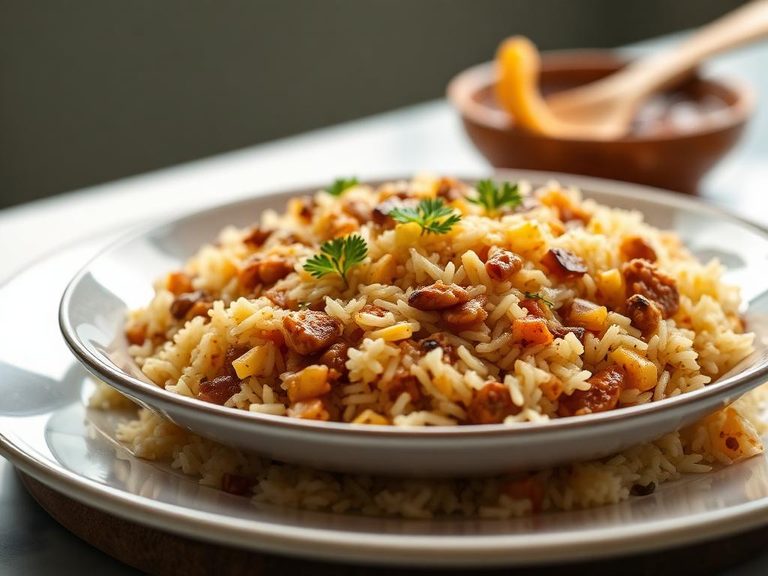
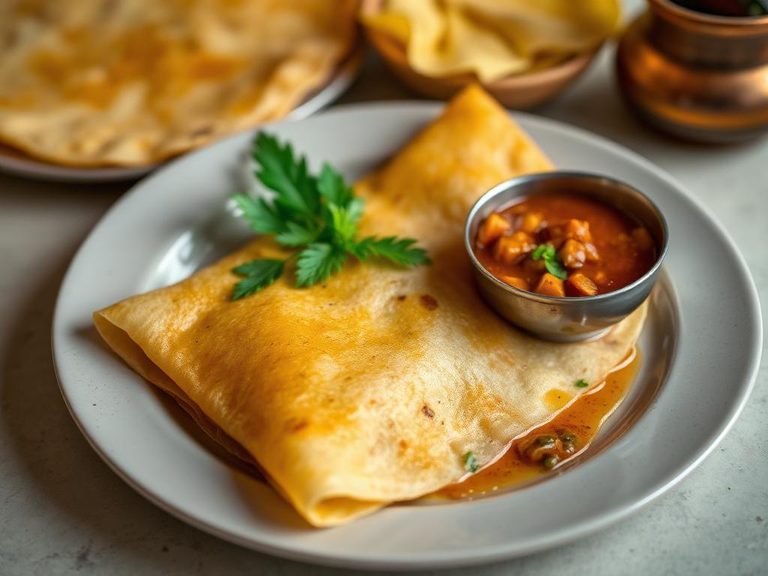
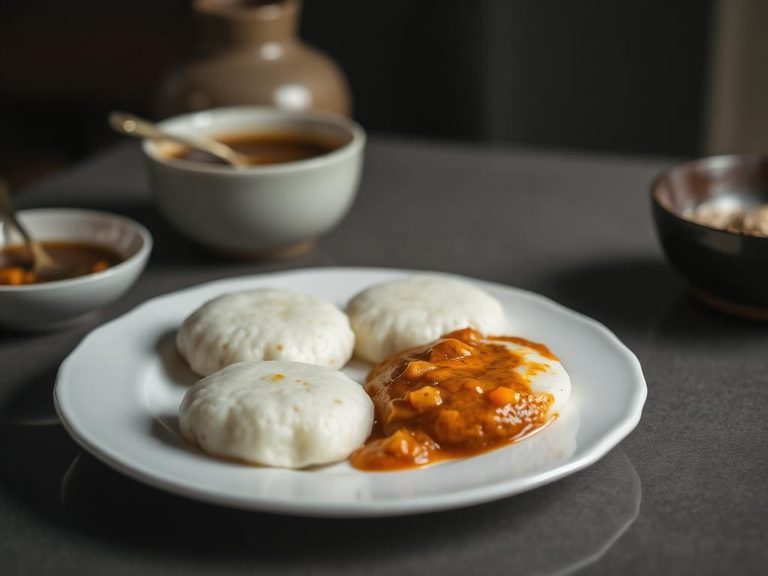
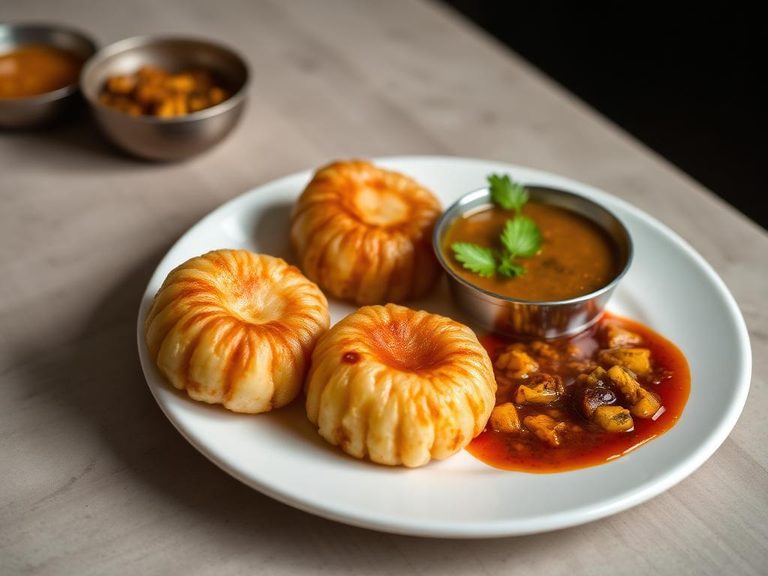
🌍 Where it's eaten
💡 Did you know?
The word 'sambar' is believed to be a corruption of the Tamil word 'chaampu' (meaning 'to mix'), and it is said to have been invented accidentally by the Maratha ruler Sambhaji in the 17th century.
Full nutrition (USDA data · scales with serving)
| Water | 80.1 g |
| Energy | 86.0 kcal |
| Protein | 4.3 g |
| Total lipid (fat) | 2.7 g |
| Carbohydrate, by difference | 11.8 g |
| Fiber, total dietary | 4.0 g |
| Total Sugars | 2.0 g |
| Calcium, Ca | 19.0 mg |
| Iron, Fe | 1.7 mg |
| Magnesium, Mg | 23.0 mg |
| Phosphorus, P | 90.0 mg |
| Potassium, K | 237 mg |
| Sodium, Na | 207 mg |
| Zinc, Zn | 0.64 mg |
| Copper, Cu | 0.13 mg |
| Selenium, Se | 1.7 ug |
| Vitamin C, total ascorbic acid | 3.2 mg |
| Thiamin | 0.09 mg |
| Riboflavin | 0.05 mg |
| Niacin | 0.65 mg |
| Vitamin B-6 | 0.11 mg |
| Folate, total | 86.0 ug |
| Folic acid | 0.00 ug |
| Folate, food | 86.0 ug |
| Folate, DFE | 86.0 ug |
| Choline, total | 16.8 mg |
| Vitamin B-12 | 0.00 ug |
| Vitamin B-12, added | 0.00 ug |
| Vitamin A, RAE | 7.0 ug |
| Retinol | 0.00 ug |
| Carotene, beta | 72.0 ug |
| Carotene, alpha | 12.0 ug |
| Cryptoxanthin, beta | 4.0 ug |
| Lycopene | 190 ug |
| Lutein + zeaxanthin | 50.0 ug |
| Vitamin E (alpha-tocopherol) | 0.63 mg |
| Vitamin E, added | 0.00 mg |
| Vitamin D (D2 + D3) | 0.00 ug |
| Vitamin K (phylloquinone) | 7.5 ug |
| Alcohol, ethyl | 0.00 g |
| Caffeine | 0.00 mg |
| Theobromine | 0.00 mg |
Fat & fatty acid profile (per 100g)
| Fatty acids, total saturated | 0.37 g |
| SFA 4:0 | 0.00 g |
| SFA 6:0 | 0.00 g |
| SFA 8:0 | 0.00 g |
| SFA 10:0 | 0.00 g |
| SFA 12:0 | 0.00 g |
| SFA 14:0 | 0.00 g |
| SFA 16:0 | 0.27 g |
| SFA 18:0 | 0.07 g |
| Fatty acids, total monounsaturated | 1.1 g |
| MUFA 16:1 | 0.01 g |
| MUFA 18:1 | 1.0 g |
| MUFA 20:1 | 0.02 g |
| MUFA 22:1 | 0.02 g |
| Fatty acids, total polyunsaturated | 1.0 g |
| PUFA 18:2 | 0.91 g |
| PUFA 18:3 | 0.13 g |
| PUFA 18:4 | 0.00 g |
| PUFA 20:4 | 0.00 g |
| PUFA 20:5 n-3 (EPA) | 0.00 g |
| PUFA 22:5 n-3 (DPA) | 0.00 g |
| PUFA 22:6 n-3 (DHA) | 0.00 g |
| Cholesterol | 0.00 mg |
FAQ
What gives sambar its distinctive sour taste?
The characteristic tangy flavor comes from tamarind (imli), which is added as a pulp or extract during cooking.
Is sambar gluten-free?
Traditional sambar is naturally gluten-free, as it is made from lentils, vegetables, and spices. However, always check for added thickeners or cross-contamination if you have a severe gluten allergy.
Can I make sambar without lentils?
While lentils (typically toor dal) are a core ingredient for the stew's body and protein, you can make a vegetable-heavy version with a smaller amount of dal or use other legumes like moong dal for a different texture.
How does sambar differ from rasam?
Sambar is a thicker, heartier stew with lentils and vegetables, while rasam is a thinner, more broth-like soup, primarily flavored with tamarind, pepper, and spices, often served as a digestive.
Nutrient density (calculated · NRF9.3)
Nutrient Rich Foods index: beneficial nutrients (protein, fiber, vitamins, minerals) minus saturated fat, added sugar & sodium, per 100 kcal.
NRF9.3 index — Fulgoni, Keast & Drewnowski, 2009. Computed from USDA nutrients.
Weight-loss friendliness (composite index)
Energy density 0.86 kcal/g · 20% calories from protein · 4.0 g fiber · 2.0 g sugar per 100 g.
Composite of energy density (Rolls et al., 1999), protein & fiber satiety, minus sugar. A calculated heuristic — ranks satiety-per-calorie, not a clinical measure.
Dietary load (calculated from USDA values)
Potential renal acid load. Positive = acid-forming, negative = alkaline-forming.
Sodium-to-potassium ratio: 0.87 (lower is better — aim for ≤ 1)
Sodium:potassium per WHO potassium guidance. Computed from USDA nutrients.