

Rice, white, short-grain, cooked, unenriched
Whole food · Cereal Grains and Pasta
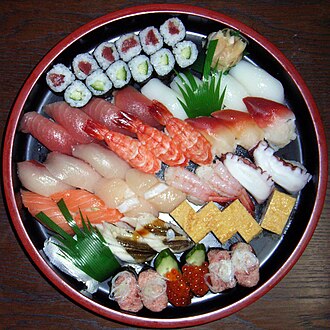
Photo: Wikipedia
This is the quintessential sticky rice of East Asia, cooked to a soft, slightly chewy texture with a subtle, sweet starchiness. Its high amylopectin content makes it cling together, perfect for forming neat balls or wrapping fillings. Nutritionally, it's a dense, quick-energy carbohydrate source with minimal fat or protein.
Calorie split: 7% protein · 91% carbs · 1% fat
↓ Full nutrition💚 Why it's loved
It's loved for its comforting, mild flavor and uniquely sticky texture that acts as a perfect canvas for savory, sweet, or umami-rich toppings and fillings. Its ability to hold its shape makes it essential for hand-held foods and elegant presentations.
⚠️ Watch-outs & how to enjoy it better
Its high glycemic index can cause rapid blood sugar spikes, making portion control important for those managing diabetes. It is also low in fiber and protein, so a meal based solely on it may not be very satiating. To counteract this, pair it with protein (like fish, tofu, or egg) and non-starchy vegetables to slow digestion and create a more balanced meal.
Key benefits
- Excellent source of quick-digesting energy for active lifestyles
- Naturally gluten-free and low in fat
- A bland, gentle food often used in recovery diets
- Provides essential minerals like manganese and selenium in small amounts
- A culturally significant staple food for billions of people
🍽️ Popular dishes
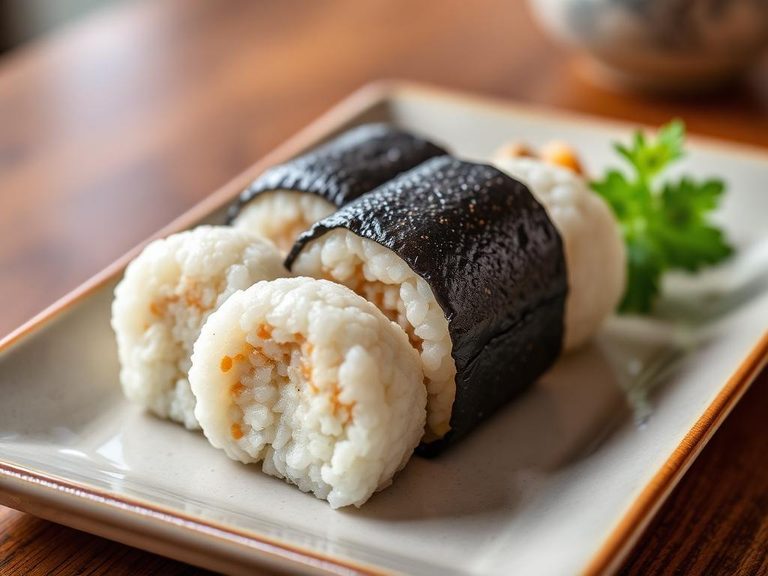
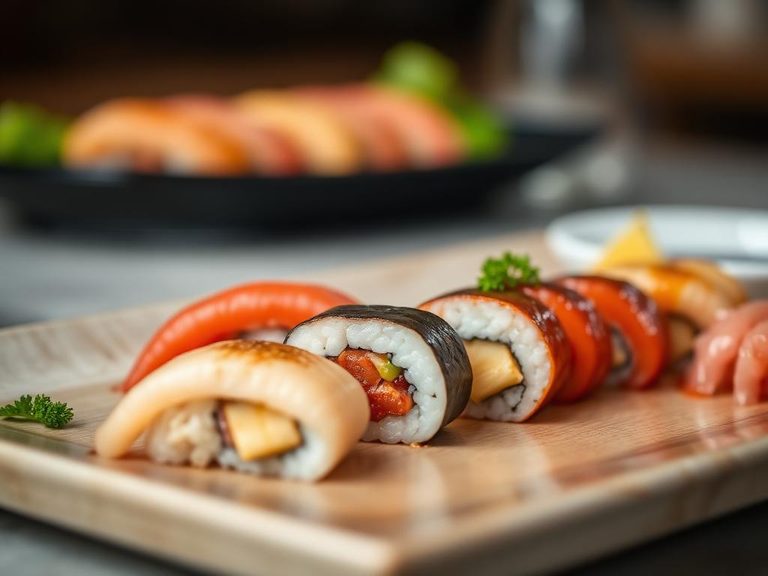
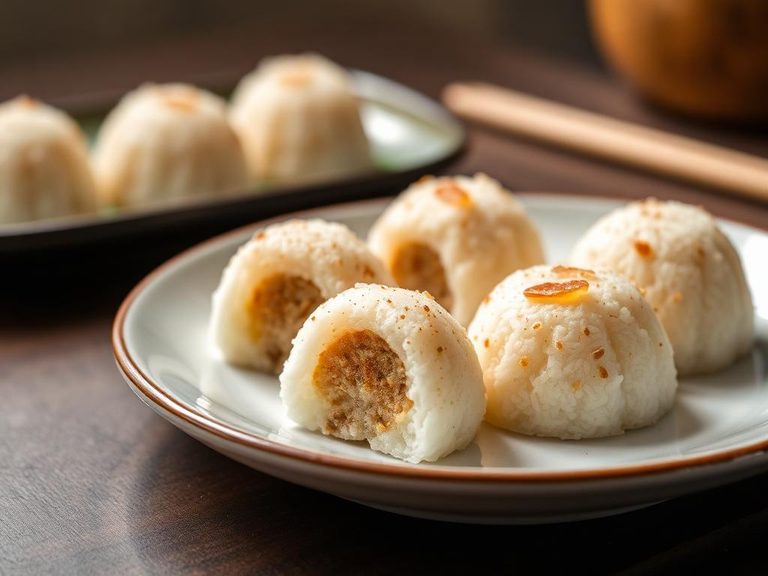
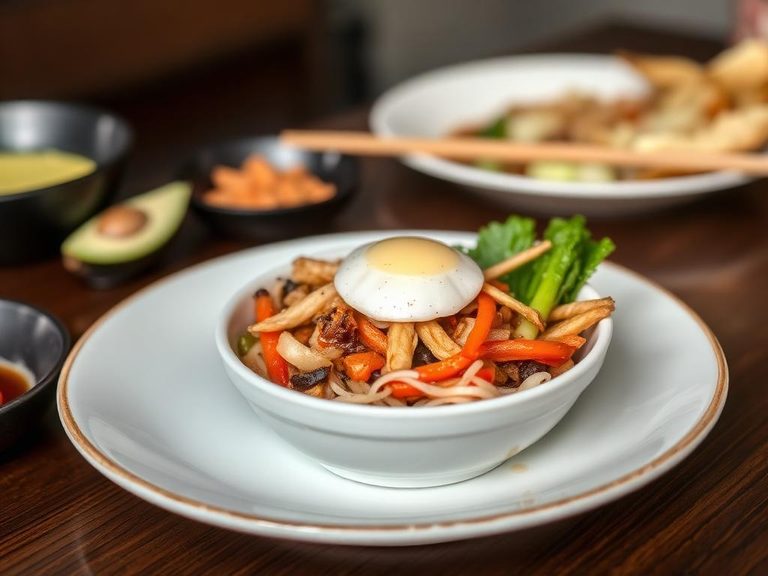
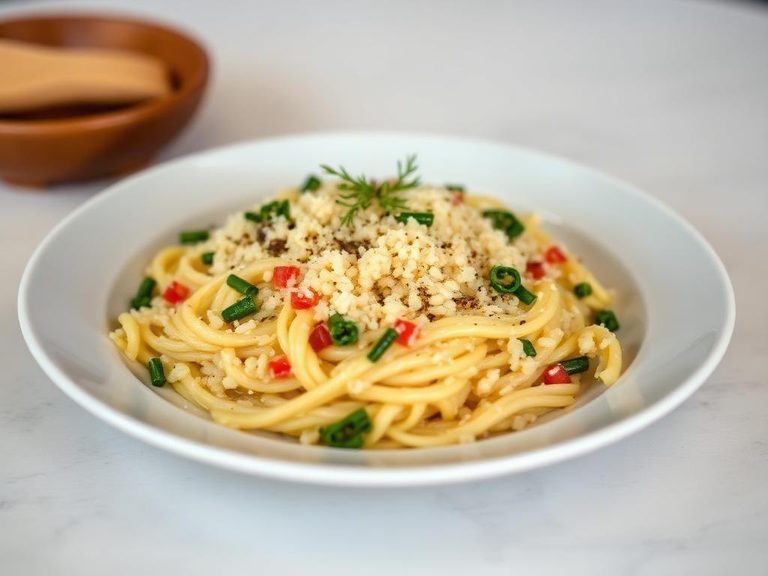
🌍 Where it's eaten
💡 Did you know?
The stickiness of short-grain rice is due to a higher proportion of the starch amylopectin, which has a branched structure, compared to the amylose found in long-grain rice.
Full nutrition (USDA data · scales with serving)
| Water | 68.5 g |
| Energy | 130 kcal |
| Energy | 544 kj |
| Protein | 2.4 g |
| Total lipid (fat) | 0.19 g |
| Ash | 0.20 g |
| Carbohydrate, by difference | 28.7 g |
| Calcium, Ca | 1.0 mg |
| Iron, Fe | 0.20 mg |
| Magnesium, Mg | 8.0 mg |
| Phosphorus, P | 33.0 mg |
| Potassium, K | 26.0 mg |
| Sodium, Na | 0.00 mg |
| Zinc, Zn | 0.40 mg |
| Copper, Cu | 0.07 mg |
| Manganese, Mn | 0.36 mg |
| Vitamin C, total ascorbic acid | 0.00 mg |
| Thiamin | 0.02 mg |
| Riboflavin | 0.02 mg |
| Niacin | 0.40 mg |
| Pantothenic acid | 0.40 mg |
| Vitamin B-6 | 0.06 mg |
| Folate, total | 2.0 ug |
| Folic acid | 0.00 ug |
| Folate, food | 2.0 ug |
| Folate, DFE | 2.0 ug |
| Vitamin B-12 | 0.00 ug |
| Vitamin D (D2 + D3), International Units | 0.00 iu |
| Vitamin D (D2 + D3) | 0.00 ug |
Fat & fatty acid profile (per 100g)
| Fatty acids, total saturated | 0.05 g |
| SFA 14:0 | 0.00 g |
| SFA 16:0 | 0.05 g |
| SFA 18:0 | 0.00 g |
| Fatty acids, total monounsaturated | 0.06 g |
| MUFA 16:1 | 0.00 g |
| MUFA 18:1 | 0.06 g |
| Fatty acids, total polyunsaturated | 0.05 g |
| PUFA 18:2 | 0.04 g |
| PUFA 18:3 | 0.01 g |
| Cholesterol | 0.00 mg |
Amino acid profile (per 100g)
| Tryptophan | 0.03 g |
| Threonine | 0.08 g |
| Isoleucine | 0.10 g |
| Leucine | 0.20 g |
| Lysine | 0.09 g |
| Methionine | 0.06 g |
| Cystine | 0.05 g |
| Phenylalanine | 0.13 g |
| Tyrosine | 0.08 g |
| Valine | 0.14 g |
| Arginine | 0.20 g |
| Histidine | 0.06 g |
| Alanine | 0.14 g |
| Aspartic acid | 0.22 g |
| Glutamic acid | 0.46 g |
| Glycine | 0.11 g |
| Proline | 0.11 g |
| Serine | 0.12 g |
FAQ
What's the difference between short-grain and long-grain rice?
Short-grain rice is plumper, stickier, and has a higher starch (amylopectin) content, making it ideal for sushi and risotto. Long-grain rice, like Basmati or Jasmine, is slender, cooks up fluffy and separate, and has more amylose starch.
Is white short-grain rice unhealthy?
It's a refined carbohydrate, meaning the bran and germ are removed, which strips it of some fiber and nutrients. It's not 'unhealthy' in moderation, but for a more balanced diet, it's often paired with protein, vegetables, and healthy fats to mitigate blood sugar impact.
How do I get it perfectly sticky for sushi?
Rinse the rice until the water runs clear, cook it with the correct water ratio, then gently fold in a seasoning mixture of rice vinegar, sugar, and salt while the rice is still hot, using a cutting motion to avoid mashing the grains.
Nutrient density (calculated · NRF9.3)
Nutrient Rich Foods index: beneficial nutrients (protein, fiber, vitamins, minerals) minus saturated fat, added sugar & sodium, per 100 kcal.
NRF9.3 index — Fulgoni, Keast & Drewnowski, 2009. Computed from USDA nutrients.
Weight-loss friendliness (composite index)
Energy density 1.30 kcal/g · 7% calories from protein · 0.0 g fiber · 0.0 g sugar per 100 g.
Composite of energy density (Rolls et al., 1999), protein & fiber satiety, minus sugar. A calculated heuristic — ranks satiety-per-calorie, not a clinical measure.
Dietary load (calculated from USDA values)
Potential renal acid load. Positive = acid-forming, negative = alkaline-forming.
Sodium-to-potassium ratio: 0.00 (lower is better — aim for ≤ 1)
Sodium:potassium per WHO potassium guidance. Computed from USDA nutrients.