

Puddings, vanilla, dry mix, regular, with added oil
Whole food · Sweets

Photo: Wikipedia
This is a shelf-stable, powdered mix designed to create a smooth, creamy vanilla pudding when combined with milk. Its texture is typically soft, dense, and gel-like, with a sweet, classic vanilla flavor profile. Nutritionally, it's a concentrated source of carbohydrates, providing quick energy with negligible protein or fat.
Calorie split: 0% protein · 97% carbs · 3% fat
↓ Full nutrition💚 Why it's loved
People love it for its nostalgic, comforting sweetness and the satisfyingly smooth, spoonable texture it delivers with minimal effort. It's a beloved, versatile canvas for toppings like fruit, chocolate, or whipped cream.
⚠️ Watch-outs & how to enjoy it better
Its very high carbohydrate content and lack of fiber or protein can lead to rapid blood-sugar spikes. To counteract this, pair a small portion with a source of protein (like nuts or Greek yogurt) or healthy fat (like chia seeds) to slow digestion. It's also a poor choice for those monitoring sugar intake.
Key benefits
- Provides a quick, convenient source of energy
- Offers a consistent, classic vanilla flavor
- Has a long shelf life for pantry storage
- Versatile base for both sweet and savory dishes
- Easy to prepare with minimal equipment
🍽️ Popular dishes

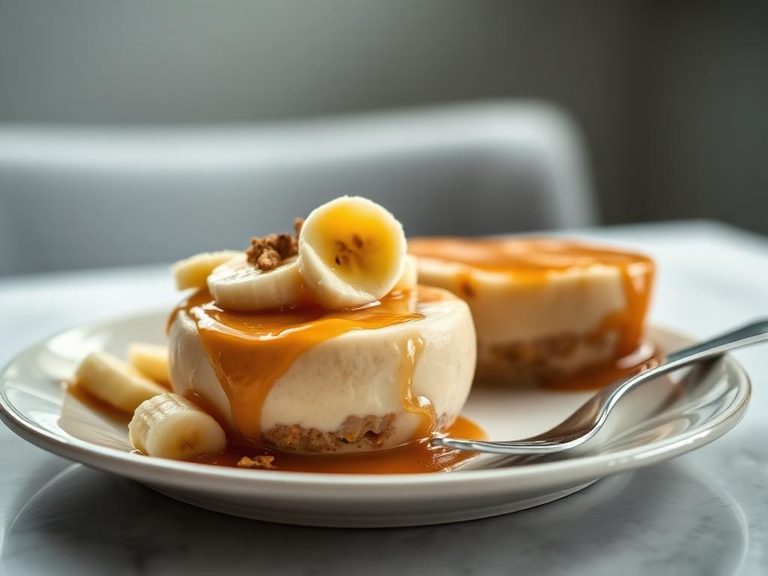

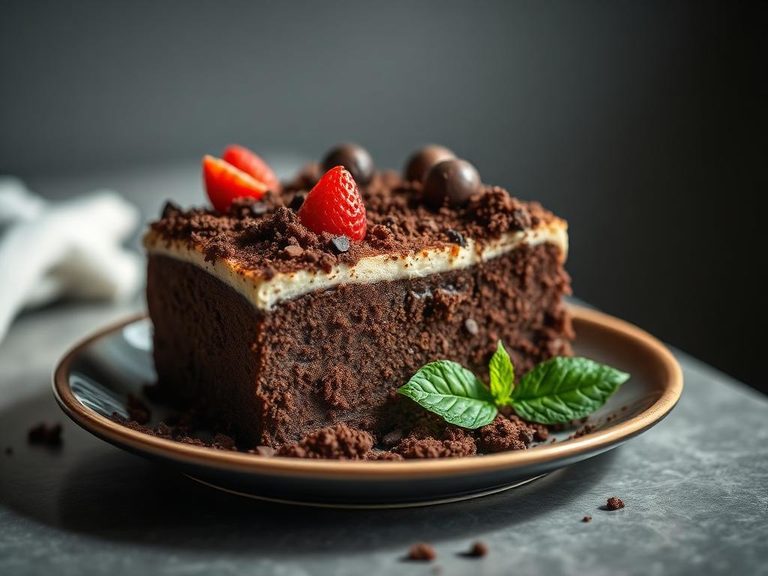
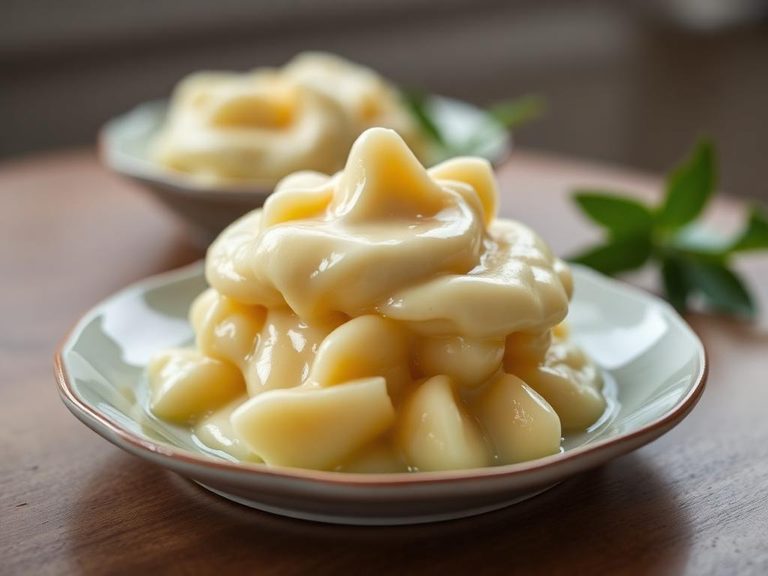
🌍 Where it's eaten
💡 Did you know?
The primary thickening agent in most dry pudding mixes is modified cornstarch, which is chemically altered to create a smoother, more heat-stable gel that resists separating.
Full nutrition (USDA data · scales with serving)
| Water | 3.9 g |
| Energy | 369 kcal |
| Energy | 1544 kj |
| Protein | 0.30 g |
| Total lipid (fat) | 1.1 g |
| Ash | 2.0 g |
| Carbohydrate, by difference | 92.4 g |
| Fiber, total dietary | 0.00 g |
| Calcium, Ca | 15.0 mg |
| Iron, Fe | 0.05 mg |
| Magnesium, Mg | 5.0 mg |
| Phosphorus, P | 3.0 mg |
| Potassium, K | 20.0 mg |
| Sodium, Na | 754 mg |
| Zinc, Zn | 0.09 mg |
| Copper, Cu | 0.02 mg |
| Manganese, Mn | 0.01 mg |
| Selenium, Se | 0.90 ug |
| Vitamin C, total ascorbic acid | 0.00 mg |
| Thiamin | 0.00 mg |
| Riboflavin | 0.00 mg |
| Niacin | 0.00 mg |
| Pantothenic acid | 0.00 mg |
| Vitamin B-6 | 0.00 mg |
| Folate, total | 0.00 ug |
| Folic acid | 0.00 ug |
| Folate, food | 0.00 ug |
| Folate, DFE | 0.00 ug |
| Vitamin B-12 | 0.00 ug |
| Vitamin A, RAE | 0.00 ug |
| Retinol | 0.00 ug |
| Vitamin A, IU | 0.00 iu |
| Caffeine | 0.00 mg |
| Theobromine | 0.00 mg |
Fat & fatty acid profile (per 100g)
| Fatty acids, total saturated | 0.20 g |
| SFA 16:0 | 0.16 g |
| SFA 18:0 | 0.04 g |
| Fatty acids, total monounsaturated | 0.32 g |
| MUFA 18:1 | 0.32 g |
| Fatty acids, total polyunsaturated | 0.53 g |
| PUFA 18:2 | 0.50 g |
| PUFA 18:3 | 0.03 g |
| Cholesterol | 0.00 mg |
Amino acid profile (per 100g)
| Tryptophan | 0.00 g |
| Threonine | 0.01 g |
| Isoleucine | 0.01 g |
| Leucine | 0.04 g |
| Lysine | 0.01 g |
| Methionine | 0.01 g |
| Cystine | 0.01 g |
| Phenylalanine | 0.01 g |
| Tyrosine | 0.01 g |
| Valine | 0.01 g |
| Arginine | 0.01 g |
| Histidine | 0.01 g |
| Alanine | 0.02 g |
| Aspartic acid | 0.02 g |
| Glutamic acid | 0.05 g |
| Glycine | 0.01 g |
| Proline | 0.02 g |
| Serine | 0.01 g |
FAQ
What's the difference between pudding and custard?
Pudding (from a mix) is typically thickened with cornstarch and cooked on the stovetop, while custard is thickened with eggs and often baked. Custard has a richer, more delicate texture.
Can I use this mix for baking?
Yes, it's a common ingredient in cakes, cookies, and pie crusts to add moisture, sweetness, and a subtle vanilla flavor.
Why is it so high in carbs?
The mix is primarily composed of sugar and modified starch, which are pure carbohydrates used for sweetness and thickening, respectively.
Nutrient density (calculated · NRF9.3)
Nutrient Rich Foods index: beneficial nutrients (protein, fiber, vitamins, minerals) minus saturated fat, added sugar & sodium, per 100 kcal.
NRF9.3 index — Fulgoni, Keast & Drewnowski, 2009. Computed from USDA nutrients.
Weight-loss friendliness (composite index)
Energy density 3.69 kcal/g · 0% calories from protein · 0.0 g fiber · 0.0 g sugar per 100 g.
Composite of energy density (Rolls et al., 1999), protein & fiber satiety, minus sugar. A calculated heuristic — ranks satiety-per-calorie, not a clinical measure.
Dietary load (calculated from USDA values)
Potential renal acid load. Positive = acid-forming, negative = alkaline-forming.
Sodium-to-potassium ratio: 37.70 (lower is better — aim for ≤ 1)
Sodium:potassium per WHO potassium guidance. Computed from USDA nutrients.