

Potato skins, NFS
Common food

Photo: Wikipedia
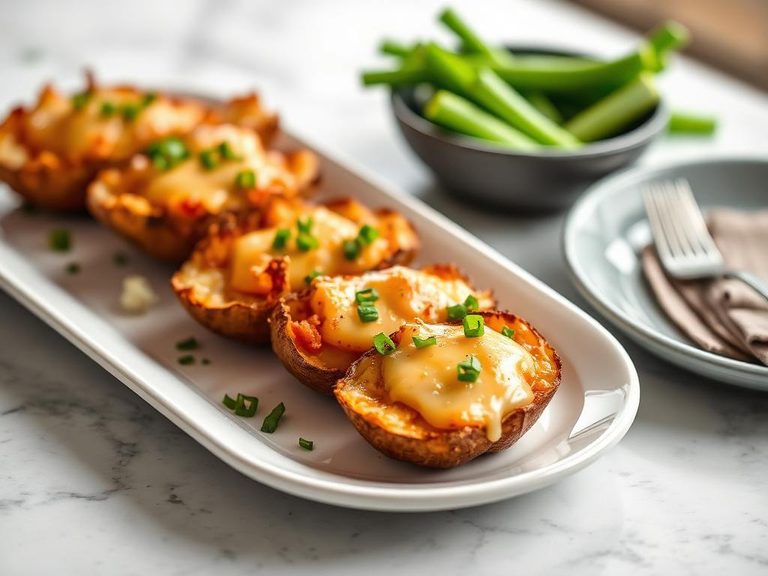
Potato skins are the crispy, savory outer layer of the potato, often baked or fried until golden and topped with melted cheese, bacon, and sour cream. They offer a satisfying crunch with a rich, salty flavor profile and a notable amount of fat and protein for a snack.
Calorie split: 12% protein · 32% carbs · 55% fat
↓ Full nutrition💚 Why it's loved
People adore them for their perfect contrast of textures—crispy exterior, soft interior—and their role as a communal, shareable appetizer that's deeply tied to American pub and game-day culture.
⚠️ Watch-outs & how to enjoy it better
As a high-fat, often high-sodium preparation, they can contribute to calorie overload and may cause blood-sugar spikes if not balanced. To counteract this, pair them with a protein-rich dip like Greek yogurt instead of sour cream, practice portion control, and opt for baking over frying.
Key benefits
- Good source of dietary fiber from the skin
- Provides a moderate amount of protein
- Contains potassium and B vitamins
- Can be a vehicle for other nutrient-dense toppings
🍽️ Popular dishes
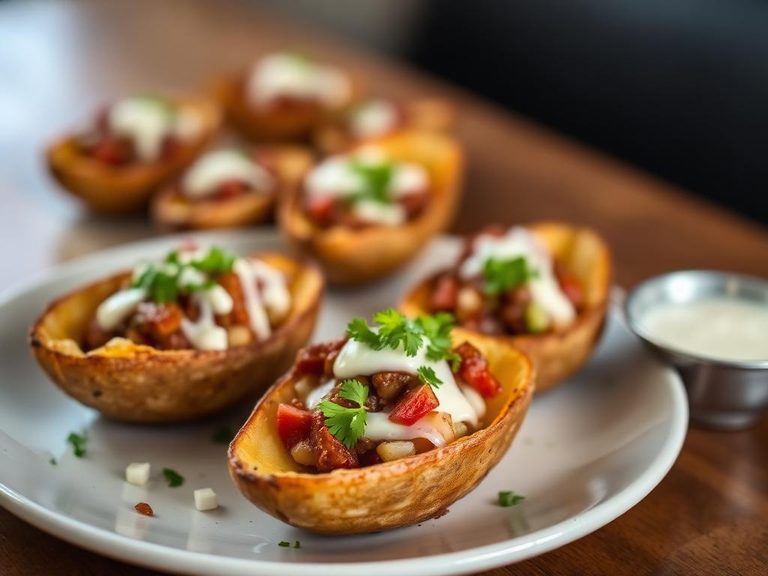
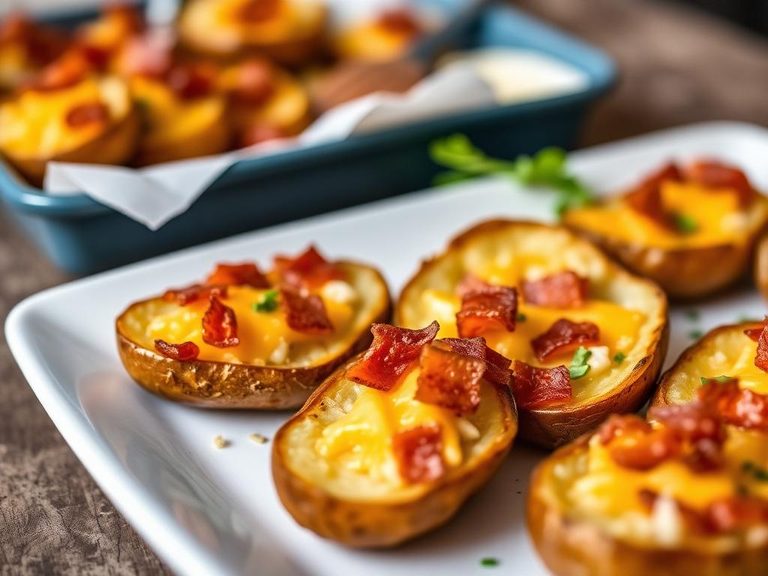
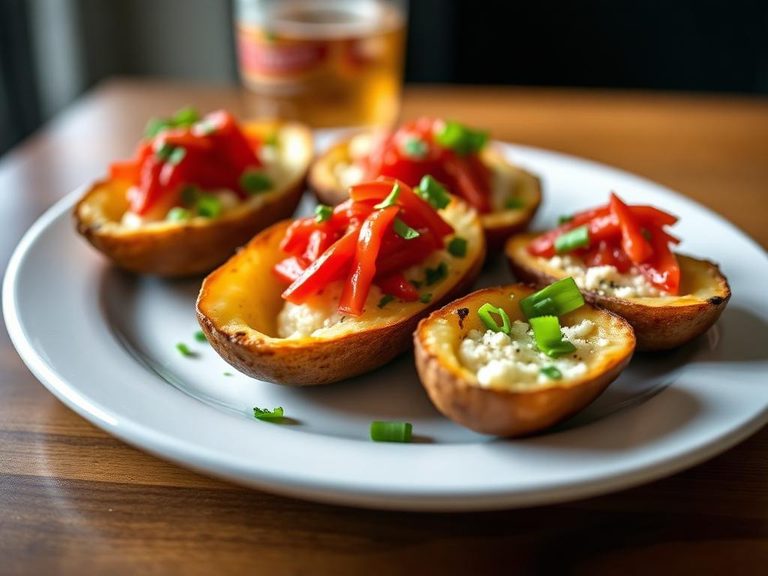
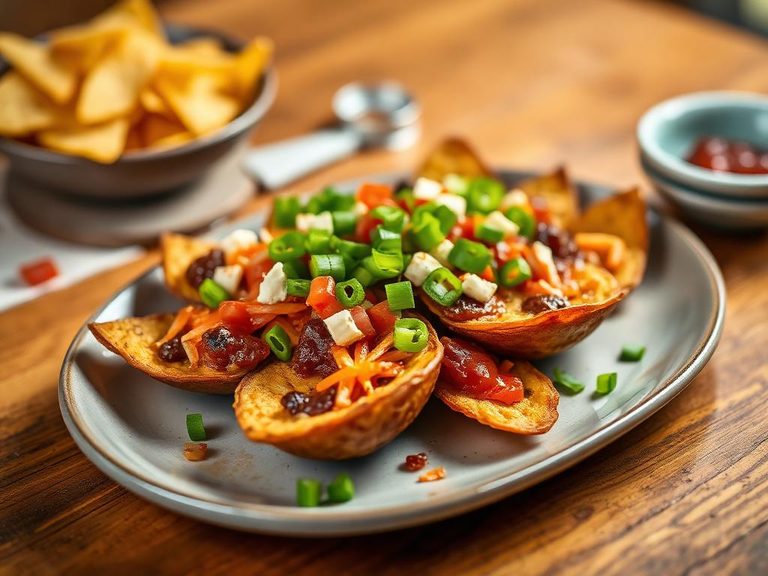
🌍 Where it's eaten
💡 Did you know?
The potato skin is where the majority of the potato's fiber and many of its minerals, like iron and potassium, are concentrated.
Full nutrition (USDA data · scales with serving)
| Water | 62.9 g |
| Energy | 199 kcal |
| Protein | 6.1 g |
| Total lipid (fat) | 12.4 g |
| Carbohydrate, by difference | 16.3 g |
| Fiber, total dietary | 1.5 g |
| Total Sugars | 1.1 g |
| Calcium, Ca | 141 mg |
| Iron, Fe | 0.66 mg |
| Magnesium, Mg | 25.0 mg |
| Phosphorus, P | 132 mg |
| Potassium, K | 376 mg |
| Sodium, Na | 417 mg |
| Zinc, Zn | 0.94 mg |
| Copper, Cu | 0.12 mg |
| Selenium, Se | 5.6 ug |
| Vitamin C, total ascorbic acid | 8.0 mg |
| Thiamin | 0.06 mg |
| Riboflavin | 0.11 mg |
| Niacin | 1.1 mg |
| Vitamin B-6 | 0.24 mg |
| Folate, total | 19.0 ug |
| Folic acid | 0.00 ug |
| Folate, food | 19.0 ug |
| Folate, DFE | 19.0 ug |
| Choline, total | 13.3 mg |
| Vitamin B-12 | 0.11 ug |
| Vitamin B-12, added | 0.00 ug |
| Vitamin A, RAE | 59.0 ug |
| Retinol | 59.0 ug |
| Carotene, beta | 3.0 ug |
| Carotene, alpha | 0.00 ug |
| Cryptoxanthin, beta | 0.00 ug |
| Lycopene | 0.00 ug |
| Lutein + zeaxanthin | 15.0 ug |
| Vitamin E (alpha-tocopherol) | 1.3 mg |
| Vitamin E, added | 0.00 mg |
| Vitamin D (D2 + D3) | 0.10 ug |
| Vitamin K (phylloquinone) | 7.5 ug |
| Alcohol, ethyl | 0.00 g |
| Caffeine | 0.00 mg |
| Theobromine | 0.00 mg |
Fat & fatty acid profile (per 100g)
| Fatty acids, total saturated | 4.4 g |
| SFA 4:0 | 0.12 g |
| SFA 6:0 | 0.10 g |
| SFA 8:0 | 0.07 g |
| SFA 10:0 | 0.16 g |
| SFA 12:0 | 0.18 g |
| SFA 14:0 | 0.58 g |
| SFA 16:0 | 2.2 g |
| SFA 18:0 | 0.81 g |
| Fatty acids, total monounsaturated | 3.9 g |
| MUFA 16:1 | 0.12 g |
| MUFA 18:1 | 3.8 g |
| MUFA 20:1 | 0.05 g |
| MUFA 22:1 | 0.00 g |
| Fatty acids, total polyunsaturated | 2.6 g |
| PUFA 18:2 | 2.3 g |
| PUFA 18:3 | 0.29 g |
| PUFA 18:4 | 0.00 g |
| PUFA 20:4 | 0.01 g |
| PUFA 20:5 n-3 (EPA) | 0.00 g |
| PUFA 22:5 n-3 (DPA) | 0.00 g |
| PUFA 22:6 n-3 (DHA) | 0.00 g |
| Cholesterol | 19.0 mg |
FAQ
Are potato skins healthy?
They can be part of a balanced diet. The skin itself is nutritious, but the common preparation with cheese, bacon, and sour cream adds significant fat and sodium. Baking and using lighter toppings improves their nutritional profile.
How do I get potato skins crispy?
After scooping out the flesh, brush the skins with oil, season, and bake at a high temperature (400-425°F or 200-220°C) until crisp. Frying is another method for extra crunch.
What's the difference between potato skins and potato wedges?
Potato skins are just the outer layer with a small amount of flesh attached, while potato wedges are thick, triangular cuts that include the skin and a substantial portion of the potato's interior.
Nutrient density (calculated · NRF9.3)
Nutrient Rich Foods index: beneficial nutrients (protein, fiber, vitamins, minerals) minus saturated fat, added sugar & sodium, per 100 kcal.
NRF9.3 index — Fulgoni, Keast & Drewnowski, 2009. Computed from USDA nutrients.
Weight-loss friendliness (composite index)
Energy density 1.99 kcal/g · 12% calories from protein · 1.5 g fiber · 1.1 g sugar per 100 g.
Composite of energy density (Rolls et al., 1999), protein & fiber satiety, minus sugar. A calculated heuristic — ranks satiety-per-calorie, not a clinical measure.
Dietary load (calculated from USDA values)
Potential renal acid load. Positive = acid-forming, negative = alkaline-forming.
Sodium-to-potassium ratio: 1.11 (lower is better — aim for ≤ 1)
Sodium:potassium per WHO potassium guidance. Computed from USDA nutrients.