

Potato skins without topping
Common food

Photo: Wikipedia
Potato skins are the crisp, golden-brown outer layer of a baked potato, prized for their satisfying crunch and earthy, starchy flavor. With a relatively high fat content compared to plain potato flesh, they offer a more indulgent texture and a rich, savory mouthfeel. This food is a classic comfort snack, often enjoyed for its simple, rustic appeal.
Calorie split: 6% protein · 51% carbs · 44% fat
↓ Full nutrition💚 Why it's loved
People love potato skins for their irresistible crunch and the satisfying contrast between the crispy exterior and the soft, starchy interior. They are a beloved comfort food and a staple in casual dining and pub culture, often served as a shareable appetizer.
⚠️ Watch-outs & how to enjoy it better
The relatively high fat content (7.45g per 100g) and potential for added sodium can be a concern for those monitoring calorie or salt intake. To counteract this, enjoy them in moderation, pair with a protein-rich dip like Greek yogurt instead of sour cream, and opt for baking or air-frying instead of deep-frying.
Key benefits
- Good source of dietary fiber (1.8g per 100g)
- Provides energy from complex carbohydrates (19.53g per 100g)
- Contains essential vitamins and minerals from the potato skin
- Naturally gluten-free
- Versatile base for various seasonings and toppings
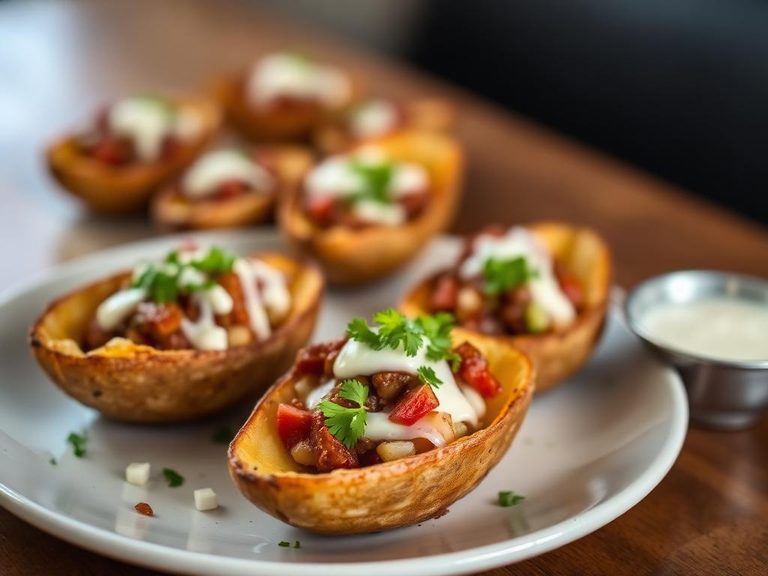
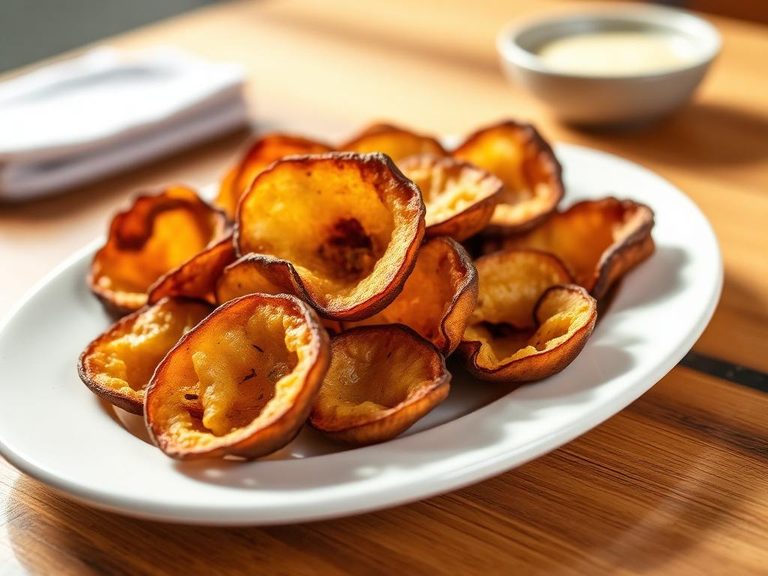
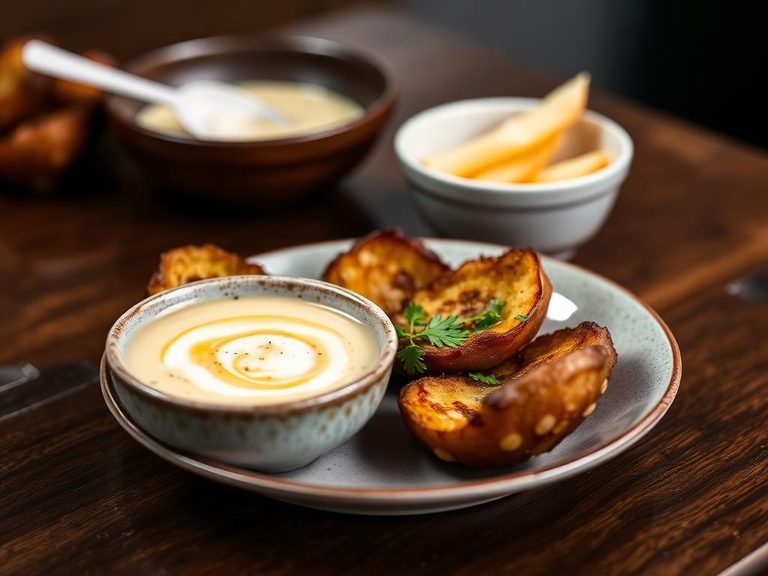
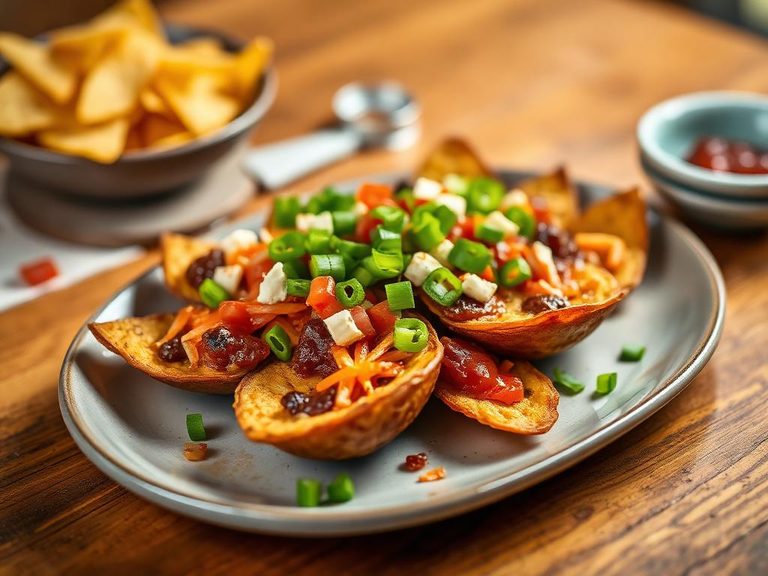
🍽️ Popular dishes
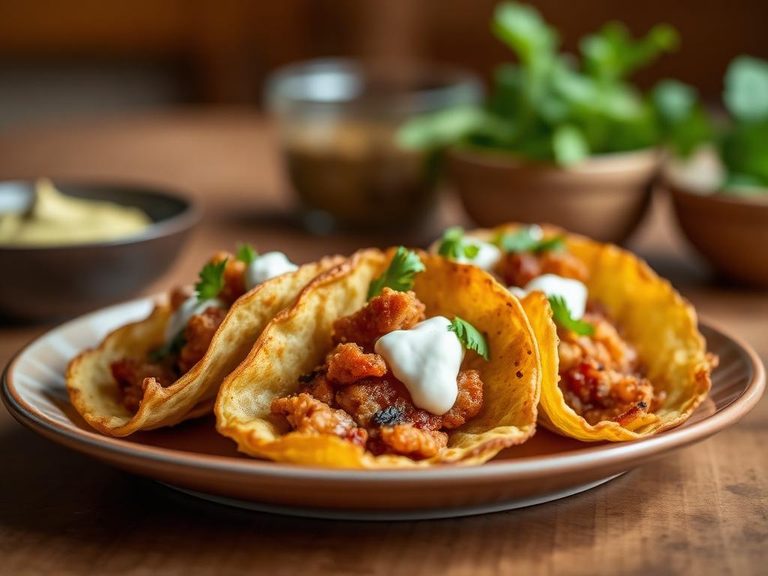
🌍 Where it's eaten
💡 Did you know?
The potato skin contains a significant portion of the potato's total fiber and nutrients, including potassium and vitamin C, which are often lost when the skin is discarded.
Full nutrition (USDA data · scales with serving)
| Water | 68.9 g |
| Energy | 151 kcal |
| Protein | 2.1 g |
| Total lipid (fat) | 7.5 g |
| Carbohydrate, by difference | 19.5 g |
| Fiber, total dietary | 1.8 g |
| Total Sugars | 1.3 g |
| Calcium, Ca | 11.0 mg |
| Iron, Fe | 0.77 mg |
| Magnesium, Mg | 25.0 mg |
| Phosphorus, P | 58.0 mg |
| Potassium, K | 445 mg |
| Sodium, Na | 363 mg |
| Zinc, Zn | 0.31 mg |
| Copper, Cu | 0.14 mg |
| Selenium, Se | 0.30 ug |
| Vitamin C, total ascorbic acid | 9.8 mg |
| Thiamin | 0.07 mg |
| Riboflavin | 0.04 mg |
| Niacin | 1.3 mg |
| Vitamin B-6 | 0.28 mg |
| Folate, total | 20.0 ug |
| Folic acid | 0.00 ug |
| Folate, food | 20.0 ug |
| Folate, DFE | 20.0 ug |
| Choline, total | 13.5 mg |
| Vitamin B-12 | 0.00 ug |
| Vitamin B-12, added | 0.00 ug |
| Vitamin A, RAE | 1.0 ug |
| Retinol | 0.00 ug |
| Carotene, beta | 4.0 ug |
| Carotene, alpha | 0.00 ug |
| Cryptoxanthin, beta | 0.00 ug |
| Lycopene | 0.00 ug |
| Lutein + zeaxanthin | 18.0 ug |
| Vitamin E (alpha-tocopherol) | 1.4 mg |
| Vitamin E, added | 0.00 mg |
| Vitamin D (D2 + D3) | 0.00 ug |
| Vitamin K (phylloquinone) | 8.7 ug |
| Alcohol, ethyl | 0.00 g |
| Caffeine | 0.00 mg |
| Theobromine | 0.00 mg |
Fat & fatty acid profile (per 100g)
| Fatty acids, total saturated | 1.0 g |
| SFA 4:0 | 0.00 g |
| SFA 6:0 | 0.00 g |
| SFA 8:0 | 0.00 g |
| SFA 10:0 | 0.00 g |
| SFA 12:0 | 0.00 g |
| SFA 14:0 | 0.01 g |
| SFA 16:0 | 0.72 g |
| SFA 18:0 | 0.22 g |
| Fatty acids, total monounsaturated | 3.1 g |
| MUFA 16:1 | 0.03 g |
| MUFA 18:1 | 3.0 g |
| MUFA 20:1 | 0.05 g |
| MUFA 22:1 | 0.00 g |
| Fatty acids, total polyunsaturated | 2.9 g |
| PUFA 18:2 | 2.5 g |
| PUFA 18:3 | 0.33 g |
| PUFA 18:4 | 0.00 g |
| PUFA 20:4 | 0.00 g |
| PUFA 20:5 n-3 (EPA) | 0.00 g |
| PUFA 22:5 n-3 (DPA) | 0.00 g |
| PUFA 22:6 n-3 (DHA) | 0.00 g |
| Cholesterol | 0.00 mg |
FAQ
Are potato skins healthy?
Potato skins can be part of a healthy diet as they provide fiber and nutrients, but they are often prepared with added fat and sodium. Baking or air-frying them and using healthy toppings can make them a more nutritious choice.
How do I make crispy potato skins?
To achieve crispy potato skins, bake the potatoes at a high temperature (around 400°F or 200°C) until the skin is firm, then scoop out the flesh, brush the skins with oil, and bake again until golden and crispy.
Can I eat potato skins if I'm on a low-carb diet?
Potato skins are relatively high in carbohydrates (19.53g per 100g), so they may not be suitable for a strict low-carb diet. However, they can be enjoyed in small portions as part of a balanced diet.
Nutrient density (calculated · NRF9.3)
Nutrient Rich Foods index: beneficial nutrients (protein, fiber, vitamins, minerals) minus saturated fat, added sugar & sodium, per 100 kcal.
NRF9.3 index — Fulgoni, Keast & Drewnowski, 2009. Computed from USDA nutrients.
Weight-loss friendliness (composite index)
Energy density 1.51 kcal/g · 6% calories from protein · 1.8 g fiber · 1.3 g sugar per 100 g.
Composite of energy density (Rolls et al., 1999), protein & fiber satiety, minus sugar. A calculated heuristic — ranks satiety-per-calorie, not a clinical measure.
Dietary load (calculated from USDA values)
Potential renal acid load. Positive = acid-forming, negative = alkaline-forming.
Sodium-to-potassium ratio: 0.82 (lower is better — aim for ≤ 1)
Sodium:potassium per WHO potassium guidance. Computed from USDA nutrients.