

Pepper steak
Common food

Photo: Wikipedia
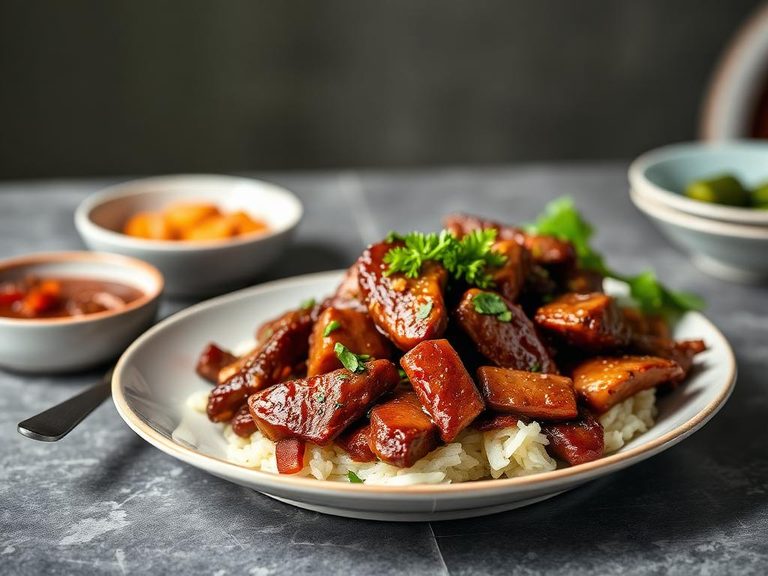
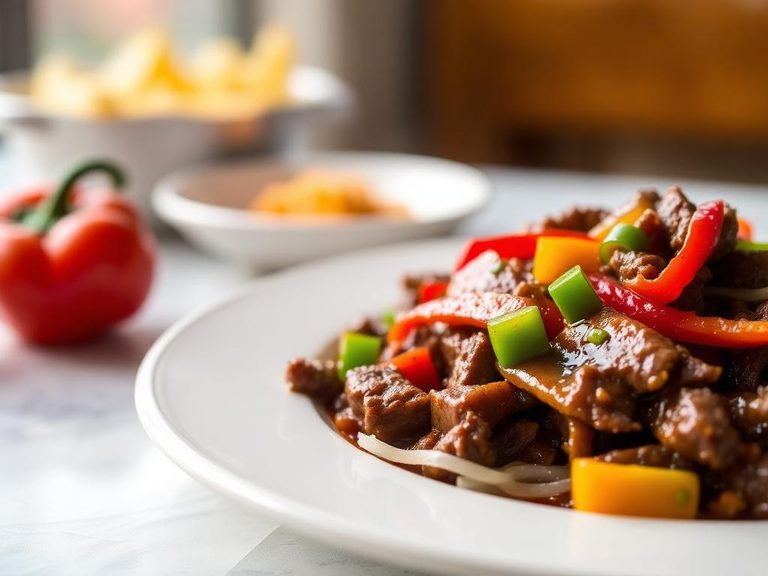
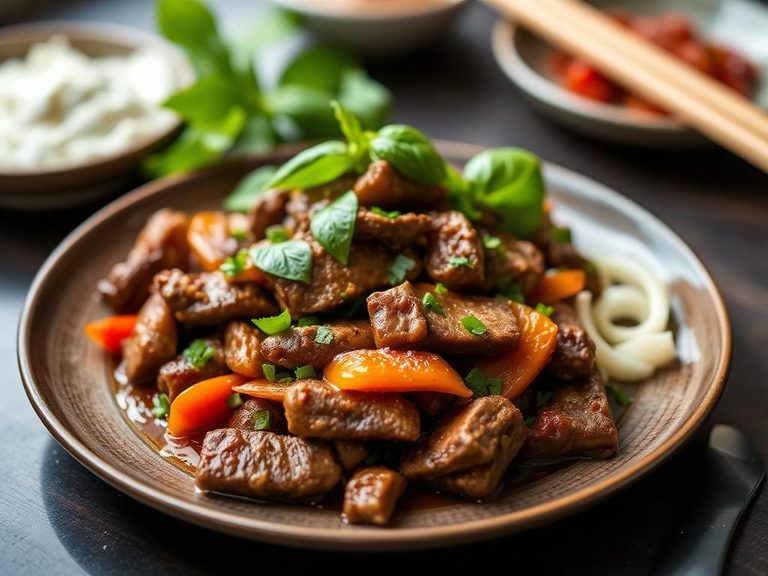
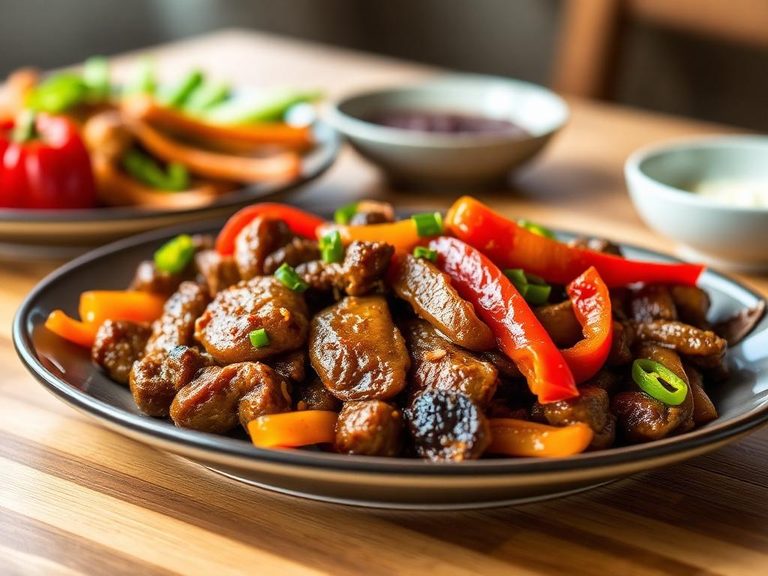
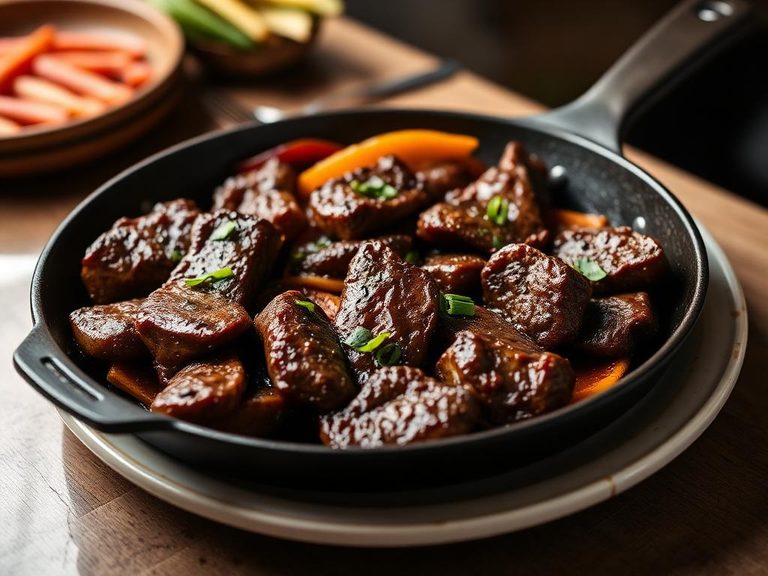
Pepper steak is a savory stir-fry featuring tender strips of beef and crisp bell peppers, often in a glossy, umami-rich sauce. The dish balances the meat's hearty chew with the pepper's sweet crunch, delivering a satisfying, protein-packed meal. Nutritionally, it's a high-protein, moderate-fat option with a relatively low carbohydrate profile, making it a popular choice for balanced diets.
Calorie split: 32% protein · 12% carbs · 56% fat
↓ Full nutrition💚 Why it's loved
People adore pepper steak for its deeply satisfying savory-sweet flavor profile and the textural contrast between tender beef and crisp peppers. It's a versatile, quick-to-cook comfort food that feels both hearty and fresh, making it a staple in home cooking and takeout.
⚠️ Watch-outs & how to enjoy it better
The dish can be high in sodium from soy sauce and other seasonings, which may be a concern for those monitoring blood pressure. The beef and sauce combination is calorie-dense, so portion control is key for weight management. To mitigate, use low-sodium soy sauce, load up on extra vegetables like broccoli or snow peas to increase volume without excess calories, and opt for leaner cuts like sirloin.
Key benefits
- Excellent source of high-quality protein for muscle maintenance
- Rich in iron and zinc from beef, supporting energy and immune function
- Bell peppers provide a good dose of vitamin C, which aids iron absorption
- Contains healthy fats that support hormone production and nutrient absorption
- A balanced macronutrient profile can promote satiety and stable energy levels
🍽️ Popular dishes
🌍 Where it's eaten
💡 Did you know?
The 'pepper' in pepper steak originally referred to black pepper, not bell peppers; the dish was a way to showcase the expensive spice before bell peppers became a common, colorful substitute.
Full nutrition (USDA data · scales with serving)
| Water | 73.5 g |
| Energy | 145 kcal |
| Protein | 11.9 g |
| Total lipid (fat) | 9.1 g |
| Carbohydrate, by difference | 4.3 g |
| Fiber, total dietary | 0.70 g |
| Total Sugars | 1.7 g |
| Calcium, Ca | 17.0 mg |
| Iron, Fe | 1.2 mg |
| Magnesium, Mg | 16.0 mg |
| Phosphorus, P | 89.0 mg |
| Potassium, K | 202 mg |
| Sodium, Na | 244 mg |
| Zinc, Zn | 2.0 mg |
| Copper, Cu | 0.07 mg |
| Selenium, Se | 11.6 ug |
| Vitamin C, total ascorbic acid | 22.6 mg |
| Thiamin | 0.05 mg |
| Riboflavin | 0.08 mg |
| Niacin | 2.3 mg |
| Vitamin B-6 | 0.26 mg |
| Folate, total | 13.0 ug |
| Folic acid | 0.00 ug |
| Folate, food | 13.0 ug |
| Folate, DFE | 13.0 ug |
| Choline, total | 46.0 mg |
| Vitamin B-12 | 0.61 ug |
| Vitamin B-12, added | 0.00 ug |
| Vitamin A, RAE | 9.0 ug |
| Retinol | 0.00 ug |
| Carotene, beta | 101 ug |
| Carotene, alpha | 7.0 ug |
| Cryptoxanthin, beta | 2.0 ug |
| Lycopene | 0.00 ug |
| Lutein + zeaxanthin | 173 ug |
| Vitamin E (alpha-tocopherol) | 1.4 mg |
| Vitamin E, added | 0.00 mg |
| Vitamin D (D2 + D3) | 0.00 ug |
| Vitamin K (phylloquinone) | 19.5 ug |
| Alcohol, ethyl | 0.00 g |
| Caffeine | 0.00 mg |
| Theobromine | 0.00 mg |
Fat & fatty acid profile (per 100g)
| Fatty acids, total saturated | 2.0 g |
| SFA 4:0 | 0.00 g |
| SFA 6:0 | 0.00 g |
| SFA 8:0 | 0.00 g |
| SFA 10:0 | 0.01 g |
| SFA 12:0 | 0.01 g |
| SFA 14:0 | 0.10 g |
| SFA 16:0 | 1.3 g |
| SFA 18:0 | 0.52 g |
| Fatty acids, total monounsaturated | 3.8 g |
| MUFA 16:1 | 0.16 g |
| MUFA 18:1 | 3.6 g |
| MUFA 20:1 | 0.04 g |
| MUFA 22:1 | 0.00 g |
| Fatty acids, total polyunsaturated | 2.4 g |
| PUFA 18:2 | 2.1 g |
| PUFA 18:3 | 0.29 g |
| PUFA 18:4 | 0.00 g |
| PUFA 20:4 | 0.01 g |
| PUFA 20:5 n-3 (EPA) | 0.00 g |
| PUFA 22:5 n-3 (DPA) | 0.01 g |
| PUFA 22:6 n-3 (DHA) | 0.00 g |
| Cholesterol | 32.0 mg |
FAQ
Is pepper steak healthy?
It can be a nutritious choice, offering high protein and key minerals like iron. Its healthiness depends on the cut of beef used, the amount of oil and sauce, and portion size. Choosing lean beef and controlling sodium makes it a balanced meal.
What cut of beef is best for pepper steak?
Quick-cooking, tender cuts like sirloin, flank steak, or tenderloin are ideal. They should be sliced thinly against the grain to ensure tenderness in a fast stir-fry.
Can I make pepper steak without soy sauce?
Yes, you can substitute with coconut aminos for a similar umami flavor with less sodium. Other options include a mix of mushroom broth and a touch of fish sauce, or a simple sauce based on oyster sauce and broth.
Nutrient density (calculated · NRF9.3)
Nutrient Rich Foods index: beneficial nutrients (protein, fiber, vitamins, minerals) minus saturated fat, added sugar & sodium, per 100 kcal.
NRF9.3 index — Fulgoni, Keast & Drewnowski, 2009. Computed from USDA nutrients.
Weight-loss friendliness (composite index)
Energy density 1.45 kcal/g · 33% calories from protein · 0.7 g fiber · 1.7 g sugar per 100 g.
Composite of energy density (Rolls et al., 1999), protein & fiber satiety, minus sugar. A calculated heuristic — ranks satiety-per-calorie, not a clinical measure.
Dietary load (calculated from USDA values)
Potential renal acid load. Positive = acid-forming, negative = alkaline-forming.
Sodium-to-potassium ratio: 1.21 (lower is better — aim for ≤ 1)
Sodium:potassium per WHO potassium guidance. Computed from USDA nutrients.