

Pasta with sauce and meat, from school lunch
Common food

Photo: Wikipedia
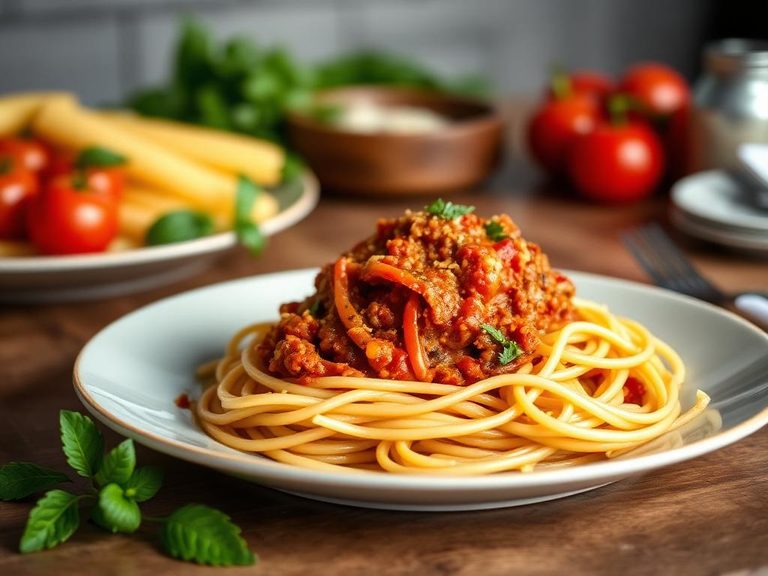
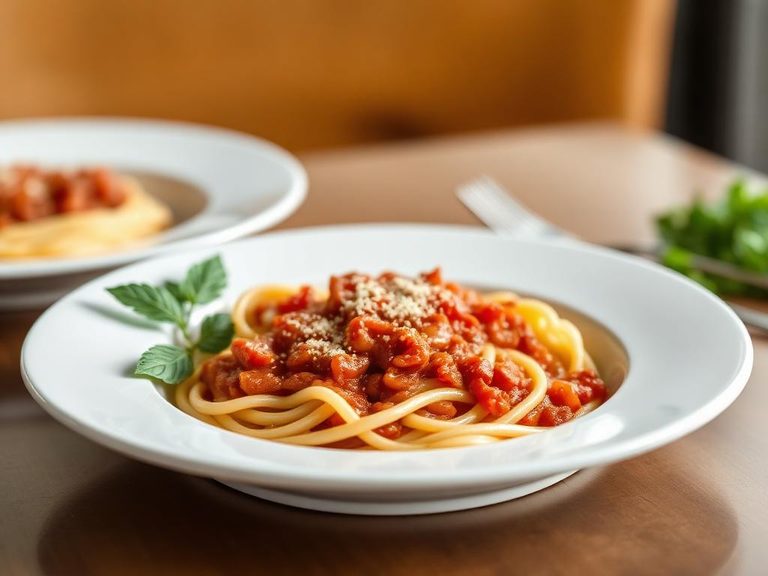
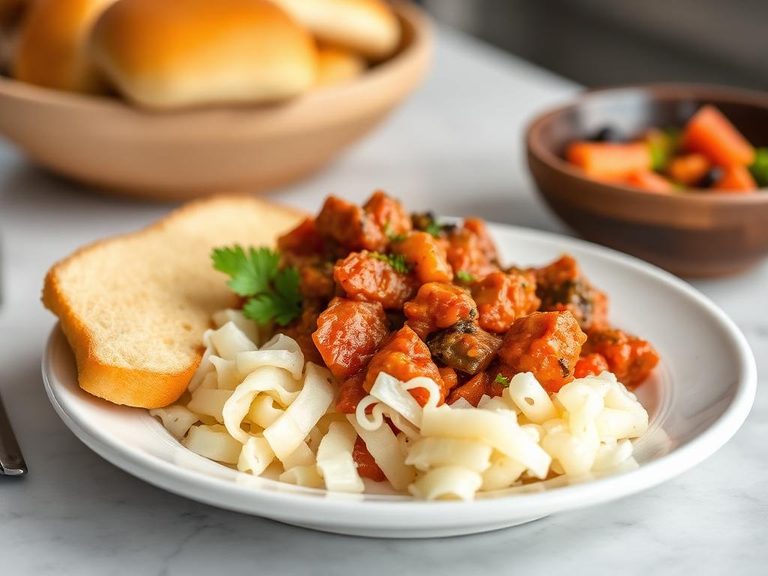
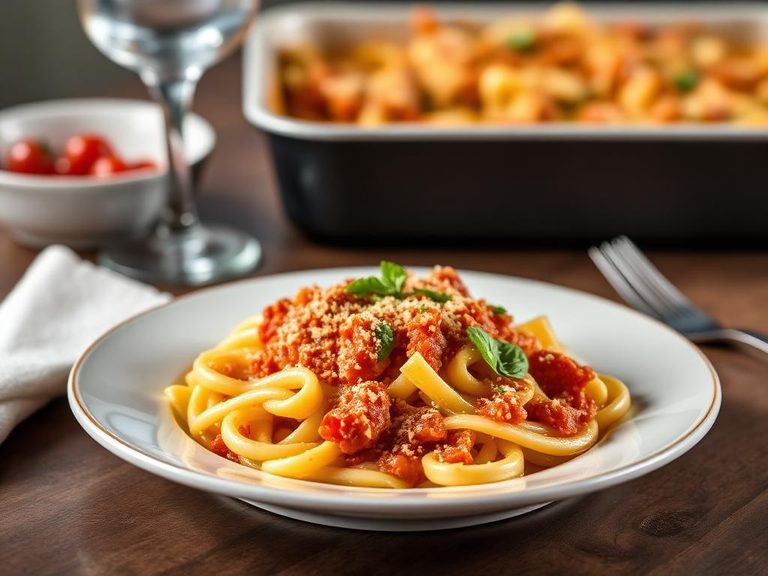
This is the quintessential school lunch staple: tender pasta spirals or tubes coated in a savory, slightly sweet tomato-based meat sauce. The texture is soft and comforting, with the meat adding a satisfying, granular contrast to the smooth pasta. Nutritionally, it's a balanced bite, offering a solid mix of energy-giving carbs and muscle-supporting protein in a modest calorie package.
Calorie split: 20% protein · 57% carbs · 23% fat
↓ Full nutrition💚 Why it's loved
People love it for its deep, savory umami flavor from the meat and tomatoes, and its comforting, nostalgic quality that reminds many of childhood. Its versatility is key—it's a canvas for adding hidden vegetables like grated carrots or zucchini.
⚠️ Watch-outs & how to enjoy it better
The sauce can be high in sodium, and the refined pasta may cause a quicker blood-sugar spike compared to whole-grain versions. To counteract this, pair it with a side salad or steamed greens to add fiber and volume, or choose a whole-wheat pasta base for a slower energy release.
Key benefits
- Provides a balanced mix of protein, carbs, and fats for sustained energy.
- Contains dietary fiber from pasta and tomato, aiding digestion.
- A convenient, all-in-one meal that's easy to portion and serve.
- A familiar comfort food that can encourage children to eat a full meal.
🍽️ Popular dishes

🌍 Where it's eaten
💡 Did you know?
The classic 'meat sauce' for school lunches is often a simplified version of the Italian ragù, which traditionally simmers for hours; the quick-cook school version uses ground meat and canned tomatoes for efficiency.
Full nutrition (USDA data · scales with serving)
| Water | 72.2 g |
| Energy | 117 kcal |
| Protein | 6.0 g |
| Total lipid (fat) | 3.1 g |
| Carbohydrate, by difference | 17.5 g |
| Fiber, total dietary | 2.6 g |
| Total Sugars | 2.7 g |
| Calcium, Ca | 20.0 mg |
| Iron, Fe | 1.4 mg |
| Magnesium, Mg | 35.0 mg |
| Phosphorus, P | 93.0 mg |
| Potassium, K | 213 mg |
| Sodium, Na | 117 mg |
| Zinc, Zn | 1.3 mg |
| Copper, Cu | 0.15 mg |
| Selenium, Se | 19.5 ug |
| Vitamin C, total ascorbic acid | 0.90 mg |
| Thiamin | 0.09 mg |
| Riboflavin | 0.09 mg |
| Niacin | 3.7 mg |
| Vitamin B-6 | 0.15 mg |
| Folate, total | 16.0 ug |
| Folic acid | 0.00 ug |
| Folate, food | 16.0 ug |
| Folate, DFE | 16.0 ug |
| Choline, total | 17.0 mg |
| Vitamin B-12 | 0.27 ug |
| Vitamin B-12, added | 0.00 ug |
| Vitamin A, RAE | 15.0 ug |
| Retinol | 0.00 ug |
| Carotene, beta | 170 ug |
| Carotene, alpha | 0.00 ug |
| Cryptoxanthin, beta | 0.00 ug |
| Lycopene | 5479 ug |
| Lutein + zeaxanthin | 126 ug |
| Vitamin E (alpha-tocopherol) | 1.2 mg |
| Vitamin E, added | 0.00 mg |
| Vitamin D (D2 + D3) | 0.00 ug |
| Vitamin K (phylloquinone) | 6.5 ug |
| Alcohol, ethyl | 0.00 g |
| Caffeine | 0.00 mg |
| Theobromine | 0.00 mg |
Fat & fatty acid profile (per 100g)
| Fatty acids, total saturated | 0.83 g |
| SFA 4:0 | 0.00 g |
| SFA 6:0 | 0.00 g |
| SFA 8:0 | 0.00 g |
| SFA 10:0 | 0.00 g |
| SFA 12:0 | 0.00 g |
| SFA 14:0 | 0.05 g |
| SFA 16:0 | 0.50 g |
| SFA 18:0 | 0.23 g |
| Fatty acids, total monounsaturated | 0.99 g |
| MUFA 16:1 | 0.06 g |
| MUFA 18:1 | 0.88 g |
| MUFA 20:1 | 0.01 g |
| MUFA 22:1 | 0.00 g |
| Fatty acids, total polyunsaturated | 0.54 g |
| PUFA 18:2 | 0.47 g |
| PUFA 18:3 | 0.06 g |
| PUFA 18:4 | 0.00 g |
| PUFA 20:4 | 0.01 g |
| PUFA 20:5 n-3 (EPA) | 0.00 g |
| PUFA 22:5 n-3 (DPA) | 0.00 g |
| PUFA 22:6 n-3 (DHA) | 0.00 g |
| Cholesterol | 10.0 mg |
FAQ
Is the protein in school pasta sauce high quality?
Yes, the ground meat (usually beef or a beef-pork blend) provides complete protein with all essential amino acids, making it a valuable protein source in the meal.
Why does the sauce sometimes taste sweet?
Many commercial and institutional recipes add a small amount of sugar to balance the acidity of the tomatoes, creating a more palatable flavor, especially for younger eaters.
Can I make a healthier version at home?
Absolutely. Use lean ground turkey or lentils, add finely chopped mushrooms and carrots to the sauce, opt for whole-grain pasta, and control the salt by seasoning with herbs like oregano and basil.
Nutrient density (calculated · NRF9.3)
Nutrient Rich Foods index: beneficial nutrients (protein, fiber, vitamins, minerals) minus saturated fat, added sugar & sodium, per 100 kcal.
NRF9.3 index — Fulgoni, Keast & Drewnowski, 2009. Computed from USDA nutrients.
Weight-loss friendliness (composite index)
Energy density 1.17 kcal/g · 20% calories from protein · 2.6 g fiber · 2.7 g sugar per 100 g.
Composite of energy density (Rolls et al., 1999), protein & fiber satiety, minus sugar. A calculated heuristic — ranks satiety-per-calorie, not a clinical measure.
Dietary load (calculated from USDA values)
Potential renal acid load. Positive = acid-forming, negative = alkaline-forming.
Sodium-to-potassium ratio: 0.55 (lower is better — aim for ≤ 1)
Sodium:potassium per WHO potassium guidance. Computed from USDA nutrients.