

Pasta, fresh-refrigerated, spinach, cooked
Whole food · Cereal Grains and Pasta
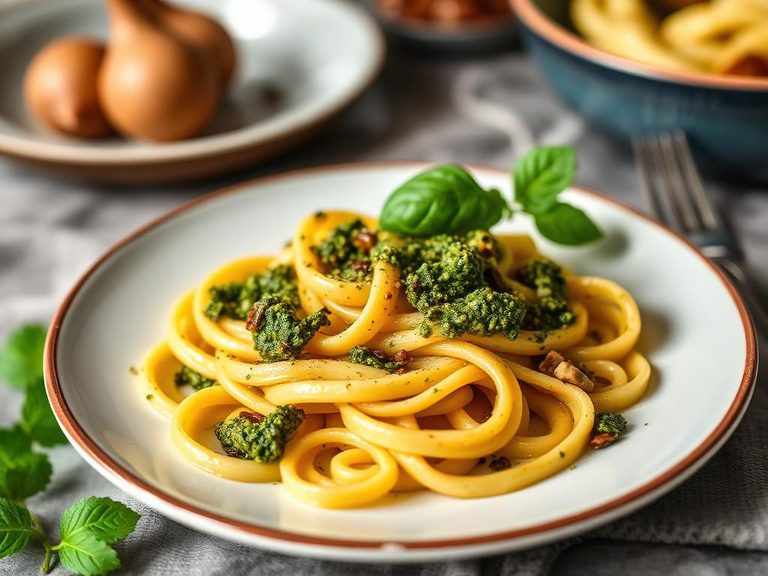
Fresh-refrigerated spinach pasta is a vibrant, emerald-green sheet or ribbon of dough, subtly infused with earthy spinach flavor. When cooked al dente, it offers a tender yet pleasantly firm bite, with a delicate sweetness from the wheat and a hint of vegetal depth. Nutritionally, it's a lighter pasta option, providing a solid carbohydrate base with a modest protein boost from the egg and spinach.
Calorie split: 16% protein · 78% carbs · 7% fat
↓ Full nutrition💚 Why it's loved
People love it for its beautiful color and the way it elevates a simple dish into something visually special. Its tender texture and mild, earthy flavor make it an incredibly versatile canvas for everything from light olive oil sauces to rich ragùs.
⚠️ Watch-outs & how to enjoy it better
The fresh dough is high in refined carbohydrates and can cause blood-sugar spikes if eaten alone. It's also a common allergen (gluten, egg) and contains oxalates from spinach. To counteract this, always pair it with a protein (like chicken or beans) and a healthy fat (like olive oil or cheese) to slow digestion, and practice portion control.
Key benefits
- Good source of quick-release energy from complex carbs
- Contains plant-based iron and vitamins from spinach
- Lower in fat than many egg-based fresh pastas
- Provides a modest protein boost compared to dried pasta
- Offers a more vibrant color and subtle flavor than plain pasta
🍽️ Popular dishes
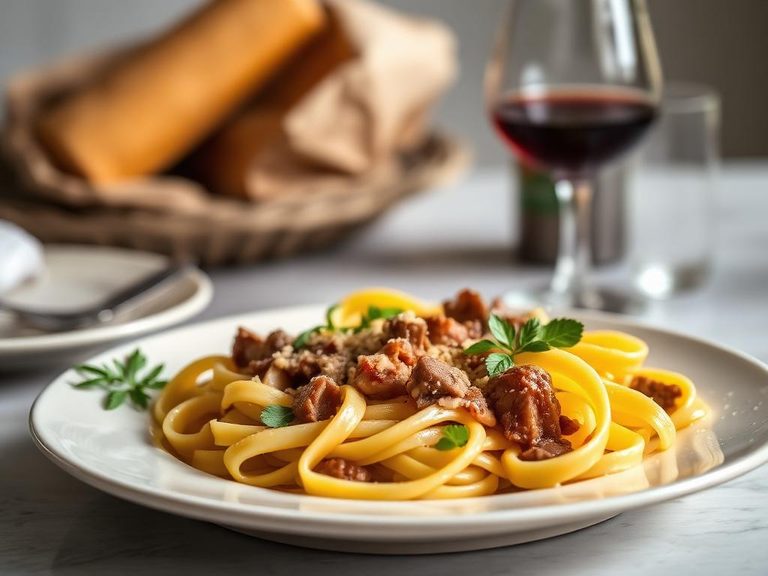
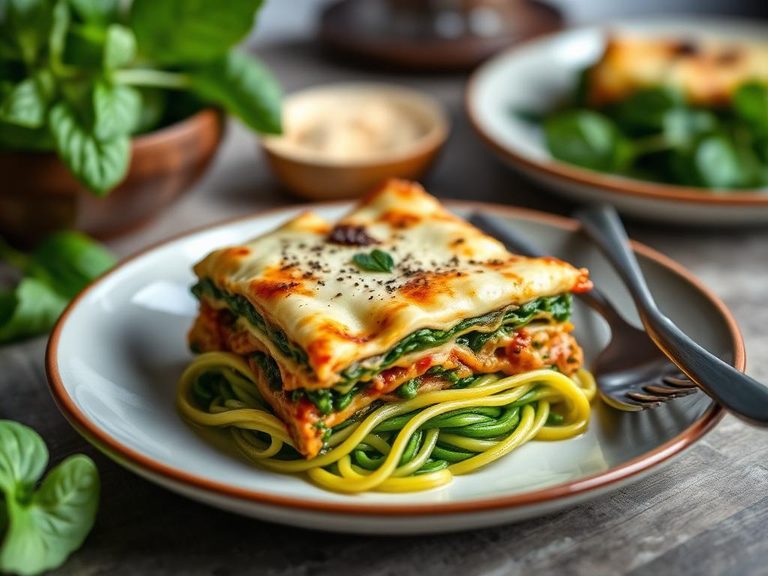
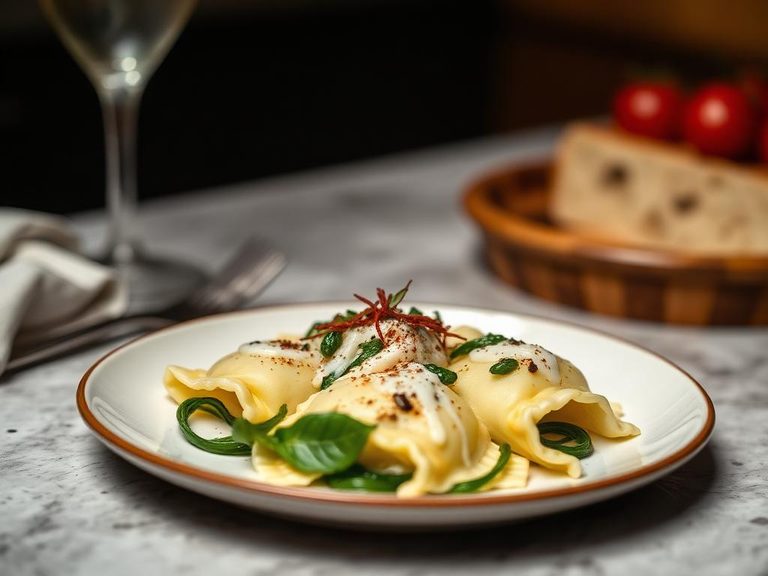
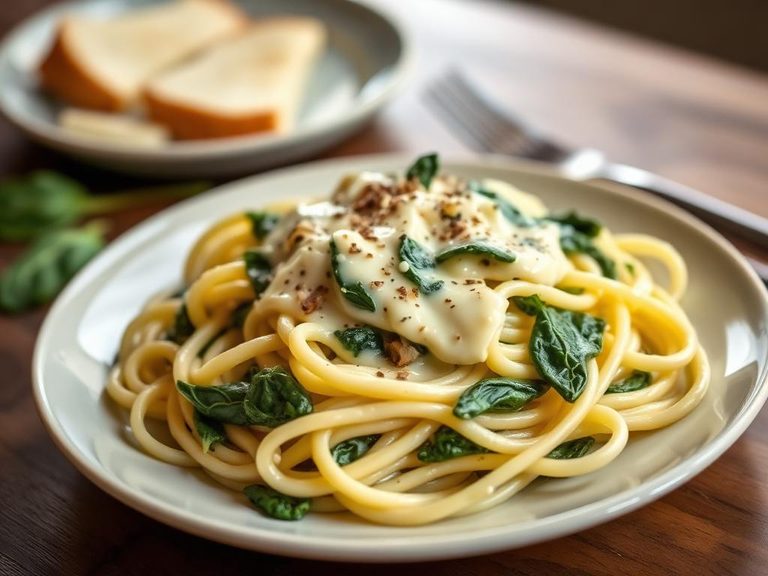
🌍 Where it's eaten
💡 Did you know?
The green color in spinach pasta comes from chlorophyll, which is heat-sensitive; overcooking can turn it a dull, olive-brown, so timing is key for visual appeal.
Full nutrition (USDA data · scales with serving)
| Water | 68.6 g |
| Energy | 130 kcal |
| Energy | 544 kj |
| Protein | 5.1 g |
| Total lipid (fat) | 0.94 g |
| Ash | 0.37 g |
| Carbohydrate, by difference | 25.0 g |
| Calcium, Ca | 18.0 mg |
| Iron, Fe | 1.1 mg |
| Magnesium, Mg | 24.0 mg |
| Phosphorus, P | 57.0 mg |
| Potassium, K | 37.0 mg |
| Sodium, Na | 6.0 mg |
| Zinc, Zn | 0.63 mg |
| Copper, Cu | 0.08 mg |
| Manganese, Mn | 0.32 mg |
| Vitamin C, total ascorbic acid | 0.00 mg |
| Thiamin | 0.18 mg |
| Riboflavin | 0.13 mg |
| Niacin | 1.0 mg |
| Pantothenic acid | 0.23 mg |
| Vitamin B-6 | 0.11 mg |
| Folate, total | 64.0 ug |
| Folic acid | 46.0 ug |
| Folate, food | 18.0 ug |
| Folate, DFE | 96.0 ug |
| Vitamin B-12 | 0.14 ug |
| Vitamin A, RAE | 10.0 ug |
| Retinol | 6.0 ug |
| Vitamin A, IU | 103 iu |
Fat & fatty acid profile (per 100g)
| Fatty acids, total saturated | 0.22 g |
| SFA 14:0 | 0.00 g |
| SFA 16:0 | 0.17 g |
| SFA 18:0 | 0.04 g |
| Fatty acids, total monounsaturated | 0.30 g |
| MUFA 16:1 | 0.03 g |
| MUFA 18:1 | 0.27 g |
| MUFA 20:1 | 0.00 g |
| Fatty acids, total polyunsaturated | 0.21 g |
| PUFA 18:2 | 0.18 g |
| PUFA 18:3 | 0.03 g |
| Cholesterol | 33.0 mg |
Amino acid profile (per 100g)
| Tryptophan | 0.07 g |
| Threonine | 0.16 g |
| Isoleucine | 0.22 g |
| Leucine | 0.36 g |
| Lysine | 0.15 g |
| Methionine | 0.09 g |
| Cystine | 0.13 g |
| Phenylalanine | 0.25 g |
| Tyrosine | 0.15 g |
| Valine | 0.24 g |
| Arginine | 0.22 g |
| Histidine | 0.11 g |
| Alanine | 0.18 g |
| Aspartic acid | 0.27 g |
| Glutamic acid | 1.6 g |
| Glycine | 0.17 g |
| Proline | 0.47 g |
| Serine | 0.26 g |
FAQ
How is fresh spinach pasta different from dried spinach pasta?
Fresh spinach pasta is made with a high moisture content dough, giving it a tender, delicate texture that cooks in minutes. Dried spinach pasta is extruded and dehydrated, resulting in a firmer bite and longer cooking time, similar to regular dried pasta.
Why does my spinach pasta turn brownish when cooked?
This is due to the natural acids in spinach reacting with heat, which degrades the green chlorophyll pigment. To preserve the color, cook it quickly in a large pot of well-salted, boiling water and serve immediately.
Is spinach pasta healthier than regular pasta?
It's slightly more nutrient-dense, offering small amounts of iron, vitamin K, and antioxidants from the spinach. However, the primary component is still refined wheat flour, so the macronutrient profile (carbs, protein, fat) is very similar to standard egg pasta.
Nutrient density (calculated · NRF9.3)
Nutrient Rich Foods index: beneficial nutrients (protein, fiber, vitamins, minerals) minus saturated fat, added sugar & sodium, per 100 kcal.
NRF9.3 index — Fulgoni, Keast & Drewnowski, 2009. Computed from USDA nutrients.
Weight-loss friendliness (composite index)
Energy density 1.30 kcal/g · 16% calories from protein · 0.0 g fiber · 0.0 g sugar per 100 g.
Composite of energy density (Rolls et al., 1999), protein & fiber satiety, minus sugar. A calculated heuristic — ranks satiety-per-calorie, not a clinical measure.
Dietary load (calculated from USDA values)
Potential renal acid load. Positive = acid-forming, negative = alkaline-forming.
Sodium-to-potassium ratio: 0.16 (lower is better — aim for ≤ 1)
Sodium:potassium per WHO potassium guidance. Computed from USDA nutrients.