

Miso sauce
Common food

Photo: Wikipedia
Miso sauce is a rich, savory condiment made from fermented soybeans, salt, and often a grain like rice or barley. It has a thick, paste-like texture and a complex, deeply umami flavor profile that is simultaneously salty, sweet, and earthy. Nutritionally, it is a high-fat, calorie-dense ingredient, with nearly all its calories coming from fat.
Calorie split: 3% protein · 13% carbs · 84% fat
↓ Full nutrition💚 Why it's loved
People love miso sauce for its unparalleled ability to add a deep, savory backbone to dishes, transforming simple broths, marinades, and dressings. Its versatility in both traditional and modern fusion cooking makes it a beloved staple in many kitchens.
⚠️ Watch-outs & how to enjoy it better
Its high sodium and fat content can be a concern for those monitoring blood pressure or calorie intake. To counteract this, use it sparingly as a flavor enhancer rather than a primary sauce, and balance it with low-sodium ingredients like vegetables or plain rice. It also contains soy, a common allergen.
Key benefits
- Source of plant-based protein from fermented soybeans.
- Contains probiotics from the natural fermentation process.
- Rich in umami, which can enhance flavor and reduce need for added salt.
- Provides essential minerals like manganese and zinc.
🍽️ Popular dishes
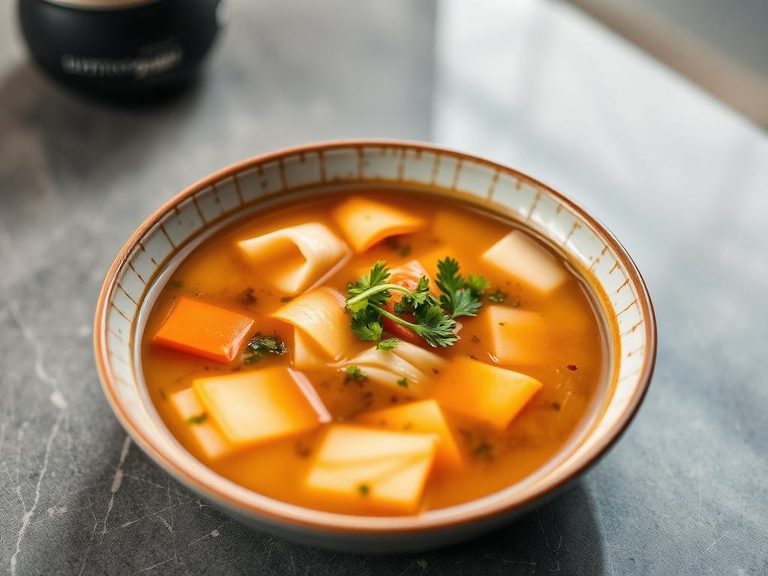

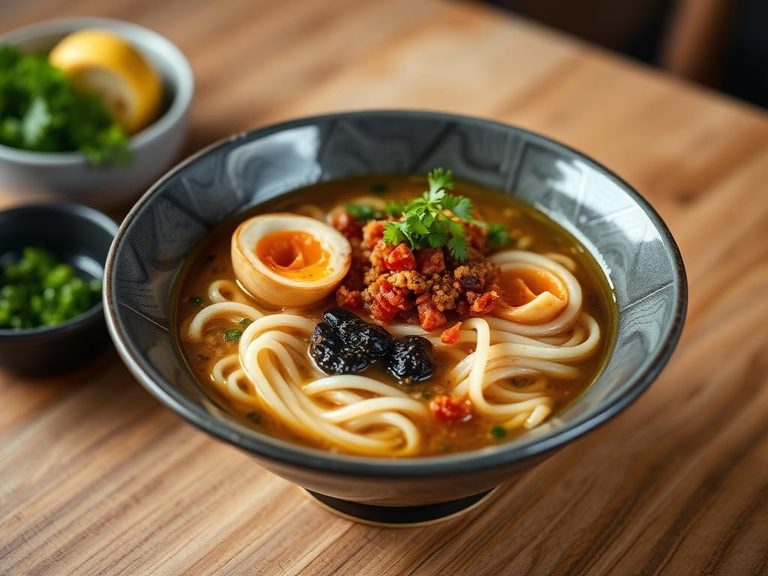
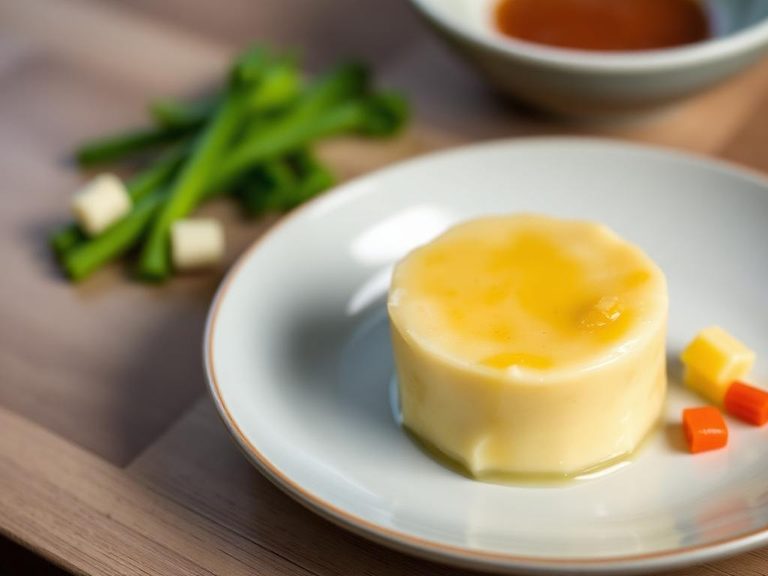
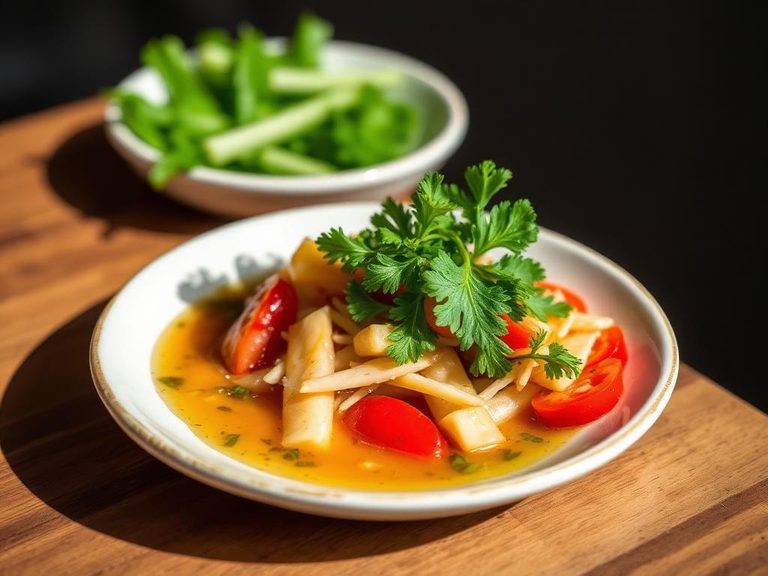
🌍 Where it's eaten
💡 Did you know?
The fermentation process for some traditional miso pastes can take over three years, during which complex flavors develop and the texture becomes incredibly smooth and dense.
Full nutrition (USDA data · scales with serving)
| Water | 37.4 g |
| Energy | 429 kcal |
| Protein | 3.4 g |
| Total lipid (fat) | 41.0 g |
| Carbohydrate, by difference | 14.0 g |
| Fiber, total dietary | 1.2 g |
| Total Sugars | 12.8 g |
| Calcium, Ca | 20.0 mg |
| Iron, Fe | 0.67 mg |
| Magnesium, Mg | 2.0 mg |
| Phosphorus, P | 41.0 mg |
| Potassium, K | 152 mg |
| Sodium, Na | 1086 mg |
| Zinc, Zn | 0.22 mg |
| Copper, Cu | 0.02 mg |
| Selenium, Se | 1.8 ug |
| Vitamin C, total ascorbic acid | 0.00 mg |
| Thiamin | 0.01 mg |
| Riboflavin | 0.01 mg |
| Niacin | 0.04 mg |
| Vitamin B-6 | 0.01 mg |
| Folate, total | 1.0 ug |
| Folic acid | 0.00 ug |
| Folate, food | 1.0 ug |
| Folate, DFE | 1.0 ug |
| Choline, total | 7.2 mg |
| Vitamin B-12 | 0.00 ug |
| Vitamin B-12, added | 0.00 ug |
| Vitamin A, RAE | 2.0 ug |
| Retinol | 0.00 ug |
| Carotene, beta | 22.0 ug |
| Carotene, alpha | 0.00 ug |
| Cryptoxanthin, beta | 2.0 ug |
| Lycopene | 14.0 ug |
| Lutein + zeaxanthin | 0.00 ug |
| Vitamin E (alpha-tocopherol) | 4.5 mg |
| Vitamin E, added | 0.00 mg |
| Vitamin D (D2 + D3) | 0.00 ug |
| Vitamin K (phylloquinone) | 51.9 ug |
| Alcohol, ethyl | 0.00 g |
| Caffeine | 0.00 mg |
| Theobromine | 0.00 mg |
Fat & fatty acid profile (per 100g)
| Fatty acids, total saturated | 5.6 g |
| SFA 4:0 | 0.00 g |
| SFA 6:0 | 0.00 g |
| SFA 8:0 | 0.00 g |
| SFA 10:0 | 0.00 g |
| SFA 12:0 | 0.00 g |
| SFA 14:0 | 0.00 g |
| SFA 16:0 | 3.8 g |
| SFA 18:0 | 1.7 g |
| Fatty acids, total monounsaturated | 10.8 g |
| MUFA 16:1 | 0.00 g |
| MUFA 18:1 | 10.8 g |
| MUFA 20:1 | 0.00 g |
| MUFA 22:1 | 0.00 g |
| Fatty acids, total polyunsaturated | 22.7 g |
| PUFA 18:2 | 21.0 g |
| PUFA 18:3 | 1.8 g |
| PUFA 18:4 | 0.00 g |
| PUFA 20:4 | 0.00 g |
| PUFA 20:5 n-3 (EPA) | 0.00 g |
| PUFA 22:5 n-3 (DPA) | 0.00 g |
| PUFA 22:6 n-3 (DHA) | 0.00 g |
| Cholesterol | 0.00 mg |
FAQ
Is miso sauce the same as miso paste?
Often used interchangeably, but 'miso sauce' may be a slightly thinner, more pourable preparation, sometimes diluted with other liquids like dashi or vinegar, while 'miso paste' is the thick, concentrated fermented product.
How should I store miso sauce?
Store it in an airtight container in the refrigerator. The high salt content acts as a preservative, allowing it to last for many months, and its flavor may continue to develop over time.
Can I use miso sauce in non-Japanese dishes?
Absolutely. It's a fantastic flavor booster in salad dressings, glazes for roasted vegetables, compound butters, or even mixed into burger patties for an umami kick.
Nutrient density (calculated · NRF9.3)
Nutrient Rich Foods index: beneficial nutrients (protein, fiber, vitamins, minerals) minus saturated fat, added sugar & sodium, per 100 kcal.
NRF9.3 index — Fulgoni, Keast & Drewnowski, 2009. Computed from USDA nutrients.
Weight-loss friendliness (composite index)
Energy density 4.29 kcal/g · 3% calories from protein · 1.2 g fiber · 12.8 g sugar per 100 g.
Composite of energy density (Rolls et al., 1999), protein & fiber satiety, minus sugar. A calculated heuristic — ranks satiety-per-calorie, not a clinical measure.
Dietary load (calculated from USDA values)
Potential renal acid load. Positive = acid-forming, negative = alkaline-forming.
Sodium-to-potassium ratio: 7.14 (lower is better — aim for ≤ 1)
Sodium:potassium per WHO potassium guidance. Computed from USDA nutrients.