

Manicotti, cheese-filled, no sauce
Common food

Photo: Wikipedia
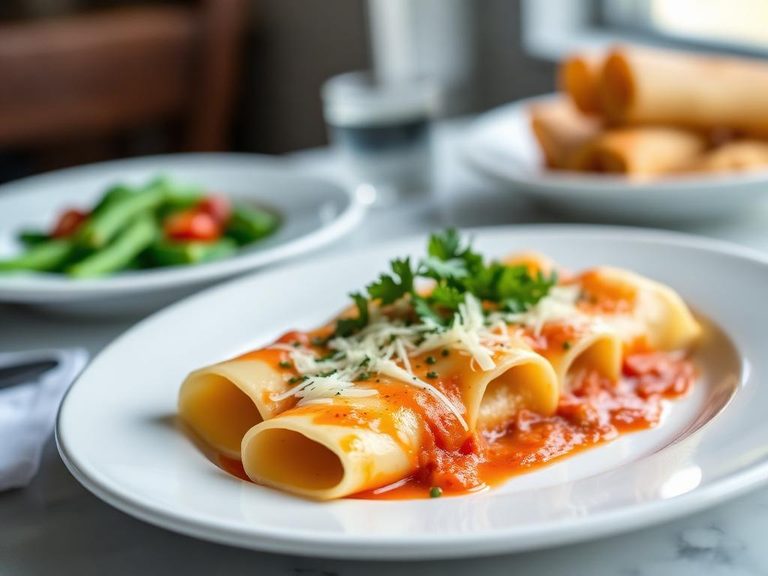
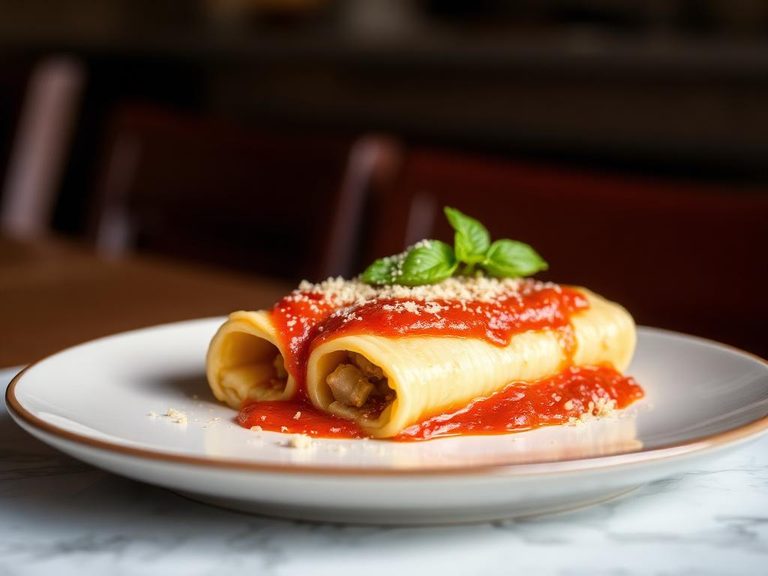
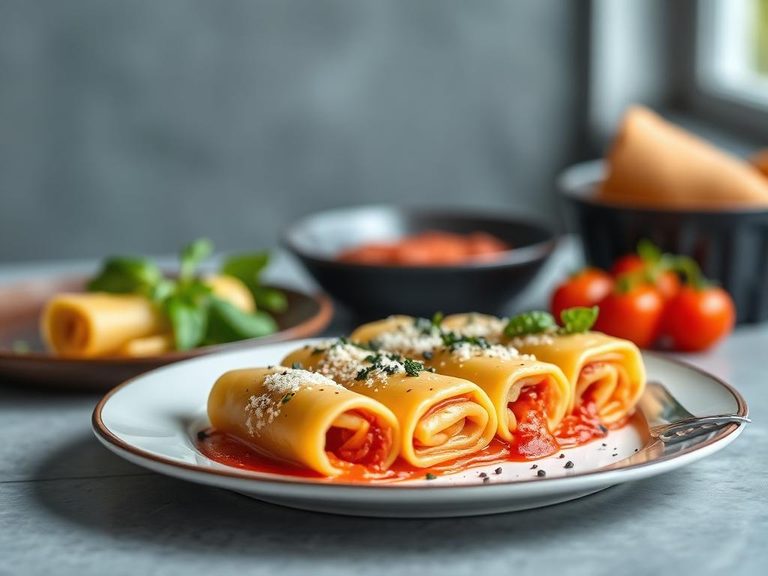
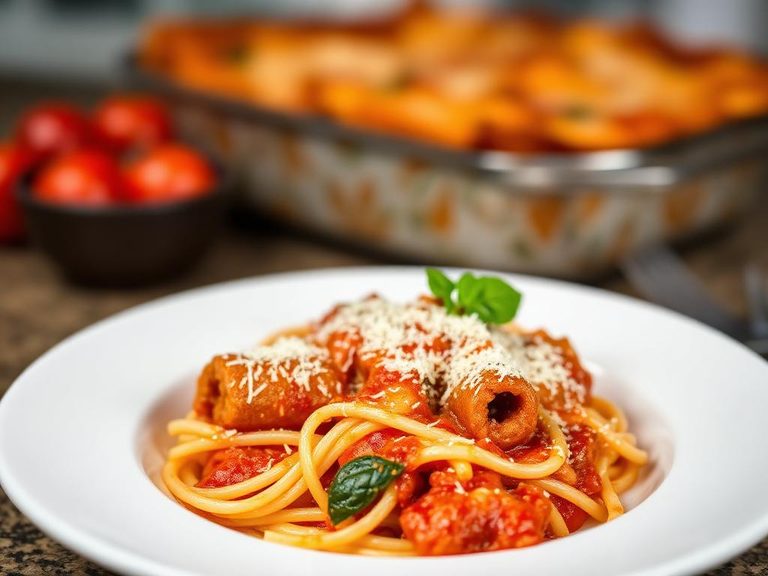
Manicotti are large, ridged pasta tubes, typically made from durum wheat semolina, that are baked until tender yet hold their shape. In this cheese-filled preparation without sauce, the pasta offers a satisfying chew, while the creamy ricotta or cottage cheese filling provides a mild, savory richness. Nutritionally, it's a solid source of protein and carbohydrates, delivering energy with a moderate fat content.
Calorie split: 20% protein · 39% carbs · 40% fat
↓ Full nutrition💚 Why it's loved
People love it for its comforting, home-cooked appeal and the delightful contrast between the tender pasta shell and the warm, creamy cheese filling. Its neutral flavor makes it a beloved canvas for countless family recipes and regional variations.
⚠️ Watch-outs & how to enjoy it better
Without sauce, it can be dry and may cause blood-sugar spikes due to the refined pasta carbs. To counteract this, pair it with a fiber-rich side salad or steamed vegetables, and ensure the filling includes a mix of cheeses like ricotta and mozzarella for added protein and fat to slow digestion. Also, be mindful of portion size.
Key benefits
- Provides a good balance of protein and carbs for sustained energy.
- The cheese filling contributes calcium for bone health.
- Offers a versatile base for adding vegetables or lean proteins.
- Can be a comforting, portion-controlled main dish when paired wisely.
🍽️ Popular dishes
🌍 Where it's eaten
💡 Did you know?
The word 'manicotti' is the Italian plural for 'sleeves,' referring to the pasta's shape, which resembles the wide sleeves of a traditional garment.
Full nutrition (USDA data · scales with serving)
| Water | 57.8 g |
| Energy | 207 kcal |
| Protein | 10.4 g |
| Total lipid (fat) | 9.3 g |
| Carbohydrate, by difference | 20.4 g |
| Fiber, total dietary | 0.60 g |
| Total Sugars | 0.50 g |
| Calcium, Ca | 203 mg |
| Iron, Fe | 1.5 mg |
| Magnesium, Mg | 19.0 mg |
| Phosphorus, P | 187 mg |
| Potassium, K | 156 mg |
| Sodium, Na | 443 mg |
| Zinc, Zn | 1.1 mg |
| Copper, Cu | 0.04 mg |
| Selenium, Se | 13.4 ug |
| Vitamin C, total ascorbic acid | 0.00 mg |
| Thiamin | 0.19 mg |
| Riboflavin | 0.30 mg |
| Niacin | 1.4 mg |
| Vitamin B-6 | 0.07 mg |
| Folate, total | 33.0 ug |
| Folic acid | 20.0 ug |
| Folate, food | 13.0 ug |
| Folate, DFE | 48.0 ug |
| Choline, total | 44.1 mg |
| Vitamin B-12 | 0.58 ug |
| Vitamin B-12, added | 0.00 ug |
| Vitamin A, RAE | 104 ug |
| Retinol | 103 ug |
| Carotene, beta | 2.0 ug |
| Carotene, alpha | 0.00 ug |
| Cryptoxanthin, beta | 2.0 ug |
| Lycopene | 0.00 ug |
| Lutein + zeaxanthin | 66.0 ug |
| Vitamin E (alpha-tocopherol) | 0.35 mg |
| Vitamin E, added | 0.00 mg |
| Vitamin D (D2 + D3) | 0.50 ug |
| Vitamin K (phylloquinone) | 0.80 ug |
| Alcohol, ethyl | 0.00 g |
| Caffeine | 0.00 mg |
| Theobromine | 0.00 mg |
Fat & fatty acid profile (per 100g)
| Fatty acids, total saturated | 5.0 g |
| SFA 4:0 | 0.16 g |
| SFA 6:0 | 0.13 g |
| SFA 8:0 | 0.08 g |
| SFA 10:0 | 0.20 g |
| SFA 12:0 | 0.23 g |
| SFA 14:0 | 0.74 g |
| SFA 16:0 | 2.5 g |
| SFA 18:0 | 0.83 g |
| Fatty acids, total monounsaturated | 2.3 g |
| MUFA 16:1 | 0.16 g |
| MUFA 18:1 | 2.2 g |
| MUFA 20:1 | 0.01 g |
| MUFA 22:1 | 0.00 g |
| Fatty acids, total polyunsaturated | 0.66 g |
| PUFA 18:2 | 0.59 g |
| PUFA 18:3 | 0.04 g |
| PUFA 18:4 | 0.00 g |
| PUFA 20:4 | 0.01 g |
| PUFA 20:5 n-3 (EPA) | 0.00 g |
| PUFA 22:5 n-3 (DPA) | 0.01 g |
| PUFA 22:6 n-3 (DHA) | 0.00 g |
| Cholesterol | 80.0 mg |
FAQ
What is the difference between manicotti and cannelloni?
They are very similar. Traditionally, manicotti refers to ridged, tube-shaped pasta (often sold as dry pasta shells), while cannelloni are smooth, cylindrical pasta sheets that are rolled around a filling. In practice, especially in the U.S., the terms are often used interchangeably.
Can I make cheese manicotti ahead of time?
Yes, it's ideal for make-ahead meals. Assemble the stuffed manicotti, cover, and refrigerate for up to 24 hours before baking. You may need to add a few extra minutes to the baking time if going straight from the fridge to the oven.
What's the best cheese blend for the filling?
A classic blend is ricotta for creaminess, mozzarella for melt and stretch, and Parmesan for sharp, salty depth. Adding a beaten egg helps bind the filling so it doesn't run out during baking.
Nutrient density (calculated · NRF9.3)
Nutrient Rich Foods index: beneficial nutrients (protein, fiber, vitamins, minerals) minus saturated fat, added sugar & sodium, per 100 kcal.
NRF9.3 index — Fulgoni, Keast & Drewnowski, 2009. Computed from USDA nutrients.
Weight-loss friendliness (composite index)
Energy density 2.07 kcal/g · 20% calories from protein · 0.6 g fiber · 0.5 g sugar per 100 g.
Composite of energy density (Rolls et al., 1999), protein & fiber satiety, minus sugar. A calculated heuristic — ranks satiety-per-calorie, not a clinical measure.
Dietary load (calculated from USDA values)
Potential renal acid load. Positive = acid-forming, negative = alkaline-forming.
Sodium-to-potassium ratio: 2.84 (lower is better — aim for ≤ 1)
Sodium:potassium per WHO potassium guidance. Computed from USDA nutrients.