

Luncheon slice, meatless-beef, chicken, salami or turkey
Common food

Photo: Wikipedia
Luncheon slices are pre-cooked, ready-to-eat portions of processed meat or meat substitutes, shaped into uniform, thin rounds or rectangles. They offer a firm, slightly bouncy texture with a savory, salty flavor profile, often with subtle smoky or spiced notes. Nutritionally, they are a dense source of protein relative to their calorie count.
Calorie split: 38% protein · 9% carbs · 53% fat
↓ Full nutrition💚 Why it's loved
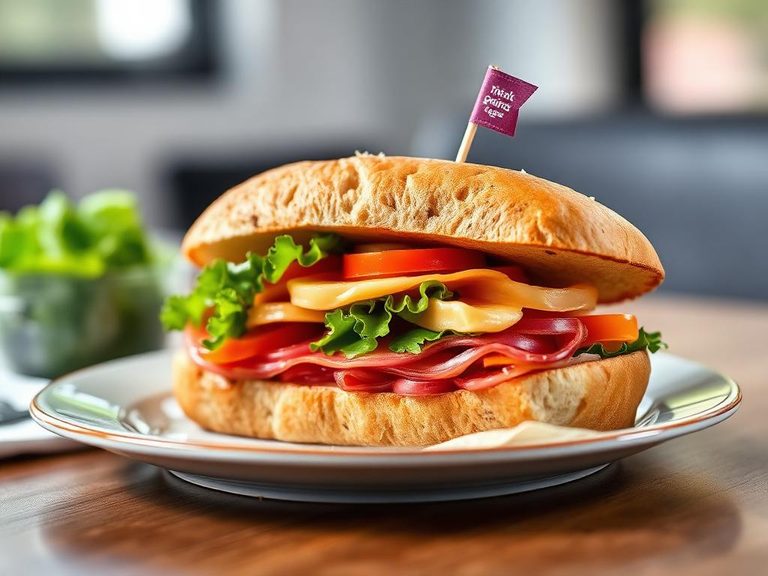
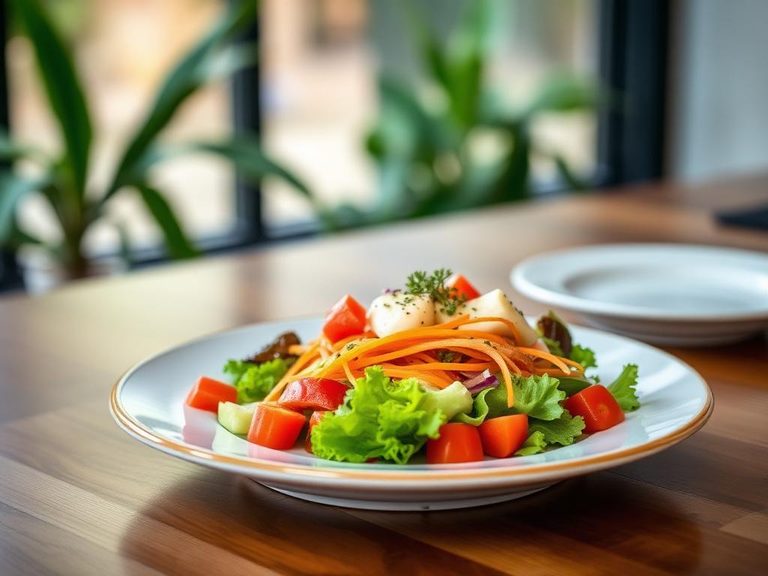
People love these slices for their incredible versatility and convenience—they can be folded into sandwiches, layered in salads, or pan-fried for a warm snack, making them a staple in quick, satisfying meals.
⚠️ Watch-outs & how to enjoy it better
They are typically high in sodium, which can contribute to water retention and is a concern for those monitoring blood pressure. To counteract this, pair with potassium-rich foods like leafy greens or avocado, and be mindful of portion sizes. Some varieties may also contain additives like nitrates; looking for 'uncured' or lower-sodium options can be a healthier choice.
Key benefits
- High-quality protein source for muscle maintenance
- Convenient, no-cook protein for quick meals
- Low in carbohydrates, suitable for low-carb diets
- Provides a quick energy boost from protein and fats
- Long shelf life reduces food waste
🍽️ Popular dishes
🌍 Where it's eaten
💡 Did you know?
The term 'lunch' itself is believed to have originated from a light, portable meal, and these slices were a 20th-century innovation designed to make that meal even more convenient and shelf-stable.
Full nutrition (USDA data · scales with serving)
| Water | 65.0 g |
| Energy | 189 kcal |
| Protein | 17.8 g |
| Total lipid (fat) | 11.1 g |
| Carbohydrate, by difference | 4.4 g |
| Fiber, total dietary | 1.1 g |
| Total Sugars | 2.2 g |
| Calcium, Ca | 41.0 mg |
| Iron, Fe | 1.8 mg |
| Magnesium, Mg | 23.0 mg |
| Phosphorus, P | 442 mg |
| Potassium, K | 200 mg |
| Sodium, Na | 711 mg |
| Zinc, Zn | 1.6 mg |
| Copper, Cu | 0.91 mg |
| Selenium, Se | 7.4 ug |
| Vitamin C, total ascorbic acid | 0.00 mg |
| Thiamin | 4.0 mg |
| Riboflavin | 0.30 mg |
| Niacin | 11.1 mg |
| Vitamin B-6 | 0.89 mg |
| Folate, total | 100 ug |
| Folic acid | 0.00 ug |
| Folate, food | 100 ug |
| Folate, DFE | 100 ug |
| Choline, total | 105 mg |
| Vitamin B-12 | 4.0 ug |
| Vitamin B-12, added | 4.0 ug |
| Vitamin A, RAE | 0.00 ug |
| Retinol | 0.00 ug |
| Carotene, beta | 0.00 ug |
| Carotene, alpha | 0.00 ug |
| Cryptoxanthin, beta | 0.00 ug |
| Lycopene | 0.00 ug |
| Lutein + zeaxanthin | 0.00 ug |
| Vitamin E (alpha-tocopherol) | 3.0 mg |
| Vitamin E, added | 0.00 mg |
| Vitamin D (D2 + D3) | 0.00 ug |
| Vitamin K (phylloquinone) | 0.00 ug |
| Alcohol, ethyl | 0.00 g |
| Caffeine | 0.00 mg |
| Theobromine | 0.00 mg |
Fat & fatty acid profile (per 100g)
| Fatty acids, total saturated | 1.3 g |
| SFA 4:0 | 0.00 g |
| SFA 6:0 | 0.00 g |
| SFA 8:0 | 0.00 g |
| SFA 10:0 | 0.00 g |
| SFA 12:0 | 0.08 g |
| SFA 14:0 | 0.04 g |
| SFA 16:0 | 0.87 g |
| SFA 18:0 | 0.35 g |
| Fatty acids, total monounsaturated | 2.1 g |
| MUFA 16:1 | 0.00 g |
| MUFA 18:1 | 2.1 g |
| MUFA 20:1 | 0.00 g |
| MUFA 22:1 | 0.00 g |
| Fatty acids, total polyunsaturated | 4.4 g |
| PUFA 18:2 | 3.9 g |
| PUFA 18:3 | 0.49 g |
| PUFA 18:4 | 0.00 g |
| PUFA 20:4 | 0.00 g |
| PUFA 20:5 n-3 (EPA) | 0.00 g |
| PUFA 22:5 n-3 (DPA) | 0.00 g |
| PUFA 22:6 n-3 (DHA) | 0.00 g |
| Cholesterol | 0.00 mg |
FAQ
What's the difference between luncheon meat and spam?
Spam is a specific brand of canned luncheon meat made primarily from pork shoulder and ham. 'Luncheon meat' is a broader category that can include beef, chicken, turkey, or meatless versions, and is often sold pre-sliced in packages.
Are meatless versions nutritionally similar?
Meatless versions aim to mimic the protein content but often have a different fat profile (e.g., using vegetable oils) and may have added sodium or flavorings to replicate the meaty taste. Always check the label for specific nutrition facts.
Can I eat this on a keto diet?
Yes, many luncheon slices are very low in carbs and can fit a keto diet. However, check the label for hidden sugars or starches, and be aware of the sodium content.
Nutrient density (calculated · NRF9.3)
Nutrient Rich Foods index: beneficial nutrients (protein, fiber, vitamins, minerals) minus saturated fat, added sugar & sodium, per 100 kcal.
NRF9.3 index — Fulgoni, Keast & Drewnowski, 2009. Computed from USDA nutrients.
Weight-loss friendliness (composite index)
Energy density 1.89 kcal/g · 38% calories from protein · 1.1 g fiber · 2.2 g sugar per 100 g.
Composite of energy density (Rolls et al., 1999), protein & fiber satiety, minus sugar. A calculated heuristic — ranks satiety-per-calorie, not a clinical measure.
Dietary load (calculated from USDA values)
Potential renal acid load. Positive = acid-forming, negative = alkaline-forming.
Sodium-to-potassium ratio: 3.56 (lower is better — aim for ≤ 1)
Sodium:potassium per WHO potassium guidance. Computed from USDA nutrients.