

Infant formula, Enfamil Infant, powder, made with baby water
Common food

Photo: Wikipedia
Enfamil Infant powder formula is a fine, pale-yellow powder that dissolves into a smooth, creamy, milky liquid with a mild, slightly sweet taste. It's specifically engineered to be nutritionally complete for infants, providing a balanced mix of proteins, fats, and carbohydrates.
Calorie split: 8% protein · 44% carbs · 47% fat
↓ Full nutrition💚 Why it's loved
Parents appreciate it as a reliable, science-backed nutrition source that supports their baby's growth and development, offering peace of mind and feeding flexibility.
⚠️ Watch-outs & how to enjoy it better
The primary sugar is lactose (7.38g/100g), which can cause digestive upset in infants with lactose sensitivity or galactosemia. It is a common allergen (contains milk). Always consult a pediatrician before use, especially for infants with known allergies or metabolic conditions.
Key benefits
- Complete nutrition for infants 0-12 months
- Provides essential DHA for brain and eye development
- Contains a dual prebiotic blend for immune support
- Offers a convenient, shelf-stable feeding option
🍽️ Popular dishes
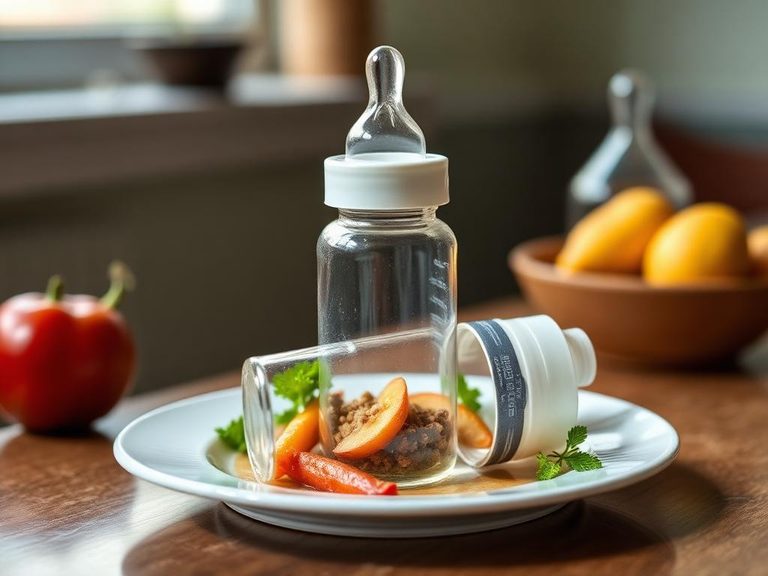
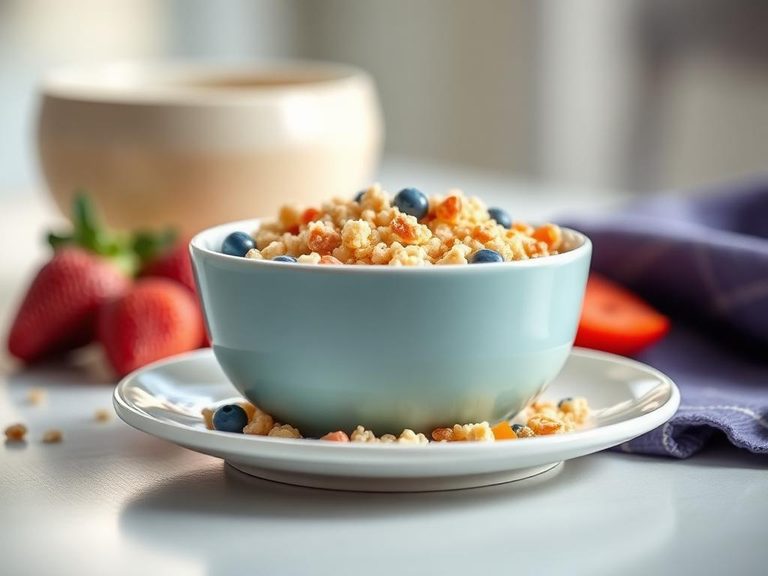
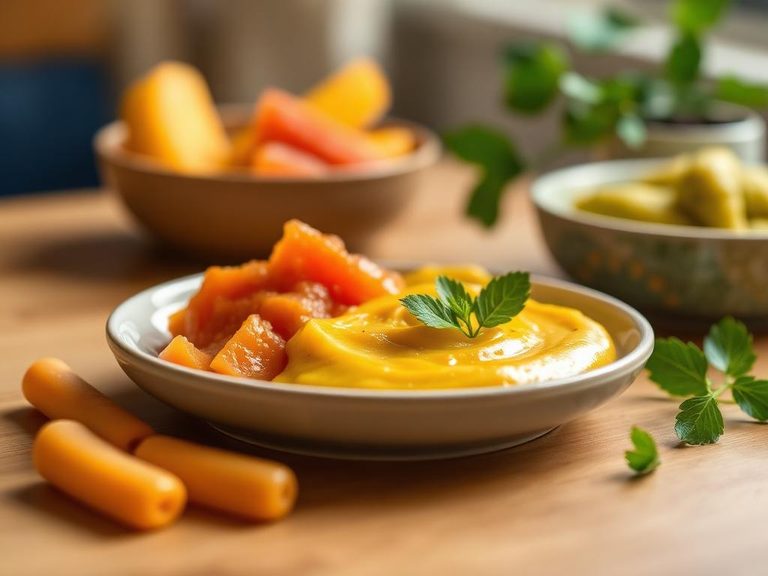
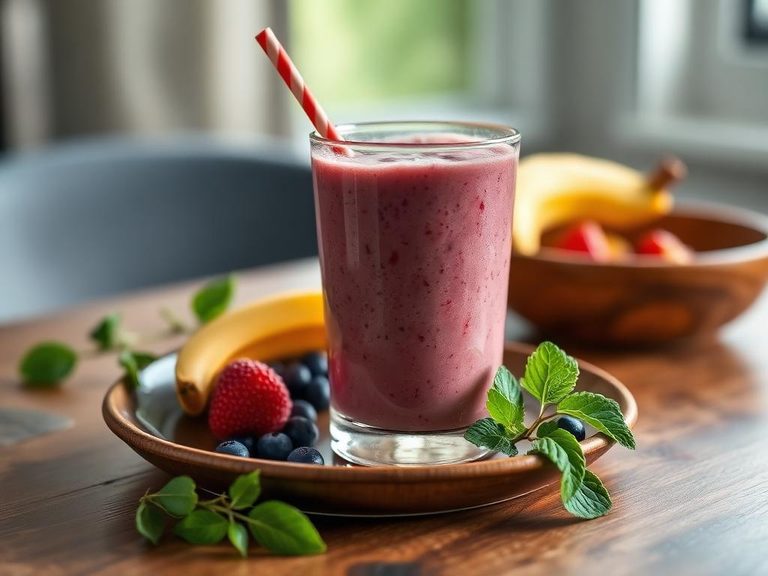
🌍 Where it's eaten
💡 Did you know?
Enfamil's formula is inspired by the nutrient composition of mature breast milk, and its specific blend of fats, proteins, and carbohydrates is designed to mimic it.
Full nutrition (USDA data · scales with serving)
| Water | 87.3 g |
| Energy | 66.0 kcal |
| Protein | 1.4 g |
| Total lipid (fat) | 3.5 g |
| Carbohydrate, by difference | 7.4 g |
| Fiber, total dietary | 0.00 g |
| Total Sugars | 7.4 g |
| Calcium, Ca | 50.0 mg |
| Iron, Fe | 1.2 mg |
| Magnesium, Mg | 5.0 mg |
| Phosphorus, P | 28.0 mg |
| Potassium, K | 71.0 mg |
| Sodium, Na | 18.0 mg |
| Zinc, Zn | 0.66 mg |
| Copper, Cu | 0.05 mg |
| Selenium, Se | 1.9 ug |
| Vitamin C, total ascorbic acid | 8.0 mg |
| Thiamin | 0.05 mg |
| Riboflavin | 0.09 mg |
| Niacin | 0.65 mg |
| Vitamin B-6 | 0.04 mg |
| Folate, total | 10.0 ug |
| Folic acid | 10.0 ug |
| Folate, food | 0.00 ug |
| Folate, DFE | 18.0 ug |
| Choline, total | 15.7 mg |
| Vitamin B-12 | 0.20 ug |
| Vitamin B-12, added | 0.20 ug |
| Vitamin A, RAE | 59.0 ug |
| Retinol | 59.0 ug |
| Carotene, beta | 0.00 ug |
| Carotene, alpha | 0.00 ug |
| Cryptoxanthin, beta | 0.00 ug |
| Lycopene | 0.00 ug |
| Lutein + zeaxanthin | 0.00 ug |
| Vitamin E (alpha-tocopherol) | 0.89 mg |
| Vitamin E, added | 0.89 mg |
| Vitamin D (D2 + D3) | 1.0 ug |
| Vitamin K (phylloquinone) | 6.0 ug |
| Alcohol, ethyl | 0.00 g |
| Caffeine | 0.00 mg |
| Theobromine | 0.00 mg |
Fat & fatty acid profile (per 100g)
| Fatty acids, total saturated | 1.4 g |
| SFA 4:0 | 0.00 g |
| SFA 6:0 | 0.01 g |
| SFA 8:0 | 0.06 g |
| SFA 10:0 | 0.04 g |
| SFA 12:0 | 0.31 g |
| SFA 14:0 | 0.14 g |
| SFA 16:0 | 0.75 g |
| SFA 18:0 | 0.14 g |
| Fatty acids, total monounsaturated | 1.3 g |
| MUFA 16:1 | 0.01 g |
| MUFA 18:1 | 1.3 g |
| MUFA 20:1 | 0.01 g |
| MUFA 22:1 | 0.01 g |
| Fatty acids, total polyunsaturated | 0.68 g |
| PUFA 18:2 | 0.59 g |
| PUFA 18:3 | 0.06 g |
| PUFA 18:4 | 0.00 g |
| PUFA 20:4 | 0.02 g |
| PUFA 20:5 n-3 (EPA) | 0.00 g |
| PUFA 22:5 n-3 (DPA) | 0.00 g |
| PUFA 22:6 n-3 (DHA) | 0.01 g |
| Cholesterol | 0.00 mg |
FAQ
How does this powder differ from ready-to-feed formula?
Powder formula is more economical and has a longer shelf life, but requires careful preparation with safe water. Ready-to-feed is sterile, more convenient for travel, and recommended for premature or immunocompromised infants.
Can I use regular tap water to mix it?
For healthy infants, you can use safe tap water. However, for infants under 2 months, premature, or immunocompromised, the CDC recommends using boiled (for 1 minute) and cooled water or distilled/sterile water to eliminate any risk of waterborne pathogens.
Is the sugar content a concern?
The carbohydrate source is lactose, the same natural sugar found in breast milk and cow's milk. It provides essential energy for rapid infant growth and is not considered an added sugar in this context.
Nutrient density (calculated · NRF9.3)
Nutrient Rich Foods index: beneficial nutrients (protein, fiber, vitamins, minerals) minus saturated fat, added sugar & sodium, per 100 kcal.
NRF9.3 index — Fulgoni, Keast & Drewnowski, 2009. Computed from USDA nutrients.
Weight-loss friendliness (composite index)
Energy density 0.66 kcal/g · 8% calories from protein · 0.0 g fiber · 7.4 g sugar per 100 g.
Composite of energy density (Rolls et al., 1999), protein & fiber satiety, minus sugar. A calculated heuristic — ranks satiety-per-calorie, not a clinical measure.
Dietary load (calculated from USDA values)
Potential renal acid load. Positive = acid-forming, negative = alkaline-forming.
Sodium-to-potassium ratio: 0.25 (lower is better — aim for ≤ 1)
Sodium:potassium per WHO potassium guidance. Computed from USDA nutrients.