

Hollandaise sauce
Common food

Photo: Wikipedia
Hollandaise is a rich, velvety emulsion of egg yolks, melted butter, and lemon juice, famously one of the five French mother sauces. Its texture is luxuriously smooth and creamy, with a bright, tangy flavor that cuts through the richness of the butter. Nutritionally, it is an extremely high-fat condiment, delivering nearly 58 grams of fat per 100g, making it a calorie-dense addition to any dish.
Calorie split: 4% protein · 1% carbs · 95% fat
↓ Full nutrition💚 Why it's loved
People adore Hollandaise for its decadent, buttery flavor and silky texture that elevates simple dishes like eggs or vegetables into something luxurious. It is a cornerstone of classic French cuisine and a symbol of indulgent brunch culture, prized for its ability to transform a meal.
⚠️ Watch-outs & how to enjoy it better
Its extremely high saturated fat and calorie content can be a concern for those managing heart health or calorie intake. To counteract this, use it sparingly as a flavor accent rather than a main component, and pair it with fiber-rich vegetables like asparagus or spinach to balance the meal.
Key benefits
- Excellent source of fat-soluble vitamins A, D, E, and K from egg yolks and butter
- Provides high-quality protein and choline from egg yolks
- Adds significant flavor and richness with a small portion size
- Can help increase satiety due to its high fat content
🍽️ Popular dishes


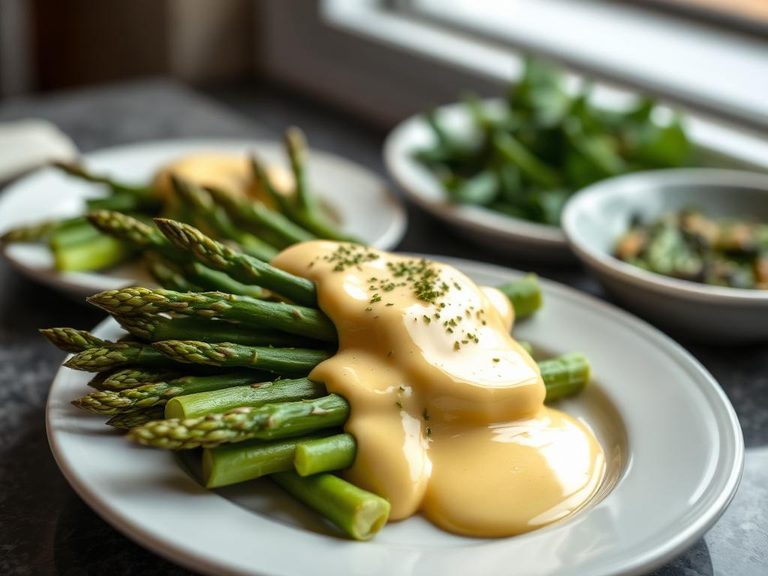
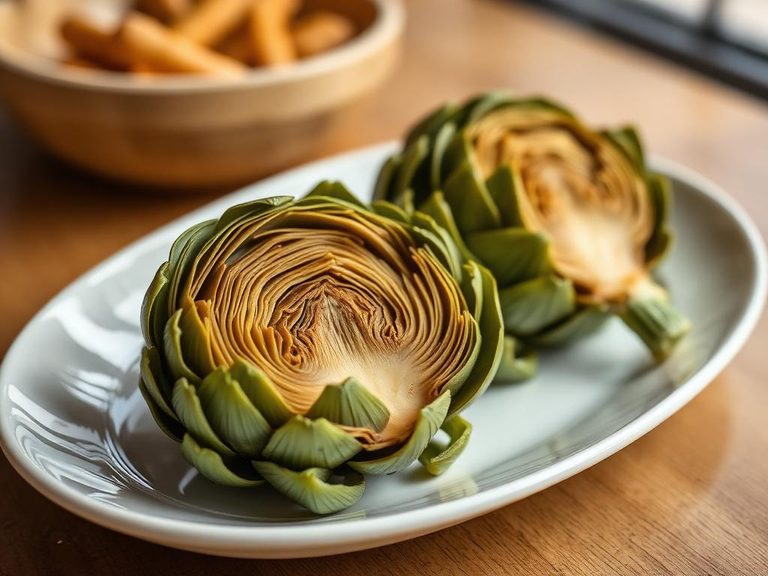
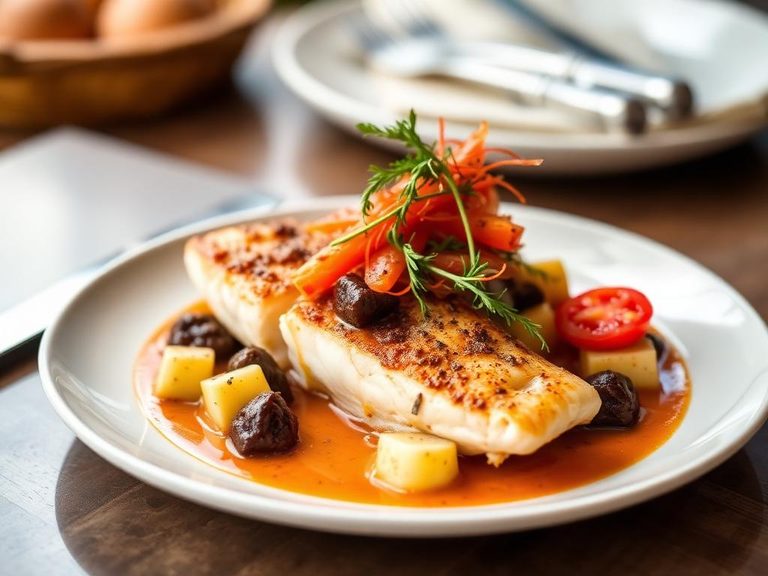

🌍 Where it's eaten
💡 Did you know?
The name 'Hollandaise' literally means 'Dutch sauce' in French, but its origins are debated; some culinary historians believe it was created in France to honor the Dutch royal house, while others link it to the Dutch practice of emulsifying butter.
Full nutrition (USDA data · scales with serving)
| Water | 34.3 g |
| Energy | 546 kcal |
| Protein | 5.4 g |
| Total lipid (fat) | 58.0 g |
| Carbohydrate, by difference | 1.0 g |
| Fiber, total dietary | 0.00 g |
| Total Sugars | 0.77 g |
| Calcium, Ca | 52.0 mg |
| Iron, Fe | 0.86 mg |
| Magnesium, Mg | 3.0 mg |
| Phosphorus, P | 131 mg |
| Potassium, K | 57.0 mg |
| Sodium, Na | 329 mg |
| Zinc, Zn | 0.74 mg |
| Copper, Cu | 0.03 mg |
| Selenium, Se | 16.8 ug |
| Vitamin C, total ascorbic acid | 3.9 mg |
| Thiamin | 0.05 mg |
| Riboflavin | 0.12 mg |
| Niacin | 0.01 mg |
| Vitamin B-6 | 0.09 mg |
| Folate, total | 38.0 ug |
| Folic acid | 0.00 ug |
| Folate, food | 38.0 ug |
| Folate, DFE | 38.0 ug |
| Choline, total | 209 mg |
| Vitamin B-12 | 0.47 ug |
| Vitamin B-12, added | 0.00 ug |
| Vitamin A, RAE | 569 ug |
| Retinol | 558 ug |
| Carotene, beta | 127 ug |
| Carotene, alpha | 13.0 ug |
| Cryptoxanthin, beta | 15.0 ug |
| Lycopene | 1.0 ug |
| Lutein + zeaxanthin | 330 ug |
| Vitamin E (alpha-tocopherol) | 1.7 mg |
| Vitamin E, added | 0.00 mg |
| Vitamin D (D2 + D3) | 1.9 ug |
| Vitamin K (phylloquinone) | 4.4 ug |
| Alcohol, ethyl | 0.00 g |
| Caffeine | 0.00 mg |
| Theobromine | 0.00 mg |
Fat & fatty acid profile (per 100g)
| Fatty acids, total saturated | 30.2 g |
| SFA 4:0 | 1.2 g |
| SFA 6:0 | 0.86 g |
| SFA 8:0 | 0.51 g |
| SFA 10:0 | 1.2 g |
| SFA 12:0 | 1.3 g |
| SFA 14:0 | 4.3 g |
| SFA 16:0 | 14.8 g |
| SFA 18:0 | 5.2 g |
| Fatty acids, total monounsaturated | 13.7 g |
| MUFA 16:1 | 0.88 g |
| MUFA 18:1 | 12.2 g |
| MUFA 20:1 | 0.10 g |
| MUFA 22:1 | 0.01 g |
| Fatty acids, total polyunsaturated | 2.8 g |
| PUFA 18:2 | 2.4 g |
| PUFA 18:3 | 0.23 g |
| PUFA 18:4 | 0.01 g |
| PUFA 20:4 | 0.19 g |
| PUFA 20:5 n-3 (EPA) | 0.02 g |
| PUFA 22:5 n-3 (DPA) | 0.02 g |
| PUFA 22:6 n-3 (DHA) | 0.04 g |
| Cholesterol | 466 mg |
FAQ
What is the main difference between Hollandaise and Béarnaise sauce?
Hollandaise is made with lemon juice and butter, while Béarnaise is a derivative made with a reduction of vinegar, shallots, and tarragon, giving it a more herbaceous flavor.
Can Hollandaise sauce be reheated?
It is best served fresh, but it can be gently reheated over a double boiler (bain-marie) while whisking constantly to prevent the eggs from scrambling. Adding a teaspoon of warm water can help re-emulsify it.
Is Hollandaise sauce safe to eat raw?
Traditional Hollandaise uses raw or lightly cooked egg yolks, which carry a small risk of salmonella. Many modern recipes use pasteurized eggs or cook the sauce to a safe temperature (160°F/71°C) to eliminate this risk.
Nutrient density (calculated · NRF9.3)
Nutrient Rich Foods index: beneficial nutrients (protein, fiber, vitamins, minerals) minus saturated fat, added sugar & sodium, per 100 kcal.
NRF9.3 index — Fulgoni, Keast & Drewnowski, 2009. Computed from USDA nutrients.
Weight-loss friendliness (composite index)
Energy density 5.46 kcal/g · 4% calories from protein · 0.0 g fiber · 0.8 g sugar per 100 g.
Composite of energy density (Rolls et al., 1999), protein & fiber satiety, minus sugar. A calculated heuristic — ranks satiety-per-calorie, not a clinical measure.
Dietary load (calculated from USDA values)
Potential renal acid load. Positive = acid-forming, negative = alkaline-forming.
Sodium-to-potassium ratio: 5.77 (lower is better — aim for ≤ 1)
Sodium:potassium per WHO potassium guidance. Computed from USDA nutrients.