

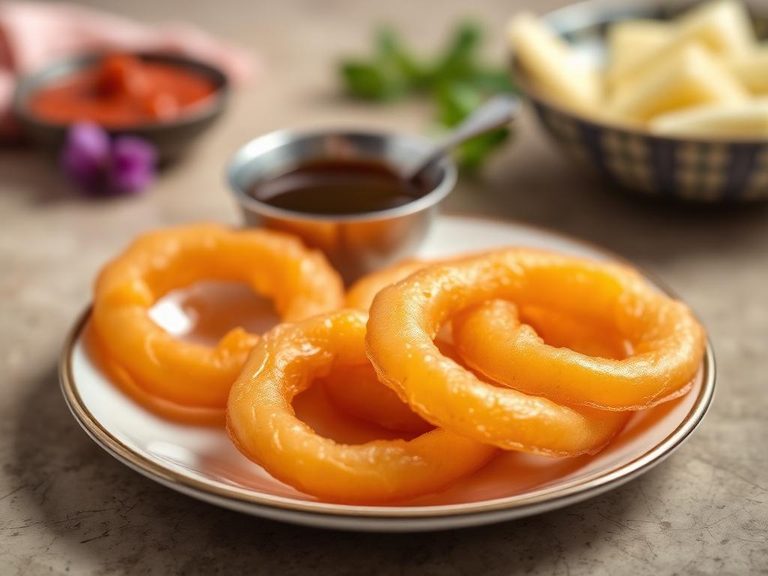
Funnel cake with sugar and fruit
Common food

Photo: Wikipedia
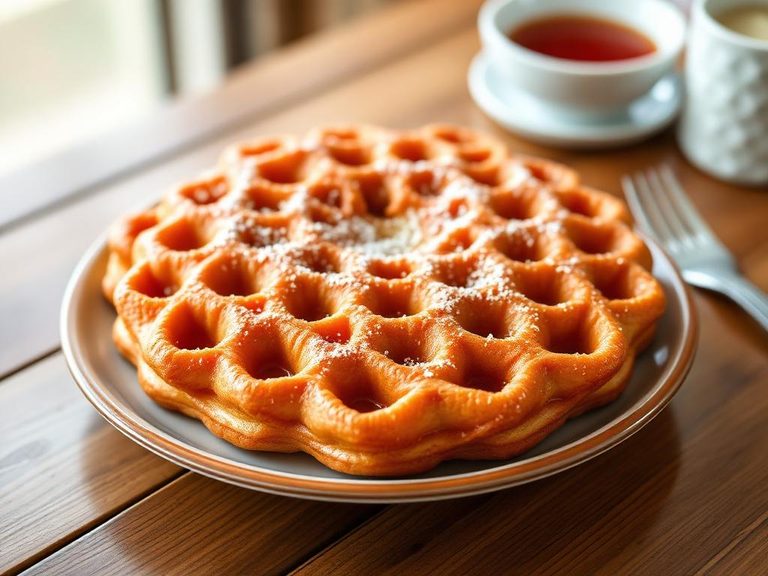
Funnel cake is a golden, crispy lattice of deep-fried batter, traditionally dusted with powdered sugar and often topped with fresh fruit like strawberries or blueberries. Its texture is a delightful contrast: a crunchy exterior giving way to a soft, slightly chewy interior. Nutritionally, it's a high-energy treat, primarily delivering quick-release carbohydrates and fats, with a modest amount of protein.
Calorie split: 6% protein · 57% carbs · 37% fat
↓ Full nutrition💚 Why it's loved
People love funnel cake for its nostalgic, carnival-like joy and the satisfying mix of warm, crispy dough with sweet toppings. Its versatility allows for endless customization, from classic powdered sugar to decadent chocolate drizzles or fresh fruit compotes.
⚠️ Watch-outs & how to enjoy it better
As a deep-fried, sugary food, it is high in calories, refined carbs, and fats, which can lead to blood sugar spikes and is not ideal for regular consumption by those managing diabetes or heart health. To mitigate this, enjoy a smaller portion, pair it with a source of protein (like a side of Greek yogurt) or fiber (from the fruit topping), and balance it with lighter meals throughout the day.
Key benefits
- Provides a quick source of energy from carbohydrates.
- Can be a source of enjoyment and social connection at events.
- Offers a base for adding nutrient-rich fruit toppings.
- The batter contains some protein from eggs and flour.
🍽️ Popular dishes
🌍 Where it's eaten
💡 Did you know?
The name 'funnel cake' comes from the method of preparation: the batter is poured through a funnel into hot oil in a swirling, circular pattern to create the signature web-like shape.
Full nutrition (USDA data · scales with serving)
| Water | 21.9 g |
| Energy | 380 kcal |
| Protein | 5.8 g |
| Total lipid (fat) | 15.7 g |
| Carbohydrate, by difference | 55.2 g |
| Fiber, total dietary | 0.90 g |
| Total Sugars | 21.3 g |
| Calcium, Ca | 103 mg |
| Iron, Fe | 1.8 mg |
| Magnesium, Mg | 16.0 mg |
| Phosphorus, P | 111 mg |
| Potassium, K | 146 mg |
| Sodium, Na | 211 mg |
| Zinc, Zn | 0.55 mg |
| Copper, Cu | 0.05 mg |
| Selenium, Se | 8.6 ug |
| Vitamin C, total ascorbic acid | 4.8 mg |
| Thiamin | 0.22 mg |
| Riboflavin | 0.22 mg |
| Niacin | 1.7 mg |
| Vitamin B-6 | 0.05 mg |
| Folate, total | 35.0 ug |
| Folic acid | 23.0 ug |
| Folate, food | 12.0 ug |
| Folate, DFE | 51.0 ug |
| Choline, total | 41.8 mg |
| Vitamin B-12 | 0.31 ug |
| Vitamin B-12, added | 0.00 ug |
| Vitamin A, RAE | 48.0 ug |
| Retinol | 47.0 ug |
| Carotene, beta | 5.0 ug |
| Carotene, alpha | 0.00 ug |
| Cryptoxanthin, beta | 1.0 ug |
| Lycopene | 0.00 ug |
| Lutein + zeaxanthin | 59.0 ug |
| Vitamin E (alpha-tocopherol) | 2.7 mg |
| Vitamin E, added | 0.00 mg |
| Vitamin D (D2 + D3) | 0.80 ug |
| Vitamin K (phylloquinone) | 13.7 ug |
| Alcohol, ethyl | 0.00 g |
| Caffeine | 0.00 mg |
| Theobromine | 0.00 mg |
Fat & fatty acid profile (per 100g)
| Fatty acids, total saturated | 2.8 g |
| SFA 4:0 | 0.02 g |
| SFA 6:0 | 0.02 g |
| SFA 8:0 | 0.01 g |
| SFA 10:0 | 0.03 g |
| SFA 12:0 | 0.03 g |
| SFA 14:0 | 0.11 g |
| SFA 16:0 | 1.8 g |
| SFA 18:0 | 0.57 g |
| Fatty acids, total monounsaturated | 6.2 g |
| MUFA 16:1 | 0.09 g |
| MUFA 18:1 | 6.0 g |
| MUFA 20:1 | 0.09 g |
| MUFA 22:1 | 0.00 g |
| Fatty acids, total polyunsaturated | 5.4 g |
| PUFA 18:2 | 4.8 g |
| PUFA 18:3 | 0.59 g |
| PUFA 18:4 | 0.00 g |
| PUFA 20:4 | 0.00 g |
| PUFA 20:5 n-3 (EPA) | 0.00 g |
| PUFA 22:5 n-3 (DPA) | 0.00 g |
| PUFA 22:6 n-3 (DHA) | 0.00 g |
| Cholesterol | 47.0 mg |
FAQ
Is funnel cake the same as a churro?
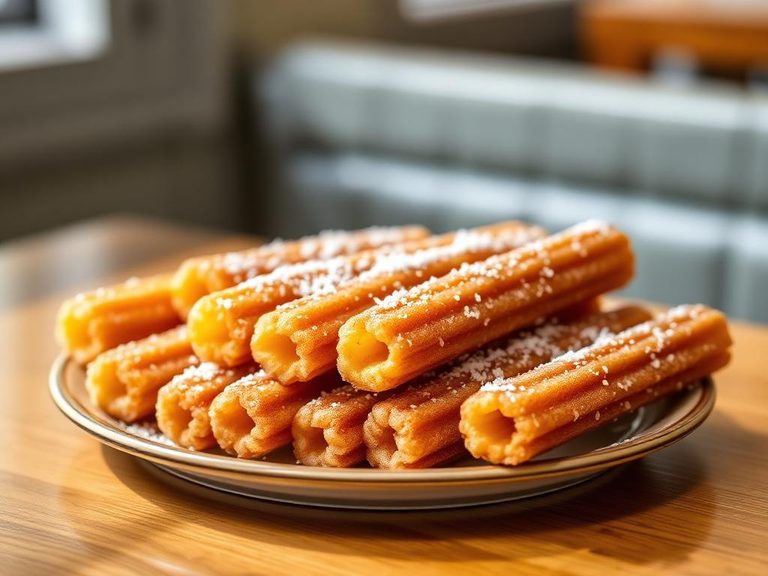
No. While both are fried dough desserts, funnel cake is made from a liquid batter poured into oil to form a web, resulting in a softer interior. Churros are made from a thicker, piped dough, giving them a denser, more uniform texture and a ridged surface.
Why is funnel cake often served at fairs and carnivals?
It's a perfect event food: the batter is simple and inexpensive, it can be cooked quickly to order, and its dramatic preparation and sweet, indulgent nature make it a festive, crowd-pleasing treat.
Can I make a healthier version at home?
You can bake a batter in a lattice pattern on a sheet pan for a lower-fat alternative. Using whole wheat flour and topping with fresh fruit instead of powdered sugar can also improve its nutritional profile, though the texture will be less crispy.
Nutrient density (calculated · NRF9.3)
Nutrient Rich Foods index: beneficial nutrients (protein, fiber, vitamins, minerals) minus saturated fat, added sugar & sodium, per 100 kcal.
NRF9.3 index — Fulgoni, Keast & Drewnowski, 2009. Computed from USDA nutrients.
Weight-loss friendliness (composite index)
Energy density 3.80 kcal/g · 6% calories from protein · 0.9 g fiber · 21.3 g sugar per 100 g.
Composite of energy density (Rolls et al., 1999), protein & fiber satiety, minus sugar. A calculated heuristic — ranks satiety-per-calorie, not a clinical measure.
Dietary load (calculated from USDA values)
Potential renal acid load. Positive = acid-forming, negative = alkaline-forming.
Sodium-to-potassium ratio: 1.45 (lower is better — aim for ≤ 1)
Sodium:potassium per WHO potassium guidance. Computed from USDA nutrients.