

Fudgesicle
Common food
Photo: Wikipedia
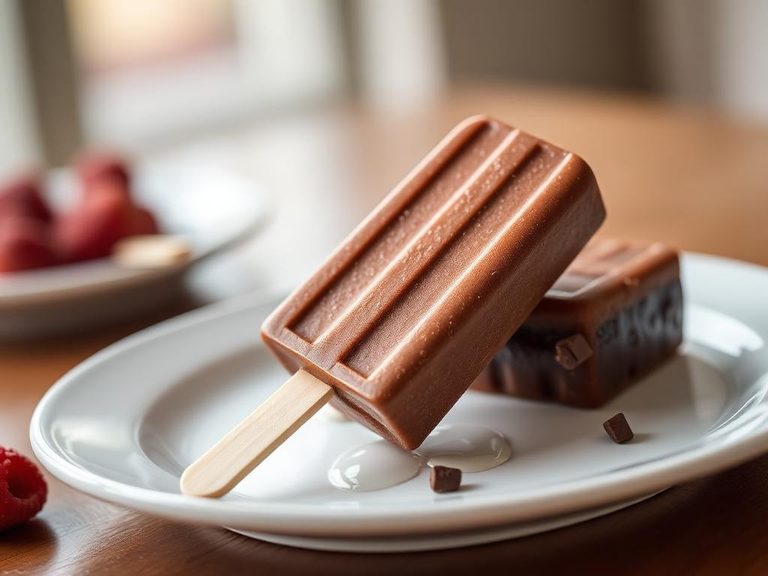
A Fudgesicle is a classic American frozen treat, a chocolate-flavored ice pop on a stick. It delivers a smooth, creamy texture that's less icy than a standard popsicle, with a deep, sweet chocolate flavor. Nutritionally, it's a relatively light dessert, providing a quick source of energy primarily from carbohydrates.
Calorie split: 6% protein · 73% carbs · 20% fat
↓ Full nutrition💚 Why it's loved
People love Fudgesicles for their perfectly balanced chocolate flavor that's rich but not overwhelmingly sweet, and their uniquely smooth, fudgy texture that melts evenly. They are a beloved nostalgic treat, often associated with childhood summers and simple, comforting indulgence.
⚠️ Watch-outs & how to enjoy it better
The primary concern is the high sugar content (17.47g per 100g), which can cause blood-sugar spikes, especially for those with insulin sensitivity or diabetes. To mitigate this, enjoy one as an occasional treat rather than a daily snack, and pair it with a handful of nuts or a cheese stick to add protein and fat, which slows sugar absorption.
Key benefits
- Low in fat compared to many frozen desserts.
- Provides a quick source of energy from carbohydrates.
- Portion-controlled by design on a stick.
- A good source of calcium if made with milk.
- Offers a simple, nostalgic treat without complex ingredients.
🍽️ Popular dishes

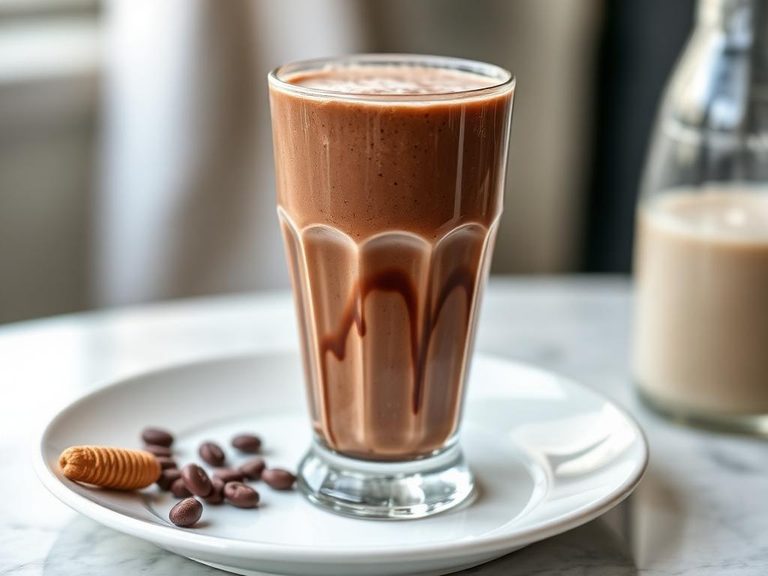
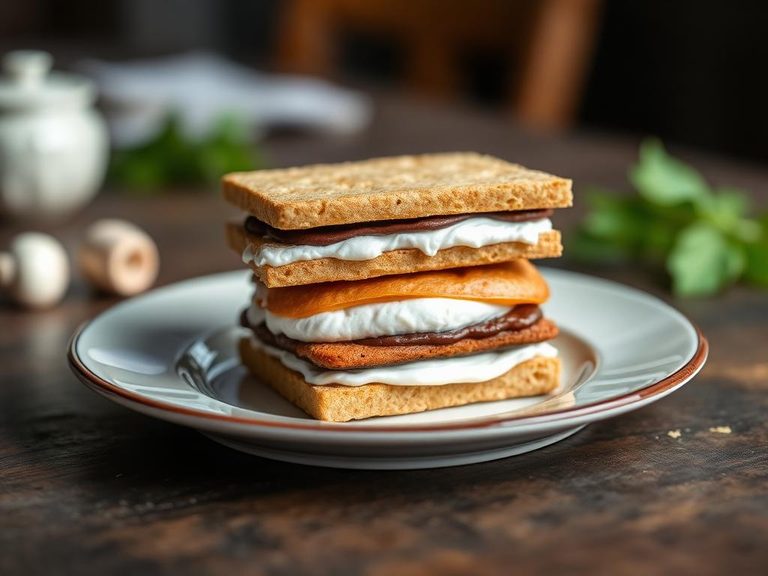
🌍 Where it's eaten
💡 Did you know?
The original Fudgesicle was created in 1925 by a Kansas City entrepreneur who accidentally discovered the recipe while trying to make a chocolate-flavored ice cream that wouldn't melt as quickly.
Full nutrition (USDA data · scales with serving)
| Water | 62.7 g |
| Energy | 163 kcal |
| Protein | 2.6 g |
| Total lipid (fat) | 3.7 g |
| Carbohydrate, by difference | 30.0 g |
| Fiber, total dietary | 1.0 g |
| Total Sugars | 17.5 g |
| Calcium, Ca | 162 mg |
| Iron, Fe | 1.1 mg |
| Magnesium, Mg | 19.0 mg |
| Phosphorus, P | 112 mg |
| Potassium, K | 177 mg |
| Sodium, Na | 104 mg |
| Zinc, Zn | 0.39 mg |
| Copper, Cu | 0.08 mg |
| Selenium, Se | 1.3 ug |
| Vitamin C, total ascorbic acid | 0.00 mg |
| Thiamin | 0.05 mg |
| Riboflavin | 0.16 mg |
| Niacin | 0.12 mg |
| Vitamin B-6 | 0.04 mg |
| Folate, total | 4.0 ug |
| Folic acid | 0.00 ug |
| Folate, food | 4.0 ug |
| Folate, DFE | 4.0 ug |
| Choline, total | 8.2 mg |
| Vitamin B-12 | 0.05 ug |
| Vitamin B-12, added | 0.00 ug |
| Vitamin A, RAE | 0.00 ug |
| Retinol | 0.00 ug |
| Carotene, beta | 0.00 ug |
| Carotene, alpha | 0.00 ug |
| Cryptoxanthin, beta | 0.00 ug |
| Lycopene | 0.00 ug |
| Lutein + zeaxanthin | 1.0 ug |
| Vitamin E (alpha-tocopherol) | 0.21 mg |
| Vitamin E, added | 0.00 mg |
| Vitamin D (D2 + D3) | 0.00 ug |
| Vitamin K (phylloquinone) | 0.10 ug |
| Alcohol, ethyl | 0.00 g |
| Caffeine | 3.0 mg |
| Theobromine | 93.0 mg |
Fat & fatty acid profile (per 100g)
| Fatty acids, total saturated | 2.7 g |
| SFA 4:0 | 0.00 g |
| SFA 6:0 | 0.02 g |
| SFA 8:0 | 0.18 g |
| SFA 10:0 | 0.13 g |
| SFA 12:0 | 1.0 g |
| SFA 14:0 | 0.40 g |
| SFA 16:0 | 0.67 g |
| SFA 18:0 | 0.25 g |
| Fatty acids, total monounsaturated | 0.58 g |
| MUFA 16:1 | 0.00 g |
| MUFA 18:1 | 0.58 g |
| MUFA 20:1 | 0.00 g |
| MUFA 22:1 | 0.00 g |
| Fatty acids, total polyunsaturated | 0.14 g |
| PUFA 18:2 | 0.14 g |
| PUFA 18:3 | 0.00 g |
| PUFA 18:4 | 0.00 g |
| PUFA 20:4 | 0.00 g |
| PUFA 20:5 n-3 (EPA) | 0.00 g |
| PUFA 22:5 n-3 (DPA) | 0.00 g |
| PUFA 22:6 n-3 (DHA) | 0.00 g |
| Cholesterol | 1.0 mg |
FAQ
How is a Fudgesicle different from a regular chocolate popsicle?
A Fudgesicle has a creamier, denser, and smoother 'fudgy' texture due to its dairy content, whereas a standard chocolate popsicle is typically water-based and more icy.
Are Fudgesicles gluten-free?
Most standard Fudgesicles are gluten-free as they are made from milk, sugar, and cocoa. However, always check the label for specific brands or varieties that may contain additives or be produced in facilities with gluten.
Can I make a healthier version at home?
Yes. You can blend Greek yogurt, cocoa powder, a natural sweetener like maple syrup, and a splash of milk, then pour into popsicle molds. This increases protein and reduces added sugars.
Nutrient density (calculated · NRF9.3)
Nutrient Rich Foods index: beneficial nutrients (protein, fiber, vitamins, minerals) minus saturated fat, added sugar & sodium, per 100 kcal.
NRF9.3 index — Fulgoni, Keast & Drewnowski, 2009. Computed from USDA nutrients.
Weight-loss friendliness (composite index)
Energy density 1.63 kcal/g · 6% calories from protein · 1.0 g fiber · 17.5 g sugar per 100 g.
Composite of energy density (Rolls et al., 1999), protein & fiber satiety, minus sugar. A calculated heuristic — ranks satiety-per-calorie, not a clinical measure.
Dietary load (calculated from USDA values)
Potential renal acid load. Positive = acid-forming, negative = alkaline-forming.
Sodium-to-potassium ratio: 0.59 (lower is better — aim for ≤ 1)
Sodium:potassium per WHO potassium guidance. Computed from USDA nutrients.