

Fried eggplant
Common food

Photo: Wikipedia
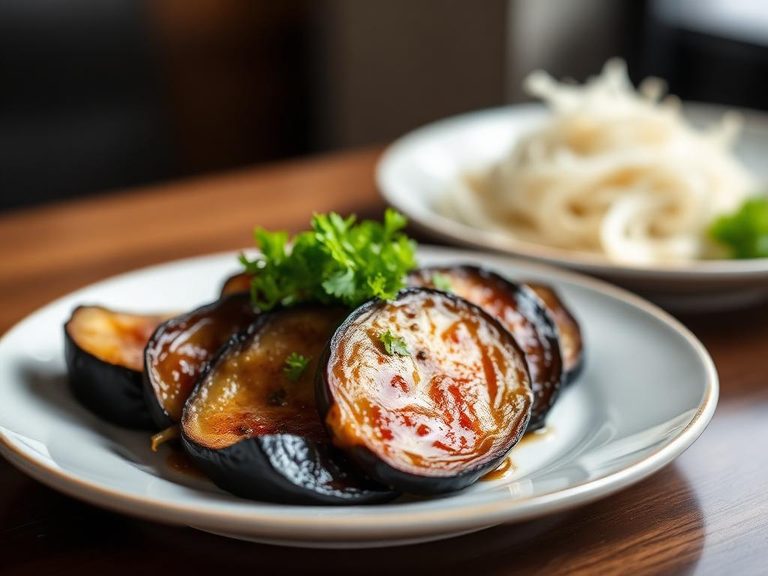
Fried eggplant transforms the spongy, mild vegetable into a rich, golden-brown delight with a creamy interior and a satisfyingly crisp exterior. Its high fat content from frying gives it a luxurious mouthfeel and a deep, savory flavor that absorbs seasonings beautifully. Nutritionally, it's a good source of fiber and provides a notable amount of fat, making it a more energy-dense vegetable dish.
Calorie split: 7% protein · 41% carbs · 53% fat
↓ Full nutrition💚 Why it's loved
People adore fried eggplant for its transformative texture—turning from firm to meltingly tender—and its incredible ability to soak up sauces, spices, and oils, making it a flavor powerhouse. It's a beloved comfort food in countless cuisines, often serving as the hearty centerpiece of a meal.
⚠️ Watch-outs & how to enjoy it better
Fried eggplant can be high in calories and fat due to its sponge-like structure absorbing cooking oil, which may be a concern for those monitoring calorie or fat intake. To counteract this, use minimal high-smoke-point oil, consider baking or air-frying as alternatives, and pair it with protein-rich foods like yogurt or legumes to create a more balanced meal. Its nightshade family membership also means some individuals with specific sensitivities may need to be cautious.
Key benefits
- Good source of dietary fiber for digestive health
- Contains antioxidants like nasunin, especially in the skin
- Provides potassium, which supports heart function
- The fat content can aid absorption of fat-soluble vitamins
- Versatile base for both vegetarian and omnivore dishes
🍽️ Popular dishes
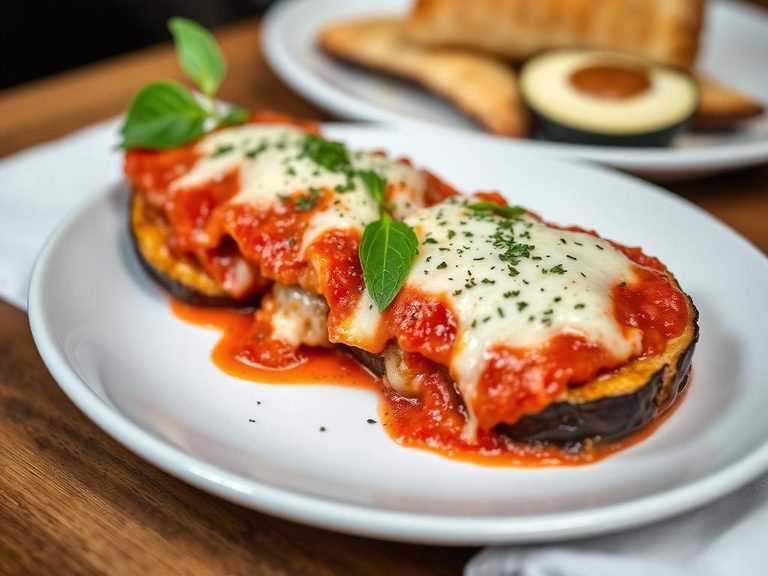
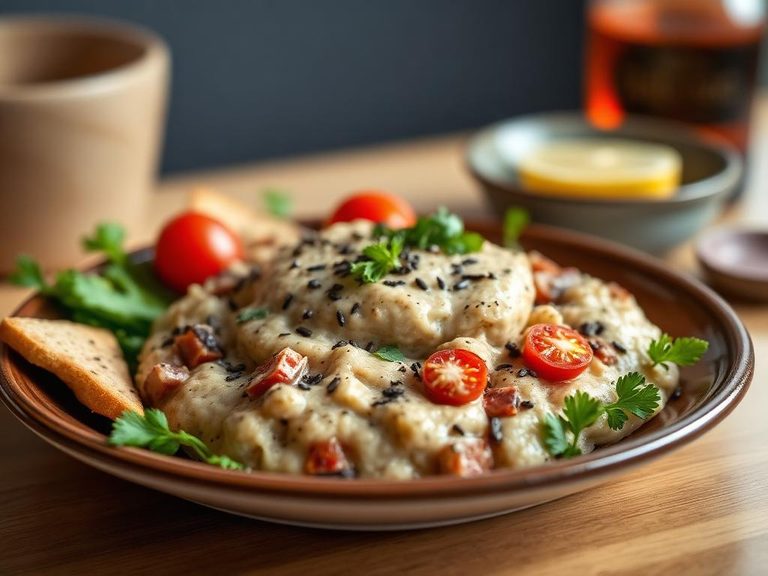
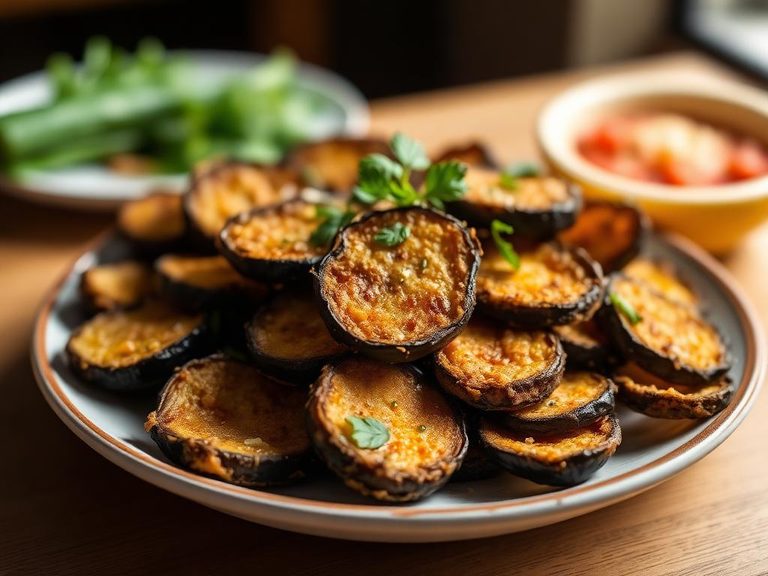
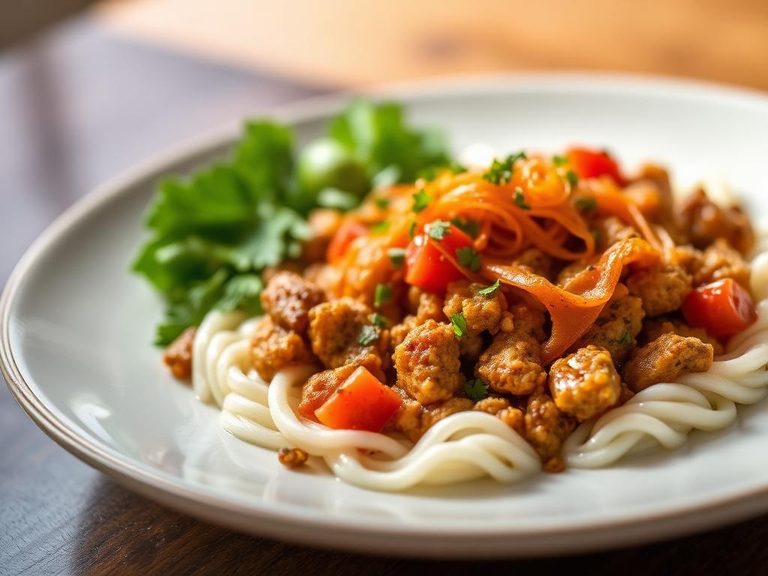

🌍 Where it's eaten
💡 Did you know?
Eggplant is technically a berry, and its name comes from the historical variety that looked like a goose egg, leading to the old name 'egg-plant'.
Full nutrition (USDA data · scales with serving)
| Water | 59.9 g |
| Energy | 218 kcal |
| Protein | 3.7 g |
| Total lipid (fat) | 12.8 g |
| Carbohydrate, by difference | 22.3 g |
| Fiber, total dietary | 2.0 g |
| Total Sugars | 1.8 g |
| Calcium, Ca | 28.0 mg |
| Iron, Fe | 1.6 mg |
| Magnesium, Mg | 14.0 mg |
| Phosphorus, P | 49.0 mg |
| Potassium, K | 135 mg |
| Sodium, Na | 315 mg |
| Zinc, Zn | 0.32 mg |
| Copper, Cu | 0.08 mg |
| Selenium, Se | 5.4 ug |
| Vitamin C, total ascorbic acid | 0.80 mg |
| Thiamin | 0.26 mg |
| Riboflavin | 0.14 mg |
| Niacin | 2.0 mg |
| Vitamin B-6 | 0.05 mg |
| Folate, total | 49.0 ug |
| Folic acid | 33.0 ug |
| Folate, food | 16.0 ug |
| Folate, DFE | 72.0 ug |
| Choline, total | 14.4 mg |
| Vitamin B-12 | 0.04 ug |
| Vitamin B-12, added | 0.00 ug |
| Vitamin A, RAE | 5.0 ug |
| Retinol | 5.0 ug |
| Carotene, beta | 5.0 ug |
| Carotene, alpha | 0.00 ug |
| Cryptoxanthin, beta | 0.00 ug |
| Lycopene | 0.00 ug |
| Lutein + zeaxanthin | 31.0 ug |
| Vitamin E (alpha-tocopherol) | 2.4 mg |
| Vitamin E, added | 0.00 mg |
| Vitamin D (D2 + D3) | 0.10 ug |
| Vitamin K (phylloquinone) | 13.8 ug |
| Alcohol, ethyl | 0.00 g |
| Caffeine | 0.00 mg |
| Theobromine | 0.00 mg |
Fat & fatty acid profile (per 100g)
| Fatty acids, total saturated | 1.8 g |
| SFA 4:0 | 0.00 g |
| SFA 6:0 | 0.00 g |
| SFA 8:0 | 0.00 g |
| SFA 10:0 | 0.00 g |
| SFA 12:0 | 0.00 g |
| SFA 14:0 | 0.01 g |
| SFA 16:0 | 1.3 g |
| SFA 18:0 | 0.39 g |
| Fatty acids, total monounsaturated | 5.2 g |
| MUFA 16:1 | 0.05 g |
| MUFA 18:1 | 5.1 g |
| MUFA 20:1 | 0.08 g |
| MUFA 22:1 | 0.00 g |
| Fatty acids, total polyunsaturated | 4.8 g |
| PUFA 18:2 | 4.3 g |
| PUFA 18:3 | 0.54 g |
| PUFA 18:4 | 0.00 g |
| PUFA 20:4 | 0.00 g |
| PUFA 20:5 n-3 (EPA) | 0.00 g |
| PUFA 22:5 n-3 (DPA) | 0.00 g |
| PUFA 22:6 n-3 (DHA) | 0.00 g |
| Cholesterol | 11.0 mg |
FAQ
Why does eggplant absorb so much oil when fried?
Eggplant has a very porous, spongy flesh with air pockets. When heated, these pockets expand and then collapse, creating a vacuum that draws in surrounding oil. Salting and resting the eggplant beforehand can help collapse these pockets and reduce oil absorption.
Is fried eggplant healthy?
It can be part of a healthy diet. While frying adds calories and fat, eggplant itself is low in calories and a good source of fiber and antioxidants. The healthiness depends heavily on the cooking method, amount of oil used, and what it's served with. Baking or air-frying are healthier alternatives.
How do I keep fried eggplant from getting soggy?
Ensure the oil is hot enough before adding the eggplant, don't overcrowd the pan, and drain the fried pieces on a wire rack instead of paper towels to prevent steaming. Serving immediately is best for maximum crispness.
Nutrient density (calculated · NRF9.3)
Nutrient Rich Foods index: beneficial nutrients (protein, fiber, vitamins, minerals) minus saturated fat, added sugar & sodium, per 100 kcal.
NRF9.3 index — Fulgoni, Keast & Drewnowski, 2009. Computed from USDA nutrients.
Weight-loss friendliness (composite index)
Energy density 2.18 kcal/g · 7% calories from protein · 2.0 g fiber · 1.8 g sugar per 100 g.
Composite of energy density (Rolls et al., 1999), protein & fiber satiety, minus sugar. A calculated heuristic — ranks satiety-per-calorie, not a clinical measure.
Dietary load (calculated from USDA values)
Potential renal acid load. Positive = acid-forming, negative = alkaline-forming.
Sodium-to-potassium ratio: 2.33 (lower is better — aim for ≤ 1)
Sodium:potassium per WHO potassium guidance. Computed from USDA nutrients.