

Fish oil, menhaden, fully hydrogenated
Whole food · Fats and Oils

Photo: Wikipedia
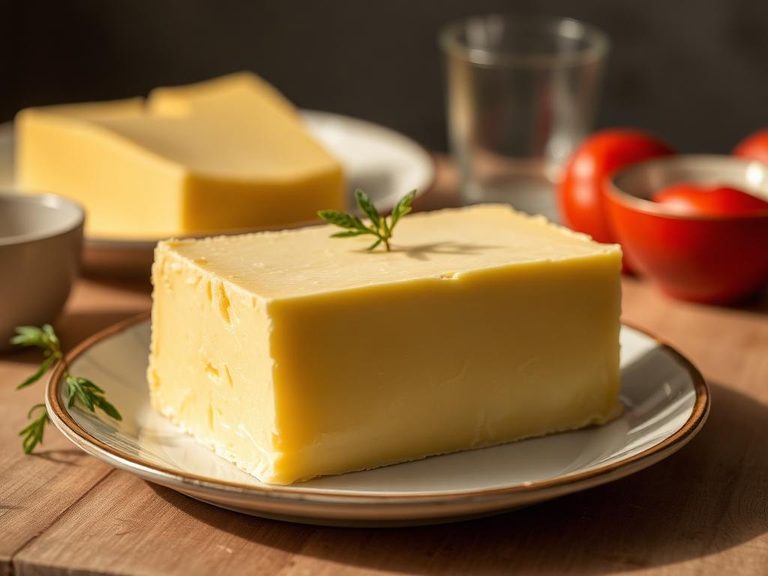
Menhaden fish oil, fully hydrogenated, is a solid, waxy fat derived from Atlantic menhaden, a small, oily forage fish. It has a neutral, almost imperceptible taste and a firm, lard-like texture at room temperature. Nutritionally, it is a dense source of calories, providing 902 kcal per 100g, almost entirely from fat.
Calorie split: 0% protein · 0% carbs · 100% fat
↓ Full nutrition💚 Why it's loved
Food manufacturers value it for its functional properties, creating a consistent, solid fat texture in products like margarine, shortening, and baked goods without the strong fishy flavor of unprocessed oil.
⚠️ Watch-outs & how to enjoy it better
Fully hydrogenated oils contain no trans fats but are also devoid of the beneficial omega-3s found in the original oil. Consumers seeking whole-food nutrition or omega-3 benefits should choose non-hydrogenated fish oils or whole fatty fish instead.
Key benefits
- High smoke point suitable for industrial frying
- Provides a stable, solid fat source for food manufacturing
- Rich in omega-3 fatty acids before hydrogenation
- Cost-effective fat for processed food production
- Shelf-stable due to hydrogenation process
🍽️ Popular dishes



🌍 Where it's eaten
💡 Did you know?
Menhaden are so ecologically vital that Benjamin Franklin lobbied for their protection in colonial America, calling them 'the sun-fish' and arguing against using them as fertilizer.
Full nutrition (USDA data · scales with serving)
| Water | 0.00 g |
| Energy | 902 kcal |
| Energy | 3774 kj |
| Protein | 0.00 g |
| Total lipid (fat) | 100 g |
| Ash | 0.00 g |
| Carbohydrate, by difference | 0.00 g |
| Fiber, total dietary | 0.00 g |
| Calcium, Ca | 0.00 mg |
| Iron, Fe | 0.00 mg |
| Magnesium, Mg | 0.00 mg |
| Phosphorus, P | 0.00 mg |
| Potassium, K | 0.00 mg |
| Sodium, Na | 0.00 mg |
| Zinc, Zn | 0.00 mg |
| Copper, Cu | 0.00 mg |
| Manganese, Mn | 0.00 mg |
| Selenium, Se | 0.00 ug |
| Vitamin C, total ascorbic acid | 0.00 mg |
| Thiamin | 0.00 mg |
| Riboflavin | 0.00 mg |
| Niacin | 0.00 mg |
| Pantothenic acid | 0.00 mg |
| Vitamin B-6 | 0.00 mg |
| Folate, total | 0.00 ug |
| Folic acid | 0.00 ug |
| Folate, food | 0.00 ug |
| Folate, DFE | 0.00 ug |
| Vitamin B-12 | 0.00 ug |
| Vitamin A, RAE | 0.00 ug |
| Retinol | 0.00 ug |
| Vitamin A, IU | 0.00 iu |
Fat & fatty acid profile (per 100g)
| Fatty acids, total saturated | 95.6 g |
| SFA 14:0 | 9.1 g |
| SFA 16:0 | 35.2 g |
| SFA 18:0 | 21.1 g |
| Fatty acids, total monounsaturated | 0.00 g |
| Fatty acids, total polyunsaturated | 0.00 g |
| Cholesterol | 500 mg |
Amino acid profile (per 100g)
Estimated from Fish, tuna, white, canned in oil, without salt, drained solids — USDA does not publish this profile for Fish oil.
| Tryptophan | 0.30 g |
| Threonine | 1.2 g |
| Isoleucine | 1.2 g |
| Leucine | 2.2 g |
| Lysine | 2.4 g |
| Methionine | 0.79 g |
| Cystine | 0.28 g |
| Phenylalanine | 1.0 g |
| Tyrosine | 0.90 g |
| Valine | 1.4 g |
| Arginine | 1.6 g |
| Histidine | 0.78 g |
| Alanine | 1.6 g |
| Aspartic acid | 2.7 g |
| Glutamic acid | 4.0 g |
| Glycine | 1.3 g |
| Proline | 0.94 g |
| Serine | 1.1 g |
FAQ
Is this the same as fish oil supplements?
No. This is a fully hydrogenated industrial fat used in food manufacturing. Supplement fish oils are typically non-hydrogenated concentrates of EPA and DHA omega-3s.
Can I cook with this at home?
It is not commonly sold for home use. Its primary role is as an ingredient in processed foods. Home cooks would use lard, butter, or vegetable shortening instead.
Why is it listed as 0g for everything except fat?
Hydrogenation converts the oil into a solid fat, removing proteins, carbs, and sugars. The final product is nearly 100% fat by weight.
Nutrient density (calculated · NRF9.3)
Nutrient Rich Foods index: beneficial nutrients (protein, fiber, vitamins, minerals) minus saturated fat, added sugar & sodium, per 100 kcal.
NRF9.3 index — Fulgoni, Keast & Drewnowski, 2009. Computed from USDA nutrients.
Weight-loss friendliness (composite index)
Energy density 9.02 kcal/g · 0% calories from protein · 0.0 g fiber · 0.0 g sugar per 100 g.
Composite of energy density (Rolls et al., 1999), protein & fiber satiety, minus sugar. A calculated heuristic — ranks satiety-per-calorie, not a clinical measure.
Dietary load (calculated from USDA values)
Potential renal acid load. Positive = acid-forming, negative = alkaline-forming.
Sodium:potassium per WHO potassium guidance. Computed from USDA nutrients.