

Fajita, beef or pork
Common food
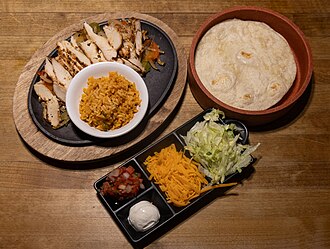
Photo: Wikipedia
Fajitas are sizzling strips of beef or pork, traditionally marinated and cooked with onions and bell peppers, served with warm tortillas. The meat offers a savory, slightly smoky flavor with a tender yet satisfying chew, while the vegetables add a sweet, crisp contrast. Nutritionally, it provides a solid protein base (12g per 100g) with moderate fat and carbs, making it a balanced meal component.
Calorie split: 21% protein · 31% carbs · 48% fat
↓ Full nutrition💚 Why it's loved
People adore fajitas for the interactive, communal experience of assembling their own tacos, the burst of flavors from the charred meat and fresh toppings, and their deep roots in Tex-Mex culinary tradition.
⚠️ Watch-outs & how to enjoy it better
The marinade and restaurant preparations can be high in sodium, potentially leading to water retention; the flour tortillas often used are refined carbs that can cause blood-sugar spikes. To counteract, opt for corn tortillas (higher fiber), use a low-sodium homemade marinade, and load up on non-starchy toppings like lettuce, pico de gallo, and avocado for healthy fats and fiber.
Key benefits
- High-quality protein source for muscle maintenance
- Contains B vitamins like niacin and B6 from the meat
- Bell peppers and onions add vitamin C and antioxidants
- Versatile for various dietary tweaks (e.g., low-carb wraps)
- Encourages vegetable consumption alongside protein
🍽️ Popular dishes
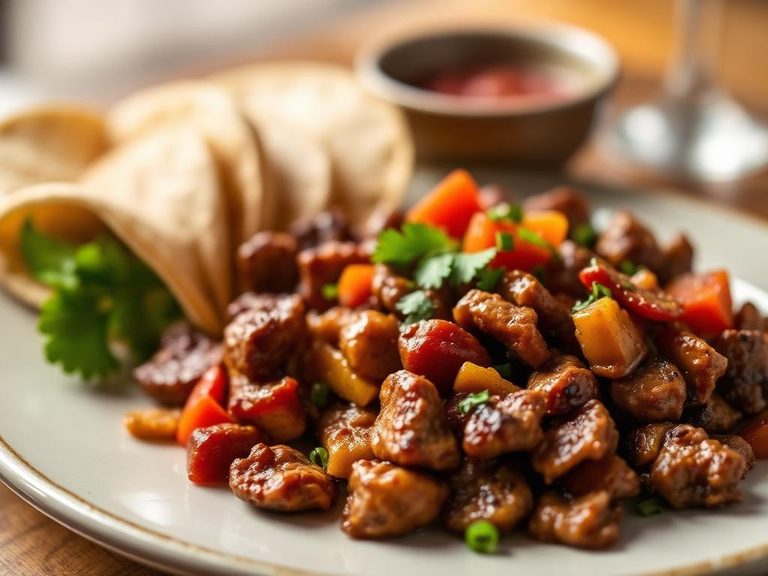
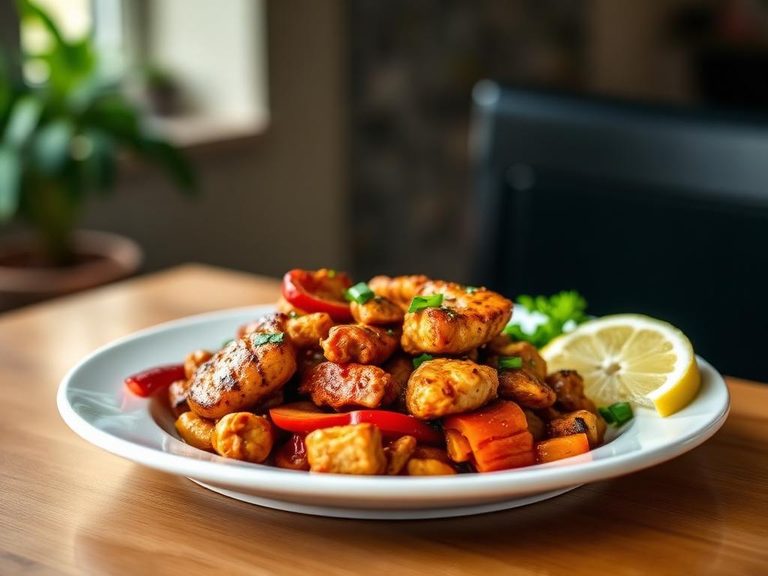
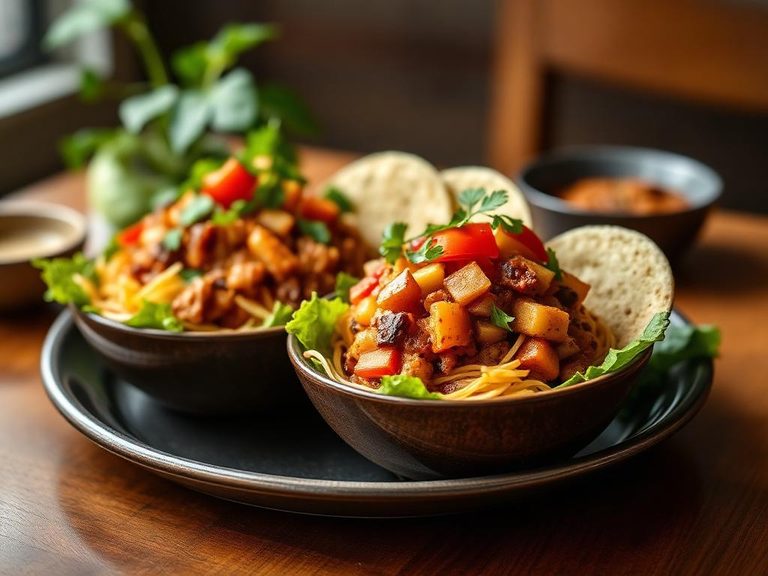
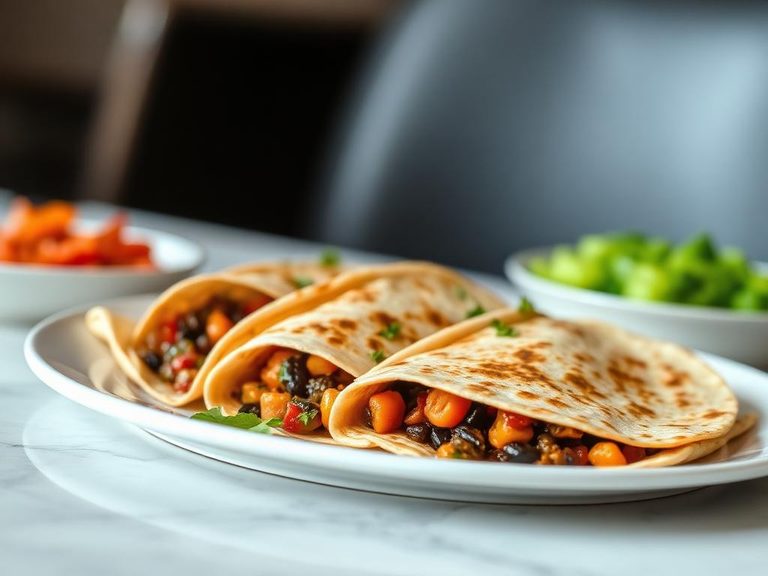
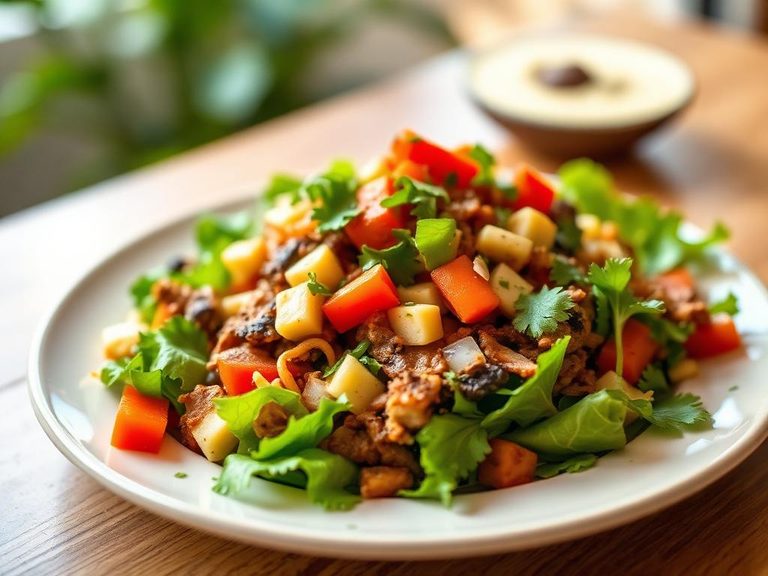
🌍 Where it's eaten
💡 Did you know?
The word 'fajita' comes from the Spanish 'faja,' meaning 'belt' or 'sash,' referring to the cut of beef (skirt steak) originally used, which is long and flat.
Full nutrition (USDA data · scales with serving)
| Water | 56.1 g |
| Energy | 231 kcal |
| Protein | 12.1 g |
| Total lipid (fat) | 12.2 g |
| Carbohydrate, by difference | 18.0 g |
| Fiber, total dietary | 1.5 g |
| Total Sugars | 2.4 g |
| Calcium, Ca | 53.0 mg |
| Iron, Fe | 2.0 mg |
| Magnesium, Mg | 18.0 mg |
| Phosphorus, P | 126 mg |
| Potassium, K | 193 mg |
| Sodium, Na | 459 mg |
| Zinc, Zn | 2.7 mg |
| Copper, Cu | 0.08 mg |
| Selenium, Se | 17.5 ug |
| Vitamin C, total ascorbic acid | 23.9 mg |
| Thiamin | 0.20 mg |
| Riboflavin | 0.23 mg |
| Niacin | 3.6 mg |
| Vitamin B-6 | 0.24 mg |
| Folate, total | 40.0 ug |
| Folic acid | 25.0 ug |
| Folate, food | 16.0 ug |
| Folate, DFE | 58.0 ug |
| Choline, total | 23.3 mg |
| Vitamin B-12 | 0.91 ug |
| Vitamin B-12, added | 0.00 ug |
| Vitamin A, RAE | 21.0 ug |
| Retinol | 2.0 ug |
| Carotene, beta | 196 ug |
| Carotene, alpha | 4.0 ug |
| Cryptoxanthin, beta | 53.0 ug |
| Lycopene | 0.00 ug |
| Lutein + zeaxanthin | 45.0 ug |
| Vitamin E (alpha-tocopherol) | 1.3 mg |
| Vitamin E, added | 0.00 mg |
| Vitamin D (D2 + D3) | 0.00 ug |
| Vitamin K (phylloquinone) | 9.5 ug |
| Alcohol, ethyl | 0.00 g |
| Caffeine | 0.00 mg |
| Theobromine | 0.00 mg |
Fat & fatty acid profile (per 100g)
| Fatty acids, total saturated | 3.2 g |
| SFA 4:0 | 0.00 g |
| SFA 6:0 | 0.00 g |
| SFA 8:0 | 0.00 g |
| SFA 10:0 | 0.00 g |
| SFA 12:0 | 0.00 g |
| SFA 14:0 | 0.12 g |
| SFA 16:0 | 1.9 g |
| SFA 18:0 | 1.0 g |
| Fatty acids, total monounsaturated | 4.7 g |
| MUFA 16:1 | 0.18 g |
| MUFA 18:1 | 4.4 g |
| MUFA 20:1 | 0.05 g |
| MUFA 22:1 | 0.00 g |
| Fatty acids, total polyunsaturated | 3.0 g |
| PUFA 18:2 | 2.6 g |
| PUFA 18:3 | 0.31 g |
| PUFA 18:4 | 0.00 g |
| PUFA 20:4 | 0.02 g |
| PUFA 20:5 n-3 (EPA) | 0.00 g |
| PUFA 22:5 n-3 (DPA) | 0.01 g |
| PUFA 22:6 n-3 (DHA) | 0.00 g |
| Cholesterol | 29.0 mg |
FAQ
What's the difference between beef and pork fajitas?
Beef fajitas typically use skirt or flank steak, offering a robust, slightly iron-rich flavor. Pork fajitas often use tenderloin or shoulder, resulting in a milder, slightly sweeter taste. Both are marinated similarly.
Are fajitas gluten-free?
The meat and vegetable filling is naturally gluten-free. However, traditional flour tortillas contain gluten. To keep it gluten-free, serve with corn tortillas or lettuce wraps.
How can I make fajitas healthier at home?
Use lean cuts of meat, marinate with lime juice, garlic, and spices instead of salty mixes, grill or sauté with minimal oil, and serve with whole-grain or corn tortillas and plenty of fresh veggies.
Nutrient density (calculated · NRF9.3)
Nutrient Rich Foods index: beneficial nutrients (protein, fiber, vitamins, minerals) minus saturated fat, added sugar & sodium, per 100 kcal.
NRF9.3 index — Fulgoni, Keast & Drewnowski, 2009. Computed from USDA nutrients.
Weight-loss friendliness (composite index)
Energy density 2.31 kcal/g · 21% calories from protein · 1.5 g fiber · 2.4 g sugar per 100 g.
Composite of energy density (Rolls et al., 1999), protein & fiber satiety, minus sugar. A calculated heuristic — ranks satiety-per-calorie, not a clinical measure.
Dietary load (calculated from USDA values)
Potential renal acid load. Positive = acid-forming, negative = alkaline-forming.
Sodium-to-potassium ratio: 2.38 (lower is better — aim for ≤ 1)
Sodium:potassium per WHO potassium guidance. Computed from USDA nutrients.