

Fajita Bowls
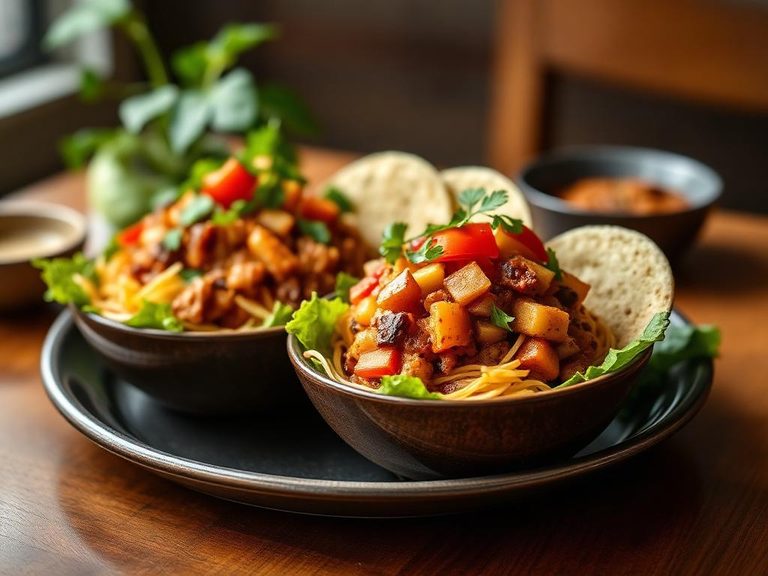
Fajita Bowls are a modern, deconstructed take on the classic Tex-Mex fajita, served in a bowl format for easy customization. They typically feature grilled, seasoned strips of chicken, steak, or shrimp, served over a base of rice or greens, and topped with sautéed bell peppers and onions, salsa, guacamole, sour cream, and cheese. The dish originates from Tex-Mex cuisine, which blends Mexican cooking traditions with American ingredients and styles.
🍽️ Nutrition at a glance
A typical fajita bowl is high in protein from the meat and often in healthy fats from avocado and dairy, with a moderate to high carbohydrate content depending on the rice or tortilla base. It provides key nutrients like fiber, vitamin C from the peppers, and iron from the meat, with a rough calorie range of 500-800 per serving depending on toppings and portion size.
Nutrition breakdown
| Calories | 450 kcal |
| Protein | 35 g |
| Carbs | 40 g |
| Fat | 18 g |
| Fiber | 6 g |
| Sugar | 5 g |
| Sodium | 850 mg |
| Potassium | 600 mg |
| Iron | 3.5 mg |
| Calcium | 120 mg |
| Vitamin C | 25 mg |
| Vitamin A | 150 mcg |
| Magnesium | 60 mg |
| Zinc | 4 mg |
| Vitamin B6 | 0.5 mg |
Per 1 bowl (350 g) · estimated, varies by recipe
💡 What's interesting
Culturally, the fajita bowl represents the evolution of Tex-Mex food into more health-conscious, customizable formats popular in modern fast-casual dining. Nutritionally, it's unique because it can be easily adapted to various diets—like low-carb by skipping rice or high-protein by adding extra meat—making it a versatile meal for different nutritional goals.
🍽️ Related dishes
AI estimate may be inaccurate · Terms