

Energy drink, sugar-free (Red Bull)
Common food

Photo: Wikipedia
A crisp, effervescent, and mildly tart beverage with a distinct medicinal-sweet aftertaste, sugar-free Red Bull delivers a potent caffeine and taurine kick in a nearly calorie-free package. Its signature silver-and-blue can is synonymous with a quick mental and physical boost, offering a sharp, clean energy surge without the sugar crash.
Calorie split: 22% protein · 62% carbs · 16% fat
↓ Full nutrition💚 Why it's loved
People love it for its reliable, fast-acting energy lift and its iconic, crisp taste that has become a cultural staple for late-night work, gaming, and pre-workout routines.
⚠️ Watch-outs & how to enjoy it better
The high caffeine content can cause jitters, anxiety, or disrupted sleep, especially in sensitive individuals. To counteract this, avoid consuming it late in the day, never mix with alcohol, and consider starting with a half-can to assess tolerance.
Key benefits
- Provides a rapid alertness boost from caffeine
- Contains zero sugar and only 5 calories per 100ml
- Includes taurine and B-group vitamins
- Convenient, portable energy source
- Widely available and recognizable
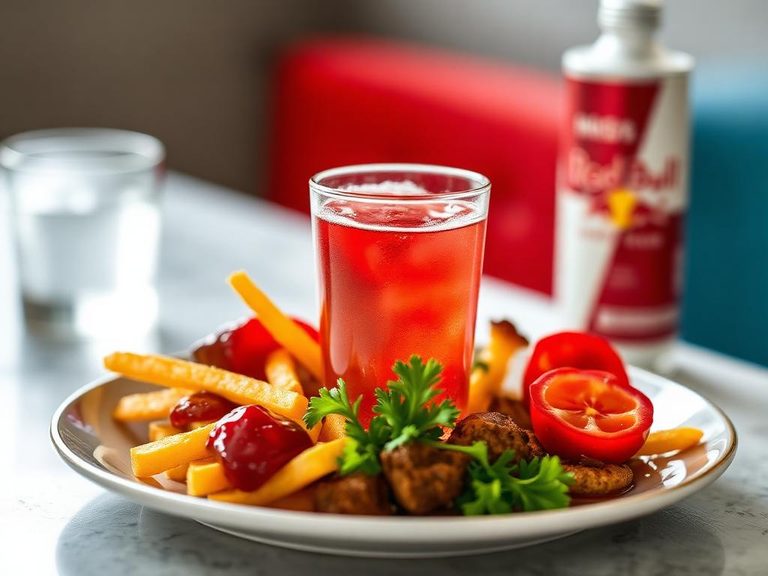
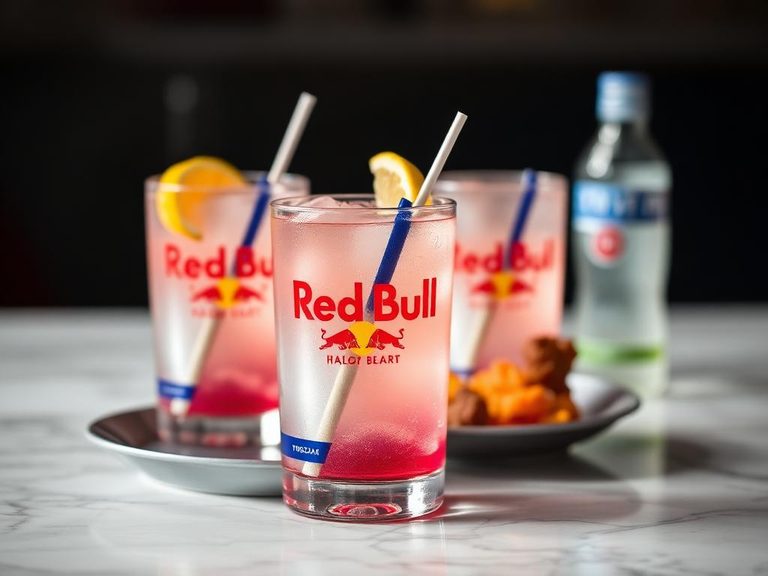
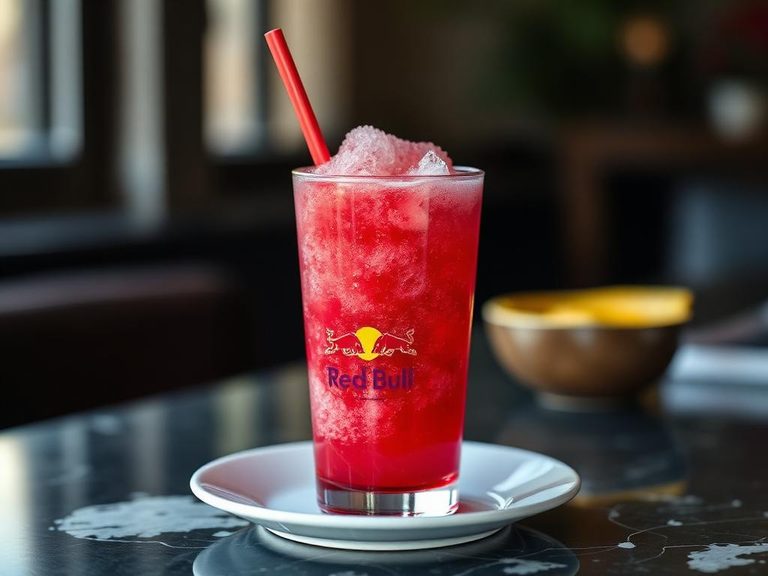
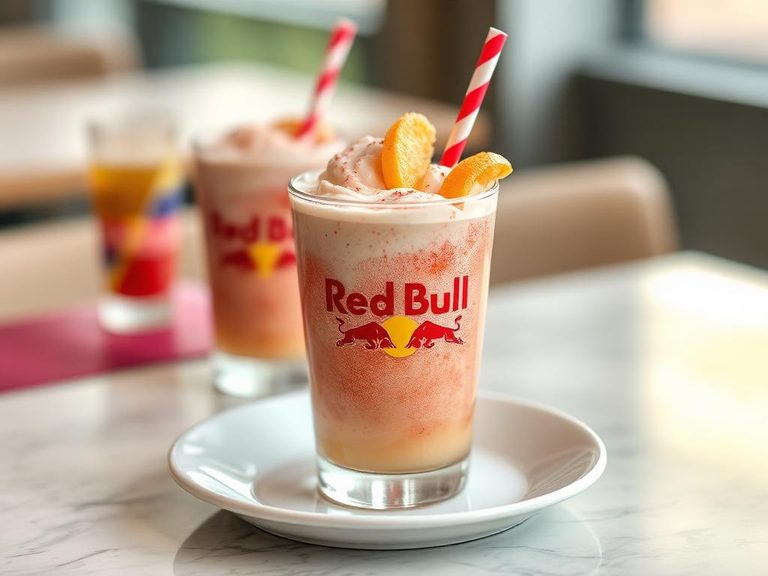
🍽️ Popular dishes


🌍 Where it's eaten
💡 Did you know?
The original formula was inspired by a Thai energy drink called Krating Daeng, which translates to 'Red Gaur' (a large wild bovine), and was marketed to truck drivers and laborers.
Full nutrition (USDA data · scales with serving)
| Water | 98.3 g |
| Energy | 5.0 kcal |
| Protein | 0.25 g |
| Total lipid (fat) | 0.08 g |
| Carbohydrate, by difference | 0.70 g |
| Fiber, total dietary | 0.00 g |
| Total Sugars | 0.00 g |
| Calcium, Ca | 13.0 mg |
| Iron, Fe | 0.02 mg |
| Magnesium, Mg | 3.0 mg |
| Phosphorus, P | 0.00 mg |
| Potassium, K | 3.0 mg |
| Sodium, Na | 83.0 mg |
| Zinc, Zn | 0.00 mg |
| Copper, Cu | 0.01 mg |
| Selenium, Se | 0.20 ug |
| Vitamin C, total ascorbic acid | 0.00 mg |
| Thiamin | 0.03 mg |
| Riboflavin | 0.57 mg |
| Niacin | 8.5 mg |
| Vitamin B-6 | 2.0 mg |
| Folate, total | 0.00 ug |
| Folic acid | 0.00 ug |
| Folate, food | 0.00 ug |
| Folate, DFE | 0.00 ug |
| Choline, total | 0.00 mg |
| Vitamin B-12 | 2.0 ug |
| Vitamin B-12, added | 2.0 ug |
| Vitamin A, RAE | 0.00 ug |
| Retinol | 0.00 ug |
| Carotene, beta | 0.00 ug |
| Carotene, alpha | 0.00 ug |
| Cryptoxanthin, beta | 0.00 ug |
| Lycopene | 0.00 ug |
| Lutein + zeaxanthin | 0.00 ug |
| Vitamin E (alpha-tocopherol) | 0.00 mg |
| Vitamin E, added | 0.00 mg |
| Vitamin D (D2 + D3) | 0.00 ug |
| Vitamin K (phylloquinone) | 0.00 ug |
| Alcohol, ethyl | 0.00 g |
| Caffeine | 30.0 mg |
| Theobromine | 0.00 mg |
Fat & fatty acid profile (per 100g)
| Fatty acids, total saturated | 0.00 g |
| SFA 4:0 | 0.00 g |
| SFA 6:0 | 0.00 g |
| SFA 8:0 | 0.00 g |
| SFA 10:0 | 0.00 g |
| SFA 12:0 | 0.00 g |
| SFA 14:0 | 0.00 g |
| SFA 16:0 | 0.00 g |
| SFA 18:0 | 0.00 g |
| Fatty acids, total monounsaturated | 0.00 g |
| MUFA 16:1 | 0.00 g |
| MUFA 18:1 | 0.00 g |
| MUFA 20:1 | 0.00 g |
| MUFA 22:1 | 0.00 g |
| Fatty acids, total polyunsaturated | 0.00 g |
| PUFA 18:2 | 0.00 g |
| PUFA 18:3 | 0.00 g |
| PUFA 18:4 | 0.00 g |
| PUFA 20:4 | 0.00 g |
| PUFA 20:5 n-3 (EPA) | 0.00 g |
| PUFA 22:5 n-3 (DPA) | 0.00 g |
| PUFA 22:6 n-3 (DHA) | 0.00 g |
| Cholesterol | 0.00 mg |
FAQ
Does sugar-free Red Bull still give you energy?
Yes, its primary energy boost comes from caffeine (about 80mg per 250ml can) and B-vitamins, not sugar.
Is it safe to drink every day?
Moderate consumption (1-2 cans) is generally considered safe for healthy adults, but daily use can lead to caffeine dependence and may affect sleep or heart health.
What is taurine, and why is it in there?
Taurine is an amino acid found naturally in the body. It's included for its potential role in supporting neurological development and regulating minerals, though its exact synergistic effect with caffeine in energy drinks is still studied.
Nutrient density (calculated · NRF9.3)
Nutrient Rich Foods index: beneficial nutrients (protein, fiber, vitamins, minerals) minus saturated fat, added sugar & sodium, per 100 kcal.
NRF9.3 index — Fulgoni, Keast & Drewnowski, 2009. Computed from USDA nutrients.
Weight-loss friendliness (composite index)
Energy density 0.05 kcal/g · 20% calories from protein · 0.0 g fiber · 0.0 g sugar per 100 g.
Composite of energy density (Rolls et al., 1999), protein & fiber satiety, minus sugar. A calculated heuristic — ranks satiety-per-calorie, not a clinical measure.
Dietary load (calculated from USDA values)
Potential renal acid load. Positive = acid-forming, negative = alkaline-forming.
Sodium-to-potassium ratio: 27.67 (lower is better — aim for ≤ 1)
Sodium:potassium per WHO potassium guidance. Computed from USDA nutrients.