

Egg sandwich on biscuit
Common food
A warm, flaky biscuit split and filled with a creamy, savory egg salad or a fried egg patty, creating a delightful contrast of textures. The rich, buttery biscuit complements the soft, seasoned egg, making for a hearty and satisfying bite. Nutritionally, it's a solid source of protein from the eggs, though the biscuit contributes most of the carbohydrates and fat.
Calorie split: 14% protein · 29% carbs · 57% fat
↓ Full nutrition💚 Why it's loved
People love it for its comforting, nostalgic appeal and the perfect harmony of a savory, creamy egg filling against a warm, buttery biscuit. It's a versatile classic that can be dressed up with herbs or kept simple, fitting seamlessly into breakfast, lunch, or a snack.
⚠️ Watch-outs & how to enjoy it better
The biscuit can be high in saturated fat and refined carbs, potentially leading to a blood-sugar spike followed by a crash. To counteract this, pair it with a side of fiber-rich fruit or vegetables, or opt for a whole-grain biscuit if available. Be mindful of portion size, as the calorie density can add up quickly.
Key benefits
- Excellent source of high-quality protein for muscle maintenance.
- Provides quick energy from the biscuit's carbohydrates.
- Contains essential nutrients like choline and vitamin D from eggs.
- A convenient, portable, and filling meal option.
🍽️ Popular dishes
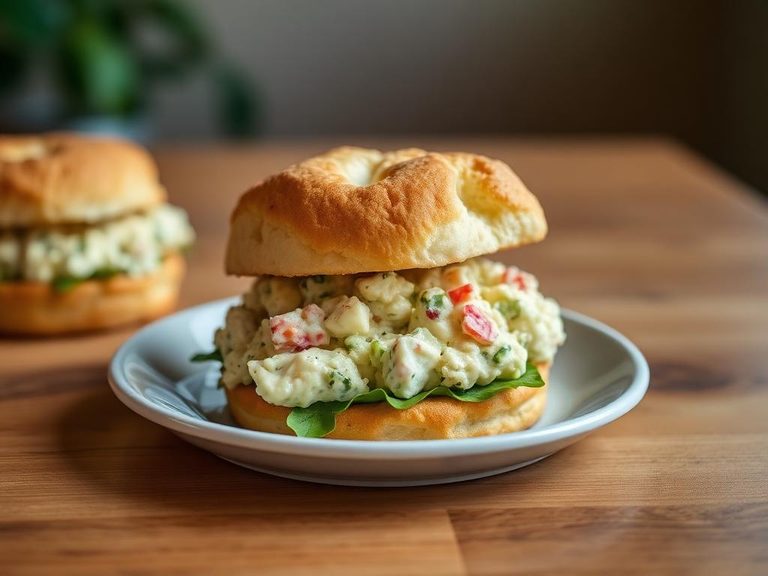


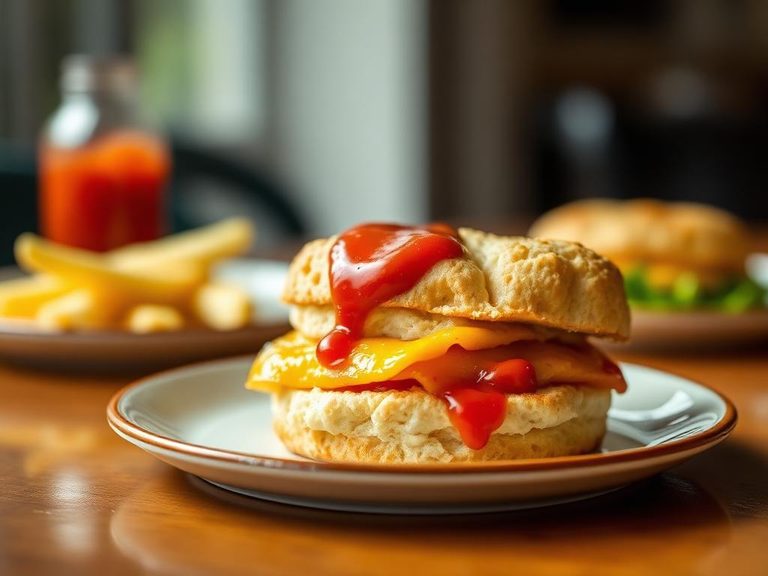
🌍 Where it's eaten
💡 Did you know?
The biscuit as we know it in the U.S. is a descendant of British scones, but the American version uses a chemical leavener (like baking powder) instead of yeast or beaten egg whites, creating its signature tender, flaky layers.
Full nutrition (USDA data · scales with serving)
| Water | 46.1 g |
| Energy | 298 kcal |
| Protein | 10.7 g |
| Total lipid (fat) | 18.8 g |
| Carbohydrate, by difference | 21.6 g |
| Fiber, total dietary | 1.2 g |
| Total Sugars | 2.3 g |
| Calcium, Ca | 180 mg |
| Iron, Fe | 2.0 mg |
| Magnesium, Mg | 15.0 mg |
| Phosphorus, P | 375 mg |
| Potassium, K | 131 mg |
| Sodium, Na | 708 mg |
| Zinc, Zn | 1.1 mg |
| Copper, Cu | 0.04 mg |
| Selenium, Se | 20.0 ug |
| Vitamin C, total ascorbic acid | 0.00 mg |
| Thiamin | 0.24 mg |
| Riboflavin | 0.34 mg |
| Niacin | 1.8 mg |
| Vitamin B-6 | 0.07 mg |
| Folate, total | 61.0 ug |
| Folic acid | 25.0 ug |
| Folate, food | 36.0 ug |
| Folate, DFE | 79.0 ug |
| Choline, total | 97.7 mg |
| Vitamin B-12 | 0.50 ug |
| Vitamin B-12, added | 0.00 ug |
| Vitamin A, RAE | 120 ug |
| Retinol | 118 ug |
| Carotene, beta | 15.0 ug |
| Carotene, alpha | 0.00 ug |
| Cryptoxanthin, beta | 6.0 ug |
| Lycopene | 0.00 ug |
| Lutein + zeaxanthin | 179 ug |
| Vitamin E (alpha-tocopherol) | 1.0 mg |
| Vitamin E, added | 0.00 mg |
| Vitamin D (D2 + D3) | 1.4 ug |
| Vitamin K (phylloquinone) | 4.4 ug |
| Alcohol, ethyl | 0.00 g |
| Caffeine | 0.00 mg |
| Theobromine | 0.00 mg |
Fat & fatty acid profile (per 100g)
| Fatty acids, total saturated | 9.7 g |
| SFA 4:0 | 0.10 g |
| SFA 6:0 | 0.09 g |
| SFA 8:0 | 0.23 g |
| SFA 10:0 | 0.26 g |
| SFA 12:0 | 1.7 g |
| SFA 14:0 | 0.94 g |
| SFA 16:0 | 4.0 g |
| SFA 18:0 | 2.2 g |
| Fatty acids, total monounsaturated | 4.2 g |
| MUFA 16:1 | 0.17 g |
| MUFA 18:1 | 4.0 g |
| MUFA 20:1 | 0.03 g |
| MUFA 22:1 | 0.00 g |
| Fatty acids, total polyunsaturated | 2.5 g |
| PUFA 18:2 | 2.2 g |
| PUFA 18:3 | 0.19 g |
| PUFA 18:4 | 0.00 g |
| PUFA 20:4 | 0.01 g |
| PUFA 20:5 n-3 (EPA) | 0.00 g |
| PUFA 22:5 n-3 (DPA) | 0.00 g |
| PUFA 22:6 n-3 (DHA) | 0.00 g |
| Cholesterol | 160 mg |
FAQ
Is an egg sandwich on a biscuit a healthy choice?
It can be part of a balanced diet. The eggs provide valuable protein and nutrients. The healthiness largely depends on the biscuit (size, ingredients) and any added fats or sodium. Pairing it with vegetables and choosing a moderate portion helps balance the meal.
How does the nutrition differ from an egg sandwich on toast?
A biscuit is typically higher in fat and calories than a slice of bread due to the butter or shortening used to create its flaky texture. Toast is often lower in calories and fat, making the biscuit version a more indulgent, energy-dense option.
Can I make a lighter version at home?
Absolutely. Use a whole-grain or lower-fat biscuit recipe, incorporate more egg whites than whole eggs, and fill the sandwich with fresh spinach or sliced tomato. Baking the biscuit instead of frying it also reduces added fat.
Nutrient density (calculated · NRF9.3)
Nutrient Rich Foods index: beneficial nutrients (protein, fiber, vitamins, minerals) minus saturated fat, added sugar & sodium, per 100 kcal.
NRF9.3 index — Fulgoni, Keast & Drewnowski, 2009. Computed from USDA nutrients.
Weight-loss friendliness (composite index)
Energy density 2.98 kcal/g · 14% calories from protein · 1.2 g fiber · 2.3 g sugar per 100 g.
Composite of energy density (Rolls et al., 1999), protein & fiber satiety, minus sugar. A calculated heuristic — ranks satiety-per-calorie, not a clinical measure.
Dietary load (calculated from USDA values)
Potential renal acid load. Positive = acid-forming, negative = alkaline-forming.
Sodium-to-potassium ratio: 5.40 (lower is better — aim for ≤ 1)
Sodium:potassium per WHO potassium guidance. Computed from USDA nutrients.