

Egg salad, made with light mayonnaise
Common food

Photo: Wikipedia
Egg salad with light mayonnaise is a creamy, savory mixture of chopped hard-boiled eggs bound in a tangy, lighter dressing. Its texture is a satisfying blend of soft egg whites and rich, crumbly yolks, with a flavor that's subtly enhanced by mustard or herbs. Nutritionally, it's a protein-packed option with a significantly reduced fat content compared to traditional versions.
Calorie split: 24% protein · 7% carbs · 70% fat
↓ Full nutrition💚 Why it's loved
People adore its comforting, nostalgic flavor and remarkable versatility—it's equally at home in a sandwich, on a bed of greens, or as a dip. It's a staple of picnics and quick lunches across many cultures, symbolizing simple, satisfying fare.
⚠️ Watch-outs & how to enjoy it better
The primary concern is its high sodium content, especially from mayonnaise and added salt, which can be an issue for blood pressure. It's also a common egg allergen, and the saturated fat, while reduced, is still present. To counteract sodium, look for low-sodium mayo and season with herbs like dill or chives instead of salt. For allergens, ensure complete separation from other foods.
Key benefits
- High-quality protein source for muscle maintenance.
- Lower in calories and fat than traditional egg salad.
- Rich in choline, important for brain health.
- Contains lutein and zeaxanthin for eye health.
- Quick and easy to prepare for meals.
🍽️ Popular dishes



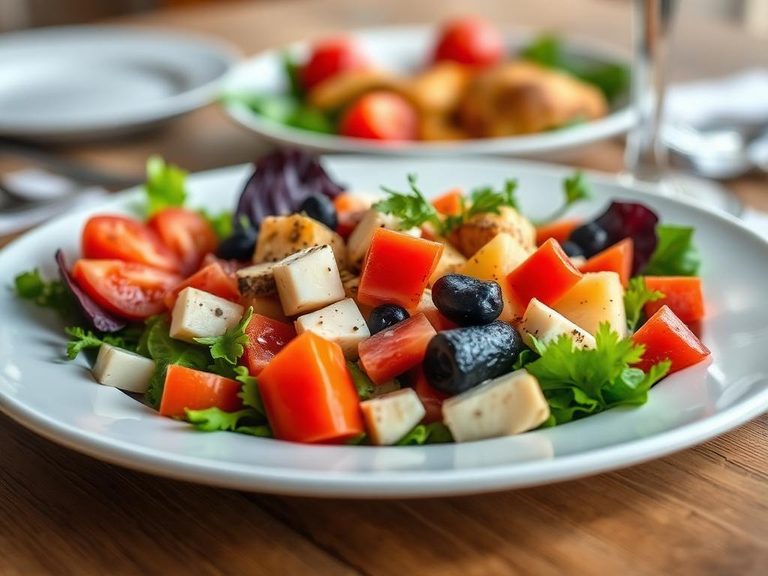
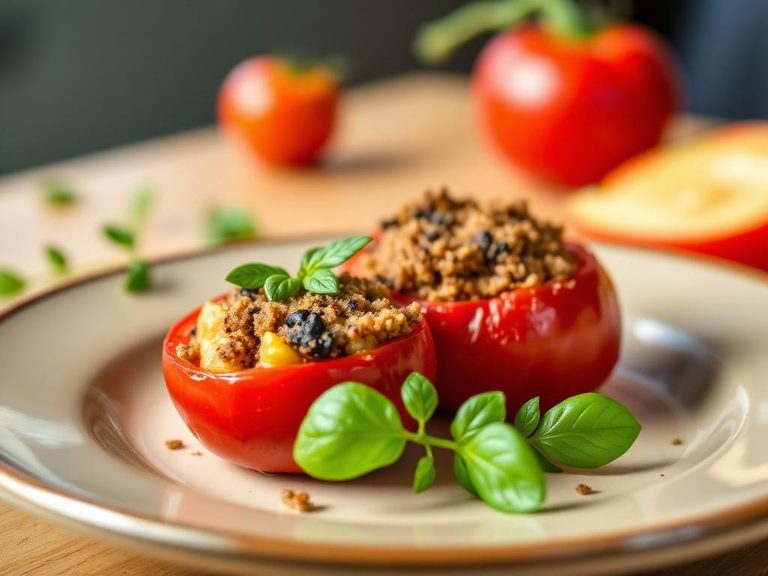
🌍 Where it's eaten
💡 Did you know?
The classic egg salad sandwich was a popular lunchbox item for American schoolchildren in the 1950s, often paired with a pickle and a cookie.
Full nutrition (USDA data · scales with serving)
| Water | 72.5 g |
| Energy | 172 kcal |
| Protein | 10.0 g |
| Total lipid (fat) | 13.0 g |
| Carbohydrate, by difference | 2.8 g |
| Fiber, total dietary | 0.00 g |
| Total Sugars | 1.6 g |
| Calcium, Ca | 41.0 mg |
| Iron, Fe | 0.96 mg |
| Magnesium, Mg | 8.0 mg |
| Phosphorus, P | 138 mg |
| Potassium, K | 106 mg |
| Sodium, Na | 423 mg |
| Zinc, Zn | 0.84 mg |
| Copper, Cu | 0.01 mg |
| Selenium, Se | 24.8 ug |
| Vitamin C, total ascorbic acid | 0.00 mg |
| Thiamin | 0.05 mg |
| Riboflavin | 0.40 mg |
| Niacin | 0.05 mg |
| Vitamin B-6 | 0.10 mg |
| Folate, total | 35.0 ug |
| Folic acid | 0.00 ug |
| Folate, food | 35.0 ug |
| Folate, DFE | 35.0 ug |
| Choline, total | 233 mg |
| Vitamin B-12 | 0.87 ug |
| Vitamin B-12, added | 0.00 ug |
| Vitamin A, RAE | 119 ug |
| Retinol | 117 ug |
| Carotene, beta | 15.0 ug |
| Carotene, alpha | 0.00 ug |
| Cryptoxanthin, beta | 8.0 ug |
| Lycopene | 0.00 ug |
| Lutein + zeaxanthin | 283 ug |
| Vitamin E (alpha-tocopherol) | 1.3 mg |
| Vitamin E, added | 0.00 mg |
| Vitamin D (D2 + D3) | 1.7 ug |
| Vitamin K (phylloquinone) | 11.5 ug |
| Alcohol, ethyl | 0.00 g |
| Caffeine | 0.00 mg |
| Theobromine | 0.00 mg |
Fat & fatty acid profile (per 100g)
| Fatty acids, total saturated | 3.3 g |
| SFA 4:0 | 0.00 g |
| SFA 6:0 | 0.00 g |
| SFA 8:0 | 0.00 g |
| SFA 10:0 | 0.00 g |
| SFA 12:0 | 0.00 g |
| SFA 14:0 | 0.03 g |
| SFA 16:0 | 2.3 g |
| SFA 18:0 | 0.84 g |
| Fatty acids, total monounsaturated | 4.3 g |
| MUFA 16:1 | 0.25 g |
| MUFA 18:1 | 4.0 g |
| MUFA 20:1 | 0.04 g |
| MUFA 22:1 | 0.01 g |
| Fatty acids, total polyunsaturated | 3.8 g |
| PUFA 18:2 | 3.3 g |
| PUFA 18:3 | 0.35 g |
| PUFA 18:4 | 0.00 g |
| PUFA 20:4 | 0.12 g |
| PUFA 20:5 n-3 (EPA) | 0.00 g |
| PUFA 22:5 n-3 (DPA) | 0.00 g |
| PUFA 22:6 n-3 (DHA) | 0.03 g |
| Cholesterol | 297 mg |
FAQ
How long does homemade egg salad last in the fridge?
It's best consumed within 3-4 days when stored in an airtight container at or below 40°F (4°C). The mayonnaise and eggs are perishable.
Can I make it without mayonnaise?
Yes. You can substitute with mashed avocado, Greek yogurt, or a vinaigrette for a different flavor and nutritional profile, though the texture will change.
Why does my egg salad get watery?
This often happens if the eggs are overcooked or if the salad is dressed too far in advance. Use fresh eggs, cook them properly, and mix the dressing just before serving.
Nutrient density (calculated · NRF9.3)
Nutrient Rich Foods index: beneficial nutrients (protein, fiber, vitamins, minerals) minus saturated fat, added sugar & sodium, per 100 kcal.
NRF9.3 index — Fulgoni, Keast & Drewnowski, 2009. Computed from USDA nutrients.
Weight-loss friendliness (composite index)
Energy density 1.72 kcal/g · 23% calories from protein · 0.0 g fiber · 1.6 g sugar per 100 g.
Composite of energy density (Rolls et al., 1999), protein & fiber satiety, minus sugar. A calculated heuristic — ranks satiety-per-calorie, not a clinical measure.
Dietary load (calculated from USDA values)
Potential renal acid load. Positive = acid-forming, negative = alkaline-forming.
Sodium-to-potassium ratio: 3.99 (lower is better — aim for ≤ 1)
Sodium:potassium per WHO potassium guidance. Computed from USDA nutrients.